Olinguito Bassaricyon neblina
Olinguito Bassaricyon neblina
IUCN Red List: Near Threatened
Location: Colombia, Ecuador
Found in the Andean cloud forests of western Colombia and Ecuador, at elevations between 1,500 and 2,800 metres.
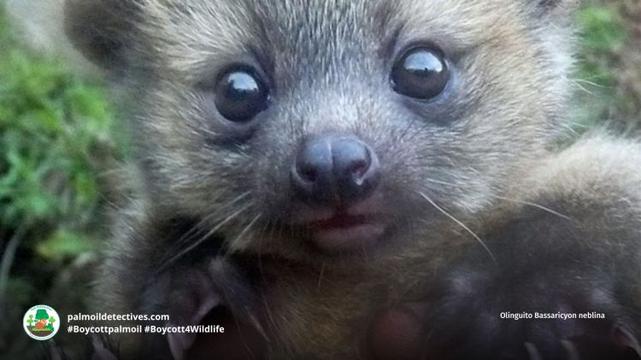
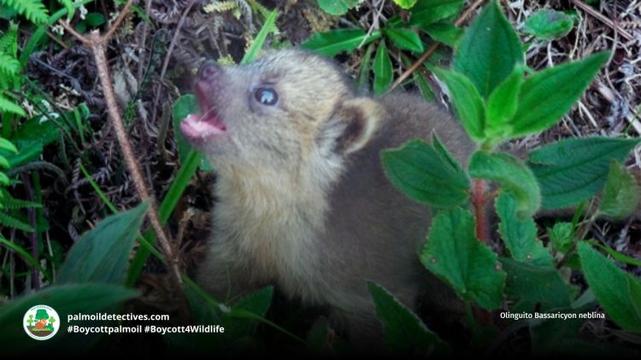
One of the cutest #mammals recently discovered is already at risk. With their bear-like faces, cat-like bodies, and lush tawny fur, the olinguito Bassaricyon neblina is an adorable button-nosed mammal of #Ecuador and #Colombia. They first made themselves known to the western world in 2006 in Ecuador and were officially described in 2013 and are considered ‘Near Threatened’ mainly from deforestation and forest clearing for #palmoil agriculture along with road building, infrastructure and gold mining throughout their range. Native to the misty cloud forests of the northern Andes, they are increasingly threatened by industrial agribusiness, palm oil plantations, and agriculture. Over 40% of their habitat has already been destroyed. Use your wallet as a weapon: always choose #palmoilfree products and be #vegan to help protect olinguitos and other species of the Andean Cloud Forest#BoycottPalmOil #Boycott4Wildlife
https://youtu.be/6_ir48JWkRI
#Olinguitos are button-nosed #mammals 😻🦦 of the Cloud Forests in #Ecuador 🇪🇨 and #Colombia 🇨🇴 Their lives are threatened by #goldmining 🥇 #meat 🥩and #palmoil 🌴 #deforestation. Help them! Be #vegan #Boycottpalmoil 🌴🚫 #Boycott4Wildlife @palmoildetect https://wp.me/pcFhgU-bBX
Share to BlueSky Share to Twitter Discovered not long ago, #Olinguitos are #bear-like tenacious survivors. Despite hiding well, their forests are rapidly disappearing for #palmoil and #meat agriculture. Help them survive! Be #vegan #Boycottpalmoil 🌴⛔️ #Boycott4Wildlife @palmoildetect https://wp.me/pcFhgU-bBX
Share to BlueSky Share to Twitter Appearance & Behaviour
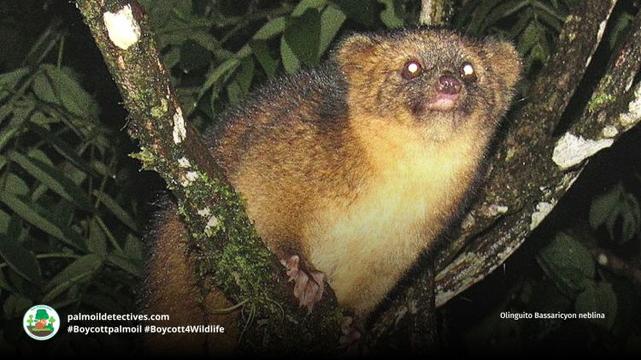
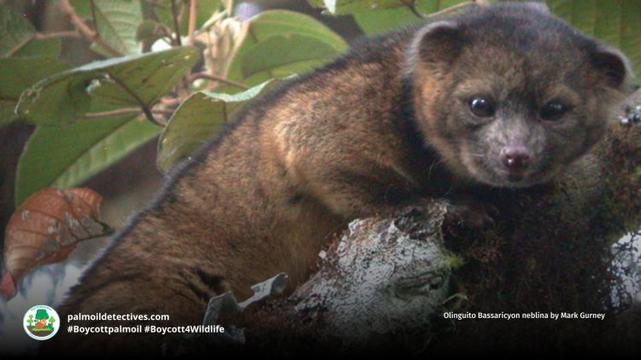
The olinguito is reminiscent of teddy bear and a domestic cat, with thick, soft, russet and tawny coloured fur, a short snout with a button-like nose, small ears, and a long fluffy tail used for balance in the treetops. Typically weighing under one kilogram, they are the smallest member of the raccoon family (Procyonidae). Nocturnal and arboreal, they live high in the forest canopy and are rarely seen. Solitary by nature, they are also reclusive and actively avoid human interaction.
Threats
Despite being classified as Near Threatened, there are no known large-scale conservation programmes or protected areas specifically designed to safeguard the olinguito or their habitat. Many of the forests where they live are under private ownership or are unprotected, leaving them at the mercy of logging companies, agribusiness, and illegal land grabs. Without legal safeguards and ecological corridors between forest remnants, olinguito populations will continue to decline unnoticed. Over 42% of their potential range has already been cleared or degraded for mining and agriculture.
Widespread deforestation of Andean cloud forests for agriculture, livestock, and infrastructure
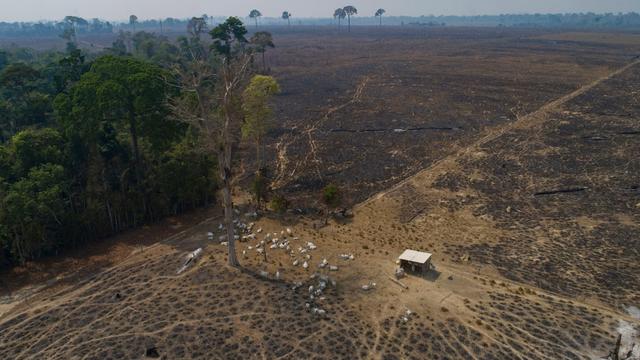
Much of the olinguito’s Andean cloud forest habitat has already been cleared for cattle pasture, coffee plantations, and crop fields. This is especially concerning given the species’ limited elevational range and dependence on specific microclimates. Habitat loss fragments populations and prevents them from moving between forest patches, leading to genetic isolation and increased vulnerability. According to Helgen et al. (2013), 42% of the olinguito’s historical range has already been lost to agriculture and urban development.
Palm oil and timber plantations rapidly consuming native forest habitat.
Large swathes of cloud forest are being destroyed to establish oil palm and timber plantations. These monocultures are ecological deserts that offer no food or shelter for frugivorous mammals like the olinguito. Although oil palm expansion is often focused in lowland regions, it is encroaching into higher elevations in parts of Colombia and Ecuador due to market demand and land speculation. This spells danger for highland endemics like the olinguito, whose misty habitat is already shrinking.
Urbanisation and road development, fragmenting their canopy habitat
As human populations expand into previously remote areas, forest is cleared for roads, settlements, and industrial development. Even if some patches of cloud forest remain, roads cut through ecosystems, isolating wildlife and increasing mortality from vehicle collisions. Urban sprawl also brings dogs and other invasive species that can harass, predate, or outcompete native animals. The olinguito’s canopy-dependent, arboreal lifestyle makes it especially susceptible to the effects of fragmentation and edge habitat.
Climate change, which threatens the stability of montane ecosystems.
Cloud forests are highly sensitive to temperature and moisture changes. As global temperatures rise, the delicate balance of mist, rainfall, and cool air that defines this biome is shifting. Suitable habitat may move upslope, but mountaintops provide a limited refuge. Once a species is pushed beyond its climatic limit, local extinction becomes inevitable. The olinguito already lives at the uppermost altitudes suitable for its survival, making it dangerously vulnerable to climate-induced habitat contraction.
Geographic Range
Olinguitos live in humid montane forests between 1,500 and 2,800 metres in elevation in western Colombia and Ecuador, including forests near Medellín in Colombia and the Otonga Forest Reserve in Cotopaxi, Ecuador. This species occupies the highest known range of any member of the genus Bassaricyon. Though only officially recognised in 2013, museum specimens had been mislabelled for decades prior to that.
Diet
Despite belonging to the carnivoran order, olinguitos are primarily frugivores. They feed on cloud forest fruits such as figs, as well as insects, nectar, and occasionally small vertebrates like birds and lizards. Their faeces are said to resemble small blueberries due to their fruit-heavy diet.
Mating and Reproduction
Very little is known about the reproductive behaviour of the olinguito, but it is believed they produce a single offspring at a time. Females have one pair of mammae. Their solitary lifestyle and canopy-based habits make studying them in the wild extremely difficult.
FAQs
How many olinguitos are left in the wild?
No population estimates exist for the olinguito, but scientists agree numbers are declining. Habitat modelling shows over 60% of their potential habitat is already deforested or degraded, suggesting a significant threat to survival (Helgen et al., 2013).
What is the lifespan of an olinguito?
Captive individuals like Ringerl—an olinguito unknowingly housed in US zoos for years—lived over a decade. Wild lifespan is presumed to be shorter, but specific data are lacking.
What are the main threats to the olinguito?
The biggest threats are deforestation and habitat loss driven by palm oil plantations, agriculture, and urbanisation. These activities have destroyed over 40% of their cloud forest habitat (Helgen et al., 2013). Climate change is also a growing concern due to their dependence on cool, moist mountain forests.
Do olinguitos make good pets?
No. Olinguitos are solitary, nocturnal, and specialised to live in misty canopy forests. Keeping them as pets is cruel and contributes to wildlife trafficking. Their capture disrupts family groups and decimates populations. If you care about olinguitos, do not fuel demand—speak out against the pet trade.
Take Action!
Olinguitos are an emblem of the hidden biodiversity in the world’s cloud forests—ecosystems that are vanishing fast.
- Boycott palm oil and demand truly forest-free alternatives.
- Support indigenous-led agroecology and forest protection efforts in the Andes.
- Refuse meat and dairy that drives deforestation in Colombia and Ecuador.
- Never support zoos or exotic pet collectors that remove wildlife from their habitats. #BoycottPalmOil #Boycott4Wildlife #Vegan #BoycottMeat
Support the Olinguito by going vegan and boycotting palm oil in the supermarket, it’s the #Boycott4Wildlife
Support the conservation of this species
This animal has no protections in place. Read about other forgotten species here. Create art to support this forgotten animal or raise awareness about them by sharing this post and using the #Boycottpalmoil #Boycott4Wildlife hashtags on social media. Also you can boycott palm oil in the supermarket.
Further Information
Helgen, K. M., Pinto, C. M., Kays, R., Helgen, L. E., Tsuchiya, M. T. N., Quinn, A., Wilson, D. E., & Maldonado, J. E. (2013). Taxonomic revision of the olingos (Bassaricyon), with description of a new species, the olinguito. ZooKeys, 324, 1–83. https://doi.org/10.3897/zookeys.324.5827
Helgen, K., Kays, R., Pinto, C., Schipper, J. & González-Maya, J.F. 2020. Bassaricyon neblina (amended version of 2016 assessment). The IUCN Red List of Threatened Species 2020: e.T48637280A166523067. https://dx.doi.org/10.2305/IUCN.UK.2020-1.RLTS.T48637280A166523067.en. Accessed on 02 May 2025.
Lee, T. E., Tinoco, N., Allred, F. G., Hennecke, A., Camacho, M. A., & Burneo, S. F. (2022). Small mammals of Otonga Forest Reserve, Cotopaxi Province, Ecuador. The Southwestern Naturalist, 66(1), 48–53. https://doi.org/10.1894/0038-4909-66.1.48
NBC News. (2013, August 16). ‘Cutest new animal’ discovered: It’s an olinguito! https://www.nbcnews.com/sciencemain/cutest-new-animal-discovered-its-olinguito-6C10925572
Wikipedia contributors. (n.d.). Olinguito. Wikipedia. Retrieved 2 May 2025, from https://en.wikipedia.org/wiki/Olinguito
How can I help the #Boycott4Wildlife?
Take Action in Five Ways
1. Join the #Boycott4Wildlife on social media and subscribe to stay in the loop: Share posts from this website to your own network on Twitter, Mastadon, Instagram, Facebook and Youtube using the hashtags #Boycottpalmoil #Boycott4Wildlife.
Enter your email address
Sign Up
Join 3,180 other subscribers
2. Contribute stories: Academics, conservationists, scientists, indigenous rights advocates and animal rights advocates working to expose the corruption of the palm oil industry or to save animals can contribute stories to the website.
Wildlife Artist Juanchi Pérez
Read more Mel Lumby: Dedicated Devotee to Borneo’s Living Beings
Read more Anthropologist and Author Dr Sophie Chao
Read more Health Physician Dr Evan Allen
Read more The World’s Most Loved Cup: A Social, Ethical & Environmental History of Coffee by Aviary Doert
Read more How do we stop the world’s ecosystems from going into a death spiral? A #SteadyState Economy
Read more 3. Supermarket sleuthing: Next time you’re in the supermarket, take photos of products containing palm oil. Share these to social media along with the hashtags to call out the greenwashing and ecocide of the brands who use palm oil. You can also take photos of palm oil free products and congratulate brands when they go palm oil free.
https://twitter.com/CuriousApe4/status/1526136783557529600?s=20
https://twitter.com/PhillDixon1/status/1749010345555788144?s=20
https://twitter.com/mugabe139/status/1678027567977078784?s=20
4. Take to the streets: Get in touch with Palm Oil Detectives to find out more.
5. Donate: Make a one-off or monthly donation to Palm Oil Detectives as a way of saying thank you and to help pay for ongoing running costs of the website and social media campaigns. Donate here
Pledge your support Learn about other animals endangered by palm oil and other agriculture
Global South America S.E. Asia India Africa West Papua & PNG Olinguito Bassaricyon neblina
Keep reading Santa Catarina’s Guinea Pig Cavia intermedia
Keep reading Keel-billed Toucan Ramphastos sulfuratus
Keep reading Asian Small-clawed Otter Aonyx cinereus
Keep reading Marsupials thought extinct for 6,000 years found in West Papua
Keep reading Gursky’s Spectral Tarsier Tarsius spectrumgurskyae
Keep reading Learn about “sustainable” palm oil greenwashing
Read more about RSPO greenwashing
Lying Fake labels Indigenous Land-grabbing Human rights abuses Deforestation Human health hazards A 2019 World Health Organisation (WHO) report into the palm oil industry and RSPO finds extensive greenwashing of palm oil deforestation and the murder of endangered animals (i.e. biodiversity loss)
Read more
#animals #Bear #Boycott4wildlife #BoycottMeat #BoycottPalmOil #carnivores #coffee #Colombia #deforestation #Ecuador #ForgottenAnimals #goldMining #goldmining #hunting #infrastructure #Mammal #mammals #meat #meatAgriculture #meatDeforestation #NearThreatenedSpecies #NearThreatened #nocturnal #OlinguitoBassaricyonNeblina #Olinguitos #omnivore #omnivores #PalmOil #palmOilDeforestation #palmoil #palmoilfree #poaching #roads #SeedDispersers #seeddispersal #vegan #VulnerableSpecies Palm Oil Detectives
 Mojo ♻️
 Palm Oil Detectives