Film Review Blog No. 106 – ORWO Wolfen P400

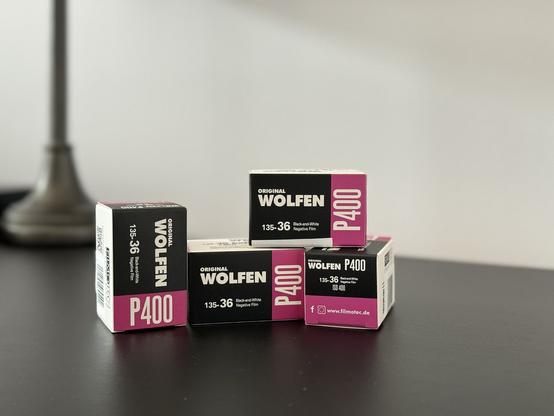
Like last year's review of ORWO Wolfen NP100, ORWO Wolfen P400 is a version of ORWO N74+ but modified to better suit still-photography by removing the anti-halation layer. I had this film stock on my wish list and was able to find it last year through Freestyle. The one thing I also noticed is that there is a slight difference between the two film stocks to indicate that something else has been done to the film stock in the process of stripping that layer. Thankfully there is already a lot of existing times that are listed directly for P400. The first thing I noticed with the film is that it is all packaged in newer metal cassettes not the plastic ones that I encountered with my review of NP100, the second is how thin the film feels compared to past ORWO motion picture films.

Film Specs
Manufacturer: ORWO
Name: Wolfen P400
Type: Panchromatic Black & White
Film Base: Polyester
Film Speed: ASA-400, Latitude: +/- 2-Stops
Formats Available: 135 (35mm)

Roll 01 - Flic Film B/W Cine Film Developer
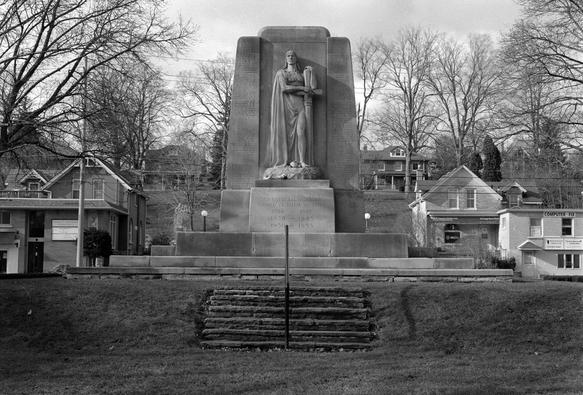
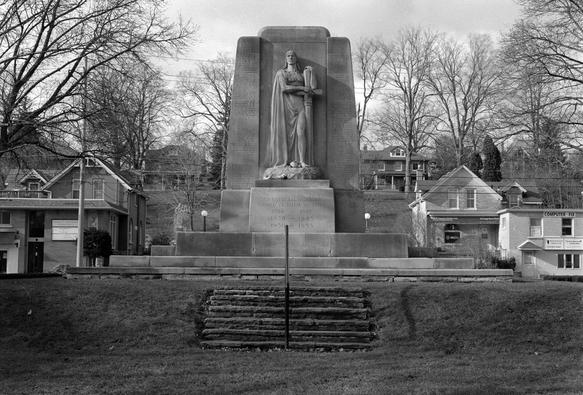
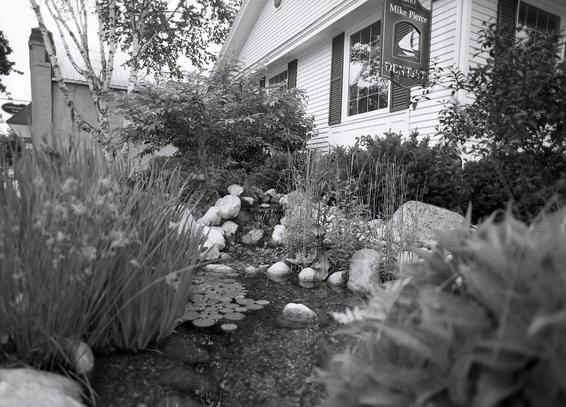
While P400 is modified to suit better photography, it is still, at its core, a motion picture film, so I'm starting off the review using the normal motion picture film developer, Kodak D-96, or in this case, the Flic Film produced version. Going with the stock dilution and dropping the time from my listed 6.5 minutes to 6.25 minutes to compensate slightly for exposing the film at ASA-320, the negatives looked thin but had good detail. And they scanned well, and with some adjustments in Photoshop, I'm pleased with these images. There's a good contrast, thanks mainly to the mixed light. I noticed the most that these images seemed a little soft, and the grain was a bit mushy but still present. That is more thanks to the developer rather than the film itself. I like this combination. It works well in these conditions and gives you a better feel for what the film can do than straight D-76.

Minolta Maxxum 9 - Minolta Maxxum AF 50mm 1:1.4 - ORWO Wolfen P400 @ ASA-320 - Flic Film B/W Cinefilm Developer (Stock) 6:15 @ 20CMinolta Maxxum 9 - Minolta Maxxum AF 50mm 1:1.4 - ORWO Wolfen P400 @ ASA-320 - Flic Film B/W Cinefilm Developer (Stock) 6:15 @ 20CMinolta Maxxum 9 - Minolta Maxxum AF 50mm 1:1.4 - ORWO Wolfen P400 @ ASA-320 - Flic Film B/W Cinefilm Developer (Stock) 6:15 @ 20CMinolta Maxxum 9 - Minolta Maxxum AF 50mm 1:1.4 - ORWO Wolfen P400 @ ASA-320 - Flic Film B/W Cinefilm Developer (Stock) 6:15 @ 20CMinolta Maxxum 9 - Minolta Maxxum AF 50mm 1:1.4 - ORWO Wolfen P400 @ ASA-320 - Flic Film B/W Cinefilm Developer (Stock) 6:15 @ 20C

Roll 02 - Ilford Ilfotec HC
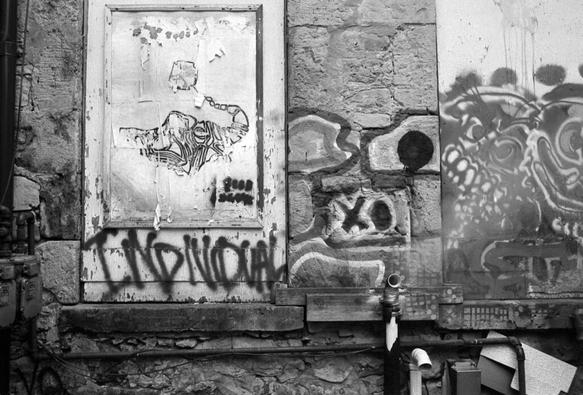
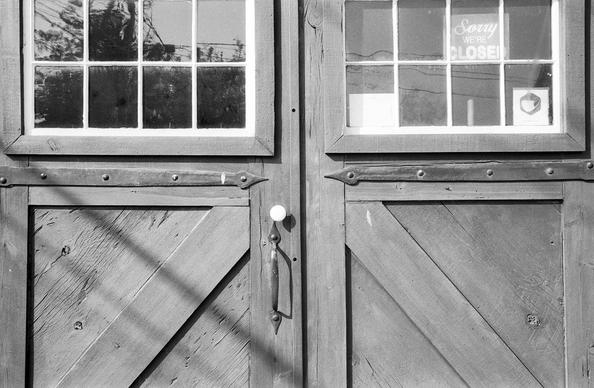
The only available time for Ilfotec HC was a 1+31 dilution. I always preferred to develop motion picture films in 1+63, so I went ahead and shot the roll at the full box speed of ASA-400 and doubled the available time while knocking it back to compensate for the constant rotation in development. I also shot this roll under bright, challenging conditions and more mixed light under trees. I should have let these develop a bit longer, the negatives were rather thin, but I'd take thin negatives over dense ones. Sadly, these were too thin, but with a bit of work in the post, I was able to pull out some images. I'm not a fan, but they work, and I'm not too happy with them. First, there is a lot of grain and medium contrast, but the images are sharp. Now I understand that P400/N74+ is not a fine-grain film, but all the same, these are mushy and grainy. Two things happened here: under-exposed and under-developed. I should have exposed these at either ASA-320 or ASA-250 and developed normally. As for the under-development, I'm leaning towards my bottle of Ilfotec HC reaching the end of its life. Either way, Ilfotec HC can work as a developer, but you will want to over-expose your film between 1/3 and 2/3 of a stop.

Minolta Maxxum 9 - Minolta Zoom AF 24-105mm 1:3.5-4.5 D - ORWO Wolfen P400 @ ASA-400 - Ilford Ilfotec HC (1+63) 11:45 @ 20C (Constant Rotation)Minolta Maxxum 9 - Minolta Zoom AF 24-105mm 1:3.5-4.5 D - ORWO Wolfen P400 @ ASA-400 - Ilford Ilfotec HC (1+63) 11:45 @ 20C (Constant Rotation)Minolta Maxxum 9 - Minolta Zoom AF 24-105mm 1:3.5-4.5 D - ORWO Wolfen P400 @ ASA-400 - Ilford Ilfotec HC (1+63) 11:45 @ 20C (Constant Rotation)Minolta Maxxum 9 - Minolta Zoom AF 24-105mm 1:3.5-4.5 D - ORWO Wolfen P400 @ ASA-400 - Ilford Ilfotec HC (1+63) 11:45 @ 20C (Constant Rotation)Minolta Maxxum 9 - Minolta Zoom AF 24-105mm 1:3.5-4.5 D - ORWO Wolfen P400 @ ASA-400 - Ilford Ilfotec HC (1+63) 11:45 @ 20C (Constant Rotation)

Roll 03 - Rodinal
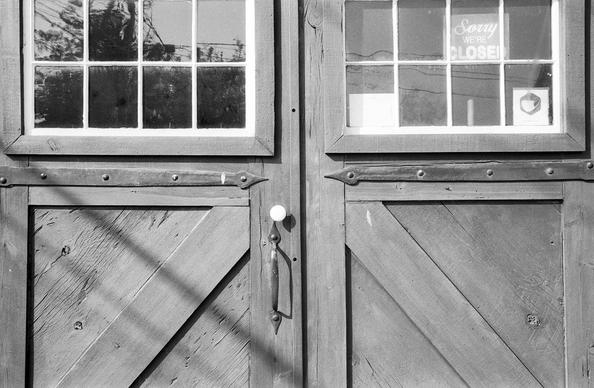
For my third roll and using Rodinal I decided to over-expose the film by one stop, shooting at ASA-200 then pulling in my development and using a 1+50 dilution with further reduction to compensate for constant rotation. And I thought the previous roll had a lot of grain, this one has even more! But I was prepared for it but on the plus side the images are sharp, the downside is that the contrast feels flat in some scenes but that could be more the lighting than the film. I don't enjoy high-contrast images and do like a low-contrast image but on cine-films I look for something middle ground, with character. And these images don't have that. Of course, I could always have played around with the contrast in post-processing and given the frames a bit more character.

Minolta Maxxum 9 - Minolta Maxxum AF 24mm 1:2.8 - ORWO Wolfen P400 @ ASA-200 - Blazinal (1+50) 9:00 @ 20C (Constant Rotation)Minolta Maxxum 9 - Minolta Maxxum AF 24mm 1:2.8 - ORWO Wolfen P400 @ ASA-200 - Blazinal (1+50) 9:00 @ 20C (Constant Rotation)Minolta Maxxum 9 - Minolta Maxxum AF 24mm 1:2.8 - ORWO Wolfen P400 @ ASA-200 - Blazinal (1+50) 9:00 @ 20C (Constant Rotation)Minolta Maxxum 9 - Minolta Maxxum AF 24mm 1:2.8 - ORWO Wolfen P400 @ ASA-200 - Blazinal (1+50) 9:00 @ 20C (Constant Rotation)Minolta Maxxum 9 - Minolta Maxxum AF 24mm 1:2.8 - ORWO Wolfen P400 @ ASA-200 - Blazinal (1+50) 9:00 @ 20C (Constant Rotation)

Roll 04 - Adox XT-3
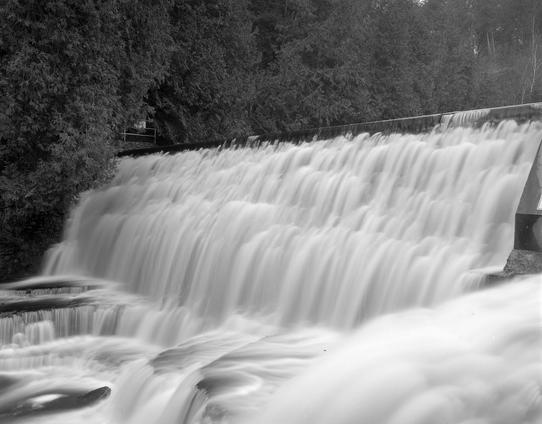
For the fourth and final roll I went with Adox XT-3, the Adox clone of Kodak Xtol using a 1+1 dilution. While I wanted to use 510-Pyro here, I went with an officially listed time. After seeing the trouble with the Ilfotec HC roll and the lovely results I got from B/W Cine developer, I went and exposed the roll at ASA-320 and developed normally. Upon pulling the negatives out of the tank, I was pleasantly surprised. The negatives did not look under or over developed and had good visible density on initial inspection. While these were certainly better than the second and third roll they still have problems, there's the compressed tonal range and despite being a fine-grain developer XT-3 did little to reduce the visible grain to something far more pleasing. Despite having high hopes for this roll I was still a little disappointed.

Minolta Maxxum 9 - Minolta Maxxum AF 20mm 1:2.8 - ORWO Wolfen P400 @ ASA-320 - Adox XT-3 (1+1) 9:30 @ 20CMinolta Maxxum 9 - Minolta Maxxum AF 20mm 1:2.8 - ORWO Wolfen P400 @ ASA-320 - Adox XT-3 (1+1) 9:30 @ 20CMinolta Maxxum 9 - Minolta Maxxum AF 20mm 1:2.8 - ORWO Wolfen P400 @ ASA-320 - Adox XT-3 (1+1) 9:30 @ 20CMinolta Maxxum 9 - Minolta Maxxum AF 20mm 1:2.8 - ORWO Wolfen P400 @ ASA-320 - Adox XT-3 (1+1) 9:30 @ 20CMinolta Maxxum 9 - Minolta Maxxum AF 20mm 1:2.8 - ORWO Wolfen P400 @ ASA-320 - Adox XT-3 (1+1) 9:30 @ 20C

Final Thoughts
Thankfully, the thinner base did not present any problems loading the film onto the reels, but I noticed that the film appears to be bulk-loaded rather than commercially loaded. I also noticed that the film tends to fog easily, so keeping it out of direct light is best. It could be because of the room's temperature, but I noticed a slight cupping when the film dried. All four rolls of the negatives came out thin, which made scanning difficult but not impossible. You could increase the development times by fifteen to thirty seconds to get added density and expose the film to your taste at either ASA-320 or ASA-250. It also doesn't surprise me that the best results from the film came from the roll developed in Flic Film B/W Cine Developer (Kodak D-96), and be ready to play around with the contrast in post-processing to get it where you want it. I'll be cautious in recommending this film; it isn't that P400 is a bad film; it takes a bit more effort to get good results, and you have to be willing to play a bit more in post-processing. This review warrants revisiting the film stock for a review (ORWO N74+) to see about getting it to a point where I'm happier with my results. What I think will help this film out the most is lots of good hard light.

Further Reading
Don't just take my word on P400, you can check out the reviews by other awesome camera reviewers!
Shoot Film Like A Boss - ORWO P400 Review

#filmreviewblogs #adoxxt3 #blazinal #cambridge #canada #filmreview #flicfilmbwcinefilmdeveloper #galt #guelph #ilfordilfotechc #minoltamaxxum9 #oakville #ontario #orwowolfenp400 #review #toronto

Film Review Blog No. 106 - ORWO Wolfen P400

Checking out the other modified motion picture film from ORWO. Wolfen P400 is a stripped down version of ORWO N74 their fast film option for motion picture but now ready for still photography.

Alex Luyckx | Blog

Better Living Through Chemistry | Picking Your Developers

Developing your film at home is both rewarding and frustrating at the same time and to add on an extra layer of complexity there is a lot of developers out there that you can use, especially in the black & white field. While certainly not as much as there used to be, there is still an excellent selection of developers to suit almost every person's need, without having to dive deep into building your developers from base chemicals. Ultimately every photographer has a different taste but if you're starting out with home development the choices may seem a little overwhelming so I'll be breaking down the different characteristics you may look for in your developing and what I feel are the best choices for each characteristic.

General Purpose Developing
While there is always a temptation to dive right into the exotic, I have found it best to get your feet wet with a bit of boring, the idea behind a good general purpose developer is that it doesn't do anything beyond developing your film and letting you explore what your films can do first before altering it through changes in exposure and development. These developers often come in large volumes and allow for development using a stock dilution to help maximise the number of rolls you can develop in a kit. The first one in this mix is the old favourite, Kodak D-76. D-76 along with the various clones available including Flic Film Classic MQ, Ilford ID-11, FPP's Dalzell76, and many others comes in either a 1 gallon or 1 liter volume and offers up use as a reusable stock solution or you can dilute it down to 1+1 or 1+2 into a one-shot developer. In all cases, this developer will handle a good 90-95% of your development needs and can even offer up some use for push and pull development. And there is almost a development time for every B&W film available today and even in the past.

Mamiya m645 - Mamiya-Sekor C 1:2.8 f=80mm - Kodak Tri-X 400 @ ASA-200 - Ilford ID-11 (Stock) 6:00 @ 20CRolleiflex 2.8F - Carl Zeiss Planar 80mm 1:2.8 - Kodak TMax 100 @ ASA-100 - Kodak D-76 (1+1) 9:30 @ 20CNikon FE - AI-S Nikkor 35mm 1:2.8 - Kodak Tri-X 400 @ ASA-400 - Flic Film Classic MQ (1+1) 9:30 @ 20CRolleiflex 2.8F - Carl Zeiss Planar 80mm 1:2.8 - Rollei RPX 400 @ ASA-400 - Kodak D-76 (Stock) 8:00 @ 20CKyocera Contax G2 - Carl Zeiss Biogon 28/2,8 T* - Rollei RPX 25 @ ASA-25 - Kodak D-76 (1+1) 8:00 @ 20C

Second on my list for a good general purpose developer is Ilford Ilfosol 3, despite the drawbacks this is an excellent choice when starting with home developing. The developer comes in a liquid concentrate that is easy to work with and takes little effort to pour and mix. You only have two dilution options 1+9 and 1+14 that will both produce similar results it all depends on how many rolls of film you have to develop. Ilfosol 3 can only be used as a one-shot developer and it oxidises far quicker than other liquid developers. That means that you will want to shoot all your film and then run through to bottle as quickly as possible. Alternatively you can use canned air to help displace any oxygen or use glass marbles to keep the volume up. You also have a tonne of options for developing film with most modern film stocks having a listed time.

Nikon FG - Nikon Series E 50mm 1:1.8 - Ilford Pan F+ @ ASA-50 - Ilford Ilfosol 3 (1+14) 4:30 @ 20CHasselblad 500c - Carl Zeiss Planar 80mm 1:2.8 - Rollei RPX 100 @ ASA-100 - Ilford Ilfosol 3 (1+9) 5:00 @ 20CPentax 645 - SMC Pentax A 645 35mm 1:3.5 - Ilford Delta 100 @ ASA-100 - Ilford Ilfosol 3 (1+14) 2:50 @ 28CKyocera Contax G2 - Carl Zeiss Planar 2/45 T* - Ilford FP4+ @ ASA-125 - Ilford Ilfosol 3 (1+14) 7:30 @ 20CNikon F5 - AF-S Nikkor 14-24mm 1:2.8G - JCH Streetpan 400 @ ASA-400 - Ilford Ilfosol 3 (1+3) 5:00 @ 20C

And the third choice I have for general purpose developing is Adox FX-39 II, I first discovered this developer several years ago and it quickly became a fast favourite. This is another liquid concentrate that has only two dilutions available and is easily mixed into a one-shot working solution and in both cases they produce similar results so it all depends on how economical you want to be with your bottle. It also has a longer shelf life than Ilfosol 3, I've had one bottle go for a year and still was running strong by the time I drained the concentrate. The one thing that FX-39 II has that the previous two do not is a set of universal times for films exposed at box speed if there isn't a listed time. But don't worry, there is a lot of listed times available for the developer.

Rolleiflex 2.8F - Carl Zeiss Planar 80mm 1:2.8 - Adox CHS 100 II @ ASA-80 - Adox FX-39 II (1+9) 7:30 @ 20CMinolta Dynax 600si Classic - Minolta Maxxum AF 28mm 1:2.8 - Agfa Silvertone @ ASA-400 - Adox FX-39II (1+9) 10:00 @ 20C (Constant Rotation)Nikon F5 - AF Nikkor 85mm 1:1.8D - Ilford Delta 100 @ ASA-100 - Adox FX-39 II (1+9) 7:00 @ 20CNikon F5 - AF Nikkor 24mm 1:2.8 - Ilford Delta 400 @ ASA-400 - Adox FX-39 II (1+9) 9:30 @ 20CMinolta Maxxum 9 - Minolta Maxxum AF 28-135mm 1:4-4.5 - Kosmo Foto Agent Shadow @ ASA-400 - Adox FX-39 II (1+9) 10:30 @ 20C

Sharpness
Sharpness is both overrated and highly valued in the photography field, it's a bit of a buzz word. That being said there are several excellent options out there to help improve your film's sharpness. While sharpness can holistically mean a combination of edge sharpness and tonal contrast, these developers are used strictly to increase the edge sharpness of your images. The downside is that it will also increase the visible grain. The number one choice from anyone in this field is Rodinal, these days you can get it under several different names, Adox carries the copyright for the Rodinal name but in Canada we have the best clone, Blazinal. Rodinal can be used one of two ways, the first as a standard developer using either a 1+25 and 1+50 dilution for one-shot or you can stand-develop the film in a 1+100 or 1+200 dilution for either 1 hour or 2 hours respectively. While many people would avoid using Rodinal with faster films, I find that it does work well with both slow films that are already sharp, mid-speed films in the same vein and even faster films.

Hasselblad 500c - Carl Zeiss Planar 80mm 1:2.8 - Kodak Tri-X 400 @ ASA-200 - Blazinal (1+25) 7:00 @ 20CNikon F90 - AF Nikkor 35mm 1:2D - Bergger Pancro 400 @ ASA-800 - Blazinal (1+25) 13:00 @ 20CHasselblad 500c - Carl Zeiss Distagon 50mm 1:4 - Rollei RPX 25 @ ASA-25 - Blazinal (1+50) 11:00 @ 20CNikon F5 - AF-S Nikkor 28-70mm 1:2.8D - CatLABS X Film 320 Pro @ ASA-320 - Adox Rodinal (1+25) 9:00 @ 20CMamiya m645 - Mamiya-Sekor C 45mm 1:2.8 N - Ilford Ortho Plus @ ASA-80 - Blazinal (1+50) 15:00 @ 20C

Next on my list for increasing the edge sharpness of your film is Ilford Perceptol. While not necessarily a sharp developer, it does an excellent job in increasing sharpness while keeping visible grain under control. Perceptol is mixed from powder into a stock solution which you can use as a reusable developer (4 rolls per liter) or as a one-shot diluted either 1+1 or 1+3. It isn't the most economical developer either way as it is only available in a 1 liter kit. This is also the developer that does wonders with almost every film that you develop with it, the one thing you will notice in some cases is that you will have a bit of speed loss with faster films.

Pentax K1000 - SMC Pentax 55mm 1:2 - Ilford HP5+ @ ASA-320 - Ilford Perceptol (1+1) 18:00 @ 20CRolleiflex 2.8F - Carl Zeiss Planar 80mm 1:2.8 - Kodak Tri-X 400 (400TX) @ ASA-320 - Ilford Perceptol (1+1) 12:00 @ 20CMinolta Maxxum 9 - Minolta Maxxum AF 50mm 1:1.4 - Fujifilm Neopan Acros 100 @ ASA-80 - Ilford Perceptol (1+1) 13:00 @ 20C (Constant Rotation)Pentax 645 - SMC Pentax A 645 35mm 1:3.5 - Ilford Delta 100 @ ASA-50 - Ilford Perceptol (1+1) 13:00 @ 20CHasselblad 500c - Carl Zeiss Planar 80mm 1:2.8 - Rollei RPX 25 @ ASA-25 - Ilford Perceptol (1+1) 10:00 @ 20C

On the rarer end of the spectrum there's SPUR HRX. SPUR is known for producing developers designed for increased sharpness and resolution and HRX certainly fits the bill. I mean there name is short for Speed Photography, Ultra Resolution and HRX is for High-Resolution X. Now the one thing that might turn people off of HRX other than sourcing the chemisty is that it's a two-part developer with a single dilution. So there's a bit of math involved by dividing the amount of concentrate in two. And HRX will hand down some amazingly sharp images but on faster films there is a speed loss and an uptick in visible grain.

New Mamiya 6 - Mamiya G 1:3.5 f=75mm L - Kodak Tri-X 400 @ ASA-250 - SPUR HRX (1+17) 10:00 @ 20C (Constant Rotation)Canon EOS Elan IIe - Canon Lens EF 50mm 1:1.8 - Oriental Seagull 400 @ ASA-400 - SPUR HRX (1+13) 12:30 (Constant Rotation)Rolleiflex 2.8F - Carl Zeiss Planar 80mm 1:2.8 (Yellow-12) - Fomapan 100 @ ASA-100 - SPUR HRX (1+20) 11:00 @ 20CRolleiflex 2.8F - Carl Zeiss Planar 80mm 1:2.8 - FPP Frankenstein 200 @ ASA-125 - SPUR HRX (1+17) 7:45 @ 20C (Constant Rotation)Zeiss Ikon Contax IIIa - Zeiss Opton Sonnar 1:1,5 f=50mm - Ilford FP4+ @ ASA-100 - SPUR HRX (1+20) 9:30 @ 20C

Fine-Grain
On the opposite end of the spectrum there's fine-grain developers. These are ones that are designed to reduce the amount of visible grain. Now in the past this has often resulted in a loss of edge sharpness but most modern developers are a balance of retaining sharpness while reducing the amount of visible grain. Number one on my list is Ilford Microphen. Microphen, a cousin to Perceptol does an excellent job with reducing grain while maintaining decent edge sharpness and controlling contrast. It can be used as both a stock reusable solution (up to 10 rolls) or as a one-shot developer in either a 1+1 or 1+3 dilution. This works incredible well in the stock dilution in cutting down grain on some of the worst offenders like Fomapan 400, Fomapan 200, and ORWO N74.

Rolleiflex 2.8F - Carl Zeiss Planar 80mm 1:2.8 - Rollei Retro 80s @ ASA-80 - Ilford Microphen (Stock) 9:00 @ 20CNikon FM - AI-S Nikkor 105mm 1:2.5 - Fomapan 100 @ ASA-100 - Ilford Microphen (1+1) 9:00 @ 20CMinolta Maxxum 9 - Minolta Maxxum AF 28mm 1:2.8 (Yellow-12) - Ilford Ortho Plus @ ASA-80 - Ilford Microphen (Stock) 9:00 @ 20CMamiya m645 - Mamiya-Sekor C 1:2.8 f=80mm - Lomography Berlin 400 @ ASA-400 - Ilford Microphen (Stock) 7:00 @ 20CNikon FM - AI-S Nikkor 35mm 1:2.8 - Fomapan 100 @ ASA-100 - Ilford Microphen (1+1) 9:00 @ 20C

Second is the obvious choice, Kodak Xtol. This is the second fine-grain developer released by Kodak and was the final developer to come out of Kodak. You can also find it in several clones including Adox XT-3 and Bellini Foto Eco Developer plus several others. If you do a high-volume of developing then Xtol and XT-3 come in 5 liter volumes. The one thing that stands out for Xtol is that not only does it cut down on the visible grain, it also helps retains some level of edge sharpness. Now recently there were some concerns over the quality of the Xtol developer coming out of Sino Promise, but now that manufacturing has switched back to a US based company there doesn't seem to be the same problem. In all cases you can use the developer in stock form as a reusable developer or dilute it to one-shot in either 1+1 or 1+2 dilutions with only slight changes to how the developer acts.

Nikon FM - AI Nikkor 28mm 1:3.5 - Fomapan 200 @ ASA-200 - Adox XT-3 (Stock) 6:00 @ 20CNikon F5 - AF-S Nikkor 14-24mm 1:2.8G - FPP Mr. Brown @ ASA-6 - Kodak Xtol (stock) 10:30 @ 20CPentax 645 - SMC Pentax A 645 75mm 1:2.8 - Kodak Tri-X Pan (TXP) @ ASA-1250 - Kodak Xtol (Stock) 12:00 @ 20CHasselblad - 500c - Carl Zeiss Distagon 50mm 1:4 - Fuji Acros 100 @ ASA-100 - Kodak Xtol (stock) 8:00 @ 20CRolleiflex 2.8F - Carl Zeiss Planar 80mm 1:2.8 - Ilford HP5+ @ ASA-1600 - Bellini EcoFilm (Stock) 11:00 @ 20C (Constant Rotation)

The final choice is an interesting one as it is the developer that Xtol replaced, Kodak Microdol-X. Today you cannot find Microdol-X new, but if you come across a sealed pouch of the stuff then it should still be good! Rather LegacyPro makes a perfect clone of Microdol-X called Mic-X. This can be used three different ways, first is in the stock form where it is a perfect fine-grain developer and reusable but at the cost of reducing some of that edge sharpness. Second in a 1+3 one-shot dilution it does increase edge sharpness and in the third form a 1+1 one-shot dilution it is a balance of both. But even in the stock form with a modern sharp film, you don't see much reduction.

Pacemaker Crown Graphic - Schneider-Krueznack Symmar-S 1:5.6/210 - Kodak Plus-X Pan @ ASA-125 - Kodak Microdol-X (Stock) 8:00 @ 20CMamiya m645 - Mamiya-Sekor C 1:2.8 f=80mm - Fomapan 100 @ ASA-100 - LegacyPro Mic-X (1+1) 9:00 @ 20C (Constant Rotation)Minolta Dynax 600si Classic - Minolta Maxxum AF 24mm 1:2.8 (Yellow-12) - Ilford FP4+ @ ASA-25 - LegacyPro Mic-X (1+3) 10:00 @ 20C (Constant Rotation)Canon EOS 3000 - Canon Lens EF 50mm 1:1.8 - Arista EDU.Ultra 200 @ ASA-200 - LegacyPro Mic-X (1+1) 8:30 @ 20CRolleiflex 2.8F - Carl Zeiss Planar 80mm 1:2.8 (Yellow 8) - Kodak TMax 400 @ ASA-400 - LegacyPro Mic-X (Stock) 9:15 @ 20C (Constant Rotation)

Compensating Developers
A compensating developer is such a loaded term which is why I'm putting it in the final spot for this entry. The main reason is that I have already talked about a tonne of different developers that can be considered compensating. Ones like Xtol and Microphen all are in this category. These are developers that will help cut down some of the negative impacts of both push and pull development which compensate for over and under exposure. They also work well with expired films and help reduce grain and cut down on overly contrasty scenes or films. At the top of my list for compensating developers in Diafine. Now Diafine can be hard to acquire today, but there are similar developers being produced, I do believe that Bellini Foto has one and Flic Film has teased at something similar. Diafine is a two-bath developer, meaning you develop the film once in Part A then develop the film a second time in Part B. There is also a standard set of times that if you expose the film at an ideal speed you can develop multiple rolls at multiple speeds at the same time. And the best part is that I've seen good results no matter what film I've used with Diafine. And if you do get your hands on the stuff it tends to last forever.

Minolta Maxxum 9 - Minolta Maxxum AF 24mm 1:2.8 - Eastman Double-X 5222 @ ASA-1600 - Diafine (Stock) 4:00 + 4:00 @ 20CNikon F5 - AF Nikkor 50mm 1:1.4D - FPP XRay Film @ ASA-400 - Diafine (Stock) 5:00 + 5:00 @ 20CKonica-Minolta Maxxum 70 - Minolta Maxxum AF 50mm 1:1.7- Arista EDU.Ultra 100 @ ASA-200 - Diafine (Stock) 3:00 + 3:00 @ 20CNikon FE2 - AI Nikkor 24mm 1:2.8 (Yellow-12) - Ilford FP4+ @ ASA-250 - Diafine (Stock) 3:00 + 3:00 @ 20CMinolta Dynax 600si Classic - Minolta Maxxum AF 50mm 1:1.4 - Ilford HP5+ @ ASA-800 - Diafine (Stock) 3:00 + 3:00 @ 20C

Second on my list might raise some eyebrows but it's Kodak HC-110 along with the various clones including Ilfotec HC and LegacyPro L110. The one thing I like about HC-110 is that you can adjust how the developer can adjust to either help increase contrast or decrease contrast and even get into compensating territory. Now if you're running the stronger dilutions like A (1+15) and B (1+31) it acts more like a general purpose developer. But once you get into more dilute mixes like E (1+47), F (1+79), G (1+119) H (1+63), and even a special 1+90 with a fixed 18 minute time that will develop most B&W films when exposed at box speed. Now many people will turn there nose up at HC-110 these days because of the change of how the developer handles, it works well in Ilfotec HC that behaves similar to the original HC-110.

Minolta XE-7 - Minolta MD W.Rokkor-X 28mm 1:2.8 - Svema FN64 @ ASA-64 - Kodak HC-110 Dil. H 16:00 @ 20CMinolta Maxxum 9 - Konica-Minolta Zoom AF 17-35mm 1:2.8-4 D - Lomography Potsdam 100 @ ASA-100 - Kodak HC-110 Dil. H 7:30 @ 20C>Rolleiflex 2.8F - Carl Zeiss Planar 80mm 1:2.8 - JCH Streetpan 400 @ ASA-400 - Kodak HC-110 Dil. F 12:30 @ 20CKyocera Contax G2 - Carl Zeiss Biogon 2.8/28 T* - Kodak Tri-X 400 @ ASA-400 - Kodak HC-110 Dil. B 4:30 @ 20CKyocera Contax G2 - Carl Zeiss Biogon 2,8/28 T* - Eastman 5363 @ ASA-25 - Kodak HC-110 Dil. G 22:00 @ 20C

And finally there is Zone Imaging 510-Pyro, this is one of my favourite developers to use when I want a good balance between edge-sharpness and fine-grain. Now Pyro developers are not for everyone as there is a lot of extras needed to get the best out of the developer and your negatives. But between all the available pyro developers, 510-Pyro is the easiest to handle. It has only one concentrate and is mixed 90% of the time at a 1+100 dilution. It is thicker than other pyro developers but does have an incredibly long shelf-life. Honestly, I have yet to find a film stock that 510-Pyro doesn't like.

Rolleiflex 2.8F - Carl Zeiss Planar 80mm 1:2.8 - CatLABS X Film 320 Pro @ ASA-320 - Zone Imaging 510-Pyro (1+100) 12:15 @ 20C (Constant Rotation)Rolleiflex 2.8F - Carl Zeiss Planar 80mm 1:2.8 - Adox CHS 100 II @ ASA-80 - Zone Imaging 510-Pyro (1+100) 8:00 @ 20CNikon FE2 - AI Nikkor 24mm 1:2.8 (B+W 092) - FPP BW Infrared @ ASA-200 - Zone Imaging 510-Pyro (1+100) 7:00 @ 20CMinolta Dynax 600si Classic - Minolta Zoom AF 28-80mm 1:4-5.6 - Derev Pan 400 @ ASA-320 - Zone Imaging 510-Pyro (1+100) 10:00 @ 20C (Constant Rotation)Rolleicord Vb (Type-2) - Schneider-Kreuznach Xenar 1:3.5/75 - Kosmo Foto Mono 100 @ ASA-100 - Zone Imaging 510-Pyro (1+100) 7:00 @ 20C

Like anything related to photography it all comes down to personal taste. The best thing you can do is to get together a good collection of developers that will suit not only the film stocks you regularly use but also how you want your images to look. There is some wisdom in picking a single developer and film stock, I'm more one who has a set list of films to use for any situation and then picking the right combination. Now this comes from developing my B&W film at home and fine tuning my process, so it will be worthwhile to keep detailed notes so that you know what you like and what you dislike. You can check out all my past developer reviews to help get you started on your development journey.

#musings #adoxchs100ii #adoxfx39ii #adoxrodinal #adoxxt3 #agfasilvertone #antwerp #aristaeduultra100 #aristaeduultra200 #arras #bwdevelopers #bwphotography #belgium #belliniecofilm #berggerpancro400 #blazinal #bobcaygeon #burlington #cambridge #canada #canoneos3000 #canoneoselaniie #catlabsxfilm320pro #centrewellington #chemistry #derevpan400 #developing #diafine #districtofcolumbia #dundas #eastman5363 #eastmandoublex5222 #fergus #flicfilmclassicmq #fomapan100 #fomapan200 #fppbwinfrared #fppfrankenstein200 #fppmrbrown #fppxrayfilm #france #fujifilmneopanacros100 #galt #georgetown #guelph #haltonhills #hamilton #harborsprings #hasselblad500c #homedevelopment #ilforddelta100 #ilforddelta400 #ilfordfp4 #ilfordhp5 #ilfordilfosol3 #ilfordmicrophen #ilfordortho #ilfordpanf #ilfordperceptol #jchstreetpan400 #jerseycity #kawarthalakes #kodakd76 #kodakhc110 #kodakmicrodolx #kodakplusxpan #kodaktmax400 #kodaktrix400 #kodaktrixpan #kodakxtol #kosmofotoagentshadow #kosmofotomono100 #kyoceracontaxg2 #legacypromicx #lindsay #lomographyberlin400 #lomographypotsdam100 #london #mamiyam645 #michigan #milton #minoltadynax600siclassic #minoltamaxxum70 #minoltamaxxum9 #minoltaxe7 #montreal #moosejaw #newjersey #newmamiya6 #nikonf5 #nikonf90 #nikonfe #nikonfe2 #nikonfg #nikonfm #oakville #oldfort #ontario #orientalseagull400 #ottawa #pacemakercrowngraphic #pentax645 #pentaxk1000 #quebec #rockton #rolleiretro80s #rolleirpx100 #rolleirpx25 #rolleirpx400 #rolleicordvb #rolleiflex28f #sandwich #saskatchewan #shakespeare #spurhrx #stratford #strathroy #svemafn64 #toronto #unitedstates #washingtondc #zeissikoncontaxiiia #zoneimaging510pyro

Better Living Through Chemistry | Picking Your Developers

While we don't have the same amount of choice in the past when it comes to development chemistry, there is still enough out there to make a new photographer feel overwhelmed! Well in the past year I've had my fill of different chemistry so today I break down some common asks for developers.

Alex Luyckx | Blog

Film Retrospective | 100 Reviews Special

This is only the second time I've reached a significant milestone in my ongoing reviews, the magic number of one hundred. And to be clear, I've done one hundred film reviews, not reviewed one hundred separate film stocks. And that's because I've reviewed some rebadged films; sometimes, I knew it was a rebadge and then made a point not to go after that film stock again, notability ORWO films. I reviewed the four motion picture-specific films from ORWO as their Lomography rebadge. But in the case of Fomapan 100, I reviewed that first as KosmoFoto Mono 100 and then again as Fomapan 100. Agfa AviFoto 80 has been reviewed many times under Rollei Retro 80s, Rollei RPX 25, Adox HR-50 and Adox Scala 50. So today, I will look back at the last 100 reviews and make a top list of some of my favourites, similar to what I did at the 100 camera review mark but slightly different.

Top Five Favourite Films
It's always hard to choose just one! But in these cases these are films that are still produced and readily available. They are also ones that I will always grab when I need to get the shot! Both for my personal and professional work. And yes, these days it is mostly Ilford on the list, which is interesting because when I started reviewing film stocks, it would have been dominated by Kodak.

Ilford FP4+
When it comes to a go-to mid-speed film, Ilford FP4+ is that film. It offers up everything I look for in this speed range, with excellent tonality, great latitude, classic grain and excellent edge sharpness. I was first introduced to FP4+ when Kodak discontinued Plus-X and I wanted something similar, and FP4+ was that film, even has the classic ASA-125 box speed. It's my goto for outdoor events, portrait work, and general photography. Plus I can use it in all my cameras from 35mm up to 4×5 and larger. And it handles any situation I throw at it when it comes to lighting, natural, artificial, high-contrast, low contrast. And you can over and under expose it and push/pull in development when the situation requires such a process. And it responds to ever developer I throw its way.

Minolta Maxxum 9 - Konica-Minolta Zoom AF 24-105mm 1:3.5-4.5 D - Ilford FP4+ @ ASA-125 - Tetenal Neofin Blau (1+9) 9:00 @ 20C (Constant Rotation)Rolleiflex 2.8F - Carl Zeiss Planar 80mm 1:2.8 - Ilford FP4+ @ ASA-125 - 510-Pyro (1+100) 10:30 @ 20CMamiya m645 - Mamiya-Sekor C 45mm 1:2.8 N - Ilford FP4+ @ ASA-125 - Adox FX-39 II (1+9) 6:00 @ 20CPacemaker Crown Graphic - Fuji Fujinon-W 1:5.6/125 - Ilford FP4+ @ ASA-64 - Pyrocat-HD (1+1+100) 8:00 @ 20C

Ilford Delta 100
While of a speed similar to FP4+, Delta 100 is the one film I take when I need something that looks sharp and modern. Thanks to the contemporary emulsion, I can achieve excellent results across all the formats. I started to enjoy Delta 100 with my original review set in 2015 when I began exploring the Ilford line of films and developers. And I'm glad I did; this spot would have been filled with Tmax 100, but I needed to find something similar with the cost increases. Also, Delta 100 works well with all the developers I use. It has become the go to film stock for my lens tests along with Delta 400. Now to see if I can over-expose it to ASA-32.

Nikon F5 - AF Nikkor 35mm 1:2D (Yellow-12) - Ilford Delta 100 @ ASA-100 - Fotospeed FD10 (1+9) 7:00 @ 20CModified Anniversary Speed Graphic - Schneider-Kreuznack Angulon 1:6,8 90mm - Ilford Delta 100 @ ASA-50 - Agfa Rodinal (1+25) 7:00 @ 20CRolleiflex 2.8F - Carl Zeiss Planar 80mm 1:2.8 - Ilford Delta 100 @ ASA-100 - Kodak HC-110 Dil. E 7:30 @ 20CBronica GS-1 - Zenzanon-PG 1:3.5 f=100mm - Ilford Delta 100 @ ASA-80 - SPUR HRX (1+20) 9:00 @ 20C

Ilford HP5+
You guessed it, another Kodak replacement. While I struggled for a while to come to love Ilford HP5+ in 35mm, I always enjoyed working with it in medium and large format. Probably my favourite combination across the board is shooting it at ASA-200 and developing it in Pyrocat-HD. But it works well in almost any developer, except Rodinal. Perfect when you need a fast shutter speed, offers up excellent latitude. Good tonality, edge sharpness, and a bit more visible grain but nothing too serious.

Minolta XE-7 - Minolta MD Rokkor-X 45mm 1:2 - Ilford HP5+ @ ASA-400 - Kodak D-76 (1+1) 13:00 @ 20CHolga 120N - Optical Lens f=60mm 1:8 - Ilford HP5+ @ ASA-400 - Ilford ID-11 (1+1) 11:00 @ 20C (Constant Rotation)Rolleiflex 2.8F - Carl Zeiss Planar 80mm 1:2.8 - Ilford HP5+ @ ASA-1600 - Bellini EcoFilm (Stock) 11:00 @ 20C (Constant Rotation)Graflex Crown Graphic - Fuji Fujinon-W 1:5.6/125 - Ilford HP5+ @ ASA-200 - Pyrocat-HD (1+1+100) 9:00 @ 20C

Eastman-Kodak Double-X 5222
Wait, there's a 200-speed film that I actually enjoy working with? Well yes, because there is something incredibly special about Double-X. First there is the connection to motion pictures, Casino Royale and more recently Oppenheimer. But Double-X always delivers the goods, while not fine-grained, it has a wonderful grain structure, and a tonality that goes on for days. I use this film for street photography, general-purpose and travel. It can be developed in a lot of different developers, but it does look amazing in Kodak's dedicated motion picture developer D-96. No matter the situation, this film will give you excellent image quality. Plus if you go through CineStill you can get Double-X in both 35mm and 120 formats.

Hasselblad 500c - Carl Zeiss Planar 80mm 1:2.8 - Cinestill BwXX @ ASA-200 - FPP D96 (Stock) 6:00 @ 20CNikon F5 - AF Nikkor 85mm 1:1.8D - CineStill BwXX @ ASA-250 - Ilford Ilfotec HC (1+63) 10:45 @ 20C (Constant Rotation)Mamiya m645 - Mamiya-Sekor C 35mm 1:3.5 N - CineStill BwXX @ ASA-250 - Fotospeed FD10 (1+9) 10:00 @ 20CNikon F5 - Tamron AF 100-300mm 1:5-6.3 - Cinestill BwXX @ ASA-200 - Cinestill D96 (Stock) 6:30 @ 20C

Ilford Pan F+
It's always good to have a slow film in your toolkit. And while there are plenty of options, my go-to when things matter is Ilford Pan F+. You get a slow film with lots of contrast and latitude. Excellent edge sharpness and fine grain. Plus, you can throw it in almost any developer and get excellent results. Perfect for landscapes, portraits, and bright days. It replaces Panatomic-X a little more than TMax 100 does in my books, despite having much more contrast. And it looks good in high-contrast developers like D-19, much better than I thought it would.

Rolleiflex 2.8F - Carl Zeiss Planar 80mm 1:2.8 - Ilford Pan F+ @ ASA-50 - Tetenal Neofin Blau (1+9) 12:15 @ 20C (Constant Rotation)Nikon F5 - AF Nikkor 24mm 1:2.8 - Ilford Pan F+ @ ASA-50 - Kodak D-19 (1+1) 5:30 @ 20C (Constant Rotation)Canon EOS 3000 - Canon Lens EF 28mm 1:2.8 - Ilford Pan F+ @ ASA-50 - 510-Pyro (1+100) 6:15 @ 21CHasselblad 500c - Carl Zeiss Planar 80mm 1:2.8 - Ilford Pan F+ @ ASA-50 - Ilford Microphen (1+1) 6:00 @ 20C

Top Five Discontinued Film Stocks
While we are lucky to have as many films out there as we do today, there are many that have been discontinued. Some recently, others before I was born. Yet I still am drawn towards a bunch of these and will purchase them when I come across them at a camera fair, store, or online.

Kodak Panatomic-X - Discontinued: 1987
By this point, you're probably sick of me extolling the virtues of Panatomic-X. But I cannot stop; it's such a great film and, oddly enough, one I found because I thought the name was cool. I mean, Panatomic-X, it's so cold war! Now this film is only for some, it doesn't have a lot of contrast natively, but that can be fixed in either post-processing or by using a strong mix of a high-contrast developer. While personally, I love the film in D-76, HC-110 (Dil. H), and Xtol. It might do well in D-19 (to boost that contrast) or drop the contrast even more with D-23. And while Panatomic-X is long gone, a few options exist to get a near experience. You can always shoot TMax 100 at ASA-32 and pull the film in development, or get your hands on CatLABS X Film 80 or Mk. II.

Mamiya m645 - Mamiya-Sekor C 45mm 1:2.8 N - Kodak Panatomic-X @ ASA-32 - Kodak D-76 (Stock) 5:00 @ 20CNikon FA - AI-S Nikkor 50mm 1:1.4 - Kodak Panatomic-X @ ASA-32 - Blazinal (1+50) 10:00 @ 20CNikon F4 - AF Nikkor 35mm 1:2D - Kodak Panatomic-X @ ASA-32 - Kodak Xtol (1+1) 7:30 @ 20CMinolta XE-7 - Minolta MD Rokkor-X 45mm 1:2 - Kodak Panatomic-X @ ASA-32 - Kodak HC-110 Dil. H 9:00 @ 20C

Kodak Kodachrome - Discontinued: 2002-2009
It would only be a list of discontinued films with Kodachrome. I first heard about Kodachrome through the Film Photography Project right when Kodak announced the discontinuation of the legendary film stock. I got my hands on a couple of rolls, but sadly those were poorly stored, and they showed. But I got more from Sean Galbraith, and these were in top condition, and I started to see why people love this film so much! It has rich, authentic colour reproduction. But I also had the chance to shoot Kodachrome 25 and Kodachrome 40 (Tungsten) balanced and get them out to Dwayne's Photo before they stopped processing the film.

Nikon F3 - AI-S Nikkor 50mm 1:1.4 - Kodak Kodachrome 64 - Processing By: Dwyanes PhotoNikon F3 - AI-S Nikkor 50mm 1:1.4 - Kodak Kodachrome 64 - Processing By: Dwyanes PhotoNikon F4s - AF Nikkor 35mm 1:2D - Kodak Kodachrome 25 - Processing By: Dwyanes PhotoNikon F4s - AF Nikkor 35mm 1:2D - Kodak Kodachrome 40 Type A - Processing By: Dwyanes Photo

Fujifilm Astia 100F - Discontinued: 2011
Fuji often gets a bad rap for it's constant discontinuation of films, and most of these films are slide films. Although they are noted for some colour negative and B&W stocks that people still yearn after. But of all the films that Fuji has discontinued, my favourite, oddly is a slide film. Fujifilm Astia 100F is the second slide film that I ever shot, the first is the Sensia line. But it was Astia that made me love slide film. It had the perfect balance of contrast, sharpness, and colour replication. In fact, I feel it had the most realistic colour replication of all the Fuji slide films.

Nikon F3 - AI-S Nikkor 50mm 1:1.4 - Fuji Astia 100F @ ASA-100 - Processing By: Silvano'sRollieflex 2.8F - Carl Zeiss Planar 80mm 1:2.8 - Fuji Astia 100F @ ASA-100 - Processing By: Silvano'sArsenal Kiev 88 - Biometar 80mm 1:2.8 - Fuji Astia 100F @ ASA-100 - Processing By: Silvano'sIntrepid 4×5 Mk. I - Schneider-Kreuznach Symmar-S 1:5.6/210 - Fuji Astia 100F @ ASA-100 - Processing By: The Darkroom

Agfa APX 25 - Discontinued: 1989-2000
I'll admit, I had a roll of APX 25 in 120 long before I knew what the film was and used it to practice loading film onto Patterson reels in daylight. I admit that mistake, but since then, I have used this film several times, including a 120-roll. I enjoy working with slow films, and APX 25 offers excellent edge sharpness, fine grain, and fantastic tonality. While you get terrific results from Rodinal, I enjoyed using Adox FX-39 II. But I also have gotten superb results from Fotospeed FD10. I am looking forward to trying the film with Diafine and Compard R09 Spezial (Studional). I do regret not being able to develop a roll in Tetenal Neofin Blau, but you cannot make the old stock solution with the new bottles.

Minolta Maxxum 9 - Minolta Maxxum AF 24mm 1:2.8 - Agfa APX 25 @ ASA-25 - Ilford ID-11 (Stock) 8:30 @ 20CMinolta Maxxum 9 - Minolta Maxxum AF 24mm 1:2.8 - Agfa APX 25 @ ASA-25 - Ilford Ilfotec HC (1+63) 11:30 @ 20CRolleiflex 2.8F - Carl Zeiss Planar 80mm 1:2.8 - Agfa APX 25 @ ASA-25 - Adox Rodinal (1+50) 9:30 @ 20CMinolta Maxxum 9 - Minolta Maxxum AF 24mm 1:2.8 - Agfa APX 25 @ ASA-25 - Adox FX-39 II (1+9) 5:15 @ 20C

Efke Films - Discontinued: 2012
Okay, so I'm going a little weird for this last one because I'm including all Efke films in this section. While I have only done an official review (twice) for KB100 (the fastest film of the group), I have had the chance to shoot all three versions. Efke's line of films includes ASA-25, ASA-50, and ASA-100 versions and are based on the original Adox B&W films released in the mid-20th Century. Efke got their hands on the formulas and equipment after Dupont sold it in 1972. Eventually, Fotoimpex would begin rebadging the film under the Adox name until discontinuation in 2012, when Efke could no longer maintain the equipment. After learning about Freestyle Photographic through the Film Photography Project, I first got my hands on films. I started to explore the weird world of B&W films. The films are silver rich and provide a classic look that most modern films don't offer. However, you did need to use a water stop bath and hardening fixer to preserve these film stocks.

Zeiss Ikon Contax IIIa - Carl Zeiss Jena Tessar 1:3,5 f=5cm T - Efke KB100 @ ASA-100 - Kodak D-23 (Stock) 7:45 @ 20CRolleiflex 2.8F - Carl Zeiss Planar 80mm 1:2.8 - Adox CHS 100 - Blazinal (1+25) 6:00 @ 20CNikon F5 - AF Nikkor 35mm 1:2D (Yellow-15) - Efke KB50 @ ASA-50 - Kodak Xtol (Stock) 8:00 @ 20CRolleiflex 2.8F - Carl Zeiss Planar 80mm 1:2.8 - Adox CHS 50 - Processing By: Silvano'sPacemaker Crown Graphic - Fuji Fujinon W 1:5.6/125 - Efke PL25 @ ASA-25 - PMK Pyro (1+2+100) 7:30 @ 21CModified Anniversary Speed Graphic - Fuji Fujinon-W 1:5.6/125 - Efke PL25 @ ASA-25 - PMK Pyro (1+2+100) 7:30 @ 21C

Top Five Favourite B &W Films
While these aren't always the one I'll reach for when results matter, they are among my favourites that I've shot and used. And I continue to use them when I'm feeling in a creative rut or want to get out and have some film fun and work in the black & white sphere!

Kentmere 100
Kentmere 100 is a wonderful budget film from Harman Technologies/Ilford Photo. But don't let the budget label scare you, because Kentmere 100 is a film that hits high above its price point. Yes, it doesn't have the finest grain out there but it has a lovely traditional grain structure. But that grain helps enhance the edge sharpness which combined with the wonderful tonal range of the film creates a delightful film that will deliver excellent results. Plus with the recent release of the film in 120 format makes it a great film that can fill out your film cataloge.

Nikon F5 - AF-S Nikkor 14-24mm 1:2.8G - Kentmere 100 @ ASA-100 - Kodak HC-110 Dil. B 5:45 @ 20CMamiya m645 - Mamiya-Sekor C 1:2.8 f=80mm - Kentmere 100 @ ASA-80 - SPUR HRX (1+20) 9:30 @ 20COlympus OM-10 - Olympus G.Zuiko Auto-W 1:3,5 f=28mm (Yellow-12) - Ketmere 100 @ ASA-100 - Flic Film Black/White & Green (1+49) 12:00 @ 20C (Constant Rotation)Rolleiflex 2.8F - Carl Zeiss Planar 80mm 1:2.8 - Kentmere 100 - Compard R09 Spezial (1+30) 9:00 @ 20C

Rollei RPX 25
Based on Agfa Avifoto 80, and probably is my favourite of all the films based on this surveillance film stock. While it also works well as Adox HR-50 and makes unique transparencies as Adox Scala 50. When you get to Retro 80s, it gets far too punchy. RPX 25 is a film rated at ASA-25, has excellent near-IR sensitivity and responds well to many different light. But what makes RPX 25 a cut above the other versions? You can get this in 35mm, 120, and 4×5 sheets! While not a film you take out all the time with a slow ASA-25 speed, it is a film for sunny days.

Pacemaker Crown Graphic - Fuji Fujinon-W 1:5.6/125 - Rollei RPX 25 @ ASA-25 - Pyrocat-HD (1+1+100) 12:00 @ 20CContax G2 - Carl Zeiss Biogon 28/2,8 T* - Rollei RPX 25 @ ASA-25 - Kodak D-76 (1+1) 8:00 @ 20CPentax 67II - SMC Pentax 67 1:2.4 105mm - Rollei RPX 25 @ ASA-25 - Ilford Ilfotec HC (1+63) 11:00 @ 20CMinolta Maxxum 9 - Minolta Maxxum AF 24mm 1:2.8 - Rollei RPX 25 @ ASA-25 - Adox Scala Developer (1+1) 10:45 @ 20C

Adox CHS 100 II
The return of the classic! CHS 100 II is a reformulated and reintroduced version of Efke KB100, which is based on an original Adox film stock. CHS 100 II is similar to the original one but has a more robust emulsion and has a bit more latitude. It offers up an old school look with a bit more grain than modern 100-speed films. The one thing I did notice with this film is that it doesn't do well in high-contrast conditions, you'll loose a lot of shadow detail. So you can probably shoot it at ASA-80 or ASA-64 to help open up those shadows when you develop, don't pull in development. You can get this in 35mm and 4×5, although I would love to see Adox bring it back in the 120 format. While you can use this with any developer, for the best results I recommend Adox FX-39 II.

Canon AE-1 - Canon Lens FD 28mm 1:2.8 - Adox CHS 100 II @ ASA-80 - Adox Atomal 49 (1+1) 9:00 @ 20C (Constant Rotation)Graflex Crown Graphic - Fuji Fujinon-W 1:5.6/125 - Adox CHS 100 II @ ASA-100 - Adox Atomal 49 (Stock) 5:45 @ 20CKonica-Minolta Maxxum 70 - Minolta Maxxum AF 35-70mm 1:4 - Adox CHS 100 II @ ASA-100 - Adox FX-39 II (1+9) 7:00 @ 20CCrown Graphic - Schneider-Kreuznack Xenar 1:4,7/135 - Adox CHS 100 II @ ASA-100 - Kodak Xtol (1+1) 7:15 @ 20C

ORWO UN54+ (Lomography Potsdam)
ORWO is a strange company these days. While tracing itself to the original Agfa company and then reformed on the eastern side of the iron curtain. The company's current iteration has been in hot water of late, especially the owner. All that aside, UN54+ is a beautiful film with tonnes of tonality, fine grain and excellent sharpness. Plus, if you get it from Lomography, you can order it in 35mm and 120. It loves D96 and handles other developers well. But honestly, for best results, a Pyro developer or D96, and you'll be happy.

Mamiya m645 - Mamiya-Sekor C 1:2.8 f=80mm - Lomography Potsdam 100 @ ASA-100 - Kodak HC-110 Dil. E 6:00 @ 20CRolleiflex 2.8F - Carl Zeiss Planar 80mm 1:2.8 - Lomography Potsdam 100 @ ASA-100 - Blazinal (1+50) 9:30 @ 20CRolleiflex 2.8F - Carl Zeiss Planar 80mm 1:2.8 - Lomography Potsdam 100 @ ASA-100 - Pyrocat-HD (1+1+100) 10:00 @ 20CMamiya m645 - Mamiya-Sekor C 1:2.8 f=80mm - Lomography Potsdam 100 @ ASA-100 - Cinestill D96 (Stock) 6:00 @ 20C

Fomapan 100
Along the same lines as Kentmere 100, Fomapan 100 is an excellent budget film. But it has a look that's different from Kentmere 100, its a classic film with a classic look. It has an excellent edge sharpness, but is a little more fine-grain than Kentmere 100 but it also depends on how you develop the film. It has a good tonality, but can get pretty crunchy under high-contrast situations. Plus you can get this film under multiple boutique and budget brands. So even if you cannot get the Foma branded stuff, there are plenty of other ways to get your hands on the stock. Fomapan 100 is also avaliable in 35mm, 120, and sheet films.

Leitz Leica M4-P - 7Artisans DJ-Optical 35/2 - Fomapan 100 @ ASA-100 - Foma Retro Special (Stock) 4:00 @ 20CMamiya C220f - Mamiya-Sekor 1:2.8 f=80mm - Fomapan 100 @ ASA-100 - 510-Pyro (1+100) 8:30 @ 20CNikon FM - AI-S Nikkor 105mm 1:2.5 - Fomapan 100 @ ASA-100 - Ilford Microphen (1+1) 9:00 @ 20CHasselblad 500c - Carl Zeiss Planar 80mm 1:2.8 - Fomapan 100 @ ASA-100 - Kodak D-23 (Stock) 10:00 @ 20C

Top Five Favourite Colour Films (C-41 & E-6)
I don't shoot a lot of colour film, I find it difficult to scan and getting it processed is a bit of a drag. I can and have processed colour at home, but because the kits last for several rolls I usually will wait until I have a huge backlog then spend the next couple of evenings running everything through. If I take it to the lab I'm looking at at least a week turn around if I can take the time to drop the rolls off. And colour slide is still a mail out process. Plus, colour film is not the cheapest way to shoot film these days. But these are some of my favourite colour films I've reviewed.

Kodak Ektachrome E100
Regarding slide film, I have always been more of a Fujifilm shooter. But with Fujifilm cutting or reducing the production of many of their E-6 films, the reintroduction of Ektachrome E100 made me sit up and look. I have shot plenty of Ektachrome, including E100G and E100VS. So when Kodak said that the new E100 would take the best of both those film stocks, I was excited. I don't see myself using this again due to increased prices and the struggle to shoot enough to make it worthwhile for an E-6 kit or to send it out to a lab and have a good month's turnaround. I will recommend this to someone wanting to start shooting slide films. It's forgiving for a slide with decent latitude and has a beautiful rich colour replication and excellent edge-sharpness. Plus it looks fun when cross-processed using the ECN-2 process.

Nikon F5 - AF Nikkor 35mm 1:2D - Kodak Ektachrome E100 @ ASA-100 - Processing By: Boréalis PhotolabMinolta Maxxum 9 - Minolta Maxxum AF 28mm 1:2.8 - Kodak Ektachrome E100 @ ASA-100 - Processing By: Boréalis PhotolabMamiya m645 - Mamiya-Sekor C 35mm 1:3.5 N - Kodak Ektachrome E100 @ ASA-100 - Unicolor Rapid E-6 KitMinolta Maxxum 9 - Minolta Maxxum AF 28mm 1:2.8 - Kodak Ektachrome E100 @ ASA-100 - Unicolor Rapid E-6 Kit

Kodak Portra 400
Okay, I don't shoot a lot of Portra anymore; the biggest reason it is hard to find is that everyone wants to shoot Portra 400. The second is that it costs so much money when you find it; I tend to leave it for those who live and breathe nothing but Portra 400. Yet, this is probably the most accessible professional film for the average photographer, especially for those who are moving to film from digital. Portra 400 is a film you can abuse and shoot almost like your digital camera, adjusting the sensitivity between shots and then processing it normally. While it doesn't have as wide a range as digital, you can shoot Portra 400 between 100 and 1600 without pushing and pulling during processing. The colours will change depending on the EI and processing, but generally, they are pleasing. More pastel and soft with over-exposure and punching with under-exposure, and relatively accurate when shot at the box speed. It's a good film, one I would use for jobs where the client insisted on colour film but not for everyday shooting; for that, I would go with Ultramax 400.

Rolleiflex 2.8F - Carl Zeiss Planar 80mm 1:2.8 - Kodak Portra 400 @ ASA-400 - Processing By: Burlington CameraMinolta Maxxum 9 - Minolta Maxxum AF 50mm 1:1.7 - Kodak Portra 400 @ ASA-800 - Processing By: Burlington CameraHasselblad 500c - Carl Zeiss Planar 80mm 1:2.8 - Kodak Portra 400 @ ASA-400 - Processing By: Burlington CameraRolleiflex 2.8F - Carl Zeiss Planar 80mm 1:2.8 - Kodak Portra 400 @ 1600 - Processing By: Silvano's

Eastman-Kodak Vision3 250D
Regarding colour film, other than Areocolor IV, the most affordable way to shoot colour is to go to the Kodak Vision3 series of films; of the four stocks available, my hands-down favourite is 250D. This lovely mid-speed film has a lot of latitude and does a beautiful job replicating colours. It isn't weird like 200T or 500T that requires extensive colour grading and filtering to work in daylight, you get excellent results right from the scanner, and you can shoot it over or under a stop without any loss when processing normally. The downside is that it comes with a remjet layer, so only specific labs can handle that and the ECN-2 process. But you can get it with this layer removed or never put it in place during manufacturing.

Nikon FE2 - AI Nikkor 28mm 1:3.5 - Kodak Vision3 5207 250D @ ASA-250 - FPP Super Color Negative ECN-2 KitNikon FE2 - AI Nikkor 28mm 1:3.5 - Kodak Vision3 5207 250D @ ASA-250 - FPP Super Color Negative ECN-2 KitNikon FE2 - AI Nikkor 28mm 1:3.5 - Kodak Vision3 5207 250D @ ASA-250 - FPP Super Color Negative ECN-2 KitNikon FE2 - AI Nikkor 28mm 1:3.5 - Kodak Vision3 5207 250D @ ASA-250 - FPP Super Color Negative ECN-2 Kit

Kodak Ultramax 400
It was hard to figure out which film to fill this spot, it was a close match between Gold 200 and Ultramax 400, but in the end, it was how Ultramax 400 looked at ASA-200 and normally developed that sold it for me. But don't just shoot it one stopover; it performed beautifully at box speed and one stop under. It's the perfect well-rounded consumer film I recommend to new shooters over Portra 400. The problem is that supply is hard to come by, and the cost is rising. But if you do find it, you are in for a treat. I consider this film superior to Portra 400; the colours look better.

Nikon FA - AI-S Nikkor 35mm 1:2.8 - Kodak Ultramax 400 @ ASA-200 - Processing By: Burlington CameraNikon FA - AI-S Nikkor 35mm 1:2.8 - Kodak Ultramax 400 @ ASA-200 - Processing By: Burlington CameraPentax Espio 115m - Pentax Zoom Lens 38-115mm 1:3.9-10.5 - Kodak Ultramax 400 @ ASA-400 - Processing By: Burlington CameraMinolta Maxxum 9 - Minolta Maxxum AF 28-135mm 1:4-4.5 - Kodak Ultramax 400 @ ASA-800 - Processing By: Burlington Camera

SantaColor 100 (Kodak Areocolor IV)
The "New" kid on the block, while it isn't really new but rather newly available. Kodak Areocolor IV is designed as an aerial surveillance film that can be processed in either C-41 (Colour Negative) or E-6 (Colour Slide) because it lacks the orange mask that is a type of negative film. Plus, it is a fresh film and continues to be produced. The problem in the past has been that it can only be purchased in large bulk rolls, making it difficult for even home bulk loaders to split it down. Enter several companies who started rerolling this under various house brands. You have SantaColor 100, FlicFilm Electra 100, FilmWashi X, and Luminar 100. Plus, who knows how many others! This is a fun colour film that I can get behind as it produces a beautiful warm colour with plenty of latitude. It works best between ASA-125 and ASA-200, rather than the 'box' speed of ASA-100, which blows out the images.

Minolta Maxxum 9 - Minolta Maxxum AF 28-135mm 1:4-4.5 - KameraStore SantaColor 100 @ ASA-50 - Processing By: Burlington CameraMinolta Maxxum 9 - Minolta Maxxum AF 28-135mm 1:4-4.5 - KameraStore SantaColor 100 @ ASA-100 - Processing By: Burlington CameraMinolta Maxxum 9 - Minolta Maxxum AF 28-135mm 1:4-4.5 - KameraStore SantaColor 100 @ ASA-200 - Processing By: Burlington CameraMinolta Maxxum 9 - Minolta Maxxum AF 28-135mm 1:4-4.5 - KameraStore SantaColor 100 @ ASA-400 - Processing By: Burlington Camera

Five Most Difficult Films
Sometimes there are films that are difficult to nail down. And while these aren't bad films, I've just had trouble getting them to a point that I'm happy with the results. And while I have managed to figure some films out (see the next section), others continue to elude my efforts. Now I haven't given up on these films and in some cases I do keep on trying to get results that I like out of them, but others I have given up on.

FilmWashi Type D
Washi D surprised me in a couple of ways, the first being that despite having a box speed of ASA-500, the images are fine-grained and sharp. Probably because this is a surveillance film stock that is designed to give exacting details for intelligence agents. The second is how crazy the images got when you added a yellow filter. With a deep yellow filter you get dramatically dark skies and even a pale yellow there is significant darkening. That said, this film drove me crazy with the paper thin emulsion that I ruined one roll and nearly ruined a second. It also does not handle overcast conditions, strange for a 500-Speed film and dislikes HC-110/Ilfotec HC. Although in the case of Ilfotec HC, I think I could have extended the development at least a minute and a half to help bring out the shadow details. That said, Type D is no longer available as it is sourced from Russia and since the illegal invasion and ongoing war in Ukraine is not sold by Washi.

[](https://www.flickr.com/photos/axle81401/50162308641/in/dateposted-public/ "FRB No. 64 - Film Washi "D" - Roll No. 1 (Kodak D-76)")Nikon F5 - AF Nikkor 35mm 1:2D (Yellow-15) - FilmWashi Type D @ ASA-500 - Kodak D-76 (1+1) 8:30 @ 20CMinolta Maxxum 9 - Minolta Maxxum AF 28mm 1:2.8 (Yellow-12) - Film Washi D @ ASA-500 - Ilford Ilfotec HC (1+63) 8:00 @ 20C[](https://www.flickr.com/photos/axle81401/50165890966/in/dateposted-public/ "FRB No. 64 - Film Washi "D" - Roll No. 2 (Rodinal)")Olympus OM-2n - Olympus G.Zuiko Auto-W 1:3.5 f=28mm (Yellow-12) - FilmWashi D @ ASA-500 - Blazinal (1+50) 11:00 @ 20C

Agfa Copex Rapid
Of all the films I have faced difficulties with, Copex Rapid is the one that I certainly will want to try again. The problem is that the film itself can be difficult to source, but the real trouble is the dedicated developer cannot be found in North America and costs a lot of money and will take a long time to ship from Europe. And the type of photography Copex Rapid is aimed at I don't practice. But it does perform well with regular developers under bright conditions. This is a fair weather film, it loves bright sunlight, and needs exacting exposure.

Mamiya m645 - Mamiya-Sekor C 45mm 1:2.8 N - Agfa Copex Rapid @ ASA-25 - Ilford ID-11 (Stock) 5:00 @ 20CNikon FE2 - AI Nikkor 24mm 1:2.8 - Agfa Copex Rapid @ ASA-50 - Adox Rodinal (1+100) 18:00 @ 20CMamiya m645 - Mamiya-Sekor C 45mm 1:2.8 N - Agfa Copex Rapid @ ASA-64 - 510-Pyro (1+300) 20:00 @ 21CNikon FE2 - AI Nikkor 24mm 1:2.8 - Agfa Copex Rapid @ ASA-50 - Adox FX-39 II (1+19) 9:00 @ 20C

Adox CMS 20 II
I caught a lot of flack for this film stock, CMS 20 II is a closed imaging system, which is to say it works with only one developer, Adotech IV. Now I'm not one for a closed system, especally with a B&W film, so I wanted to try and use other developers. Also it was near impossible to get bottles of Adotech IV when I completed this review. Now I did get workable results from most of the developers I used, D-76, Rodinal, and Pyrocat-HD. The best results I got are from TMax Developer. I did go back and revisit this film twice, once with Adotech IV and again with the Adox Scala Reversal Kit. In both cases, I don't know what happened but I could not get results good enough for publishing. Unlike some of the other films on this list, I won't be trying CMS 20 II again.

Pentax 645 - SMC Pentax A 645 35mm 1:3.5 - Adox CMS 20 II @ ASA-20 - Kodak TMax Developer (1+4) 5:30 @ 20CNikon F90 - AF-S Nikkor 14-24mm 1:2.8G - Adox CMS 20 II @ ASA-20 - Kodak D-76 (1+3) 10:30 @ 20CNikon F5 - AF Nikkor 35mm 1:2D - Adox CMS 20 II @ ASA-20 - Blazinal (1+100) 18:00 @ 20CNikon F5 - AF Nikkor 50mm 1:1.4D (CPOL) - Adox CMS 20 II @ ASA-12 - Pyrocat-HD (1+1+100) 9:00 @ 20C

Svema Foto 200
There are a lot of people who feel this film is special, and they aren't wrong. It's a wonderful film that provides amazing tonality and excellent sharpness. But it comes at a cost, there is way more grain with this film than I would expect from a 200-Speed film! Surprisingly it works best in Rodinal, and has less-visible grain than the other developers I tried it in, it also responds well to Kodak Xtol. But the real problem I have with Svema 200, is getting it loaded onto the reels. The paper thin negatives buckle at the slightest resistance and when working in a change bag, it heats up quickly and you get the film sweats. I don't have a need for Svema 200 in my current photography so I won't be returning to this film.

Nikon FA - AI-S Nikkor 35mm 1:2.8 (CPOL) - Svema Photo 200 @ ASA-200 - Kodak D-76 (Stock) 8:30 @ 20CNikon F5 - AF DC-Nikkor 105mm 1:2D - Svema Foto 200 @ ASA-200 - Blazinal (1+50) 14:00 @ 20CNikon F4 - AF Nikkor 35mm 1:2D - Svema Foto 200 @ ASA-200 - Kodak Xtol (1+1) 12:00 @ 20CMinolta Maxxum 9 - Minolta Maxxum AF 28mm 1:2.8 - Svema Foto 200 @ ASA-200 - Pyrocat-HD (1+1+100) 15:30 @ 20C

Foma Retropan 320
I really wanted to like Retropan, I think this film has a lot of potential to fill in a gap that is just enough different from Fomapan 400, but I can't get around the fact that the contrast is far to low in most developers! To get the best results, you do want to add some filtration and use the dedicated Retro Special developer. But once you start straying, you start to see a lot of muddy grain, displeasing low contrast, and an overall softness. It even didn't play well with Pyrocat-HD, and looks ugly in D-76 stock. I think it would do well in a high-contrast developer like LQR or D-19, but again, I don't see it a worthwhile effort when I have better results from Fomapan 400.

Mamyia m645 - Mamiya-Sekor C 35mm 1:3.5 N (Yellow-12) - Foma Retropan 320 Soft @ ASA-320 - Foma Retro Special Developer (Stock) 5:00 @ 20CMamyia m645 - Mamiya-Sekor C 35mm 1:3.5 N (Yellow-12) - Foma Retropan 320 Soft @ ASA-200 - Foma Fomadon LQN (1+10) 8:30 @ 20C (Constant Rotation)Mamiya m645 - Mamiya-Sekor C 45mm 1:2.8 N - Foma Retropan 320 @ ASA-320 - Kodak D-76 (Stock) 9:30 @ 20CRolleiflex 2.8F - Carl Zeiss Planar 80mm 1:2.8 - Foma Retropan 320 @ ASA-320 - Pyrocat-HD (1+1+100) 11:30 @ 20C

Redeemed Films
I honestly have a drive to find the right way to shoot and develop a film. It might take a bit of time to discover the right combination to get results that I like, but it can be worth it and you discover a film that will work in odd situations or to give a look of yesteryear that isn't possible with modern film stocks.

Fomapan 400
Foma 400 is an interesting film. When I first heard about it, the film was not given the best reputation. Gritty, Grainy, Mushy. But when I reviewed the stock I saw that it had some potential. It took a lot of work to figure out how to get the best results from Fomapan 400. Some will say that it is not a true 400-Speed Film, but I do disagree with that statement now. Fomapan 400 is a beautiful film when shot at either 400, 800, or 200 and every point in-between. It's all about shooting the stock at the right speed and developing it right in the situation at hand. Fomapan 400 is a true classic film, it looks like the Tri-X of the 60s and 70s. Works well with high-contrast developers, compensating developers, and yellow filters. You can pick this stuff up in 120, 35mm, and sheet films. Along with various boutique and budget rebadges.

Mamiya C220f - Mamiya-Sekor D 1:3.5 f=105mm - Fomapan 400 @ ASA-200 - Ilford Ilfotec HC (1+31) 6:00 @ 20CNikon F5 - AF Nikkor 14mm 1:2.8D - Fomapan 400 - Foma Retro Special Developer (Stock) 6:00 @ 20CRolleiflex 2.8F - Carl Zeiss Planar 80mm 1:2.8 - Fomapan 400 @ ASA-200 - Kodak D-76 (1+1) 9:00 @ 20CNikon FM - AI Nikkor 28mm 1:3.5 - Fomapan 400 @ ASA-200 - Flic Film Black/White & Green (1+49) 12:00 @W film. P30 was a film that baffled me for a long time, a tough nut to crack. But I had to figure out the best conditions and development for the film. Then there was also the slight difference between the original Alpha release and the full production film stock. A delightful film that certainly gives a unique perspective. It loves light and medium contrast conditions, works best in run of the mill developers like D-96 and Xtol clones. While I haven't used the film in 120, I do plan on using it in that medium. Although if I had to choose between P30 and the newly released ORTO, I would pick ORTO.

Minolta Maxxum 9 - Minolta Maxxum AF 100mm 1:2.8 MACRO - FilmFerrania P30 @ ASA-80 - Cinestill D96 (Stock) 8:00 @ 20CNikon F5 - AF-S Nikkor 14-24mm 1:2.8G - FilmFerrania P30 @ ASA-80 - Adox XT-3 (Stock) 9:00 @ 20CNikon F5 - AF Nikkor 35mm 1:2D (Yellow-15) - Film Ferrania P30 @ ASA-50 - Kodak D-76 (Stock) 8:00 @ 20CNikon FE - AI-S Nikkor 35mm 1:2.8 - Ferrania P30 @ ASA-80 - Kodak HC-110 Dil. H 12:00 @ 20C

Kentmere 400
When I first reviewed Kentmere 400 I disliked it more than Fomapan 400. This was an ugly film, gritty, grainy, and mushy. But after Ilford released the film in 120 I started to get into the film a lot more. A budget friendly fast film that isn't Fomapan 400, and Kentmere 400 has a different look and feel. Like Foma 400, Kentmere 400 is a film that you need to develop and shoot right to get the best results. Compensating developers are a must, Tmax Developer, Atomal 49, and Studional (R09 Spezial/Hydrofin). And also, don't try over-exposing the film, it just goes grey and not in a good way. But you can push it a couple of stops and see some excellent results.

Nikon FE2 - AI-S Nikkor 35mm 1:2.8 - Kentmere 400 @ ASA-400 - Compard R09 Spezial (1+30) 8:00 @ 20CMamiya m645 - Mamiya-Sekor C 1:2.8 f=80mm - Kentmere 400 @ ASA-400 - Adox FX-39 II (1+9) 10:00 @ 20C (Constant Rotation)Leitz Leica M4-P - DJ-Optical 7Artisans 35/2 - Kentmere 400 @ ASA-400 - Adox Atomal 49 (1+1) 13:30 @ 20C (Constant Rotation)Rolleiflex 2.8F - Carl Zeiss Planar 80mm 1:2.8 - Kentmere 400 @ ASA-400 - Adox Atomal 49 (1+1) 13:30 @ 20C (Constant Rotation)

Fomapan 200
While I warmed up to Fomapan 400 it took me a lot longer to get used to Fomapan 200. I still don't think I'm 100% there with Foma 200. But I've always disliked most 200-speed films. But I'm certainly on the right path with Fomapan 200. The trouble is that it likes exotic developers, Pyro-Based, HR-DEV, Atomal 49, and others. My opinion of Fomapan 200 has certainly improved and it is a capable film I just haven't figured out the right spot for where I like the stock. I guess I still have a way to go with this film, but maybe using it on a Frugal Film Project cycle will help out?

Rolleiflex 2.8F - Carl Zeiss Planar 80mm 1:2.8 - Fomapan 200 @ ASA-200 - Compard R09 Spezial (1+30) 10:45 @ 20C (Constant Rotation)Nikon FM - AI-S Nikkor 35mm 1:2.8 (Yellow-12) - Fomapan 200 @ ASA-100 - Pyrocat-HD (1+1+100) 7:30 @ 20CRolleiflex 2.8F - Carl Zeiss Planar 80mm 1:2.8 - Fomapan 200 @ ASA-125 - Adox HR-DEV (1+35) 12:00 @ 20CNikon FM - AI-S Nikkor 200mm 1:4 - Fomapan 200 @ ASA-200 - Kodak D-23 (Stock) 7:00 @ 20C

Rollei Superpan 200
Here's another 200-speed film, Superpan 200 is an interesting film stock that has a lot to offer. It has a unique look and feel that extends into the near-IR range. While I haven't tried it with a dedicated IR filter, but it looks amazing under a red filter and a high-contrast developer. Like Fomapan 200, it took me a while to get to know Superpan 200. It all started with a stand development in Rodinal. Now I'm not big on stand-development, but it gave me a starting point for what I want Superpan to look like. Then it was a matter of building from there, will it be a regular choice, no, but I at least know how to get it to the right spot.

Mamiya m645 - Mamyia-Sekor C 35mm 1:3.5 N (Red-25) - Rollei Superpan 200 @ ASA-200 - Kodak D-19 (1+1) 8:30 @ 20CMinolta XE-7 - Minolta MD Rokkor-X 45mm 1:2 - Rollei Superpan 200 @ ASA-200 - Kodak D-76 (1+1) 14:00 @ 20CNew Mamiya 6 - Mamiya G 1:3.5 f=75mm L - Rollei Superpan 200 @ ASA-200 - Adox FX-39 II (1+14) 15:15 @ 20C (Constant Rotation)Nikon Nikkormat EL - AI-S Nikkor 35mm 1:2.8 - Rollei Superpan 200 @ ASA-200 - Adox Atomal 49 (Stock) 10:30 @ 20C

Well that wraps up the first 100 reviews! Here's to another 100 reviews, but it may never reach that number. Sadly unlike cameras and lenses there is a finite number of film stocks out there, but hopefully I can at least get up to 150? And I do want to get my hands on more discontinued and expired film stocks to fill out some more reviews. Plus I have some ideas to add secondary reviews for film stocks already tested. Until then you can find a complete list of my reviews over on the dedicated page.

#filmreviewblogs #510pyro #adoxatomal49 #adoxchs100art #adoxchs100ii #adoxcms20ii #adoxfx39ii #adoxhrdev #adoxrodinal #adoxscaladeveloper #adoxxt3 #agfaapx25 #agfacopexrapid #agfarodinal #arsenalkiev88 #belliniecofilm #blazinal #canonae1 #canoneos3000 #cinestilld96 #compardr09spezial #eastmandoublex #eastmanvision3250d #efkekb100 #film #filmreview #filmferraniap30 #filmwashid #flicfilmblackwhitegreen #fomafomadonlqn #fomaretrospecialdeveloper #fomaretropan320 #fomapan100 #fomapan200 #fomapan400 #fotospeedfd10 #fppsupercolornegativeecn2kit #fujifilmastia100f #graflexcrowngraphic #graflexspeedgraphic #hasselblad500c #holga120n #ilforddelta100 #ilfordfp4 #ilfordhp5 #ilfordid11 #ilfordilfotechc #ilfordmicrophen #ilfordpanf #intrepid4x5mk1 #kamerastoresantacolor100 #kentmere100 #kentmere400 #kodakd19 #kodakd23 #kodakd76 #kodakektachromee100 #kodakhc110 #kodakkodachrome25 #kodakkodachrome40typea #kodakkodachrome64 #kodakpanatomicx #kodakportra400 #kodaktmaxdeveloper #kodakultramax400 #kodakxtol #konicaminoltamaxxum70 #kyoceracontaxg2 #leitzleicam4p #mamyiac220f #mamyiam645 #minoltamaxxum9 #minoltaxe7 #newmamyia6 #nikonf3 #nikonf4 #nikonf5 #nikonf90 #nikonfa #nikonfe #nikonfe2 #nikonfm #nikonnikkormatel #olympusom10 #olympusom2n #orwoun54 #pentax645 #pentax67ii #pentaxespio115m #pmkpyro #pyrocathd #review #rolleirpx25 #rolleisuperpan200 #rolleiflex28f #special #spurhrx #svemafoto200 #tetenalneofinblau #unicolorrapide6kit #zeissikoncontaxiiia #zenzabronicags1

Film Retrospective | 100 Reviews Special

I can't believe I have hit this mark, 100 film reviews! Now in fairness I haven't reviewed 100 film stocks, as some films have turned up multiple times under different brands. But still, it's fun to look back at some of my notable (good and bad) films.

Alex Luyckx | Blog

A Brief History of the Railway in Canada – Part IV – A Golden Age (1900 – 1950)

The late 19th century brought the final push to extend out the transcontinental line. The arrival of the 20th century, the Canadian Pacific Railway was the only line that extended across Canada, at least from Vancouver to Montreal. In Ontario, Grand Trunk managed to secure itself as the big player in the province by absorbing all the competition but could not do that with Canadian Pacific finding itself against a competitor that it simply could not buy out. This was the golden age of rail travel when mighty steam locomotives travelled across the country; rail networks connected people and places, mail and cargo were easily moved. Trains opened up northern Ontario and made the Silver Rush at Cobalt and later the Gold Rush in Timmins possible. But the change would be coming sooner than anyone would think.

The Stratford Motive Powershops were one of Charle Hayes' big projects to improve Grand Trunk.
Nikon D750 - AF-S Nikkor 28-70mm 1:2.8DAnother of Hayes' grand projects was the 1905 new station for the city of Brantford.
Nikon D750 - AF-S Nikkor 28-70mm 1:2.8DTemiskaming and Northern Ontario Railway had its start in 1902 as a way to expand north beyond the Canadian Pacific line at North Bay. Locomotive 701 served from 1921 to 1957 a 4-6-2 "Pacific" Locomotive.
Nikon D300 - AF-S Nikkor 14-24mm 1:2.8G

By the start of the new century, Grand Trunk, captained by Charles M. Hayes, had finally started to turn a profit. Under Hayes, the rail operator began a large scale modernization effort. Older stations were replaced with new ones, plans were made to update the extensive maintenance facilities, and more importantly, new faster locomotives to run longer, heavier trains further. Similar projects were undertaken by Canadian Pacific, but unlike Grand Trunk, their station modernization, especially at further afield, a more uniform approach to station design was taken. To construct an alternative transcontinental line, Canadian Northern Railway reached further west, and their line from Manitoba reached Port Arthur (modern-day Thunder Bay) in 1901. Seeing the advantage of a second transcontinental line, the federal government decided to approach Canadian Northern and Grand Trunk to work together to complete such an effort, with heavy funding from the government. While Grand Trunk was not opposed to such a project, they had no desire to work with another company. Instead, they extended an offer to Canadian Northern to outright buy their network. Canadian Northern's shareholders turned down the offer. In response, Grand Trunk chartered Grand Trunk Pacific, and the federal government now funded both Canadian Northern and Grand Trunk Pacific. By 1904, Michigan Central's hold over Canadian Southern would see a 99-year extension, making a rail tunnel under the Detroit River between Detroit and Windsor a wise idea. The Great Toronto Fire of the same year destroyed a great deal of the city's downtown, but the one building that escaped the fire was the eye-sore Union Station, but it did open up a large amount of property next door. Grand Trunk and Canadian Pacific struck a deal to construct a third union station next to the second, forming the Toronto Terminal Railways, each operator holding 50% of the shares. The trouble was that neither could agree on the design and layout and faced difficulties from the city on track routing. Grand Trunk also began working on a new Union Station in Ottawa, Headquarters in Montreal, plus opening a vast expansion to their Stratford Motive Power shops. Work on the Grand Trunk Pacific line began in 1907 while Canadian Pacific improved their route through the Rockies. Much of the work involving blasting new spiral tunnels to replace former steep grades. Both Canadian Northern and Grand Trunk Pacific moved fast to complete their lines, but to the surprise of Canadian Northern, Grand Trunk moved far quicker than they expected, sinking both companies deep into debt. The Michigan Central tunnel opened to train traffic in 1910, allowing a far easier way to move goods across the river than even a bridge or rail ferry. The Kingston & Pembroke Railway ended up in the pocket of Canadian Pacific. The reason is that easy access to the Canadian Locomotive Company produced many locomotives for Canadian Pacific. In 1912 the sinking of the RMS Titanic and the mass loss of life took the world by surprise. Among the lost, Charles Hayes travelled back to Canada to look at the new financial crisis brewing within Grand Trunk. Despite these cost overruns and falling deeper into debt, the Grand Trunk Pacific line hit the west coast in 1914.

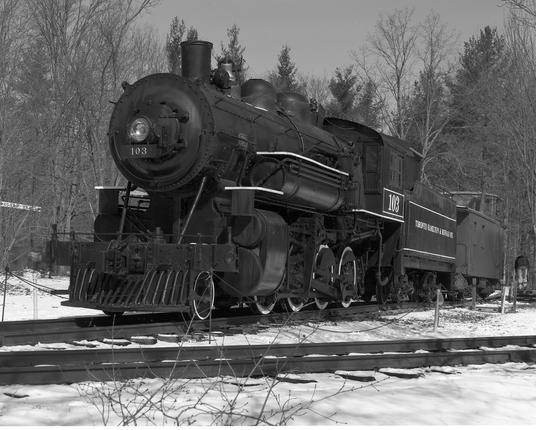
TH&B Locomotive 103 constructed in 1910 is a 2-8-0 "Consolidation" that served until the full retirement of steam from T,H&B in 1954, today on display at Westfield Heritage Village.
Graflex Pacemaker Crown Graphic - Schneider-Kreuznach Symmar-S 1:5.6/210 - Kodak TMax 100 @ ASA-64 - Blazinal (1+25) 5:30 @ 20CGrand Trunk wasn't the only one improving Canadian Rail facilities, Michigan Central opened their brand new locomotive repair shop in St. Thomas.
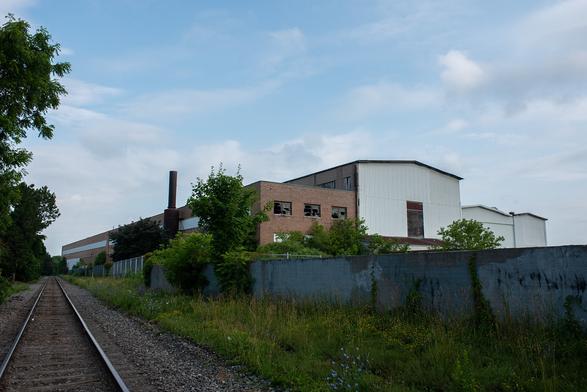
Nikon D750 - AF-S Nikkor 28-70mm 1:2.8DThe former Leaside shops opened by Canadian Northern Railway in 1916 two years later ended up in Canadian National's hands.
Nikon D750 - AF-S Nikkor 28-70mm 1:2.8D

And in time, Canada went to war, almost every industry moved quickly to get onto a war footing, and soon capital and workers dried up as the war in Europe escalated well beyond the ending in Christmas of 1914. Troop trains moved the Canadian Expeditionary Force members from across the nation to embarkation points at Canada's coasts. The new Union Station project ground to a halt, having started that year, leaving the existing station groaning under a daily trainload of 150 trains and 40,000 passengers. Trains also moved food, goods, war materials and eventually those labelled enemy aliens to internment camps. Despite this, as the war dragged on, Canadian Northern completed their line in 1916, and Canadian Pacific opened their new North Toronto flagship station to take some of the pressure off the Grand Trunk Union Station. Canadian Northern wanted to continue extending east opened a new maintenance facility in Leaside. But the money was gone, and even when the government came calling to collect, Canadian Northern had nothing. Ottawa had the answer, not wanting to lose a valuable asset and, more importantly, losing it during wartime seized Canadian Northern and put it under national control using their management firm, Canadian Government Railways. The firm, nearly a loosely connected group of defunct railways, continued to operate independently but with government-appointed boards. With Canadian Northern, they could dump everything on a tested operator. Grand Trunk Pacific quickly joined Canadian Northern in the Government hands. When the war ended in 1918, even Grand Trunk was on the ropes, and the government soon took action to prevent a significant disruption with the largest operator in Ontario. The trouble came when the British investors raised being paid for their shares, eventually taking the matters to the courts. It was here that the truth about Grand Trunk came out, they were cooking the books, and the investors walked away with nothing. In 1923 Canadian Government Railways received a full charter as a Crown Corporation, calling themselves Canadian National Railways. And the new companies first monumental task was the centralization and streamlining of a vast and complex network of trains, rails, and properties. And they moved quickly, duplications were removed, surplus equipment sold off, and properties demolished. The project that did get moving again and had a grand opening in 1927 was the new Beaux-Arts Union Station in Toronto, attended by King Edward VIII. Although work continued into 1931. In 1929 Canadian National introduced a pair of diesel-electric locomotives, running an eight-car train from Montreal to Vancouver with minimal interruption. Quickly smaller branch lines became proving grounds for a new idea, the self-propelled car, rail diesel car (RDC) or more familiarly doodle-bugs.

In addition to taking the same reporting mark, Canadian National Railway also took on the Canadian Northern Railway's slogan.
Nikon D750 - AF-S Nikkor 28-70mm 1:2.8DCN Locomotive 6400 a heavily modified 4-8-4 "Northern" Locomotive produced in 1936 and then streamlined by the National Research Council, it would serve as motive power for the train that carried the King and Queen during their 1939 tour. Today it is on display at Ottawa's Museum of Science and Technology.
Nikon D300 - AF-S Nikkor 17-55mm 1:2.8G DXThe grand Concourse Hall at Toronto's Union Station, one of the big projects to modernize rail travel in Toronto.
Nikon F5 - AF Nikkor 35mm 1:2D - Ultrafine Extreme 100 @ ASA-200 - Ilford Microphen (Stock) 9:00 @ 20C

The 1929 stock market crash sent ripples around the entire world; soon, everyone, including the railroads, suffered from the economic downturn. It also did not help that crops also began to fail through the prairies and long trains carried those looking for work, often riding without a ticket. Michigan Central and, by extension, Canadian Southern ended up under New York Central's control. The two big ones, Canadian National and Canadian Pacific, had become financially stable and debt-free for Canadian operators. But even then, the depression caught up; both began to cut low-traffic lines and even entered a traffic sharing agreement at the darkest point of the downturn. But despite this, both began to use the vast quantities of unemployed citizens to construct grand new stations as make-work projects or improve tracks and other infrastructure on their lines. Canadian National built a brand new station in Hamilton and restored the 1879 Bridge Street Station in Niagara Falls. Both would be visited in 1939 by King George VI and Queen Elizabeth (The Queen Mother) during their Royal tour; both Canadian National and Canadian Pacific would provide the trains to carry the monarchs across the nation. The tour also saw the end of a short piece, and the world again moved to war that same year. Both Canadian National and Canadian Pacific moved to a war footing; trains moved soldiers and materials to ports for the war that spanned the globe. Canadian Pacific's Angus Shops constructed Valintine Tanks for the effort. During the war, vast new Northern and Pacific type locomotives were used with the significant effect of pulling longer, heavier trains. But also saw an increase in the use of diesel-electric locomotives for switching duties in yards. Despite needing the same materials for the war effort, these locomotives required less maintenance, crew, and material to operate.
The post-war era saw a changed world; countries like Canada rode high as a new standard of living ensured that many found new homes in the growing suburban spaces outside the large smokey cities.

CP Locomotive 7020, served from 1941-1986 as a yard switcher in Toronto, an ALCO S-2 unit, seen here in its original 1940's livery on display at the Toronto Railway Museum.
Nikon D750 - AF-S Nikkor 28-70mm 1:2.8DThe surviving front cab of CN 9159 an iconic F-7 road locomotive.
Rolleiflex 2.8F - Carl Zeiss Planar 80mm 1:2.8 - Kodak Tri-X 400 (400TX) @ ASA-320 - Ilford Perceptol (1+1) 12:00A pair of ALCO RS-3, these were the third generation road-switchers completed today these two serve as part of the York-Durham Heritage Railway.
Nikon D750 - AF-S Nikkor 28-70mm 1:2.8D

While the jobs remained in the large urban centre's railways that once used for long-distance travel began to adjust their operations to commuter traffic. These runs were covered by self-propelled Rail Desiel Cars that were once passed off as curiosities formed a new type of passenger traffic. And full out diesel-electric locomotives were starting to replace steam. And as iconic as the steam locomotives were, the new F-Unit road locomotives coming out of General Motors Desiel showed off a new streamlined style. And other traditional locomotive makers were starting to produce locomotives that could work both as yard switchers and on mainline service, with the release of the ALCO RS-1. By the middle of the century, it became clear that steam motive power would be on its way out. Even passenger traffic spiked during the war was starting to decline in the face of improvements in air travel, personal automobiles and more importantly, better-limited access freeways.

#afadedglory #blackrock #blazinal #brantford #canada #canadianhistory #canadiannorthern #canadianpacific #canadiansouthern #crowngraphic #englehart #grandtrunk #hamilton #hamiltonbuffalo #ilfordmicrophen #ilfordperceptol #infrastructure #kodaktmax100 #kodaktrix400 #museumofscienceandtechnology #nikond300 #nikond750 #nikonf5 #ontario #railroad #railway #rockton #rolleiflex28f #stthomas #stratford #toronto #torontorailwaymuseum #ultrafineextreme100 #uxbridge #westfieldheritagevillage

A Brief History of the Railway in Canada - Part IV - A Golden Age (1900 - 1950)

In Canada, the Golden Age of Rail is often described as being from the 1880s to the 1950s, but the actual golden age lasted for the first half of the 20th Century.

Alex Luyckx | Blog