Clear night, Moon bright

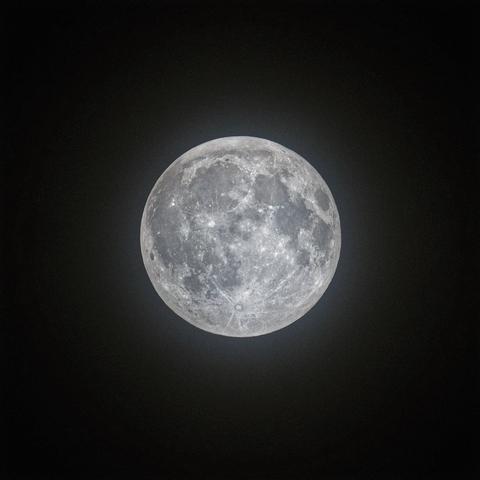
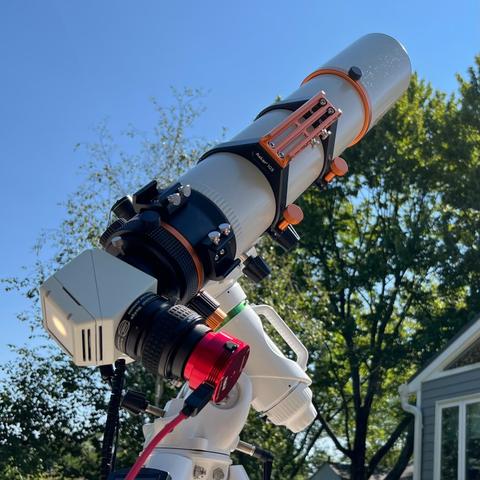
November 3, 2025 — The air was still and the moon so bright and clear tonight, we had to open up the observatory long enough to take a peek and a pic! Moon was 92% illuminated in its waxing gibbous phase, lighting the landscape around us, no flashlight required. Technical: Askar 103 APO telescope, TeleVue Powermate 2X Barlow, Canon EOS 5D Mk. 4 DSLR, single exposure.

#Askar #astronomy #astrophotography #gibbousMoon #moon #observatory

Shot on a Fujifilm X-E4 connected via adapter to an Askar FRA400. It was quite hazy. Yet I love the mood it resulted in.

#moon #fullmoon #moonphotography #astrophotography #hazy #grainy #grainyphoto #400mm #askar #sharpstaroptics #sharpstar #fra400 #askarfra400 #fuji #fujifilm #fujifilmxe4 #fujixe4 #xe4
Sanggup Tinggalkan Keluarga, Ini Kisah Disebalik Pengorbanan Wira Negara Yang Ramai Tak Tahu | Oh! Negara - Oh! Media

Bila sebut tentang wira negara, kita tahu yang mereka akan sentiasa bersedia di barisan hadapan, tak kira tempat dan masa betul tak? Bukan itu saja, mereka juga terpaksa meninggalkan keluarga tercinta demi berkhidmat untuk masyarakat dan negara. Tapi, pernah tak korang terfikir, bagaimana dan apakah situasi yang wira negara seringkali lalui dari hari ke hari? - Baca artikel penuh di Oh! Media untuk info lanjut.

Sanggup Tinggalkan Keluarga, Ini Kisah Disebalik Pengorbanan Wira Negara Yang Ramai Tak Tahu | Oh! Media
The Ghost of Cassiopeia (IC 63)
========================

I captured a ghost! 👻

Say hello to IC 63, also known as the “Ghost of Cassiopeia.” This beautiful nebula lies about 550 light-years away in the constellation Cassiopeia and gets its nickname from the faint, eerie glow sculpted by intense radiation from the nearby star Gamma Cassiopeiae. The nebula glows red thanks to hydrogen-alpha emission and shows blue where dust reflects starlight. Capturing this faint cloud is always a fun challenge, especially with the bright nearby star lighting things up!

Scope: Askar 103APO
Lens: Askar 0.6x Reducer
Scope: Askar 103APO
Lens: Askar 0.6x Reducer
Camera: ZWO ASI 294MC Pro
Filter: Antlia Tri-Band RGB Ultra
Mount: SkyWatcher AZ-EQ5-GT
Guiding: Svbony SV165 with ZWO ASI 224MC
Controller: ZWO ASIAir Pro

Integration time: 12hrs 30min

Full version and print available at:
https://adfr.io/astro/20250818_ic63

#astrophotography #astrophoto #astrophotographer #deepsky #deepskyphotography #deepskyobject #deepskyastrophotography #ghostofcassiopeia #ic63 #nebula #deepspace #space #nightsky #astronomy #cosmos #stargazing #wolframstar #stellarevolution #spaceisart
Dakwaan Abang Malbatt Kena Sondol Dengan Pekerja Stesen Minyak, Isteri Hilang Sabar Dedah Hal Sebenar - https://ohmedia.my/ohtidak/dakwaan-abang-malbatt-kena-sondol-dengan-pekerja-stesen-minyak-isteri-hilang-sabar-dedah-hal-sebenar/
#Askar #Curang #Featured #ohtidak
Dakwaan Abang Malbatt Kena Sondol Dengan Pekerja Stesen Minyak, Isteri Hilang Sabar Dedah Hal Sebenar | Oh! Media

Seorang isteri telah meluahkan kekecewaan serta kemarahannya terhadap seorang individu yang dikatakan menjadi orang ketiga dalam rumahtangganya. Kisah ini bukan sahaja membabitkan hubungan suami isteri, malah turut memaparkan drama penuh emosi dan konflik yang berpanjangan. Menurut isteri dikenali sebagai Nurul Atiqah, penyondol yang bekerja di sebuah stesen minyak di Sungai Besar didakwa sengaja mendekati suaminya […]

Dakwaan Abang Malbatt Kena Sondol Dengan Pekerja Stesen Minyak, Isteri Hilang Sabar Dedah Hal Sebenar | Oh! Media
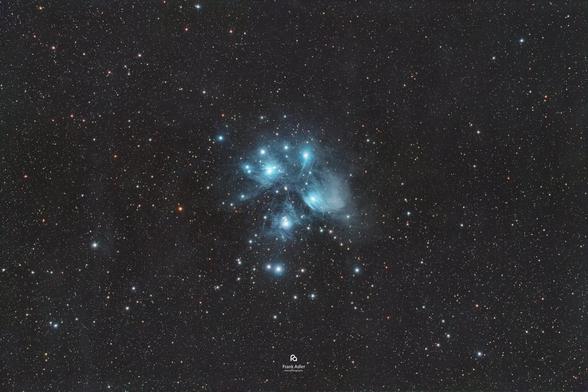
The Seven Sisters ============== Located about 444 light years from earth, in the constellation of Taurus, the Pleiades are among the closest star clusters to our sun and probably the most obvious one in the night sky, clearly visible to the naked eye and a great sight through binoculars. The cluster is visually dominated by seven hot blue stars, formed within the last 100 million years, moving together through a dust cloud in the interstellar medium, thus causing the famous blue reflection nebulae around them. It’s estimated that the cluster will probably survive for about another 250 million years, after which it will disperse due to gravitational interactions with its galactic neighborhood. Scope: #Askar 103APO Lens: Askar 0.6x Reducer Camera: @canondeutschland EOS 6Da Filter: #Antlia Tri-Band RGB Ultra Mount: @sky_watcher_official AZ-EQ5-GT Guiding: @svbonyastronomy SV165 with @zwoasi 224MC Controller: @zwoasi ASIAir Pro Integration time: 6hrs 20min Full version and print available at: https://adfr.io/astro/20241130_m45 #astrophotography #astrophoto #astrophotographer #deepsky #deepskyphotography #deepskyobject #deepskyastrophotography #pleiades #plejaden #sevensisters
The Seven Sisters - Pleiades

Hey there, I'm Frank. I create web experiences and capture the beauty of the universe.

Still working without a dome, our setups are outdoors and temporary so we try and keep them fairly simple. Solar observing and imaging generally lend themselves well to brief observations due to the extreme amount of light available and resultant short photographic exposures. With a couple of clear days and nights available, we took advantage and made some experiments and observations with several successive setups on a single Skywatcher EQ6-R Pro mount.

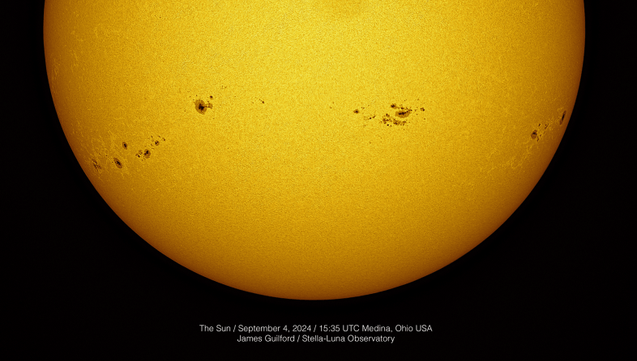
Southern hemisphere of Sun — First Light image from ZWO ASI678MM planetary camera, via Baader Herschel-Prism, and Askar 103 APO telescope. False color applied.

We began with the Askar 103 APO telescope and its 700mm focal length, attaching our Baader Herschel-Prism, and the new ASI678MM monochrome camera. The setup worked well but for one issue: focus was only just achieved with the focuser racked all the way in with no latitude for adjustment. Image quality was very good but probably would have been better if we’d have had a bit more inward travel. Note: It was only later that we realized we might gain the needed travel if we had switched the camera’s nosepiece from the 1.25-inch to the 2-inch, allowing removal of the thick 1.25-inch adapter ring from the Herschel. A well, duh, moment!

By the way, we continue to be impressed by the build quality and optical excellence of the Askar refractor. It’s a solid instrument with great features, delivering superb results.

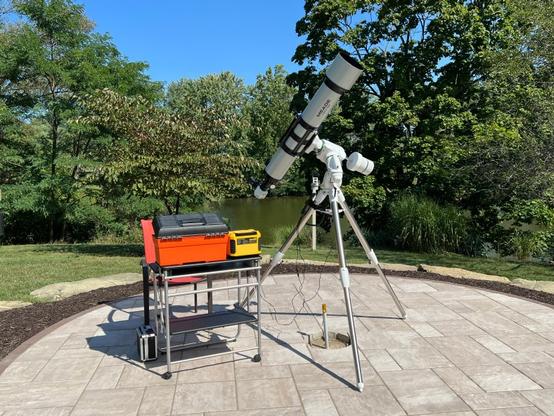
Askar 103 APO telescope, Baader Herschel-Prism, ASI678MM camera, on the Skywatcher mount makes an excellent combination. A Herschel wedge-style optical device does not require a filter be attached in front of the telescope’s objective lens — deflecting, absorbing, and ejecting the bulk of sunlight energy. Internal filters in the Baader apparatus reduce brightness and increase contrast.The Meade 6-inch refractor atop the Skywatcher mount and tripod. Visually, very effective, but the setup did not work with the Herschel-Prism and camera. The circular paved area is to form the floor of the observatory structure, the gray conduit to deliver power to a permanent mounting pier. Yes, the sky really was that blue that day!

The second experiment involved installing our massive Meade 6-inch telescope on the mount. The Skywatcher has a retractable rod for holding counterweights and is, therefore, a bit shorter than it might otherwise be, resulting in less leverage. It took nearly all of our available counterweights to balance the big scope. We installed the Herschel-Prism and a nice eyepiece and got beautiful views of the spotted face of our star. Attaching the ASI678MM, however, we could not reach focus — that inward focuser travel limit again — but we don’t believe the switch to the 2-inch nosepiece will help. That’s a shame! The Meade’s 1,250mm focal length would have provided amazing closeups!

The 11-inch Celestron SCT set up for a nighttime trial. This OTA was part of an integrated mount system that had failed so we “deforked” the telescope and attached a mounting rail for use on an equatorial mount.

With the mount set up we decided to try out the 11-inch Celestron SCT at night. Herschel wedge accessories are not to be used on reflecting telescopes as the concentrated unfiltered incoming sunlight can damage the scope’s secondary mirror. To our disappointment the telescope, which has set in storage for months since we attempted collumnation, displayed rather severe image distortions — comma-shaped stars. After a good bit of frustration we dismounted the telescope and planned to come out the next night with the Vixen Cassegrain telescope.

All good things… A series of clear days and nights came to an end with clouds rolling in to cover Saturn as it emerged from behind neighboring trees.

The following evening looked very promising; the sky was actually more transparent than it had been for the Celestron effort. Saturn would rise from behind trees neighboring our site some time after 11 p.m. so, at the appointed hour, we stepped outdoors and looked. Clouds, heralding a day or two of rain showers, were rolling in — broken at first but rapidly obscuring the entire sky. We tore down the setup, stowed the gear, and called it a night.

Tight crop on sunspots from the planetary camera’s First Light image of September 4. Sunspot umbra, penumbra, details are visible as are faculae and the granulated texture of the solar photosphere. Askar telescope, Baader Herschel-Prism, ZWO ASI678MM camera.

Over the period of a couple of days and nights, much was learned and the new planetary camera proved itself to be an excellent performer. We’ll continue to use the camera and telescope for solar and, probably, lunar views. Next we’ll likely try installing the focal reducer to achieve full-disk images.

https://stellalunaobservatory.space/2024/09/06/planetary-camera-first-light/

#Askar #2024 #astronomy #camera #celestron #observatory #planetary #Skywatcher #solar #sun #sunspots

Planetary camera first light

Still working without a dome, our setups are outdoors and temporary so we try and keep them fairly simple. Solar observing and imaging generally lend themselves well to brief observations due to th…

Stella-Luna Observatory
The flaming star nebula
==========================

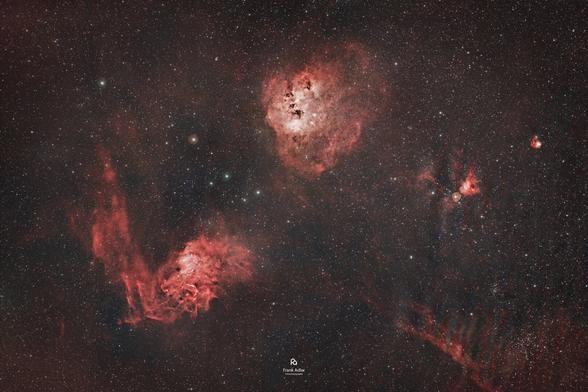
I captured this image about a week ago and, while processing, had to find out that there‘s a huge white flare overlaying the whole image. Capturing deep sky at full moon is a bad idea already, but this time, I was too close to it and got a massive moon light leaking into my scope. The data went straight to trash. But I just had to try recovering it. So after a LOT of Photoshop trickery, I ended up with an acceptable image :)

Scope: Askar 103APO
Lens: Askar 0.6x Reducer
Camera: Canon EOS 6Da
Filter: Altair Tri-Band
Mount: Skywatcher AZ-EQ5-GT
Guiding: Svbony SV165 with ZWO ASI224MC
Controller: ZWO ASIAir Pro

Integration time: 6hrs 15min

Full version and print available at https://adfr.io

#astrophotography #astrophoto #narrowband #narrowbandimaging #deepsky #deepskyobjects #deepskyphotography #IC405 #IC410 #IC417 #M38 #NGC1893 #NGC1907 #NGC1931 #flamingstarnebula #widefield #nightsky #nightskyphotography #nightskyart
Frank Adler :: Astrophotography & Web Engineering

Hey there, I'm Frank. I create web experiences and capture the beauty of the universe.

The Jellyfish Nebula
===============

After months of grey skies, there finally was a chance to test-drive my new #Askar 103APO yesterday. I'll definitely need to capture more data for this target though.

This is IC 443 - the jellyfish nebula, an integration of 2hrs 45min.

Scope: Askar 103APO
Lens: Askar 0.6x Reducer
Camera: Canon EOS 60Da
Filter: Altair Tri-Band
Mount: Skywatcher AZ-EQ5-GT
Guiding: Svbony SV165 with ZWO ASI224MC
Controller: ZWO ASIAir Pro

Full version at https://adfr.io

#astrophotography
#astrophoto
#narrowband
#narrowbandimaging
Frank Adler :: Astrophotography & Web Engineering

Hey there, I'm Frank. I create web experiences and capture the beauty of the universe.

Nekazal etxe batean Espainian zehar hauxe topatu berri. Ez da marka euskalduna izango, ezta? #galderaserioa #askar