How ‘y’all’ took over modern English : NPR
The word “y’all” has spread beyond the South, thanks in part to its blend of polite respect and folksy inclusivity. Here, a golf tournament volunteer holds a “Hush Y’all” sign at the Mobile Bay LPGA Classic in Mobile, Ala., in 2012. Kevin C. Cox / Getty Images
“Y’all means all” has emerged as a slogan of support for immigrants and marginalized groups. In this 2018 photo, Ricardo Gámez of El Paso holds a sign bearing the words at the Tornillo Port of Entry in Tornillo, Texas, as medical professionals called for quick reunification of some 2,700 migrant children with their families. Paul Ratje / AFP via Getty Images
July 16, 20255:00 AM ET, Heard on All Things Considered
By Bill Chappell 2-Minute Listen Transcript
Sorry, yinz. Fuhgeddaboudit, you guys: In the past 20 years or so, “y’all” has gone from being a Southernism to become America’s favorite way to use the second person plural, according to linguists.
“Y’all has won,” says Paul E. Reed, a linguist at the University of Alabama who studies Southern American English and Appalachian English.
Admirers appreciate y’all’s tidiness and utility. In particular, Reed says, young people across the U.S. seem to love y’all.
“It’s expanded much more outside of the South” among people who are under 40 years old, he says.
Long-term migration patterns have also helped y’all spread, from Black Americans who brought it with them out of the South during the Great Migration, to Northerners and others who have more recently adopted the term after moving to the South.
“It feels like home when I hear it,” says Kelly Elizabeth Wright, an assistant professor of language sciences at the University of Wisconsin-Madison who grew up in Tennessee. “It’s from where I was raised. But it makes me feel included and welcome. And I think that’s part of why people are embracing it, because it has this capacity to make others feel included and welcome.”
Where did y’all come from?
“It’s essentially as old as American English in a lot of ways,” Wright says.
The word has thrived because it’s utilitarian, filling a gap in standard English. We use y’all — and relatives like yinz (for those in Pittsburgh) and youse — because the language has long lacked a satisfying plural pronoun for “you.”
“Basically, all of the non-mainstream varieties are better than the mainstream variety, because ‘you’ being for plural is confusing,” Reed says.
There are competing (and in cases, complementary) ideas about y’all‘s origin. Many U.S. linguists believe that the American version of y’all likely developed from two sources that reinforced one another, according to Wright and Reed. They use technical terms like simultaneity and calque to describe it; the idea is that one path began in Britain, and the other in West Africa.
2-Minute Listen Transcript
Editor’s Note: Read the rest of the story, at the below link.
Continue/Read Original Article Here: How ‘y’all’ took over modern English : NPR
#2025 #America #Books #History #Language #NationalPublicRadio #NPR #Reading #Sayings #Southern #UnitedStates #WordHistory #YAll
 beword.fun
 Front Page [Unofficial]
 Vassil Nikolov | Васил Николов
 The Perpetually Curious!
 DrWeb
DrWeb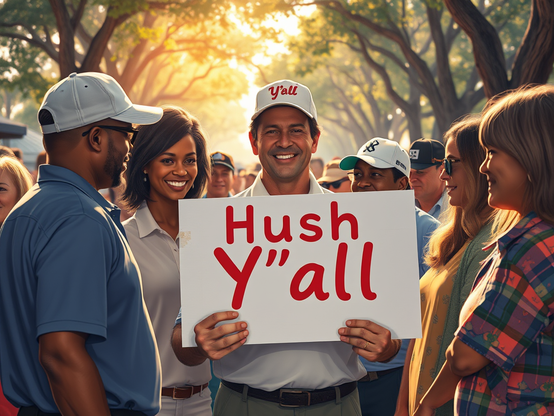
 Chris
Chris {:ok, "Joel Jucá"}
 EH Lupton