 Izzie G 🎹🎸🎙️🎛️🎚️♾️👨🦯🌕
This week's #FolktaleFriday is The Wolf of the Winter Moon. I hope you enjoy. #wolfofthewintermoon #winterfolklore #darkfolklore #mythology #storytelling https://www.youtube.com/shorts/qLYiH8MF0-0

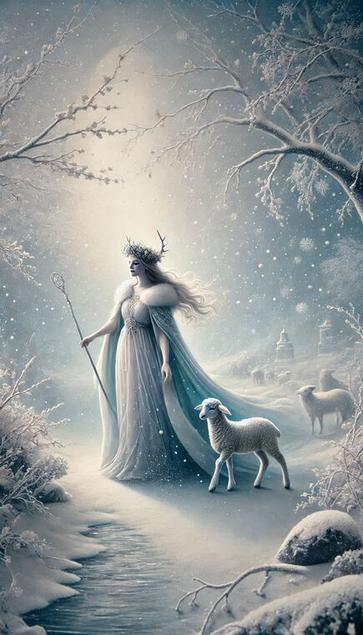
Frau Holle
Good afternoon on this grey, cold day in the Peak District. It truly is grim today – barely daylight, damp, misty, the kind of cold that makes you wonder how people survived here for thousands of years without kettles and teabags – just what you’d expect this close to midwinter.
Usually, I’d dig out an article for the solstice – Something warm and cosy – a brief history and some suggestions for celebrating Yule for the more ‘Pagan’ inclined readers. But the internet is already full of them and this time of year has many more interesting festivals and folklore to offer – although I will still probably cover aspects of Yule and Saturnalia and the better known midwinter festivities, today we are going all sacred femme.
So.. take a few minutes for yourself, pull up a Yule log, grab a cup of tea and join me for a little festive chitchat about Frau Holle.
Frau Holle is truly one of the most fascinating figures in European folklore. She is steeped in mystery, myth, and cultural significance. She exists as a powerful archetype, blending elements of the divine feminine, the supernatural, and the maternal. Her roots are deeply embedded in Germanic mythology, and her presence has persisted through centuries, manifesting in fairy tales, regional traditions, and even modern neo-pagan practices. Yet most people have never heard of her.
At her core, Frau Holle is a figure of duality. She embodies both nurturing and stern qualities, acting as a protector and punisher, a bringer of abundance and an enforcer of justice. Her dual nature reflects the ancient belief in balance and reciprocity within the natural and moral order of the world. To truly understand her, we must delve into all her many facets – her roles as goddess, folk tale character, and seasonal spirit.
If you’ve heard of her, it would probably be from the Grimm Brothers’ fairy tale ‘Mother Holle’. In this story, she appears as a benevolent old woman living in a magical realm beyond a well. She rewards a diligent, kind-hearted girl with gold and punishes her lazy, selfish stepsister by covering her in pitch. This tale reinforces themes of morality and labour, presenting Frau Holle as a guardian of virtue and justice. Yet, even this simple narrative hints at something deeper – a connection to the cycles of life and the sacredness of work.
Frau Holle’s association with spinning is particularly significant. Spinning was a vital skill for women in pre-industrial societies, tied not only to survival but also to cultural identity and spiritual practice. In folklore, spinning often serves as a metaphor for fate, with threads representing the lifelines of individuals. Frau Holle’s role as a spinner places her in a lineage of goddesses such as the Norse Norns, who weave the destiny of all beings. We’ll cover the Norns at a later date.
It’s no coincidence that her realm is accessed through a well – a well represents a liminal space that connects the earthly world with the divine.
In older mythological contexts, Frau Holle likely originates as a Germanic goddess connected to the earth, fertility, and the cycles of nature. Her winter associations, particularly snowfall, link her to the seasonal rhythms of death and rebirth. In regions where she was venerated, snowfall was often described as Frau Holle shaking out her feather bed, a poetic image that ties her to both domestic life and the grandeur of the natural world. This act of shaking out feathers also symbolises the release of life-giving energy, ensuring the land remains fertile for the coming spring.
As Christianity spread through Europe, many pagan deities were either demonised or reimagined as folkloric figures. Frau Holle is an excellent example of this transformation. Stripped of her divine status, she became a fairy tale character or a seasonal spirit, yet her core attributes remained intact. The blending of pagan and Christian traditions allowed her to survive in the collective memory, even if her worship faded.
In folk traditions, Frau Holle is often connected to the Twelve Nights – the period between Christmas and Epiphany. This time was seen as liminal, when the veil between worlds thinned, and the dead roamed the earth. Frau Holle, as a psychopomp, was believed to lead the Wild Hunt during this time, gathering the souls of the departed. Her connection to the dead ties her to older chthonic deities and reinforces her role as a guardian of the natural cycle of life and death.
In some regions, Frau Holle was also associated with water, wells, and springs, further highlighting her role further as a life-giving force. Wells were often seen as sacred spaces, gateways to the otherworld, and sites of ritual offerings. The blending of her attributes, spinning, snow, water, and the dead, re-enforces the aspects that speak to her complexity and her enduring relevance.
Frau Holle’s duality is reflected in her appearance across traditions. In some stories, she is depicted as a kind and loving figure, offering rewards to those who demonstrate virtue. In others, she is stern and even frightening, punishing those who fail to meet her standards. Her dual nature reflects the harsh realities of life in pre-modern societies, where survival depended on both hard work and the capriciousness of the natural world.
The persistence of Frau Holle in modern times speaks to the power of folklore to adapt and endure. While she may no longer be worshipped as a goddess, she remains a potent symbol of feminine power, moral justice, and the cyclical nature of existence.
Contemporary neo-pagan and Heathen practices sometimes embrace Frau Holle as a representative of ancestral wisdom and seasonal rhythms, honouring her through rituals, offerings, and storytelling.
Her story continues to resonate because it taps into universal human experiences – the need for balance, the value of work, and the desire to connect with something greater than ourselves.
Honouring Frau Holle can be a deeply meaningful way to connect with ancestral traditions, the cycles of nature, and the divine feminine. You could set up a small space in your home dedicated to Frau Holle. Include symbols of her domain, such as feathers (for her connection to snow), spinning tools like spindles or wool, and images of wells or water. Candles, particularly white ones, can represent her role as a bringer of light in the dark season. Add winter greens, such as holly or evergreen branches, to connect her to the natural world.
If you live in a region where it snows (I’m looking at you, Canada), take a moment to appreciate the snowfall as a blessing from Frau Holle. Spend time outside observing its beauty, or even collect a bit of snow to use as sacred water on your altar if you have one. If it doesn’t snow where you are, consider shaking out a feather pillow or blanket to symbolise her act of releasing snow upon the earth.
Frau Holle rewards diligence and kindness, as seen in her fairy tale. During the season, honour her by helping others, volunteering, or being generous with your time and resources. Balance these acts of kindness with dedicated work on personal projects or household tasks, keeping in mind her appreciation for effort and care.
As a protector of domestic life, Frau Holle can be celebrated through acts of hearthcraft and home-keeping. Bake traditional winter treats, prepare hearty meals, or engage in seasonal crafts. Cleaning and organising your home during this time can also be a way to invoke her energy and create a welcoming space for the new year.
If you have access to a natural spring, well, or other water source, you can leave small offerings to honour Frau Holle. Coins, flowers, or bread are traditional offerings in many water-related traditions. If visiting a water source isn’t feasible, you could pour fresh water into a bowl on your altar as a symbolic act.
Engage in spinning, knitting, weaving, or other fiber arts to connect with Frau Holle’s role as a spinner. If you don’t know how to spin, simply learning about the craft or appreciating its history can be a way to honour her. Consider making small handmade items as gifts or offerings.
Frau Holle is closely associated with the Twelve Nights (also known as the Rauhnächte) between Christmas and Epiphany. Use this liminal time to connect with her energy by reflecting on the past year, setting intentions for the year ahead, and engaging in divination or dreamwork. Keeping a dream journal during this time is particularly appropriate, as Frau Holle is said to have ties to the otherworld and the subconscious.
The hearth is a sacred space in Frau Holle’s domain. If you have a fireplace, lighting a fire in her honour is a meaningful act. Alternatively, light a candle in your home, dedicating its warmth and light to her. As the flame burns, meditate on her qualities of protection, justice, and renewal.
Share her stories with family or friends, share this post if you like, keeping her myth alive in modern times. Reflect on the lessons embedded in her tales, such as the importance of fairness, hard work, and the cycles of nature. Storytelling can be a powerful way to pass down her legacy and foster a sense of connection to your heritage – and it’s free and fun to do.
Prepare a simple offering of food, such as bread, porridge, or baked goods, and place it outside as a gesture of gratitude to Frau Holle – you’ll also be helping the wild bird out. This practice ties into older traditions of leaving offerings for household spirits or deities during the winter months.
Create snowflake ornaments, feather charms, or other seasonal decorations to honour her presence. These can be hung in your home as a reminder of her connection to the winter season and her protective influence.
It’s time for me to get back doing festive chores now. And it’s kind of nice knowing that for some, the mundane little tasks we undertake many times a day – washing a cup, writing a card, baking a pie – can be a nod to ancient traditions that honour long forgotten deities.
❄️
#ancestralWisdom #divination #divineFeminine #domesticMagic #dreamwork #fiberArts #FolkloreStudies #FrauHolle #GermanicMythology #hearthcraft #neoPaganism #paganRituals #Rauhnächte #sacredWells #seasonalCycles #seasonalOfferings #SeasonalTraditions #snowSymbolism #spinningGoddess #storytelling #traditionalFestivities #TwelveNights #WildHunt #winterFolklore #winterRituals #winterSolstice #Yule
Kallikantzaroi
There’s something about December that makes even the most sensible among us glance a little suspiciously into the darker corners of the house. Perhaps it’s the thinning of the year, that stretch of nights where the world seems to hold its breath and wait for light to begin its long march back. Or perhaps it’s simply the weather – Derbyshire giving us endless rain again, with just a teasing hint of cold that might, if it feels generous, turn to snow.
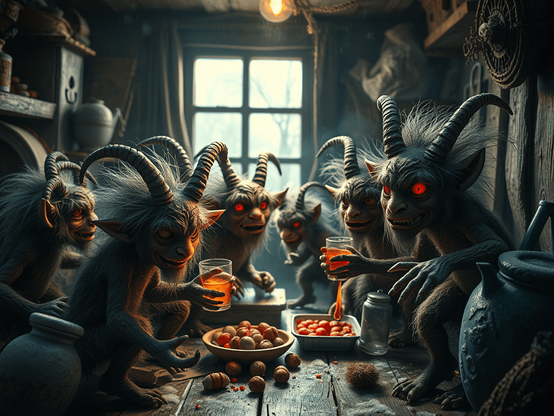
On these dreich afternoons, my thoughts drift across Europe to one of my favourite winter creatures, the kallikantzaroi, those chaotic little goblins who tumble into Greek and Balkan folklore with the enthusiasm of feral children set loose in a pantry.
The stories say the kallikantzaroi live underground for most of the year, hacking away at the World Tree, that cosmic trunk that holds all creation together. It’s a marvellous image, really… a gang of soot-blackened, wild-haired, half-witted imps sawing furiously at the roots of existence, nearly managing to topple the universe every December. Just when they’re about to succeed, the Twelve Days of Christmas arrive, and the holy power of the season forces them up to the surface.
While they’re distracted causing mischief above ground, the World Tree quietly heals itself, and the whole process starts again. There’s something deeply human about this cycle – monumental effort, a whiff of disaster, then everything being mended while you’re out causing trouble elsewhere.
Descriptions of the kallikantzaroi depend on which region you ask and how imaginative the storyteller is feeling. Some describe them as tiny, wiry men with burning red eyes and goat’s legs. Others as hulking, hairy, apelike figures with tongues lolling past cracked lips. A few tales give them hooves, others claws, some even snouts. They’re the folkloric equivalent of a child’s drawing. Messy, inconsistent, but bursting with chaotic personality. What’s always consistent, though, is their nature: hungry, disruptive, obnoxiously playful, and absolutely determined to wreak havoc in the short window they have.
In older village tales, the kallikantzaroi were believed to run rampant through streets and houses from Christmas Eve until Epiphany, howling, laughing, overturning anything not nailed down. They spoil food, sour milk, smash plates, steal pies, frighten livestock, and pinch people’s toes at night. They’re nearly always starving, desperate for warmth and a stray sausage. (Frankly, the way people describe them, they sound a bit like the rowdy boys who used to congregate outside the village shop in my childhood, hooting at passers-by and smelling faintly of bonfire smoke.)
The easiest way to understand the kallikantzaroi is to see them as midwinter personified – dark nights, unsettled weather, frayed nerves, too many people in small spaces, and the lingering echo of older fears from times when winter really could take you. They’re the embodiment of seasonal misrule, a reminder that the darkest nights have always belonged to strange company.
Naturally, winter folklore comes with instructions for keeping the chaos out. One widespread tradition was to keep the Christmas log – the *karyfýllion* – burning continuously throughout the Twelve Days. A warm hearth meant safety and the fire’s blessing kept goblins from creeping down the chimney. Families would save the charred stump from year to year as a protective charm, a bit like folk here keeping a piece of last year’s Yule log as a talisman.
Another favourite protection was the colander. This one always delights me: place a colander or sieve by your door, and the kallikantzaroi, compelled by some cosmic goblin law, must stop and count the holes. But they never can get past the number three, which is sacred, forbidden, or simply beyond their mental abilities depending on the teller. They get stuck in a mystical loop of…
“one… two… three… oh no, can’t say that… start again!”
…until dawn chases them back underground. I think there’s a special joy in knowing you can outwit supernatural chaos with basic kitchen equipment.
In other regions, people burned old shoes because the acrid smell was said to drive goblins away. Some families sprinkled flour around the hearth at night and if they found tiny clawed footprints in the morning, it was proof the kallikantzaroi had visited but been unable to slip past the fire.
Children born during the Twelve Days were considered at risk of becoming goblin-like themselves unless baptised immediately or given protective amulets – usually red thread, iron pins, or sprigs of basil tied around their clothing.
The kallikantzaroi don’t exist in isolation, of course. Once you start following their trail through European folklore, you find they have cousins everywhere.
In Bulgaria and Serbia, you meet the *karakoncolos* – a very similar goblin who lurks in shadows, mimicking voices to lure people outside.
In Turkey, he becomes the *karakoncol*, a night-haunting creature whose name possibly shares roots with the Greek one.
In the Slavic north, you get the *kikimora*, not a goblin but a house spirit whose mischief ranges from minor irritation to full-blown menace.
In the Alps, the Perchten run wild through winter streets, beautifully monstrous figures who blur the line between guardian spirits and goblin tricksters.
Closer to home, Britain has its own winter troublemakers, though they come in more genteel packaging.
The Welsh *bwgan* – a shapeshifting, household-haunting pest, shares a mischievous streak with the kallikantzaroi.
The English *hobthrusts*, lurking under bridges and in lonely places, have a similar knack for startling travellers.
Even our beloved Jack Frost has a streak of chaos beneath his frosty charm.
And then there’s the tradition of misrule itself.
The Lord of Misrule, the hobby horses, the mummers… that ancient winter urge to turn everything upside down before order returns.
Yet what sets the kallikantzaroi apart is their sheer, exuberant destructiveness paired with their strict time window. They represent the old medieval belief that the Twelve Days were a dangerous liminal zone. A time when spirits roamed freely, animals might speak, bread might refuse to rise, and the boundaries between worlds were uncomfortably thin. The goblins are the season’s last tantrum before light returns.
They’re also a reminder that winter has never been all candles and carols. It was once a season of deep uncertainty. Food stores ran low, weather could isolate entire communities, and long nights weighed heavily on the mind. Folklore filled the gaps, giving shape to anxiety and offering practical rituals that, even if they didn’t magically banish goblins, certainly gave people a comforting sense of agency.
Burn the log.
Hang the basil.
Mind the chimney.
Place the colander by the door, and you’ve at least done something to keep the wild things outside.
Some scholars argue that the kallikantzaroi may be remnants of older, pre-Christian nature spirits, perhaps genii of the underworld or localised earth demons reinterpreted through Christian festivals. Others suggest they reflect broader Indo-European traditions of winter monsters – beings who emerge during the dark season, trouble humans briefly, then vanish at the return of the sun.
Their yearly assault on the World Tree also echoes Norse myth, those great cosmic trees seem always to be in peril, whether from goblins or serpents or frost giants.
I love the stubbornness of them. Twelve days a year to cause havoc, eleven and a half months to brood underground and plot next year’s attempt to destroy the world. It’s almost sweet in a bizarre way. They’re not evil, exactly. Just committed to mischief the way some people are committed to complaining about the weather.
Even now, in modern Greece, they persist in jokes, Christmas cards, and the occasional village story told to make children behave. They’ve softened over time, becoming less of a threat and more of a seasonal nuisance. A reminder not to leave your sausages unattended.
When I look out into the rain-soaked Derbyshire dark and wish yet again for snow, I think about them fondly. Creatures of the threshold, birthed from centuries of winter fears and festive excess. A little bit frightening, a little bit funny, and – like so much folklore – a way of making sense of a long night.
If the cold ever sharpens into frost, I might go full Greek grandmother and leave a colander by the back door, just for the charm of it.
After all, you never know which stories still hold a spark of truth in the witching days of winter.
#DecemberLore #FairyLore #Goblins #kallikantzaroi #winterFolklore #WorldFolklore
Giorria Sí – The Otherworldly Hare
There’s an old belief whispered across Ireland and carried over into pockets of the British Isles, that hares are never quite what they seem.
Elegant, twitch-nosed and fleet as shadows, yes. But also watchers, messengers, little furry gatekeepers slipping between our world and the Otherworld on moonlit nights.
Today, as the year leans into its darkest time and the veil grows ever so slightly thinner (or perhaps we just imagine it does), it feels like the right time to curl up with a cup of something warm and talk about the giorria sí – the fairy hare.
The phrase itself is wonderfully simple: giorria meaning hare, sí meaning of the Otherworld, of the fairy mound, of that strange realm just half a breath beyond the hedgerow. A giorria sí isn’t just a hare that happens to have something odd about it. It’s a creature steeped in old magic, often appearing at crossroads, holy wells, lonely hearthsides, and farms where something uncanny has begun to stir.
In countless tales, the hare is the first hint that the boundaries have blurred. The fire crackles a little strangely. The dog refuses to cross the threshold…
And then someone spots a hare sitting far too still, golden eyes fixed on them as though weighing their secrets.
One of my favourite threads in Irish and British folklore is the hare’s link with witches. Hares were said to carry spells in their fur, ferrying enchantments from cottage to field. A suspiciously bold hare, especially one that darted through a churchyard or sat glaring at a cow, was often believed to be a shapeshifted woman. Usually a healer, a midwife, or a widow who’d already raised local eyebrows simply by existing a little too independently.
There’s a very famous old story of a farmer who shot a troublesome hare only to find, moments later, a neighbour woman lying in her bed with a bleeding leg. People swear it happened in their village. It appears in a hundred counties. You can’t walk five miles in folklore without tripping over another shape-shifting hare.
But the giorria sí is something different, something deeper. These aren’t merely mortal women in borrowed fur. The fairy hare belongs to the Aos Sí, that ancient race who inhabit the mounds and hollows, the ruins and ringforts, and every chilly draft that creeps across a doorway when no one has opened a window.
A giorria sí might appear before a birth or a death, standing as a quiet sentinel. Some believe the creatures guide travellers through dangerous landscapes, particularly boggy places where the land has its own appetite. Others insist that if you chase a hare on May Day, you’ll be led straight into the heart of the Otherworld – an excellent way to ruin your afternoon and possibly never return.
They are also guardians of liminal time – dawn, dusk, the witching hours when the moon hangs low and round as a scrying bowl. Watch a hare at twilight and you’ll see what people mean… That eerie stillness, the switch from soft herbivore to something ancient and knowing. It’s unsettling in a delicious way, the sort of feeling that makes you clutch your coat tighter and feel… just for a moment… that you’re being studied in return.
Hares were traditionally left alone, partly out of respect, partly from superstition. Hunters might refuse to shoot one if its coat looked “too bright” under a grey sky, or if it crossed their path against the wind, or if it paused to stare at them a little too long. The old folk would say,
” Leave it. That one belongs to them. ”
Meaning the sí.
Meaning meddling would only bring trouble. Soured milk, missing livestock, unseasonable storms, a run of bad dreams that left you feeling as though someone had been rummaging around your thoughts.
And yet, for all their associations with witchcraft and fairy mischief, the giorria sí isn’t a threatening spirit. They’re more like quiet omens, neither wicked nor benevolent, but aligned to whatever greater tide is rolling through the landscape. They’re reminders that the world is not a tidy place, and that for every field ploughed and furrowed, there is a patch of thicket where the ancient things still skitter and breathe.
If you’re feeling inclined to honour or at least acknowledge the fairy hare this season, you might leave a pinch of oats in a sheltered spot, or carry a small silver charm when travelling after dark. Some people simply pause when they see a hare and offer a quick greeting into the cold air. Respect is the currency of old folklore, and a little goes a long way.
So, next time you’re wandering along a frost-whitened lane and catch sight of a hare sitting like a carved figure in the dusk, remember the stories. The giorria sí may be watching you as closely as you’re watching it. And perhaps – just perhaps – it’s deciding whether to let you pass untroubled… or to lead you somewhere you never meant to go.
And isn’t there something beautifully comforting in that?
That even in the quietest corners of winter, the old magic still twitches its whiskers.
#fairy #fairyLore #folklore #giorriaSi #hare #winterFolklore

#FolkloreSunday 🎄🕯️👻
On dark Christmas nights, the veil thins. In Victorian England, it was tradition to gather by the fire on Christmas Eve & tell ghost stories—Dickens’ A Christmas Carol is the most famous survivor of this once-widespread custom. Telling “winter tales” until midnight was believed to keep evil spirits at bay while the Saviour was born.
#ChristmasGhostStories #YuleTraditions #VictorianChristmas #WinterFolklore
🎨'Scrooge and the ghost of Marley,' by Arthur Rackham.

The Myth of Jack Frost
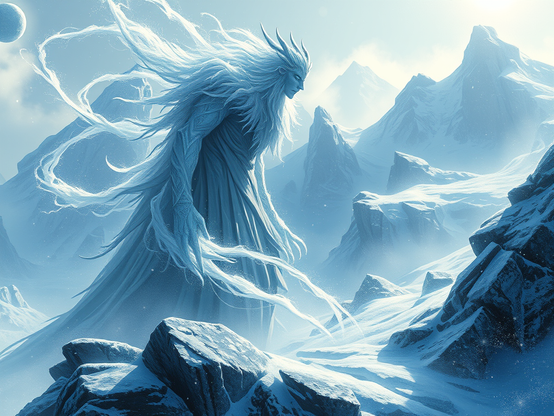
Jack Frost is a figure steeped in winter folklore, has long captured the imagination of people across various cultures. While Jack is often associated with a mischievous spirit who personifies the frost and cold(thanks DreamWorks), some tales link him to the Icelandic frost giants, mythical beings rooted in Norse legends. This connection paints a different picture of Jack Frost, transforming him from a playful sprite into a being tied to ancient and powerful forces of nature.
In Icelandic tradition, frost giants, or “jötnar,” are formidable figures that embody the untamed wilderness of the natural world. They dwell in Jötunheimr, a realm of giants described in Norse mythology as a rugged and icy domain where humans dare not venture. These giants are not merely antagonists; they are primal forces that predate the gods themselves. Among these frost giants, it is easy to imagine a character like Jack Frost emerging – a figure who bridges the worlds of myth and modern-day storytelling.
Jack Frost, as he is popularly known today, is often depicted as a whimsical and impish figure. His icy touch decorates windows with intricate frost patterns, and his chilly breath leaves a sparkling glaze over the landscape. Yet, if we trace his roots to Icelandic frost giants, his character becomes far more complex. The frost giants represent chaos, power, and the wild aspects of winter, often seen as adversaries to the gods like Thor and Odin. However, they also embody the awe-inspiring beauty and danger of the natural world, which aligns with the dual nature of Jack Frost as both enchanting and harsh.
In some legends, Jack Frost may be viewed as a smaller, more manageable manifestation of these mighty giants. And while he doesn’t embody their towering, fearsome presence, he does carry a trace of their power. His ability to create frost and ice, to chill the air with a mere thought, connects him to their elemental strength.
Yet, unlike the jötnar, Jack Frost interacts with the human world in a more personal and direct way, leaving his mark on frosty mornings and delighting – or vexing – those who encounter his handiwork.
The Icelandic connection also deepens the symbolic meaning of Jack Frost. In a land like Iceland, where winter’s grip is profound and lasting, the frost giants resonate with the harsh reality of surviving such conditions. They are not just mythical figures but representations of the challenges and beauty of living in harmony with nature’s extremes. Jack Frost, as a descendant of this lineage, becomes a messenger of winter’s might. One who can be both playful and punishing.
Modern portrayals of Jack Frost often strip away his darker, more primal roots. He becomes a symbol of winter’s charm, a figure of holiday cheer, or even a protagonist in children’s tales. Yet, beneath this light-hearted veneer lies a connection to an older and more fearsome mythology. If one considers his link to the Icelandic frost giants, Jack Frost embodies a fascinating duality: the magical wonder of snowflakes and the raw, unyielding force of an arctic storm.
This blend of whimsy and power ensures that Jack Frost endures as a beloved figure in winter folklore. He is the playful trickster who nips at noses and paints icy masterpieces, but he also carries the legacy of ancient beings who command respect and awe. Through this lens, Jack Frost becomes more than just a seasonal character; he is a reminder of winter’s beauty and its challenges, a link between the modern imagination and the ancient myths that shaped it.
#ancientMyths #frostGiants #frostPatterns #frostSpirit #icelandicFolklore #icelandicMythology #icyLandscapes #jackFrost #jackFrostOrigins #jotnar #mythicalBeings #mythicalCreatures #naturesForces #norseLegends #norseMythology #primalForces #winterFolklore #winterLegends #winterMagic #wintersDuality
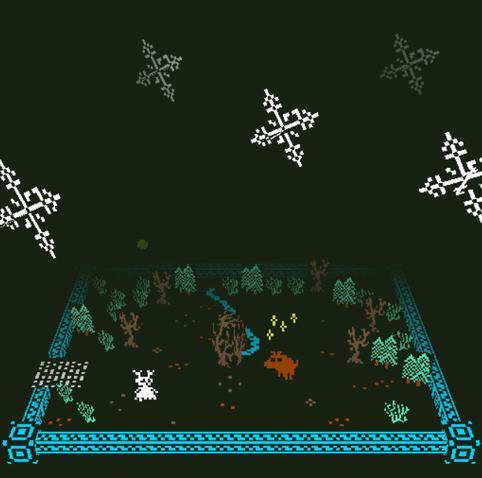
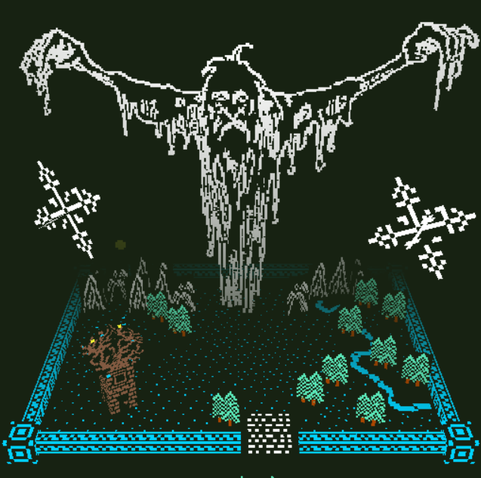
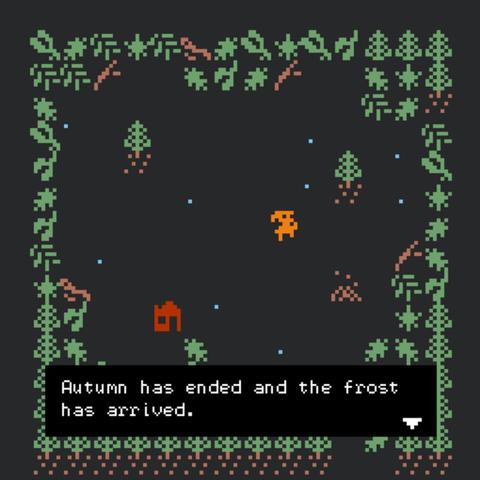
A few years ago I also made this 3D Bitsy - Sister Spring, Brother Winter. Another slice of winter folktale. A wood spirit collects fallen pieces of sun to welcome back Sister Spring.
https://ashg.itch.io/sister-spring-brother-winter
The large character in the 2nd screen was from an old out of copyright book image. I was able to import it and then tidy it up using Image to Bitsy.
I should get back into using 3D Bitsy. It was fun to build the scenes with it. :)
I do like the 3D diorama Spectrum feel. Inspired by Knightlore etc.
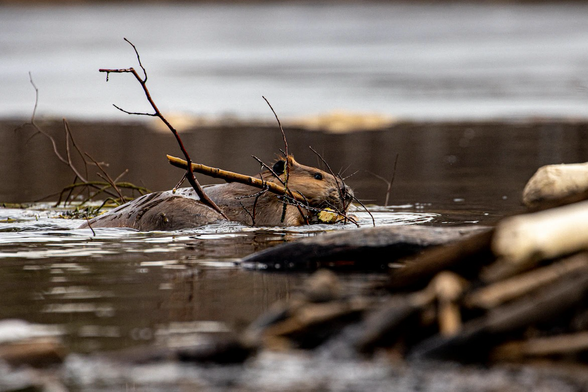
Some indigenous peoples of North America looked to the beaver to help predict what type of winter it would be. If a beaver constructed its lodge larger and stronger than usual, that meant harsh winter weather was on its way. #FolkloreSunday
📷: Derek Otway
#Folklore #NativeAmericanFolklore #Beaver #Winter #WinterFolklore #AnimalFolklore
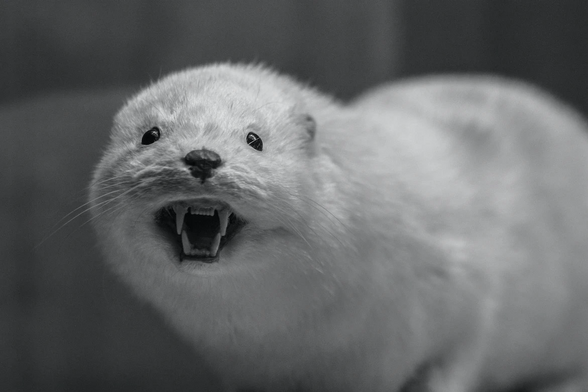
According to the tall tales of North American lumberjacks, the Snow Wasset is a giant weasel-like beast that hibernates during the summer and hunts in the winter. Disappearances of lumberjacks in snowy woods were often blamed on this fearsome critter. #LegendaryWednesday
📷: Daniil Zameshaev
#Folklore #FearsomeCritters #NorthAmericanFolklore #TallTales #SnowWasset #Winter #WinterFolklore
 Kirst Mason D'Raven
 Nifty Buckles Folklore
 Ash Noodle

 EssAeEm