Welsh Water told to pay £45m for ‘unacceptable’ sewage failures

Water regulator Ofwat said its investigation found the not-for-profit company had failed to adequately operate, maintain, and upgrade its wastewater assets.

It also found that Welsh Water’s senior management and Board failed to have proper oversight to ensure the company was meeting its legal requirements.

In response, Welsh Water has apologised and accepted the findings, agreeing to a redress package that will fund environmental improvements rather than being paid from customer bills.

Lynn Parker, Senior Director for Enforcement at Ofwat, said the investigation had uncovered significant failings.

“Our investigation has found serious and unacceptable breaches in how Dŵr Cymru Welsh Water has operated and maintained its sewage works and networks, which has resulted in excessive spills from storm overflows to the environment,” she said.

“We now expect them to focus on putting things right so that customers can regain trust in their water company and the critical service they provide.”

Ofwat said the £44.7m package will be funded from Welsh Water’s retained profits, as the company does not have shareholders.

The bulk of the money – £40.6 million – will be targeted at reducing spills at specific overflows and tackling groundwater seeping into the sewer network, which is a major cause of frequent spills.

A further £4.1 million will be invested to improve river water quality, including a new £1 million ‘Cymuned Natur’ fund to support local environmental groups.

Welsh Water said it had already started a “major transformation programme” to improve performance and strengthen oversight.

A spokesperson for the company said: “We accept the findings of Ofwat’s investigation and apologise for where we have fallen short of the standards that our customers and regulators rightly expect from us.”

“We have already taken steps to strengthen our governance, oversight and compliance arrangements as part of a wider transformation programme across the business.”

The company added that the redress package was in addition to the £4.2 billion it is investing between 2025 and 2030, with £2.5 billion of that dedicated to environmental improvements.

Ofwat’s investigation into Welsh Water is the seventh case in a wider probe into the wastewater sector, which has now resulted in enforcement packages totalling over £300 million.

A public consultation on the proposed enforcement package is now open and will close on April 2.

#DwrCymru #Environment #Ofwat #sewage #waterPollution #WelshWater

Huge scale of sinkhole that keeps flooding Swansea revealed as diggers tear into site

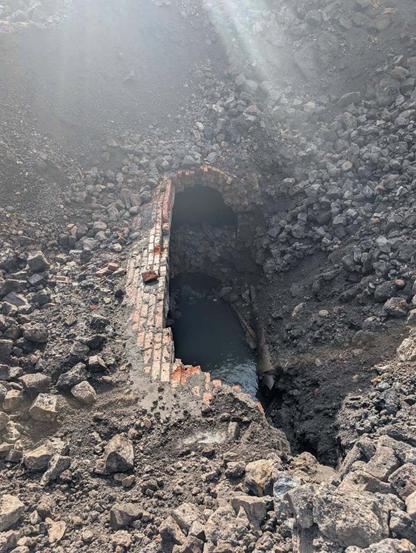
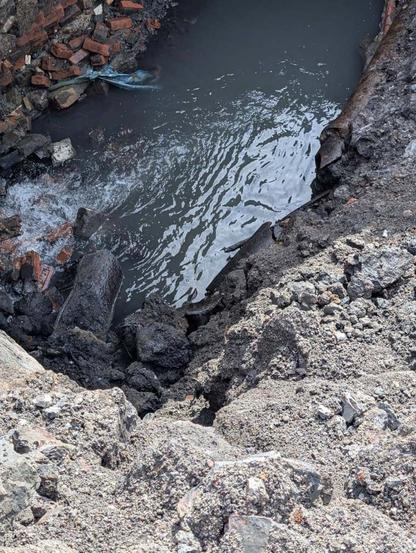
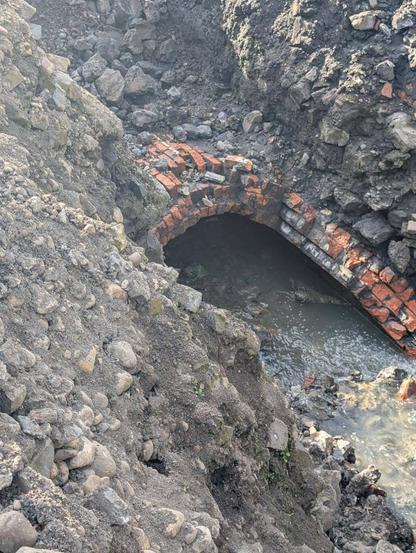
The club — once a popular community venue — has now been completely demolished, clearing the way for Welsh Water’s contractors to dig down to a collapsed culvert buried around 10 metres beneath the site. The culvert is believed to have damaged a main trunk sewer and sits alongside the remains of a tramline that once served the old Cwmfelin steelworks.

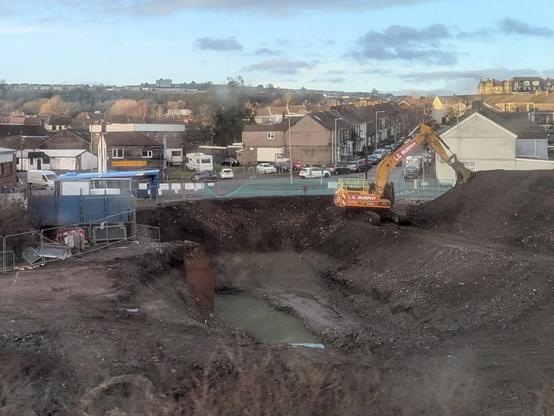
The works mark the third phase of a long-delayed repair operation. The first phase involved filling the initial sinkhole beside the club. The second saw the building itself torn down. The third — now underway — is a full excavation to expose and repair the culvert.

A photo taken by local resident Mark Ludlam shows the scale of the operation, with heavy machinery working on a deep pit surrounded by fencing and pumping equipment.

Despite widespread assumptions on social media, the council is not responsible for the repair work. Responsibility lies with Cwmfelin Social Club’s insurers, and with Welsh Water and their insurers, who are overseeing the excavation and the complex sewer repairs beneath the site.

The sinkhole first opened up in August 2023, causing extensive damage to the club and its car park. Beneath the site lies a collapsed culvert, a sewer, and the remnants of a tramline — all of which have complicated the repair work.

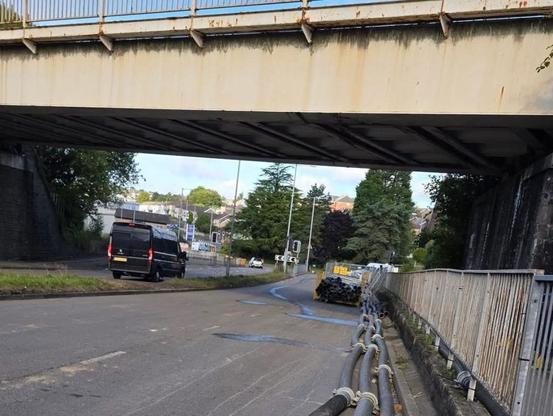
The culvert collapse also damaged the main trunk sewer, forcing Welsh Water to install a temporary system running from the grounds of the former Libanus Chapel, along the pavement of Carmarthen Road, under the railway bridge and eastwards to a new connection point. The temporary pipework and pumping equipment remain in place, which is why one lane of Carmarthen Road between Cwmbwrla roundabout and Gors Avenue is still closed.

The issue has escalated over recent months, with repeated flooding incidents across Cwmbwrla, Manselton and Brynhyfryd. On September 14, the culvert collapse triggered a major flood at Cwmbwrla roundabout, leaving the junction impassable from all directions. It took a week to reopen, and the area has flooded multiple times since — including a November incident that left Reb’s Razors barbershop under two feet of water, destroying equipment and stock.

Cwmfelin sinkhole: Timeline of events

2021
A major water leak occurs on the main road outside Cwmfelin Social Club.

January 2022
A small hole appears in the club’s car park near the toilets, described as the size of a dustbin lid.

August 2023
Large cracks form and the club’s toilets collapse into a developing sinkhole, forcing the venue to close.

September 2023
Severe storms cause major flooding at Cwmbwrla roundabout, with the collapsed culvert blamed for water inundating homes and businesses.

October 2023
A sewer beneath Heol y Gors bursts, linked to the broken culvert and water backing up during heavy rain.

October 2024
Investigations confirm a collapsed culvert 10 metres down, a disused tramline and a damaged sewer, complicating repairs due to the nearby railway line.

July 2025
Plans are finalised to demolish the club to allow access for contractors to repair the culvert and sewer.

September 2025
The club is formally slated for demolition as further flooding prompts renewed action.

October 2025
Demolition of Cwmfelin Social Club begins, two years after the major collapse.

January 2026
Excavation work begins to reach the collapsed culvert beneath the former club.

Residents have suffered too. Nigel and Ian Davies, who had lived in their home for 50 years, were rescued by boat after floodwater surged through their property.

The council has repeatedly stressed that the collapsed culvert — not blocked drains — is the cause of the flooding, and that the responsibility for repairs sits with the club’s insurers and Welsh Water.

Club secretary Mike Kennedy has said he hopes the venue could one day be rebuilt on the land, depending on funding and the outcome of the repairs.

With excavation now progressing, residents are hoping this long-running saga may finally be moving toward a permanent fix — and an end to the disruption that’s hit the area in recent months.

Related stories from Swansea Bay News

Demolition of Cwmfelin Social Club begins after two years on edge of giant sinkhole
Contractors moved in to start taking down the building after months of uncertainty.

Council points to Cwmfelin Club sinkhole works after Cwmbwrla flooding
Officials say the collapsed culvert — not blocked drains — is behind the repeated floods.

Councillor warns culvert collapse could leave Cwmbwrla at risk over Christmas
Fears raised over further flooding as repair delays continue.

Cwmbwrla roundabout closed after cars submerged in flood water
Major disruption as councillor links the chaos to the collapsed culvert.

Cwmbwrla flooding: Roundabout reopens but residents face long recovery
Homes and businesses count the cost after another major flood.

#A483 #CarmarthenRoad #Cwmbwrla #cwmbwrlaFlooding #CwmbwrlaRoundabout #CwmfelinClubDemolition #CwmfelinSocialCLub #demolition #Sinkhole #Swansea #WelshWater

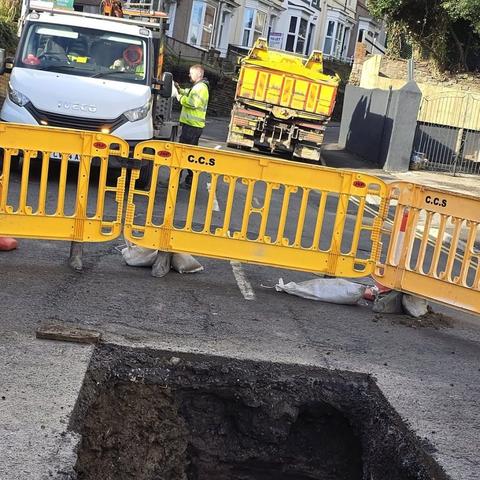
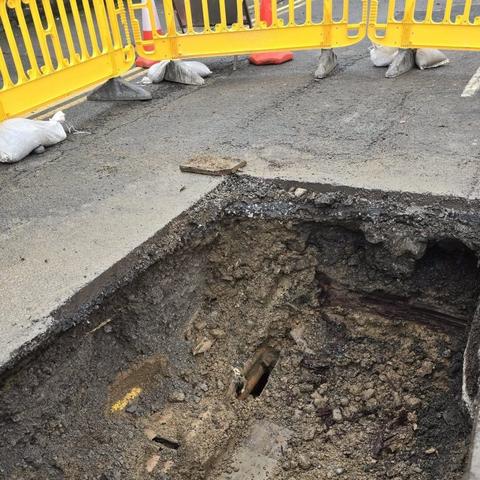
Brynymor Road sinkhole larger than expected, says councillor

The sinkhole that forced the closure of Brynymor Road in Swansea last week is “significantly larger than first anticipated,” according to Uplands councillor Peter May, who shared an update on social media after meeting with Welsh Water engineers.

Cllr May said the company had accepted liability for the collapse, which is believed to have been caused by a major leak just above the affected area. That leak was repaired last week, but engineers are still working to assess the full extent of the damage beneath the surface.

“The hole is significantly larger than first anticipated,” he wrote, “and when I left site they were still trying to find the extent of the void under the road.” Based on surface cracking, the damage could stretch around three metres wide, five to six metres long, and just over one metre deep.

Excavation underway at the Brynymor Road sinkhole site. Engineers are working to assess and repair the damage.

Welsh Water plans to excavate the area fully, backfill it with new material, and reinstate the carriageway. While repairs were initially hoped to be completed by Thursday evening, Cllr May said that timeline was “somewhat optimistic” and that a Friday reopening was more likely.

“There was a significant leak just above the sinkhole which was repaired last week,” he added. “Welsh Water agree that this has in all probability caused the collapse.”

Council investigation continues

Swansea Council last issued an update on 24 November, confirming that highways teams had begun investigating the cause of the sinkhole, which appeared at the junction of Brynymor Road and Westbury Street.

The council said the road would be reinstated once the investigation was complete and the area made safe. In the meantime, Brynymor Road remains closed to traffic between Westbury Street and Eaton Crescent. Westbury Street itself is open, but there is no access onto Brynymor Road from that junction. The section of Brynymor Road between St Helen’s Road and King Edward Road remains open to traffic.

#brynymorCrescent #brynymorRoad #eatonCrescent #kingEdwardRoad #roadClosure #sinkhole #stHelensRoad #swansea #swanseaCouncil #uplands #welshWater #westburyStreet

Welsh Government says South West Wales bathing waters rated ‘excellent’ – but sewage and pollution issues cast shadow

The 2025 results, published this week, show that 98% of bathing waters across Wales met strict environmental standards following monitoring by Natural Resources Wales (NRW). Officials say the findings demonstrate the resilience of Wales’s beaches and the success of ongoing efforts to protect water quality.

Deputy First Minister Huw Irranca‑Davies said the results reflected “our commitment to protecting water quality” and praised communities and partners for working together towards a cleaner Wales.

Mary Lewis, Head of Natural Resource Management at NRW, added:

“Our wonderful beaches and bathing waters are an important part of Wales’s identity and culture… The results reflect the dedication of our teams, partners, environmental groups and communities who protect and care for our environment.”

Local results at a glance

AreaBeaches rated ‘Excellent’Other classificationsSwanseaLangland, Caswell, Bracelet Bay, RhossiliSwansea Bay – GoodNeath Port TalbotAberafan Beach–CarmarthenshirePembrey, Pendine Sands–PembrokeshireTenby South, Castle Beach, Freshwater West, Barafundle, Newgale, Whitesands (plus many more)–Bridgend CountyTrecco Bay, Sandy Bay, Rest Bay (Porthcawl)–

Sewage spills and enforcement fines temper the good news

While the classifications are positive, they come against a backdrop of ongoing public concern about water quality.

Residents in Gower have repeatedly voiced frustration over sewage spills affecting popular beaches, saying they feel “pooped off” by the frequency of incidents. Campaigners argue that these spills undermine public confidence in official bathing water ratings.

💧 What do bathing water ratings mean?

Excellent
The highest standard. Water quality is consistently very good, giving strong reassurance for swimmers and visitors.

Good
Meets high standards but with occasional dips in quality. Still safe for bathing, though less consistent than ‘excellent’ sites.

Sufficient
Passes the minimum EU and UK requirements. Bathing is permitted, but water quality may be variable and less reliable.

Poor
Fails to meet the required standards. Official advice is against bathing due to risks to health.

Who sets the ratings?
Natural Resources Wales monitors designated bathing waters during the season (May–September) and classifies them under Welsh Government regulations.

Why it matters:
Ratings guide public health advice, tourism confidence and environmental management. They reflect long‑term monitoring, not just daily conditions.

Rivers and coastlines under pressure

Beyond the beaches, rivers in South West Wales have also been highlighted as pollution hotspots. The River Tawe was recently ranked among the most sewage‑affected in the UK, raising questions about how inland water quality connects to coastal bathing standards.

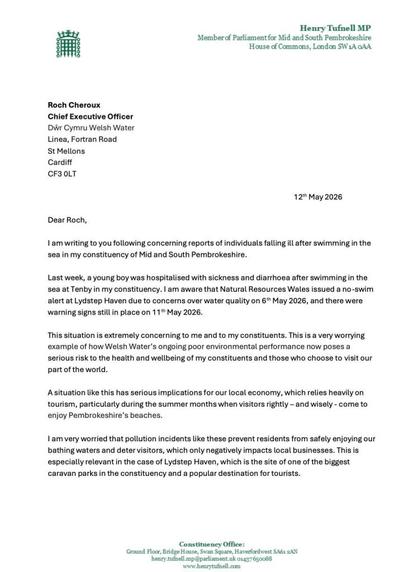
In Pembrokeshire, warnings have been issued about sewage pollution at popular beaches, prompting local MPs to challenge regulators and water companies during Welsh Affairs Committee hearings.

Calls for reform and a sewage action plan

The wider debate has led to growing political pressure. Campaigners and politicians, including Welsh MPs, have called for a national sewage action plan to tackle pollution at its source. At the same time, Welsh Government has outlined plans to overhaul water regulation, promising reforms that put “people, the environment and future generations at its heart.”

Deputy First Minister Huw Irranca‑Davies acknowledged that climate change and heavy rainfall — including 170% of average levels in September — can significantly affect water quality. He said maintaining standards will require “sustained investment, innovation, and partnership working across all sectors.”

A mixed picture for South West Wales

The headline figures show South West Wales beaches performing strongly, with almost all rated ‘excellent’. But the wider context of sewage spills, enforcement fines and river pollution means the story is more complex.

For swimmers and visitors, the classifications provide reassurance about water quality at designated sites. Yet campaigners insist that behind the ratings lies a system under strain, with regulators, water companies and government facing mounting pressure to deliver lasting improvements.

Related stories from Swansea Bay News

Welsh Water under pressure as sewage pollution incidents hit ten‑year high
Regulators report a surge in sewage discharges, sparking calls for tougher enforcement across Wales.

Residents say they’re ‘pooped off’ with Gower sewage spills
Locals express frustration over repeated sewage incidents affecting popular beaches on the Gower peninsula.

Welsh Water fined £1.35m for over 800 breaches to sewage discharge permits
The company faces a record penalty after failing to control pollution at treatment sites across Wales.

River Tawe one of the most sewage‑filled in the UK
New analysis ranks the Tawe among Britain’s most polluted rivers, raising concerns for downstream bathing waters.

#aberafanBeach #aberavonBeach #barafundle #bathingWaterQuality #beaches #braceletBay #caswellBay #cefnSidanBeach #dwrCymru #freshwaterWest #huwIrrancaDaviesMs #langlandBay #naturalResourcesWales #newgale #pembrey #pendineSands #pollution #porthcawl #restBay #rhossiliBay #sandyBay #sewage #swanseaBay #tenby #treccoBay #waterQuality #welshGovernment #welshWater #whitesandsBeach

Council points to Cwmfelin club sinkhole works after Cwmbwrla flooding

The authority says the repairs, completed in the club’s car park where a giant sinkhole first appeared two years ago, may be linked to the severe flooding which left the busy Cwmbwrla roundabout under water and forced the closure of surrounding roads.

Dozens of homes and businesses were affected, while cars were submerged and traffic chaos spread across the city.

Council action

Council leader Rob Stewart confirmed the authority has contacted the club for information about the work.

“Cwmfelin Social Club closed due to a sinkhole two years ago and the club appointed contractors to demolish the club. The contractors have recently filled the sinkhole. We have had no issues in the last two years with flooding in the area, while pumping equipment has been doing its job. We have today written to the club seeking details of the works their contractors completed.”

The council says its own culverts and gulleys in the area were inspected and cleared before the weekend’s heavy rain.

Welsh Water waiting on demolition

Dŵr Cymru Welsh Water (DCWW) has said it cannot access the collapsed culvert and foul sewer system beneath the club until demolition is completed. The council has urged the club and its contractors to engage with DCWW “as a matter of urgency” to speed up the process.

In the meantime, emergency pumping equipment remains in place on the inbound carriageway to keep water levels down.

Cllr Stewart added:

“We are doing everything we can and are working with DCWW to increase the temporary pumping equipment on‑site to help reduce flood waters. This means the in‑bound traffic is still restricted and we apologise for the inconvenience caused, but our priority has to be to reduce the threat of flooding until the culvert can be repaired.”

Long‑running saga

The sinkhole first opened up in 2023, forcing the closure of the club and displacing hundreds of members. Since then, the collapsed culvert beneath the site has been repeatedly linked to flooding on Heol y Gors and at the Cwmbwrla roundabout2.

Local councillor Peter Black has previously warned that the culvert collapse has blocked the watercourse, causing water to back up and overwhelm drains during heavy rain.

Despite repeated calls for action, the club remains standing and demolition has yet to be completed. Residents have expressed frustration at the lack of progress, warning that the community has lost a much‑loved social hub while also facing repeated disruption from flooding.

Related stories from Swansea Bay News

Cwmbwrla flooding: roundabout reopens but residents face long recovery
Residents and businesses count the cost after homes were inundated and cars submerged.

Cwmbwrla roundabout closure set to continue into early hours as clean‑up continues
Emergency crews worked through the night to pump out floodwater and inspect the road surface.

Cwmbwrla Roundabout closed after cars submerged in flood water – councillor links chaos to collapsed culvert
Initial coverage of the dramatic flooding and warnings over the collapsed Burlais Brook culvert.

Cwmfelin Social Club to be demolished after two years on edge of giant sinkhole
Demolition confirmed as the only way to access and repair the collapsed culvert beneath the club.

Swansea social club on edge of giant sinkhole no closer to finding a solution
A year on from closure, residents voiced frustration at the lack of progress in resolving the sinkhole saga.

#CllrRobStewart #culvert #Cwmbwrla #cwmbwrlaFlooding #CwmbwrlaRoundabout #CwmfelinSocialCLub #Environment #featured #flooding #gulley #Sinkhole #Swansea #SwanseaCouncil #WelshWater

Cwmbwrla roundabout closure set to continue into early hours as clean‑up continues

Local councillor Peter Black said it was “likely that the roundabout will not be open again tonight” and urged drivers to use alternative routes to avoid the heavy congestion seen during Monday’s morning rush hour.

The junction – one of Swansea’s busiest – was left under several feet of water after torrential rain over the weekend, submerging cars and forcing emergency services to close all approaches.

Cwmbwrla Roundabout flooding cleanup
(Image: Bryn Morgan)Cwmbwrla Roundabout flooding cleanup
(Image: Bryn Morgan)

Council: flooding linked to collapsed culvert on private land

In its latest statement, Swansea Council said it was continuing to support Welsh Water in efforts to remove the flood water.

“Prior to the severe weather during the weekend, the council ensured that a nearby watercourse and council‑maintained culvert were cleared,” a spokesperson said.

“We believe the flooding at Cwmbwrla over the weekend is linked to a previously collapsed culvert on private land which is not owned or maintained by the council.

A number of pumps have been deployed on site to help remove the water from this location and we are working to ensure this busy route is reopened as soon as possible. Once the water levels have been reduced, there will be a need to keep the route closed for a short period to carry out safety inspections and a clean‑up of the road surface.”

Motorists are being urged to continue avoiding the area while the work continues.

Long‑running culvert issue

The collapsed culvert – beneath the Cwmfelin Social Club – has been at the centre of a long‑running infrastructure problem in the area. As Swansea Bay News has previously reported, local councillors have linked it to repeated flooding and road closures on Heol y Gors and at Cwmbwrla roundabout.

You can read our earlier coverage of the weekend’s flooding here.

#CllrPeterBlack #culvert #Cwmbwrla #CwmbwrlaRoundabout #CwmfelinSocialCLub #flooding #Sinkhole #Swansea #SwanseaCouncil #SwanseaFlooding #WelshWater

Cwmbwrla Roundabout closed after cars submerged in flood water – councillor links chaos to collapsed culvert

The A483 junction was completely impassable from Sunday afternoon, with South Wales Police diverting traffic via Pentregethin Road. First Cymru buses rerouted several services, and Swansea Council warned drivers to avoid the area.

Mid and West Wales Fire and Rescue Service sent specialist crews with a boat to the scene, while videos on social media showed some people paddleboarding – and even swimming – in the murky floodwater.

Cwmbwrla Roundabout was totally submerged by flood water
(Image: Swansea Council)Carmarthen Road flooding

Council: culvert couldn’t cope with downpour

Swansea Council said early investigations suggest a nearby culvert was unable to cope with the sustained volume of water during the severe downpours. The authority is working with Dŵr Cymru Welsh Water to determine the exact cause.

The flooding also forced the closure of the nearby CREST Mental Health Service on Monday, with hopes it could reopen the following day.

Possible link to Cwmfelin Club sinkhole

Local councillor Peter Black said the incident is likely connected to the long‑running collapse of the Burlais Brook culvert beneath the Cwmfelin Social Club – a site Swansea Bay News has previously reported is due to be demolished so repairs can take place.

In a Facebook exchange with residents, Cllr Black explained that the culvert collapse has blocked the watercourse, causing water to back up along Heol y Gors and force its way out through manholes. A temporary pump installed on the brook “clearly can’t cope with this rain,” he said.

Residents voice frustration

Some residents complained about blocked drains and a lack of urgency in tackling drainage problems along Heol y Gors, warning that the road had already been closed for months due to water damage. Others questioned how far the culvert collapse could be responsible for flooding higher up the hill.

Cllr Black said the repair work cannot begin until the Cwmfelin Club is demolished – a process he warned will take months – but stressed he is pressing for progress.

Severe weather across Wales

The flooding came amid a Met Office yellow weather warning for strong winds and heavy rain across Wales. Gusts of up to 66mph were recorded in Gwynedd, with power cuts affecting hundreds of homes and travel disruption reported on roads and bridges.

Natural Resources Wales issued multiple flood alerts, and emergency services dealt with fallen trees and other weather‑related incidents.

#A483 #CllrPeterBlack #culvert #Cwmbwrla #CwmbwrlaRoundabout #CwmfelinSocialCLub #featured #flooding #MidAndWestWalesFireAndRescueService #SwanseaCouncil #SwanseaFlooding #WelshWater

Cwmfelin Social Club to be demolished after two years on edge of giant sinkhole

Cwmfelin Social Club, in the Cwmbwrla area, shut its doors in August 2023 when a small hole in the tarmac — “no more than a dustbin lid” in size, according to club officials — revealed a vast cavity beneath. Investigations linked the sinkhole to a collapsed culvert around 10 metres below ground and the remains of a disused tramline.

At the time, it was hoped the closure would last only weeks while safety work was carried out. But the location on private land, close to neighbouring buildings and a railway line, made repairs complex. As we reported in October 2024, both Welsh Water and Network Rail said the ground conditions and proximity to key infrastructure posed major challenges.

Now, club chairman Mike Kennedy says demolition is the only way to gain access for engineers to assess and fix the underlying problem.

“It’s two years now since the club closed. We were trying to find other ways to repair without taking the club down, but unfortunately that’s the only way to get access… yes, really disappointed.”

Local member Mark Boyce said the loss would be deeply personal:

“I’ll be in tears when this comes down. My mother’s soul is in there — she was a cleaner for 25 years and I used to come every weekend.”

Cwmbwrla councillor Peter Black said the cost of repairing the culvert and sewer would only be known once the building was gone and engineers could carry out a full inspection.

“It could be anything from £1 million upwards — or it could be less than that — we just don’t know yet.”

It is not yet clear whether the club will be rebuilt once the ground is made safe.

#CllrPeterBlack #Cwmbwrla #CwmfelinSocialCLub #NetworkRail #SinkHole #Sinkhole #Swansea #WelshWater

Residents say they’re ‘Pooped Off’ with Gower sewage spills

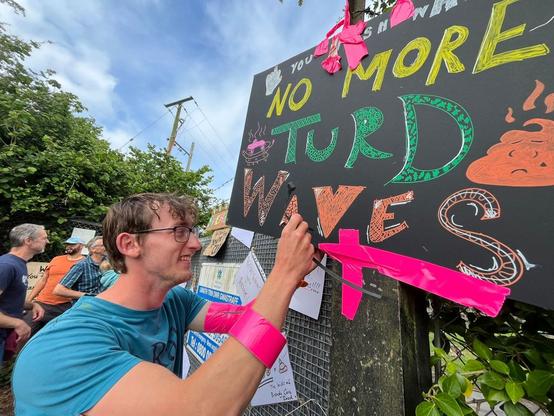
Local resident, David Haines-Hanham is behind the protest which saw over 70 local residents cover the gates of the treatment works with anti-sewage posters and messages from the local community.

These included slogans such as “I came here to swim, not to marinade in bum broth” and “Welsh Water – No more turd waves”.

A placard at the Bishopston Treatment Works protest

Mr Haines-Hanham explained: “This started a couple of years ago when I was stand-up paddleboarding with my daughter Maddie. It was a nice day. It hadn’t rained for 24 hours. We were coming back from Caswell to Brandy Cove. The water was about a metre deep and we were enjoying looking at the seaweed and the rocks. All of a sudden where the pipe outfall is the water turns a disgusting brown. The smell is unmistakeable. The filth was horrible. It was unmistakably a sewage slick.

“Next time we were walking along the cliffs just before one of the autumn storms were coming in. It hadn’t rained for two days. We looked over to Brandy Cove. It was high tide and there was an unmistakeable brown patch again with all the black headed gulls having a feast. In my mind it was a sewage slick in preparation for a storm that hadn’t even happened yet.”

Mr Haines-Hanham says he has a clear message for Welsh Water. “You’ve failed to futureproof your infrastructure. Since the UV treatment was brought in, it doesn’t seem to me that you’ve looked to the future. You haven’t looked 20 years time, which is where we are now. You’ve done nothing to prepare for the prevention of pollution incidents.

“I don’t know much about the politics of Welsh Water, but I do know they’ve just asked us as bill payers for more money. I say just use that money – our money – to mend your outdated systems. Put money in the right places to make our sea cleaner.”  

Over 70 residents attended the demonstration

Mr Haines-Hanham said: “I’ve explained the ‘snowball effect’ to my kids, and their hope is that our small action will encourage and inspire other communities to do similar at treatment works that regularly underperform and allow sewage to be released into the sea.”

Meanwhile Welsh Water say they’re investing £2.5bn on environmental projects over the next 5 years and that some pollution issues are due to surface-water run-off and poorly maintained private septic systems.

A spokesperson for Welsh Water said: “Storm overflows play a vital role in preventing homes being flooded following heavy rain. 

“We cannot completely remove storm overflows as it would cost between £9-£14 billion and involve digging up almost every street in Wales.

“We understand there is increased concern about water quality and we are working to improve things with £2.5bn investment on environmental projects in our current investment period (2025-30).

“This comes after we invested £1.4bn in our wastewater system in the decade to 2025, which helped ensure Wales’ amazing coastline is blessed with almost a quarter of the UK’s Blue Flag beaches despite having just 15% of its coastline. 

“The latest Bathing Water results for Wales also showed that 98% of the designated bathing waters meet stringent quality standards – with almost 70% meeting the highest ‘Excellent’ water quality standard.

“A number of factors can impact water quality including surface water runoff, misconnections – as we saw recently in a social media video shared of waste on the rocks between Langland and Rotherslade, rural land use and poorly maintained private septic tanks.

“You can get accurate and up-to-date information on spills from our storm overflows on this map.”

In response to Welsh Water’s statement, Mr Haines-Hanham reflected on the launch of regulator OfWat’s pollution enforcement investigation into Welsh Water in July 2024.

A similar investigation into Thames Water resulted in fines of nearly £123m for the company.

He said: “I only speak from the experience of what one family has experienced on one beach. Our experiences were categorically NOT during heavy rain periods.

“I also dispute the claim that the overflow map is accurate having been given conflicting information on the day I spoke to them. 

“Have we just been incredibly unlucky/lucky to witness these things or have Welsh Water just been getting away with it unnoticed?

“I’ve a feeling that their increase in investment is a result of the start of this investigation and I would love to see a breakdown of investment from the last 20 years compared to money taken from customers.

“As one sign said on Saturday – ‘You take our money now take some responsibility’ and another one saying ‘They have failed to futureproof infrastructure – use OUR extra money to mend your outdated system’.”

#Bishopston #BrandyCove #Caswell #featured #Gower #pollution #sewage #WelshWater

Landmark water review recommends overhaul of Welsh regulation

A major review of the UK water sector has recommended sweeping changes to how water is regulated in Wales, including the creation of a single integrated regulator and a national water planning authority.

The Independent Water Commission, chaired by former Bank of England deputy governor Sir Jon Cunliffe, published its final report this week, describing the current system as “fragmented and overlapping”. It sets out 88 recommendations aimed at restoring public trust, improving environmental outcomes, and ensuring long-term investment in water infrastructure.

In Wales, the report proposes merging Ofwat’s economic responsibilities into Natural Resources Wales (NRW) — a move intended to simplify oversight and give regulators a “whole-firm” view of water companies. It also calls for a 25-year National Water Strategy, with statutory milestones and public consultation, to guide future decisions.

The proposals come amid growing scrutiny of Welsh Water, which is under pressure following a surge in sewage pollution incidents. As previously reported by Swansea Bay News, the company recorded over 105,000 sewage spills in 2023, the highest in a decade. Environmental groups and opposition parties have called for tougher enforcement and greater transparency.

Other recommendations from the Commission include:

  • A Water Ombudsman to strengthen consumer protections
  • A national social tariff to support low-income households
  • New powers to block water company ownership changes
  • Stronger regulation of abstraction, sludge, and drinking water standards
  • Compulsory water metering and improved monitoring of pollution

The report has sparked political debate. Welsh Conservative MS Andrew RT Davies warned against expanding NRW’s remit, calling it a “failed environmental regulator” and arguing it should be replaced entirely.

The proposed abolition of Ofwat has been welcomed by the Welsh Liberal Democrats, who say the move reflects years of campaigning to strengthen water regulation and tackle sewage pollution.

Swansea councillor and Senedd candidate for Gŵyr Abertawe, Cllr Sam Bennett, described the recommendation as a “major step forward” in restoring public trust, but cautioned that without urgent action, the reforms risk falling short.

“This is a big win for the Liberal Democrats, who have led the campaign against the sewage scandal for years,” said Bennett. “But countless Welsh rivers are still being poisoned by raw sewage. Our communities deserve clean water, strong regulation and environmental justice — not more empty promises.”

The party has long criticised water companies for prioritising profit over public health and the environment, pointing to rivers like the Tawe, which ranks among the most sewage-polluted in the UK. They’ve also raised concerns about whether Natural Resources Wales, which would take on expanded powers under the new model, has the capacity to deliver — citing over a decade of budget cuts and staffing pressures.

The Welsh Liberal Democrats say the reforms must be backed by real investment in infrastructure and stronger enforcement, particularly in Wales, where the devolved government holds significant powers over the sector.

Environment Secretary Steve Reed has signalled support for reform, describing Ofwat as “clearly failing” and pledging to halve sewage pollution in England’s rivers by 2030.

#NaturalResourcesWales #Ofwat #pollution #WelshWater