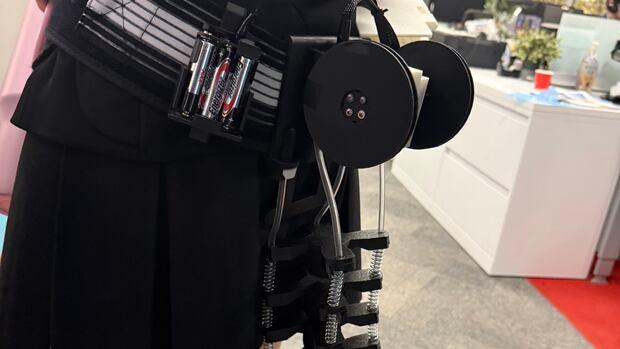
I saw this at #ALDI & immediately thought what a great idea. There was only this last one left & soon after I took the photos, a man bought it. I am a little concerned with these power banks that are all the rage though. Do we have sufficient recycling for these? Do people even bother recycling them?
What Will Crochet Look Like in 2040?
Every generation thinks they’ve reached the peak of technology.
Then twenty years later they’re explaining to confused children why they used to print MapQuest directions or carry CDs in giant binders.
Crocheters are no different.
Right now, we’re pretty impressed with ourselves. We have digital patterns, online yarn shopping, stitch-counting apps, and video tutorials for every project imaginable.
But what will crocheting look like in 2040?
Nobody knows for sure.
That won’t stop us from wildly guessing.
Smart Hooks Will Judge Us
Today’s crochet hooks are simple.
In 2040?
Your hook will probably connect to your phone, count your stitches automatically, and gently inform you:
“That was supposed to be a double crochet.”
You’ll argue with it.
The hook will be correct.
You’ll frog three rows anyway.
Some things never change.
AI Will Design Patterns
Artificial intelligence is already writing patterns. I didn’t say they were good patterns…but you’ve likely stumbled upon a few in your day-to-day on the internet.
By 2040, you’ll probably be able to type:
“Make me a cardigan inspired by my cat, my favorite coffee mug, and the emotional trauma of trying to learn foundation stitches.”
Thirty seconds later you’ll have a complete pattern.
Will the sleeves match?
That’s another question.
Yarn Will Become Ridiculously High-Tech
By 2040, yarn companies will stop asking whether they can and start asking whether they should.
Spoiler alert:
They won’t.
Mood Yarn
Changes color based on your emotional state.
Halfway through a project you’ll discover your sweater contains:
Future therapists will diagnose stress levels by examining unfinished blankets.
Accountability Yarn
This yarn knows how many unfinished projects you own.
When your WIP count reaches double digits, it starts asking uncomfortable questions.
“Shouldn’t you finish that cardigan first?”
Nobody needs that kind of negativity.
Predictive Yarn™
Using advanced AI, this yarn knows what projects you’ll start next month.
The replacement skeins arrive before you’ve even convinced yourself you need them.
The accuracy is unsettling.
Competitive Yarn
This yarn tracks the progress of nearby crocheters.
Your blanket reaches Row 45 and suddenly receives a notification:
Karen finished hers three days ago.
Smart Yarn Labels
Current labels:
“Machine wash cold.”
Future labels:
“Based on your previous projects, I recommend you buy three more skeins.”
“You’re not going to skip swatching, are you?”
“We both know you’re making modifications.”
No matter how advanced yarn becomes, there will still be one universal truth:
A crocheter will stand in front of a closet containing 147 skeins and say:
“I don’t have anything to work with.”
And somehow, even in 2040, that statement will feel completely reasonable.
Virtual Crochet Circles
Instead of meeting in person, some groups may gather in virtual reality.
Picture it:
You’re sitting in your living room wearing fuzzy slippers.
Your friend is in another country.
Your crochet buddy is on vacation.
Yet somehow all three of you are sitting around the same virtual coffee table complaining about yarn prices.
Honestly?
That part already feels realistic.
Self-Counting Stitch Markers
The most commonly lost item in crochet history may finally evolve.
Future stitch markers might:
Current crocheters lose stitch markers inside couch cushions.
Future crocheters will lose them after forgetting the password.
Progress.
Pattern Reading May Become Optional
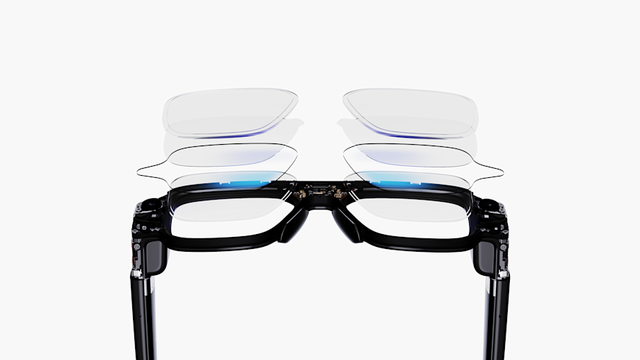
Instead of reading a pattern, you may simply wear smart glasses.
The glasses highlight:
Future crocheters may never know the joy of discovering they’ve been repeating Row 14 instead of Row 15 for an entire evening.
Project Bags Will Get Smarter
Today’s project bag:
A bag.
Tomorrow’s project bag:
Actually, let’s hope that last one becomes available much sooner.
The Great Granny Square Revival Will Continue
Let’s be honest.
No matter what technology does, granny squares aren’t going anywhere.
Crochet trends come and go.
Yarn brands come and go.
Hooks change.
Styles change.
But somehow granny squares survive every decade.
If archaeologists uncover a crochet project in the year 3000, there’s at least a 50% chance it will involve a granny square.
Future Crocheters Will Laugh at Us
Imagine a crocheter in 2040 saying:
“Wait… you counted stitches manually?”
“You downloaded PDF patterns?”
“You had to search for yarn substitutions yourself?”
“You bought yarn without scanning it with a smart fiber analyzer?”
We’ll sound ancient.
Which is exactly how we sound when we hear stories about crocheters copying patterns by hand from magazines.
Final Thoughts
Will any of these predictions come true?
Probably some.
Definitely not all.
But one thing seems certain:
In 2040, crocheters will still buy yarn they don’t technically need.
They’ll still start new projects before finishing old ones.
They’ll still play yarn chicken.
And they’ll still insist that this next project will only take a weekend.
Some technologies are destined to change.
Crocheter optimism is not one of them.
If you could invent one futuristic crochet tool or gadget, what would it do?
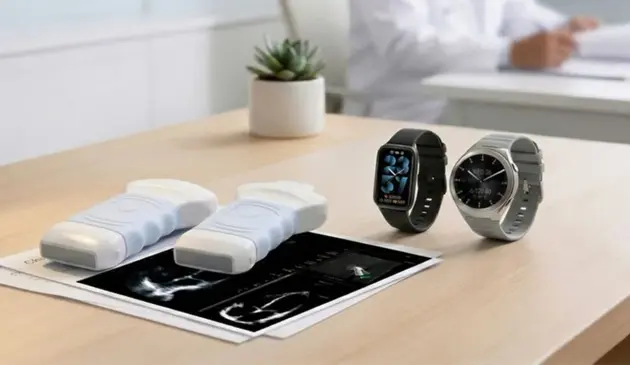
#AICrochet #artificialIntelligence #creativeTechnology #Crochet #crochet2040 #crochetBlog #crochetCommunity #crochetDiscussion #crochetFun #crochetGadgets #crochetHumor #crochetInnovation #crochetInspiration #crochetLife #crochetNerd #crochetPredictions #crochetTechnology #crochetTools #crochetTrends #crochetPattern #digitalCrafting #fiberArts #freePattern #futureOfCrochet #futureTechnology #futurism #futuristicCrafting #geekCrochet #geekCulture #handmadeFuture #makerCommunity #makerCulture #modernCrochet #pattern #sciFiCrochet #scienceFiction #smartCrochet #smartTextiles #wearableTechnology #yarn #yarnAddict #yarnHumor #yarnLover #yarnStashAsus VivoWatch 6 Plus arrives with a 1.43-inch AMOLED display, ECG, blood pressure tracking, sapphire glass, and titanium build.

#mymobprice #ASUS #VivoWatch6Plus #Smartwatch #HealthTech #WearableTechnology
Oura Ring 5 gets smaller while adding AI health tracking and blood pressure monitoring
https://fed.brid.gy/r/https://nerds.xyz/2026/05/oura-ring-5/
The second wave of the AI and assessment crisis
In this paper Thomas Corbin, Sue Sharpe & Phillip Dawson suggest that wearable AI will bring a second wave of the assessment crisis. In the first wave, there has been a reliance on the idea that physical examination provides a backstop which can underwrite authenticity: “the physical exclusion of technology at the point of performance” (pg 1). They argue that wearable AI will make it vastly more difficult to enact that exclusion because they can provide real-time cognitive assistant without external markers which indicate they are being used for this purpose.
This is still a new field but it is rapidly growing. Meta sold 7 million smart glasses last year, with signs suggesting growth is accelerating. These are just manufacturer within a broader field of wearable AI that is receiving huge investment. So while someone might be able to spot Meta’s Ray-Ban glasses it’s unfeasible to imagine that every wearable device could be reliably spotted. There also equity issues which arise from the fact these serve real assistive functions for many users: they are dual use in a way which precludes ethical exclusion. The assumption we would ratchet up oversight in order to prevent them being brought into invigilated spaces raises all manner of ethical, legal and political questions. As they put it, “A regime that extends scrutiny further than simply glasses must decide how far into the student’s embodied presentation it is willing to reach” (pg 13). A commitment to excluding these devices necessitates a form of “bodily adjudication” based on two conditions which are decreasingly tenable. From pg 12:
First, invigilators must be able to identify which objects on a student’s person are relevant candidates for scrutiny. Secondly, they must then be able to determine whether those objects are AI-enabled or not. Under conditions of wearable AI, neither condition can be assumed. The issue is not simply that smart glasses may be difficult to distinguish from ordinary eyewear. Rather, it is that the relevant class of wearable technologies no longer maps neatly onto a small set of visibly exceptional devices.
The deeper transition they are pointing to here involves a shift from AI as a discrete tool to one which is embedded in practice in a way that might not ultimately be separable. In this sense I think we can see inline automation tools (Copilot 365 and Grammarly etc) which offer ambient assistant to users as another vector of this transition. I thought this was really important on pg 6-7:
Screen-based AI is structurally different. Consulting ChatGPT on a laptop or smartphone requires directing attention away from the task at hand, engaging with a separate interface, reading a response, and returning to the task. Even when this process becomes routine, it remains episodic. The tool cannot become phenomenologically transparent because the architecture of use requires repeated explicit engagement with a separate object. The user must turn to it, attend to it, and return from it. Smart glasses differ because they operate within, rather than alongside, ongoing activity. They have the architectural capacity to become phenomenologically trans- parent, to withdraw from user awareness and become part of the structure through
The episodic character of user-model interaction for chatbots is exactly what makes meta-cognition possible. They demand articulation, even if minimally, while also making the interaction itself available as an object of reflection that can inform that articulation. This is why it’s possible to use chatbots in an active way. In contrast inline automation tools insert themselves into the flow of activity in a manner which is intended to render this episodic experience unnecessary. This is literally baked into the metaphor of the Copilot. It’s possible to meta-reflect while you’re in flow but I don’t think it’s possible for learners to do this: the space is crucial for developing this capabilities in the first place. For this reason I’d suggest we see the second wave of the assessment crisis as responding to three factors: (a) the declining burden of articulation in chatbots* (b) the parallel growth of inline automation tools (c) the rise of AI wearables. This is how they describe the distinction between the first wave and the second wave. From pg 9
The first wave, exemplified by screen-based systems such as ChatGPT,
created a crisis of practice within an intact institutional framework. Tasks had to be redesigned, expectations renegotiated, and academic integrity policies rewritten, but the basic shape of the problem remained familiar: students were using an external tool, that tool produced identifiable outputs, and institutions could still, with effort, separate students from the tool at particular assessment events. The first wave was a harder version of a problem assessment had encountered before.
The second wave is different in three ways, and each of them matters inde pendently. First, the property itself is structurally new. Screen-based AI is episodic by architecture. The user must turn to it, attend to it, read its response, and return. Even a heavily reliant user is engaging with the tool as a discrete object on discrete occasions. Wearable AI, as the previous sections have argued, has the structural conditions for incorporation. It does not function as a tool the user consults but as a capability the user inhabits. This is not a difference of degree. It is a difference in the kind of relationship a user can have with the technology, and it is not a difference any previous educational technology has had to confront at scale.
Once AI use is no longer “external, episodic, and, at least in principle, distinguishable from the student’s own ongoing activity” (pg 10) then assessment strategies built around exclusion become fundamentally untenable. It’s another argument that supports the notion that fundamental assessment reform has to happen so we might as well get on with it. The problem is that I still don’t believe that processual assessment is adequately scalable within mass higher education. So the vice tightens 😬
*This is what my book with Milan Sturmer is essentially about. The short-form version of the argument is that post-training has made chatbots vastly more able to infer user expectations without deliberate and expansive prompting. Therefore the user has to articulate themselves much less to get what they want.
#AI #assessment #higherEducation #metaReflection #universities #wearableAI #wearableTechnologyLetinAR Develops Advanced Optical Modules for Wearable AI Glasses
📰 Original title: South Korea’s LetinAR is building optics behind AI glasses
🤖 IA: It's not clickbait ✅
👥 Users: It's not clickbait ✅
View full AI summary: https://en.killbait.com/letinar-develops-advanced-optical-modules-for-wearable-ai-glasses.html?utm_source=mastodon_world&utm_medium=social&utm_campaign=killbait.mastodon_world

South Korean startup LetinAR is pioneering the development of optical modules for AI-enabled smart glasses, a key component that determines usability, image clarity, and power efficiency. Founded in 2016 by longtime friends Jaehyeok Kim and Jeonghun Ha, LetinAR has spent the last decade perfecting its proprietary technology called PinTILT. Unlike traditional waveguide or birdbath lenses, PinTILT directs light precisely into the user's eyes, producing brighter images in thinner, lighter, and more energy-efficient lenses. This innovation addresses the major challenges in the wearable AI glasses industry, where every gram and battery hour counts. LetinAR has already secured $18.5 million in funding from Korea Development Bank and Lotte Ventures, with total funding reaching $41.7 million, and plans a 2027 IPO in South Korea. Its optical modules are currently used by companies like Japan's NTT QONOQ Devices and Dynabook, as well as in a Swiss AI-powered AR motorcycle helmet from Aegis Rider, set to launch in European markets in 2026. As global AI glasses shipments continue to surge—8.7 million units in 2025, projected to exceed 15 million this year—LetinAR positions itself as a critical supplier enabling wearable, practical, and high-performance AI glasses.