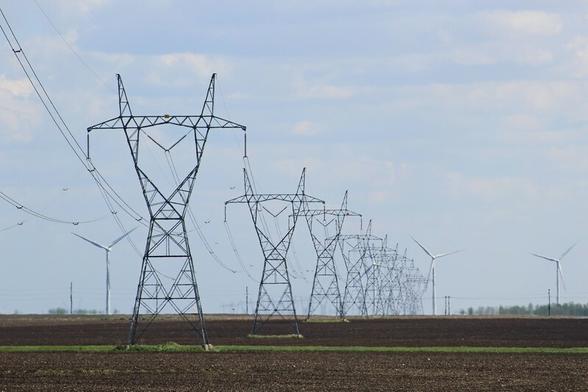
@camwilson Do you/we/anyone know whether there are mandatory requirements to make use of the low quality waste heat from them? It may require deliberate choice to co-locate the data centres where waste heat usage can be facilitated.

e.g. pre-heating for adjacent industrial processes, district heating

#climate #datacentre #wasteheat #auspol #GovernmentPolicy
#carbonneutral

Tackling the #energy demands of #supercomputers through technology and experience: Satoshi Matsuoka, Director of the @riken Center for Computational Science, and Dieter Kranzlmüller, head of LRZ, signed a Memorandum of Understanding to establish close cooperation in the field of #energyefficiency Both #supercomputing centers rely on water-based cooling and aim to advance technology for thermal optimization as well as for the recovery and reuse of #wasteheat: https://www.lrz.de/en/news/detail/riken-r-ccs-and-lrz-collaborate

#IT4Science

We are introducing a #CO2neutral heating system on the Garching research campus, using #wasteheat from the #supercomputer and #geothermal sources. This is expected to reduce emissions by around 30,000 tons per year: http://go.tum.de/752215

#sustainability #energy

📷U.Meyer

TUM will save 30,000 tons of CO2 per year in the future

The TUM Research Campus Garching will be supplied with CO2-neutral heat in the future – saving 30,000 tons of CO2 per year.

@primonatura #DistrictThermalNetworks #WasteHeatHarvesting #wasteheat

All essential for energy efficiency which will reduce the cost of the renewable energy networks, and reduce cost to the end-user

I continue to believe that #WasteHeat is probably a much bigger factor in global #ClimateCollapse than most people are willing to consider. It's not just #greenhouse gas #emissions. All the fuel we burn, all the power we generate, all produces not insignificant thermodynamic losses. 2/3rds of electrical power generation is lost as waste heat, before it reaches the end user, and a large proportion of what is actually consumed is also lost as waste heat. Then there's direct combustion of fuels.
This NYC high-rise is using heat pumps and waste heat to cut fossil fuels

The cutting-edge, state-backed project at 345 Hudson could be a model for other big buildings sprinting to comply with the city’s building decarbonization law.

Canary Media
Instead of wasting heat we could be putting it to use. We could do this for buildings across Canada #energyefficiency #wasteheat #SustainableLiving
https://www.cbc.ca/news/science/zibi-waste-heat-recovery-1.7117832
These Ottawa-area buildings are heated with industrial waste, as reuse technology gains steam | CBC News

Residents of a new development in Ottawa-Gatineau are using industrial waste to keep their homes warm: specifically, waste heat from a local paper plant. Heat is being thrown away all around us — but it can be captured to heat buildings in a more efficient and climate friendly way.

CBC

We need more of this - but there seem to be all sorts of legal - not technical - restrictions that limit this clever use of #WasteHeat from summer aircinditioning. It's important because #HeatPump efficiency depends on the temperature of the source of extracted heat. ANd peak demand for heat energy occurs just when air source heat pump efficiencies are lowest. ANd the size of the electrical grid depends on peak demand - the higher the peak demand, the greater the capital investment.

So why aren't we looking at how to enable community/district systems that do the same thing?

To Slash Carbon Emissions, Colleges Are Digging Really Deep https://www.nytimes.com/2024/01/23/climate/geoexchange-climate-colleges-heat.html?unlocked_article_code=1.P00.5iDc.uiGbkT_oFFYU&smid=nytcore-android-share

#ClimateAction #heatpumps #ThermalNetworks

To Slash Carbon Emissions, Colleges Are Digging Really Deep

A growing number of colleges and universities are using deep underground pipes to heat and cool their buildings without burning fossil fuels.

The New York Times
There are technologies that can harvest energy and store waste heat for later use. This heat can be captured, stored, and distributed to heat homes and businesses, reducing greenhouse gas emissions. Technology is already available to do this, and it would significantly impact our ability to achieve net-zero heating systems. Reusing waste heat is a win-win for the environment and the economy. #WasteHeat #NetZeroHeating #SustainableEnergy https://www.weforum.org/agenda/2023/08/reuse-waste-energy-net-zero-heating-systems/
How to reuse waste energy for net-zero heating systems?

Reusing waste heat energy can help us reduce our reliance on fossil fuels, improve air quality and help us achieve net-zero emissions.

World Economic Forum
Waste heat: the dominating root cause of current global warming - Environmental Systems Research

Background Pursuing GHG reductions by means of all resources and efforts has turned out no result to stop or even slow the global warming: the globe still gets warmer and warmer, especially in the recent years, at record-breaking rate almost each single year. Additionally, no definitive relationship has been found between the warming and the atmospheric GHG concentration. The link between them even in IPCC’s report lacks support and is unconvincing. All these imply that something else is responsible for the warming. On the other hand, huge amount of residual heat or waste heat from human activities has been poured into the climate system but has not been considered seriously in the context of global warming or climate change. Results This article features deploying the basic principles of thermodynamics and applying a new model, Equivalent Climate Change Model, to analyse the currently available data on world energy consumption between 1965 and 2017, and to study the relation between the global warming and the waste heat entered the climate system. The results show that the temperature changes in air, oceans and land are definitively correlated to the respective heat allocated from the waste heat stream based on their specific heat capacities, with high certainty and reliability. The observed anomalies in air fall within a range of simulations at an equivalent climate change surface air boundary layer depth between 50 and 100 m (60 ~ 100 m in recent decades due to more establishments of high-rising heat discharging sources); the anomalies in oceans fall within a range of simulations at an equivalent climate change waters surface boundary layer depth between 0.10 and 0.20 m (0.125 ~ 0.20 m in recent decades); and the anomalies in land fall within a range of simulations at an equivalent climate change land surface boundary layer depth between 0.05 and 0.10 m (0.06 ~ 0.10 m in recent decades). The simulation results at the air layer depth of 70 m are almost the same as NASA’s Lowess smoothing trend. Forecast of future global warming based on this model under the scenario of business as usual indicates that the possible air temperature risings will be in the range of 0.68 ~ 1.13 °C in 2030 and 0.73 ~ 1.22 °C in 2040; the possible sea temperature risings will be in the range of 0.61 ~ 0.98 °C in 2030, 0.66 ~ 1.05 °C in 2040; and the possible land temperature risings will be in the range of 1.02 ~ 1.71 °C in 2030, 1.10 ~ 1.84 °C in 2040. However, if the energy conversion efficiency increased by 10% by 2030 and another 10% by 2040, then the possible air temperature risings would be in the range of 0.54 ~ 0.90 °C in 2030 and 0.44 ~ 0.73 °C in 2040; the possible sea temperature risings would be in the range of 0.49 ~ 0.78 °C in 2030, and 0.40 ~ 0.64 °C in 2040; and the possible land temperature risings would be in the range of 0.81 ~ 1.36 °C in 2030 and 0.66 ~ 1.11 °C in 2040. The observed global average air temperature changes and the Lowess Smoothing values in 2018 and 2019 fall within the range set by the air layer depth between 60 and 100 m, are consistent with the forecast under the scenario of business as usual, further confirms the reliability of this approach. Conclusions Greenhouse gases are not the culprit of the current global warming, instead, huge amount of residual heat or waste heat discharged into the environment from human activities has dominated the warming (beside of solar irradiance and volcano eruptions). Pursuing GHG reductions is bound to be ineffective in preventing the globe from further warming but increases unnecessary burdens. Switching to 100% of surface renewable energies is the ideal solution to completely solve further warming problem. However, geotherm does cause global warming although it is a type of renewable energy. Increasing energy’s conversion efficiency can effectively help slow down the warming, it requires vast investment and will embrace breakthroughs in technologies. Changing human’s behavior individually and socially and retrofitting can decrease the energy consumption and the amount of heat entering the environment and thus help mitigate climate change and its impact in the most cost-effective way. Unlike the General Circulation Models that can only simulate the past air temperature changes with greater uncertainty, the Equivalent Climate Change Model can not only trace the past temperature changes in air, oceans and land, but also can predict the future changes in them, respectively, with high certainty and reliability.

SpringerOpen