GitHub - kiprotect/klaro: Klaro Privacy Manager. An open-source, privacy-friendly & compliant consent manager for your website.

Klaro Privacy Manager. An open-source, privacy-friendly & compliant consent manager for your website. - kiprotect/klaro

GitHub
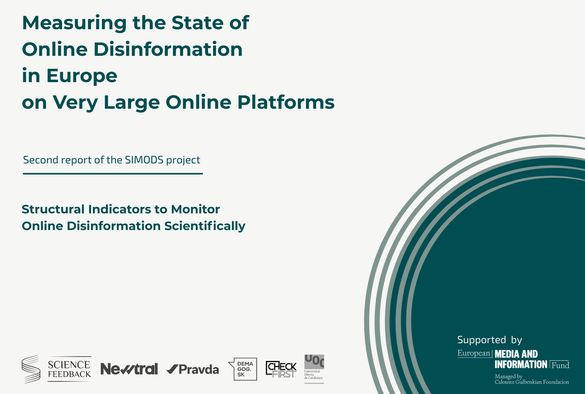
#Studie: Facebook, TikTok, YouTube und X weisen den größten Anteil desinformierender Posts auf. KI-generierte Inhalte werden dabei immer relevanter. LinkedIn rangiert von den untersuchten Plattformen auf dem letzten Platz.
#Simods #VLOPs #Desinformation
https://science.feedback.org/second-measurement-mis-disinformation-major-platforms-europe/
What our second measurement says about misinformation on major platforms in Europe - Science Feedback

TikTok continues to show the highest prevalence of mis/disinformation (~25% of exposure-weighted posts), up from ~20% in the first measurement. The interaction advantage of low-credibility accounts over high-credibility ones persisted or worsened on most platforms.

Science Feedback
Impressed by the results of the survey from Coimisiún na Meán on data access under #DSA Article 40(4): 103 researchers are planning 602 applications in total, with 448 data access requests planned within the first 6 months of applications opening, out of which 317 relating to #VLOPs/VLOSEs established in Ireland.
Obviously, “TikTok, Facebook, Instagram, YouTube and X were the most common VLOP/VLOSEs that researchers were planning to request data from”.
https://mailchi.mp/cnam.ie/vetted-researcher-newsletter-issue-1
500: We've Run Into An Issue | Mailchimp

"In 2024, social media #VLOPs submitted their first risk assessments under the #DigitalServicesAct. None of the VLOPs identified #monetization systems as a #systemicrisk."

"Decisions over who is eligible for payment, & what actors & content get financially rewarded, can substantially shape the content that gets created, amplified, and consumed."

Crucial report by @whattofix.tech on how #bigtech's monetization schemes create systemic risks under the #DSA:

https://www.whattofix.tech/publications/systemic-risks-annual-report/

WHAT TO FIX’s Submission to the European Board on Digital Services’ Annual Report on Systemic Risks

We’re excited to share our submission to the European Board for Digital Services’ request for input, designed to inform its first annual report on systemic risks and recommended mitigation measures.

[FR] La Commission européenne utilise désormais @opentermsarchive pour suivre les CGU, politiques de confidentialité et autres documents contractuels des #VLOPs et #VLOSEs dans le cadre du #DSA.

Un pas important pour la transparence des plateformes et la souveraineté numérique européenne !

Merci au ministère, @HenriVerdier et @EUCommission pour leur soutien.

Lire le communiqué : https://www.diplomatie.gouv.fr/fr/politique-etrangere-de-la-france/diplomatie-numerique/actualites-et-evenements/article/numerique-la-commission-europeenne-s-appuie-sur-open-terms-archives-pour-suivre

#Transparence #SouverainetéNumérique

Numérique - La Commission européenne s'appuie sur Open Terms Archives pour suivre les conditions d'utilisation des très grandes plateformes en ligne (11.06.25)

Le ministère de l'Europe et des Affaires étrangères se félicite du choix de la Commission européenne de recourir à l'outil Open Terms Archive pour (…)

France Diplomatie - Ministère de l'Europe et des Affaires étrangères
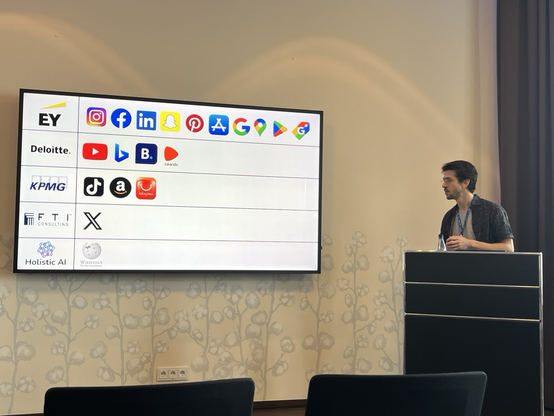
Surprise, surprise: who is auditing #VLOPs platforms for #DSA compliance?
Study by @johnalbert
#AoIR
Nun ist unser Beispiel Bluesky mit 26 Millionen Nutzern weltweit ein kleiner Schmetterlingsfisch. Er ist von überschaubarer Relevanz. Die Gesetzgeber (siehe oben) sind zu dem Schluss gekommen, dass in der EU besonders große Anbieter auch eine besonders große Verantwortung treffen solle: #VLOPS.
Bluesky

Bluesky Social
Der #DSA fordert von allen Hostern daher leicht erreichbare Meldewege und ein Moderationsregime - eine Fallbearbeitung für Inhalte Dritter. Haben sie das nicht, gefährdet dies das Haftungsprivileg.... (Durchschnaufen, gleich geht's mit den #VLOPS weiter..)
Bluesky

Bluesky Social

Dzięki #DSA (akt o usługach cyfrowych) największe internetowe platformy (#VLOPs) muszą cyklicznie analizować, w jaki sposób ich usługi wpływają na zdrowie publiczne, prawa człowieka i demokrację.
Przeczytaliśmy pierwszy raport - od Facebooka. To nasze wnioski:
https://panoptykon.org/obowiazkowe-oceny-ryzyka-VLOP-facebook

🫢 Mały spoiler: Meta nie widzi problemu z hiperpersonalizacją w algorytmach rekomendujących treści.

Platformy muszą oceniać, jak wpływają na zdrowie, prawa człowieka i demokrację. Analizujemy raport Facebooka | Fundacja Panoptykon

Platformy muszą oceniać, jak wpływają na zdrowie, prawa człowieka i demokrację. Analizujemy raport Facebooka | Fundacja Panoptykon

2/
Mieliśmy się też dowiedzieć, co zrobiły, żeby minimalizować potencjalne negatywne skutki swoich usług.

Taki obowiązek dotyczy 19 firm z największą liczbą użytkowników(#VLOPs i #VLOSEs).

Do wtorku (26.11) analizy opublikowały Wikipedia, Apple LinkedIn, Zalando i Bing.

Dłużej musieliśmy poczekać na X, Google Search, Facebook i Instagram