#RobertsRecycling seeks clothing brand partners to create #Wood alternative from #TextileWaste https://ukft.org/roberts-recycling-wood-alternative/

Bridgend man sentenced for illegal waste operations and ordered to repay £322,500

Stephen John Williams, 69, of Tondu, Bridgend, was the sole owner of Wenvoe Environmental Limited and Servmax Ltd. Between October 2018 and October 2019, he organised the illegal deposit of 2,600 tonnes of contaminated textile waste at sites in Caerphilly, Cowbridge and Dolgellau.

At Cardiff Crown Court on 3 October 2025, Williams was sentenced to 21 months’ imprisonment, suspended for two years, following a prosecution by Natural Resources Wales (NRW). He must also complete five rehabilitation activity days.

Waste left landowners with huge clean‑up bills

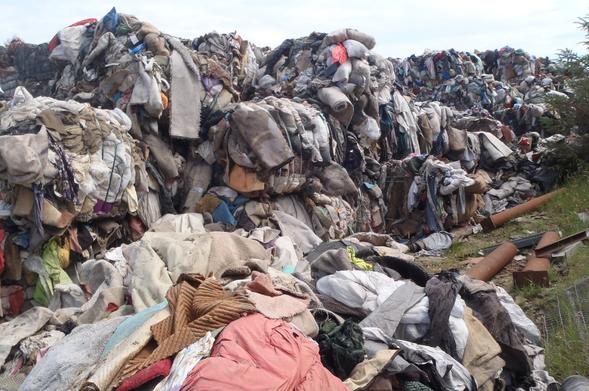
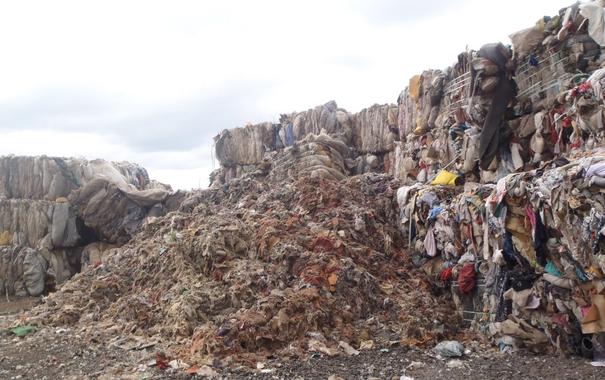
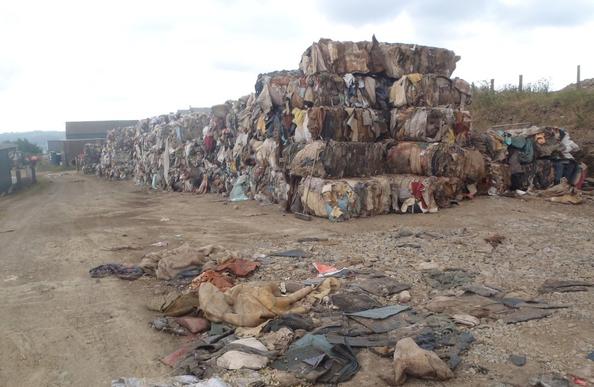
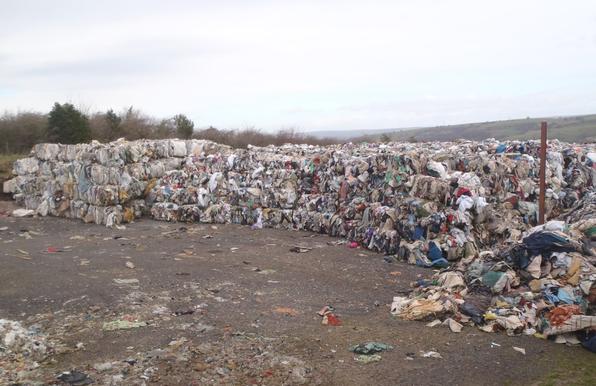
At Pen Yr Heol Las Farm in Caerphilly, NRW officers discovered 1,843 tonnes of baled textile waste contaminated with general refuse. Williams claimed it was intended for equine use, but it was deemed unsuitable and posed a significant fire risk. Despite being served with a legal notice to remove the waste, he failed to comply.

Baled textile waste illegally dumped at Pen Yr Heol Las Farm in Caerphilly, posing a significant fire risk after being left in place despite legal notices.Baled textile waste illegally dumped at Pen Yr Heol Las Farm in Caerphilly, posing a significant fire risk after being left in place despite legal notices.Baled textile waste illegally dumped at Pen Yr Heol Las Farm in Caerphilly, posing a significant fire risk after being left in place despite legal notices.

In Cowbridge, 260 tonnes of similar waste were found at Crossways Industrial Estate. Again, Williams ignored a legal notice, leaving landowners — who had no involvement in the operation — to pay £48,790 to clear the site.

At Hengwrt in Dolgellau, officers found 527 tonnes of waste including clothing, carpets, foam and mattresses. Williams again failed to comply with a notice to remove it.

Contaminated waste including clothing, carpets and foam dumped in bushes at Hengwrt, Dolgellau, one of three sites targeted by the illegal operation.
(Image: Natural Resources Wales)

NRW: “Sustained disregard for environmental law”

Su Fernandez, Senior Enforcement Officer for NRW, said:

“Businesses that move, store or broker waste must do so responsibly and within the law. When individuals choose to ignore these rules, the consequences can be serious.

“In this case, Stephen Williams demonstrated a sustained disregard for environmental law. The waste posed a significant fire risk and left landowners facing substantial clean‑up costs. Despite being served with legal notices, Mr Williams failed to take action.

“We welcome the outcome of this case and hope it sends a clear message that NRW will not tolerate the illegal disposal of waste. We will pursue offenders through the courts where necessary and use powers under the Proceeds of Crime Act to recover the profits made from environmental crime.”

Ordered to repay £322,500

Under the Proceeds of Crime Act, the court determined Williams had benefitted by £470,189.41 from his environmental crimes, based on income from unlawful deposits, avoided landfill tax, and accrued interest.

His available assets, primarily equity in property, were valued at £322,500. He was ordered to repay that amount within three months or face a custodial sentence of three years and six months. The outstanding balance will remain enforceable, and prosecutors may apply to recover further funds if Williams acquires new assets in future.

How to report environmental crime

NRW urged the public to report environmental incidents via its 24/7 incident communications centre, either through the online “Report It” form or by calling 0300 065 3000.

Related stories from Swansea Bay News

Man fined over £1,200 for unlicensed waste removal
A driver was caught transporting waste without the correct licence and ordered to pay more than £1,200 in fines and costs.

Port Talbot men banned after repeated fly‑tipping
Two men from Port Talbot were banned from handling waste following multiple fly‑tipping offences across South Wales.

Driver must pay £1,717 after bathroom waste fly‑tipped
A motorist was ordered to pay £1,717 after bathroom waste was dumped near a popular picnic site.

Volunteers clear waste from River Tawe
Community volunteers removed waste from the River Tawe to support safe river sailings and improve the local environment.

#baledTextileWaste #Bridgend #Caerphilly #contaminatedWaste #Cowbridge #CrosswaysIndustrialEstate #flytipping #Hengwrt #landfill #NaturalResourcesWales #NRW #NRWProsecution #PenYrHeolLasFarm #ServmaxLtd #textileWaste #Tondu #wasteDisposal #WenvoeEnvironmentalLimited

MEPs give green light to new EU rules to reduce textile and #FoodWaste - EUbusiness.com | EU news, business and politics https://www.eubusiness.com/environment/new-eu-rules-to-reduce-textile-and-food-waste/
#TextileWaste #FastFashion

An excellent article that touches upon stitches, #embroidery, #Sashiko, and patches!

What is #VisibleMending? +5 Simple Techniques

April 18, 2024 | Kathryn Kellogg

"One of the most sustainable things you can do is just use what you have. That pertains to clothing items too: Simply shopping your closet first can make a big impact.

"Why? Well, did you know there are enough clothes on the planet right now to dress the next six generations of humanity?"

Learn more:
https://www.goingzerowaste.com/blog/visible-mending/

#SolarPunkSunday #NormalizeMending #ResistFastFashion #SlowFashion #TextileWaste #VisibleMending #VisibleRepair #StitchIt #stitchitdontditchit #FiberArts #DIY

What is Visible Mending? +5 Simple Techniques - Going Zero Waste

Curious about visible mending? Here's what it is and the most common forms of visible mending, along with helpful tutorials.

Going Zero Waste

#StitchIt, Don’t ditch it: Resisting #FastFashion through #VisibleMending

Kaja Šeruga
Fri, June 13, 2025

"Once a month between April and October, a group of stitchers takes to the streets of #EdinburghScotland, making themselves comfortable on camping chairs decorated with hand-embroidered banners inviting people to #stitchitdontditchit. Equipped with sewing baskets and mending skills, they repair their garments in public and teach interested passers-by how to do the same.

"The #EdinburghStreetStitchers, as they call themselves, are part of a growing movement that is reclaiming the ancient art of mending. Historically, mending was done in private and in ways that concealed, rather than announced, the repair. Choosing instead to mend visibly—whether through the color of the stitching or by doing it in a public location—is a statement and a conversation starter, Reasons to be Cheerful says.

" 'You are clearly stating that you have kept this from a #landfill,' says Kate Sekules, a mender who teaches fashion history at the Pratt Institute in New York City’s borough of Brooklyn, and is pursuing a PhD in the history and theory of mending. 'It’s also got the advantage of making everything you own unique and special. And when you’ve invested time and energy and thought and craft into your clothing, you value it so much more.'

"Inspired by the global #StreetStitching movement, the former pharmacist Mary Morton started the #Edinburgh group in 2022, three years after a discussion with her son sent her down a rabbit hole of research and learning about the #ClimateCrisis. 'At the end of all of that, I was absolutely horrified. I thought, ‘What can I do about it?' she recalls.

"Volunteering at the #SHRUBCooperative, which is working to reduce waste in Edinburgh, she learned about the high carbon impact of textiles—producing a kilogram of fabric releases 23 kilograms of greenhouse gases on average. 'I’ve always done a bit of sewing, so I thought teaching people how to sew and repair their garments was something I could do to help,' says Morton. She started teaching sewing at the cooperative’s #ZeroWaste Hub, but quickly realized she was preaching to the choir. 'I wanted to do something to reach out to the broader community and make them aware of the situation,' she says.

"The term 'fast fashion' was coined by the New York Times in 1989 to describe Zara’s business model, which turned a designer’s idea into a garment available to consumers in only 15 days. Today’s ultra-fast fashion retailers have further accelerated the pace of production: #Shein, for example, has created 52 micro-seasons per year and adds up to 10,000 items to its website each day. With plummeting prices and a rising throwaway culture, by 2014, people were buying 60 percent more clothes than at the turn of the millennium, and keeping them for only half as long.

"Today the fashion industry is responsible for 92 million metric tons of #TextileWaste annually, and the dyeing and finishing of textiles causes 20 percent of industrial #WaterPollution. Due to energy-intensive production and long supply chains, the apparel industry is responsible for eight percent to 10 percent of global #CarbonEmissions—more than aviation and shipping combined.

"The quiet, simple act of mending can go a long way toward reducing these impacts: According to research by the climate action NGO WRAP, 82 percent of repaired garments prevent the purchase of a new one, and extending the life of an item of clothing by only nine months reduces its carbon, water and waste footprint by a total of 20 percent to 30 percent.

" 'One of the other big benefits is to #NormalizeMending again,' says Morton. For most of human history, textiles were time-consuming to produce and expensive to buy, so mending them was second nature, says Sekules. Repairs were often visible out of necessity, since matching thread to existing fabric was a costly and often impossible proposition. One of the oldest extant examples of visible mending is a 2,000-year-old Egyptian tunic in the Whitworth Geller’s collection in Manchester, England, though the practice is far older than that. Over millennia people across the world developed their own distinct techniques of darning, embroidery and appliqué, using colorful patches or designs to hide holes and stains. 'It was made to seem deliberate, because it was a shameful sign of poverty to look as if you’ve been mended,' says Sekules.

"As mending fell out of favor in Europe and the U.S. in the late 20th century, the skills associated with it were also lost over time. 'As far as we can tell it used to be passed down the maternal line since time immemorial,' says Sekules. 'Then we forgot about it—culturally, it was just no longer a skillset we needed.'

"In recent years a growing opposition to fast fashion has coalesced under the umbrella of #SlowFashion, a movement championing quality over quantity and responsible use of resources. 'People are becoming more aware that the way we produce is harmful to people and the environment,' says Sam Bennett, maker, researcher and one-half of the duo behind Repair Shop, which takes mending commissions and offers online and in-person mending workshops. 'It’s a smaller, quieter form of #activism that I think is really exciting.'

"The resurgence of mending coincided with early Instagram, with visible mending especially well-suited to such a visual medium, and menders like Celia Pym and Tom van Deijnen started to document their mends on the platform in 2014. 'Those posts and popularity then allowed for people to create public workshops, publish books and so on,' says Bennett, who is working on a timeline documenting how mending skills have been passed on over the past 300 years. Much of the skill-sharing has also moved to virtual spaces, which makes it accessible to anyone with an internet connection. But while they serve their purpose, online workshops don’t have quite the same magic, says Bennett: 'It really started with community and sitting side by side with someone. And I think that in the end, that is still the most successful way to learn.'

https://www.yahoo.com/lifestyle/articles/stitch-don-rsquo-t-ditch-153005359.html

#SolarPunkSunday #VisibleRepair #VisibleMending #Mending #FiberArts #Crafting #DIY #MakeAndMend #RepairDontBuy #ResistFastFashion #BuildingCommunity

Stitch it, don’t ditch it: Resisting fast fashion through visible mending

Reasons to be Cheerful reveals how stitchers around the world are repairing their clothes with pride, turning a once-hidden process into a bold fashion...

Yahoo Life
I popped into the local op shop this morning. I'm always on the lookout for surprises. Sure did get a surprise - a very worn and stretched Zara knit dress for $25. At Big W the other day they had quite nice knit dresses for $20. Is it any wonder people buy cheap imports when the op shops are putting silly prices on things. #textilewaste #opshopfinds

@Alien_Sunset this study from the UK in 2022 did find that secondhand clothing had a lower environmental footprint than new, even if posted to a distribution centre and then posted out from there https://circulareconomyjournal.org/wp-content/uploads/2024/07/Klooster_et_al_Do-we-save-the-environment-by-buying-second-hand-clothes-The-environmental-impacts-of-second-hand-textile-fashion-and-the-influence-of-consumer-choices.pdf

#CircularEconomy #TextileWaste

WRAP warns of looming collapse in UK used textiles sector

Environmental NGO warns that unsustainable losses could place a £64 million burden on local authorities, charities, and consumers if struggling industry fails

Resource.co