Нейросетевой эквалайзер на PlutoSDR: от синтетики к железу

Любой реальный радиоканал «размазывает» символы во времени: соседние отсчёты накладываются друг на друга, и приёмник видит межсимвольную интерференцию (ISI). Классический способ с этим бороться — адаптивный фильтр LMS. Он прост, дёшев и хорошо работает, пока канал близок к линейному. Но это именно линейный фильтр: когда лучей несколько и у них разные фазы, одной линейной комбинацией отсчётов идеально восстановить символ уже не получается. Отсюда идея, которую я и проверял: заменить (или дополнить) LMS компактной свёрточной сетью. Сеть смотрит не на один отсчёт, а на целое окно принятого сигнала и учится по нему обратному отображению канала — то есть восстанавливать исходную точку созвездия с учётом совместной статистики соседних символов. Сначала всё это обучается и сравнивается на синтетике, а потом проверяется на настоящем железе — модуле ADALM‑PLUTO.


https://habr.com/ru/articles/1048700/

#RF #КИХ #кихфильтр #бих #pytorch #tensorflow #радиотехника

Нейросетевой эквалайзер на PlutoSDR: от синтетики к железу

Зачем вообще трогать LMS Любой реальный радиоканал «размазывает» символы во времени: соседние отсчёты накладываются друг на друга, и приёмник видит межсимвольную интерференцию (ISI). Классический...

Хабр
Best Python AI Frameworks in 2026 | The PyCharm Blog

Compare the top Python AI frameworks for 2026. Learn when to use each, their strengths and limitations, and how to choose the right one for your project.

The JetBrains Blog
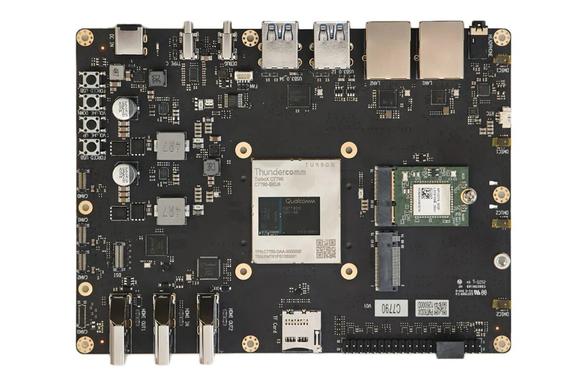
Thundercomm TurboX C7790 Android and Linux development kit features Qualcomm Dragonwing Q-7790 Edge AI SoC

Thundercomm has launched the TurboX C7790 development kit, a compact edge AI platform built around the Qualcomm Dragonwing Q-7790 (CQ7790S) processor. The kit offers up to 24 TOPS of AI performance and support for both Android and Linux operating systems. The development kit pairs a TurboX C7790 system-on-module equipped with 12GB LPDDR5X RAM and 128GB flash with a carrier board featuring a wide range of interfaces from dual GbE to HDMI, USB-C, and MIPI DSI display interfaces. Target applications include AI cameras, video conferencing, robotics, and edge AI gateways. TurboX C7790 Development Kit specifications: System-on-Module - TurboX C7790 SoC - Qualcomm Dragonwing Q-7790 (CQ7790S) 4nm processor CPU – Octa-core Kryo processor up to 2.8 GHz 1x Gold+ core @ 2.8 GHz 4x Gold cores @ 2.4 GHz 3x Silver cores @ 1.8 GHz GPU – Qualcomm Adreno 722 GPU up to 1.15 GHz VPU Video Decode – 4K120 H.264/H.265/AV1 Video

CNX Software - Embedded Systems News
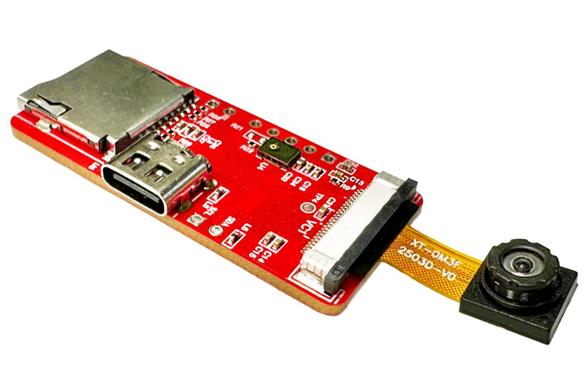
Nuvoton NuMaker-GestureAI-M55M1 module combines Cortex-M55 MCU with GC0308 camera for AI gesture control

Back in November last year, we covered the launch of the NuMicro M55M1 MCU from Nuvoton, which combines an Arm Cortex-M55 core with an Ethos-U55 microNPU for on-device AI and gesture control. Now, they have released the NuMaker-GestureAI-M55M1, a development module based on that MCU for AI vision-related applications. This new board integrates the M55M1 MCU with a GC0308 CMOS image sensor, a digital microphone, and a microSD card slot for storing AI models. It is designed for applications such as gesture control, basic vision systems, and touchless interfaces. NuMaker-GestureAI-M55M1 specifications: MCU – Nuvoton NuMicro M55M1R2LJAE CPU - Cortex-M55 MCU @ 220 MHz Memory - 1.5 MB SRAM Storage - 2 MB Flash AI Accelerator - Arm Ethos-U55 micro-NPU @ 220 MHz Storage – MicroSD card slot (located on the back) for storing AI model files Camera – Integrated VGA GC0308 CMOS image sensor Audio – On-board digital microphone (DMIC) USB –

CNX Software - Embedded Systems News
Build a Live Object Detection App for the Reachy Mini With TensorFlow and PyCharm | The PyCharm Blog

Learn how to build a real-time object detection app using TensorFlow and PyCharm, then deploy it onto the Reachy Mini robot for live object tracking.

The JetBrains Blog
Learn everything you need to know about Tensorflow via these 93 free HackerNoon blog posts. https://hackernoon.com/93-blog-posts-to-learn-about-tensorflow #tensorflow
93 Blog Posts To Learn About Tensorflow | HackerNoon

Learn everything you need to know about Tensorflow via these 93 free HackerNoon blog posts.

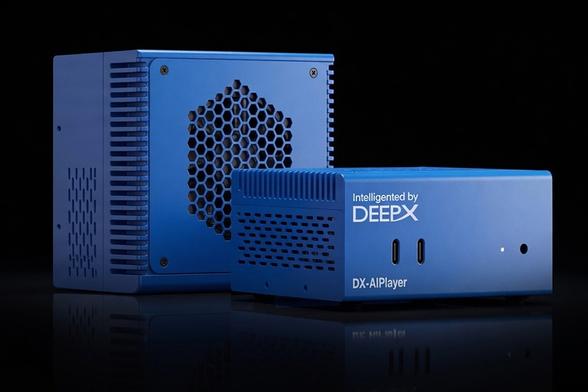
DEEPX DX-AIPlayer N97 mini PC combines Intel N97 SoC and 25 TOPS DX-M1 AI accelerator

DEEPX has just launched the DX-AIPlayer, an ultra-compact edge AI mini PC with an Intel Processor "Alder Lake-N" N97 SoC and the company's DX-M1 M.2 AI accelerator module. The system is designed for real-time vision AI applications in robotics, smart cities, and factory automation. We’ve seen plenty of Alder Lake-N mini PCs like the Jetway B420UADN1, the Avalue EPC-ASL, the AAEON UP 710S, and various others, but the DX-AIPlayer N97 is different as it integrates the DX-M1 module via an M.2 2280 M-Key (PCIe Gen 3 x4) slot. The NPU delivers up to 25 TOPS of INT8 AI performance while consuming only 1 to 5 Watts of power, and features 4GB of dedicated LPDDR5 memory to handle larger workloads and multi-model execution without bottlenecking the host system's RAM. DEEPX DX-AIPlayer N97 specifications: SoC - Intel Processor N97 quad-core processor up to 3.6 GHz with 6MB cache, 24 EU Intel UHD graphics

CNX Software - Embedded Systems News
GitHub - mokemokechicken/reversi-alpha-zero: Reversi reinforcement learning by AlphaGo Zero methods.

Reversi reinforcement learning by AlphaGo Zero methods. - mokemokechicken/reversi-alpha-zero

GitHub
PyTorch vs. TensorFlow: Choosing the Right Framework in 2026 | The PyCharm Blog

PyTorch vs. TensorFlow in 2026: Compare learning curves, deployment options, and use cases, and get guidance for choosing the right deep learning framework.

The JetBrains Blog