 Daily Times - Latest Pakistan News, World, Business, Sports, Lifestyle [Unofficial]
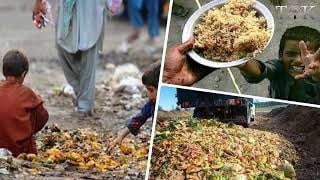
Food waste rises as Pakistan faces growing crisis
 chris 🔓 Digital Sovereignty
@micehome how much power draw would there be without the thousands of sensors?
 Vietnamnet BOT
Sunhouse đang tập trung vào chiến lược phát triển bền vững với 2 trụ cột chính: công nghệ lõi và năng lực sản xuất. Định hướng này được xây dựng qua gần 30 năm hoạt động, giúp doanh nghiệp duy trì tăng trưởng ổn định trong kỷ nguyên tiêu dùng xanh.
#Sunhouse #SustainableConsumption #SustainableDevelopment #PhátTriểnBềnVững #TiêuDùngXanh #CôngNghệ #Manufacturing #KinhDoanh
https://vietnamnet.vn/chien-luoc-cua-sunhouse-trong-ky-nguyen-tieu-dung-ben-vung-2480440.html

 Uni Göttingen
What would make you reach deeper into your pocket to pay for sustainable chocolate?
Researchers at our Uni looked at the influence of emotive social media posts. It turns out there is an effect, but how long does it last? https://www.uni-goettingen.de/en/3240.html?id=7745
Or check out the research: https://doi.org/10.1093/qopen/qoaf003

 CUSP
CUSP 
Ringing the Changes | CUSP Newsletter, Dec 2024 → https://share.sender.net/campaigns/9o8p/ringing-the-changes-cusp-newsletter-dec-2024
As 2024's turmoil reshapes the political and ecological landscape, we continue to address the urgent question of sustainable prosperity. Explore insights on economics, resilience, and change from our researchers, alongside major collaborations shaping policy and practice. Here's to our tenth year of inquiry and action!
__cc #PostGrowth #Degrowth #BeyondGrowth #WellbeingEconomy #SustainableConsumption
As 2024's turmoil reshapes the political and ecological landscape, we continue to address the urgent question of sustainable prosperity. Explore insights on economics, resilience, and change from our researchers, alongside major collaborations shaping policy and practice. Here's to our tenth year of inquiry and action!
__cc #PostGrowth #Degrowth #BeyondGrowth #WellbeingEconomy #SustainableConsumption

Caring consumption and sustainability: Insights from household provisioning in the first ten years of motherhood—New #OpenAccess paper by Kate Burningham and Susan Venn → https://cusp.ac.uk/themes/s1/paper-kb-caring-consumption/
__
cc #SustainableConsumption #SustainableLifestyles #Motherhood #Food #SustainableFood #CareEconomy

Caring consumption and sustainability: Insights from early motherhood | Journal paper by Kate Burningham and Sue Venn
Households play a key role in sustainability transitions but remain underexplored. This longitudinal study shows how motherhood shapes sustainable food prac ...
 Pollinators
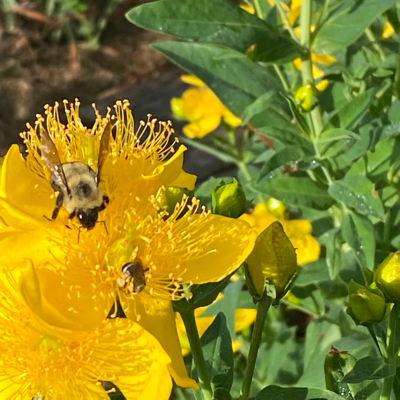
@simon_brooke. Excellent! Can you share more photographs as your time allows? Thank you for your contribution to the Mastodon universe. The straw bale construction world has interesting connections. For example the foundation to the bale wall, and the bale wall to the sill of the roof framing. #strawbalebuild, #strawbale, #sustainableconstruction, #SustainableConsumption.
 Melissa Boneau
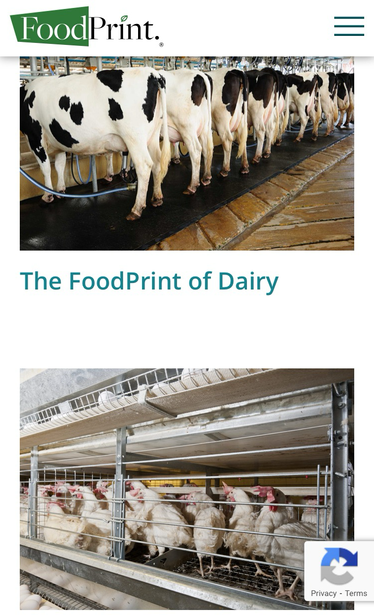
#sustainableconsumption #animalrights https://foodprint.org/the-total-footprint-of-our-food-system/issues/

 Minna Kanerva
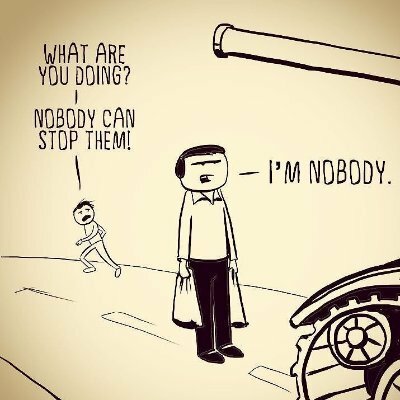
Our new special issue on how to transform food consumption so that it's good for people and planet #planetaryhealthdiet #sustainableconsumption #climatecrisis #EcologicalCrisis #lessmeat

How to Achieve a Planetary Health Diet Through System and Paradigm Change?
The call for a transformation toward planetary health diets (such as the one suggested by the EAT-Lancet Commission in 2019) is getting louder and more urgent. Such diets take into account not only human health, but also the ecological sustainability of global food systems and the natural systems that enable human societies to flourish. More recently the 2022 IPCC AR6 Working Group III report also acknowledged this point. The report suggests a shift towards more plant-based diets for high meat-consuming population groups, as these diets are considered by many to be essential for climate change mitigation and adaptation, for restoring damaged ecosystems, and for alleviating the sixth mass extinction of species.<br/><br/>Food-related consumer practices, consumer behaviours and characteristics (gender, class, etc.) have been the focus of significant and high-quality social science research. However, sustainability transformation in food systems is largely a political and power-related question. This Research Topic draws attention to prioritising questions of power in this context. How can we identify and influence drivers - beyond individual practices - to generate system and paradigm level change? The incumbent actors (e.g. various industries) and structures (e.g. those related to subsidies) strongly resist transformational change. For example, even when industry actors seemingly accept change, they prefer to align it with their own short-term business interests and existing...
 Lukas Parker
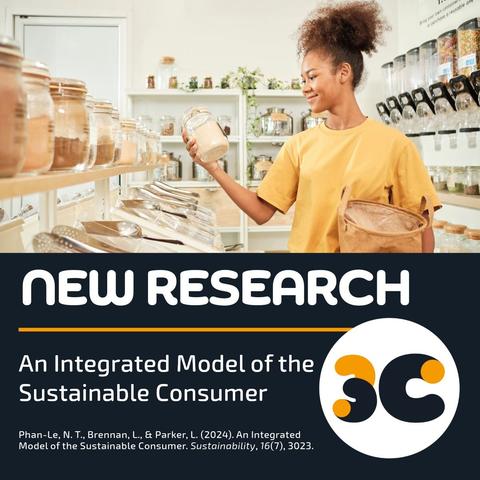
Check out our latest article in Sustainability (Journal): An Integrated Model of the Sustainable Consumer.
The term ‘sustainable consumer’ is used across various knowledge domains, from #SustainableConsumption, #GreenMarketing, #Sustainability, and hashtag#SocialChange to hashtag#SocialMarketing for sustainability issues. However, the term lacks a precise definition, which leads to the inaccurate evaluation and measurement of the impact of green marketing or social marketing campaigns on consumption—sustainable or otherwise. This paper develops a framework to clarify the term ‘sustainable consumer’ to assist both scholars and practitioners. The application of systems thinking was applied to the extant literature to theorise the #SustainableConsumer. It provides a new framework for theorising Sustainable Consumers: the integrated model of the sustainable consumer (#ISMC). The framework enables a targeted intervention design according to the layer and element and permits more precise evaluations of behaviour change campaigns’ effectiveness.
Read it here (open access): https://doi.org/10.3390/su16073023

An Integrated Model of the Sustainable Consumer
The term ‘sustainable consumer’ (SC) is used across various knowledge domains, from sustainable consumption, green marketing, sustainability, and social change to social marketing for sustainability issues. However, the term SC lacks a precise definition, which leads to the inaccurate evaluation and measurement of the impact of green marketing or social marketing campaigns on consumption—sustainable or otherwise. This paper develops a framework to clarify the term ‘sustainable consumer’ to assist both scholars and practitioners. The application of systems thinking was applied to the extant literature to theorise the SC. This conceptual paper provides a new framework for theorising SCs: the integrated model of the sustainable consumer (ISMC). This framework emphasises the interconnected relationships of influences within the SC profile to assist scholars in examining SCs within these systems with precision. We contend that, to promote and maintain the desired sustainable consumption for long-term effects, researchers and practitioners should consider the impact not only of the socio-psycho-demographic characteristics but also the connection of the person to the environment and their community, in addition to their worldviews. The framework presented here challenges linear models by proposing a nested, dynamic structure that recognizes the interconnected influences within the sustainable consumer’s ecosystem. The framework also enables a targeted intervention design according to the layer and element and permits more precise evaluations of behaviour change campaigns’ effectiveness.