
In the Manner of a Corpse
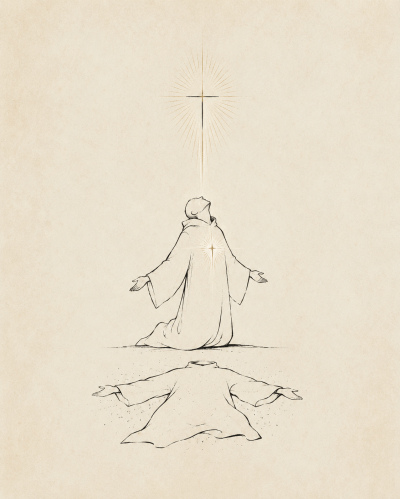
The phrase perinde ac cadaver means “as if a corpse” or “in the manner of a dead body.” It is associated especially with Ignatius of Loyola and Jesuit obedience. In the Jesuit context, the idea was that one living under religious obedience should allow oneself to be “carried and governed” by divine providence through one’s superiors, as a dead body can be carried wherever another wills. A Jesuit Studies summary notes that Ignatius’s teaching on obedience was centered on Christ and extended beyond outward action toward the will and understanding, while still allowing a person to represent difficulties to a superior. (Portal to Jesuit Studies) A 1908 quotation of the relevant Latin renders the image starkly: the obedient person should be like a body that “allows itself to be carried in any direction and treated in any way.” (The Spectator Archive)
So the phrase has a dangerous edge. It can become a theology of domination: the living person reduced to a usable instrument. But it also touches an older ascetic question: how does the self become free from the tyranny of self-will? The problem is not desire itself, nor personality, nor conscience, nor agency. The problem is the ego enthroned — the self that must be obeyed, defended, admired, justified, and protected at all costs.
A Caelinian Reflection: Concerning the Corpse, the Cross, and the Living Self
From the lesser folios of Brother Caelinius, copied in the dim cloister of the Morastery, concerning the death that is not death, and the life that is not possession.
There is a saying among the old disciplined orders: perinde ac cadaver — as if a dead body.
And many have trembled before it, as well they should.
For no phrase that compares the soul to a corpse ought to be handled without fear. A corpse cannot speak. A corpse cannot protest. A corpse cannot discern whether the hands that carry it are gentle or cruel. Therefore let no abbot, bishop, prince, pastor, committee, empire, army, market, or machine take this phrase into its mouth too easily. For there are many who love obedience in others because they love power in themselves.
But there is another reading, hidden beneath the severe garment of the words.
Not the corpse of domination.
Not the corpse of erased conscience.
Not the corpse of holy silence before unholy command.
Rather, the corpse of the false self.
For the ego too must die.
Not the self God created.
Not the face beloved before the foundation of the world.
Not the child laughing in the garden of being.
Not the soul with its strange music, its wounds, its gifts, its tears, its fire.
That self must live.
But the other self — the swollen self, the defended self, the self that must always be seen, always be right, always be vindicated, always be centered, always be special, always be wounded more deeply than all others, always be praised for its humility — that self must be laid out upon the table.
Let it be washed.
Let it be wrapped.
Let it be carried away.
For there is a death that does not destroy the person, but releases the person from the prison of self-occupation.
This is not becoming zero in the sense of becoming nothing. It is becoming unowned by the ego. It is the long, daily, humiliating, merciful work of dying to the self that has mistaken itself for God.
Christ does not say, “Erase the image of God within you.”
Christ says, “Deny yourself, take up your cross, and follow me.”
And what is denied?
Not love.
Not conscience.
Not joy.
Not beauty.
Not creativity.
Not the holy ache of being alive.
What is denied is the little throne within the breast, where the anxious monarch sits and demands tribute from every room it enters.
The ego says:
“Who noticed me?”
“Who ignored me?”
“Who has more than I have?”
“Who threatens my place?”
“Who failed to honor my pain?”
“Who saw my brilliance?”
“Who wounded my image?”
“Who must I defeat so that I may exist?”
But the soul alive in Christ learns another speech:
“I am already seen.”
“I am already held.”
“I do not need to win in order to be real.”
“I do not need to dominate in order to be safe.”
“I do not need to disappear in order to be humble.”
“I may become small because I am held by a Love too large to measure.”
Here, then, is the mystery: the one who dies to self does not become less alive, but more alive.
The corpse-image fails if it ends in passivity. But it becomes fruitful if it passes through the tomb into resurrection.
For the Christian is not called merely to be dead.
The Christian is called to be dead to sin and alive to God in Christ Jesus.
Dead to the old compulsions.
Alive to mercy.
Dead to rivalry.
Alive to communion.
Dead to the hunger to possess.
Alive to receiving.
Dead to the need to be the hero of every story.
Alive to becoming a servant within God’s story.
Dead to reputation as an idol.
Alive to faithfulness in secret.
Dead to vengeance.
Alive to reconciliation.
Dead to the clenched fist.
Alive to the open hand.
Thus Brother Caelinius writes:
Blessed is the one whose ego has become a corpse,
yet whose heart has become a garden.
For such a one is not carried by tyrants,
but raised by Christ.
The work continues because the ego is not slain once only. It is a many-headed thing. It dies in the morning and returns by noon. It dies in prayer and rises in conversation. It dies in confession and reappears in ministry. It dies in one wound and returns disguised as wisdom.
Therefore the disciple must not say, “I have no ego.”
That is usually the ego wearing a monk’s robe.
The disciple says instead:
“Lord Jesus Christ, have mercy on me.
Teach me to notice the old self without obeying it.
Teach me to lay down the false self without despising the true self.
Teach me to die without becoming dead.
Teach me to live without needing to be enthroned.”
For the goal is not corpse-like obedience to human hierarchy.
The goal is cruciform freedom.
Not the dead body as object, but the living body of Christ. Not the person emptied for use, but the person emptied for love. Not submission to domination, but surrender to resurrection.
And so the old phrase is taken down from the wall of fear and placed upon the altar of discernment.
Perinde ac cadaver — yes, but only if what lies dead is the tyranny of ego.
And beyond it, written in brighter ink:
Vivo autem, iam non ego, vivit vero in me Christus.
“I live; yet not I, but Christ lives in me.”
#aliveInChrist #AnabaptistReflection #BrotherCaelinius #ChristianArt #ChristianReflection #contemplativePrayer #cruciformLife #devotionalArt #Discipleship #DyingToSelf #egoDeath #falseSelf #Humility #IgnatiusOfLoyola #JesuitObedience #kenosis #minimalistArt #monasticSpirituality #mysticalTheology #perindeAcCadaver #resurrection #selfEmptying #spiritualFormation #surrender #symbolicIllustration #trueSelfLe Nouvel Obs: Face à #Trump, la « leçon de #Pékin » aux #Européens :
#WORLD #RESISTANCE
https://www.nouvelobs.com/monde/20260519.OBS115065/face-a-trump-la-lecon-de-pekin-aux-europeens.html
*SIIIIGH*
look, there are only 2 options how this can play out:
1) #iran gives up on nukes so #trump can sell his #surrender, iran still controls the #strait, meaning you can cut its throuput in half
2) #trump drags this on until he's #impeached, a #warpowers resolution is passed or he dies
Becoming Zero
A Sermon on Our Value in Christ
(Note: Sermons can be heard in audio format at https://millersburgmennonite.org/worship/sermon-audio/)
Philippians 2:1–13
Introduction
There is a strange kind of math at the heart of Christian faith.
Most of us are taught to become something: successful, respected, secure, noticed. We want a place, a voice, a purpose. There is nothing wrong with wanting life to matter. There is nothing wrong with wanting to be seen and loved.
And today, as we honor our graduates, we give thanks for real accomplishment, for effort, growth, perseverance, and the doors that now open before them. But I also want to bless them with this deeper challenge: do not let the world’s calculations of what counts for success be the measure for your life.
The world often teaches us an anxious kind of success. It teaches us to add and add and add: accomplishments, things, recognition, possessions, influence, control, certainty, proof that we are right, evidence that we matter.
Then Paul gives us the mathematics of Jesus.
Jesus, who had equality with God, did not use it for his own advantage.
Jesus emptied himself.
Jesus took the form of a servant.
Jesus became obedient, even to death on a cross.
Jesus became zero.
Not worthless. Not meaningless. Not erased. But emptied of grasping for power. Emptied of the need to dominate. Emptied of the need to stand above others. Emptied so completely that the love of God could be witnessed without obstruction.
Let us pray:
Que las palabras de mi boca y las meditaciones de nuestros corazones sean agradables a tus ojos, oh Dios, roca nuestra y redentor nuestro. Amén.
Homily
Becoming zero does not mean believing we have no value. It does not mean allowing ourselves or others to be diminished or abused in the name of humility. That is not the way of Christ. The humility of Jesus does not protect oppression; it exposes it. The self-emptying of Christ is not self-destruction.
To become zero is not to become nothing.
To become zero is to become free.
I once wrote a short poem called “Becoming Zero,” subtitled “The Mathematics of the Divine.” It begins:
“It is where
I need to be
not past the center
into negativity
but more of others
and less of me”
That is the distinction we need. Becoming zero is not moving past the center into despair, shame, worthlessness, or self-hatred. It is the place where my needs, preferences, anxieties, opinions, and desires are no longer the measure of everything.
It is, as the poem says, “more of others / and less of me.”
And then the poem continues:
“What were gains
I now consider loss
for where the axes
meet at zero
they make a cross”
Where the axes meet at zero, they make a cross.
That is Philippians 2. The vertical line: love of God. The horizontal line: love of neighbor. And at the center: Christ, emptied, humbled, crucified, and yet revealing the very heart of God.
So when Paul says, “Value others above yourselves,” he is not asking us to wander into negativity. He is asking us to come to the cross-shaped center.
Paul writes:
No hagan nada por ambición egoísta ni por vanidad.
“Do nothing out of selfish ambition or vain conceit. Rather, in humility value others above yourselves.”
That sentence alone could transform the church.
Imagine if it became not just a verse we admire, but a practice we live. Imagine if every time we entered a room we asked, “Whose good am I seeking?” Imagine a disagreement where people asked, “How can I understand the interest of the other before defending my own?” Imagine life lived where the question was not, “How do I get my way?” but “How do we become more faithful to Christ together?”
That is the community Paul is describing.
“If you have any encouragement from being united with Christ, if any comfort from his love, if any common sharing in the Spirit, if any tenderness and compassion…”
Paul is appealing to what the church at Phillipi has already received. If Christ has encouraged us, if love has comforted us, if the Spirit has drawn us into fellowship, then those gifts should become visible in the way we treat one another.
La vida de la iglesia debe ser el desbordamiento de la gracia de Dios.
Church life should be the overflow of God’s grace.
If we have been comforted by Christ, we become comforting people.
If we have been forgiven by Christ, we become forgiving people.
If we have been welcomed by Christ, we become welcoming people.
If we have been served by Christ, we become servants of all.
Paul says, “Be like-minded, having the same love, being one in spirit and of one mind.”
That does not mean everyone in the church must have the same personality, opinions, politics, beliefs, preferences, background, or tastes. Christian unity is not sameness. The church is a body, not a wall of identical bricks.
La unidad significa que nuestras diferencias se reúnen bajo el señorío de Cristo.
Unity means our differences are gathered under the lordship of Christ.
We can disagree and still ask, “How do I love you?” We can see things differently and still ask, “How do I honor Christ in how I speak to you?” We can have strong convictions and still refuse selfish ambition and vain conceit.
That phrase “selfish ambition” matters. Paul is not condemning all ambition. There are holy ambitions: to serve well, love deeply, seek justice, create beauty, build peace, preach truth, care for the suffering.
He is naming the ambition that curves inward.
Selfish ambition says: I must win. I must be seen. I must be right. I must get credit. I must protect my place. I must not become less.
Then Paul names “vain conceit”: empty glory, hollow importance, the need to appear larger than we are.
Against all of that, Paul says: humility.
But humility is often misunderstood. Humility is not pretending our gifts are not real. Humility is not saying, “I am terrible at everything,” when God has given us abilities. True humility is living in the truth:
I am deeply loved, but I am not the center.
I have gifts, but they are not mine to hoard.
I have needs, but so do others.
I have a voice, but so does my neighbor.
I have interests, but they are not the only interests that matter.
Paul says:
“Not looking to your own interests but each of you to the interests of the others.”
He does not say we have no interests. He does not say our needs do not matter. He does not command a community where some are always sacrificed for the comfort of others. In a healthy body, every member matters. En un cuerpo sano, cada miembro importa.
This is where John the Baptist helps us.
In the Gospel of John, John’s disciples come to him worried. Jesus is baptizing. Crowds are going to Jesus. John’s influence is decreasing. His ministry is no longer at the center.
And John says:
“He must become greater; I must become less.”
That is becoming zero.
John does not say it with bitterness. He does not say, “Well, I guess I failed.”
John fundamentally understands his calling. John is not the bridegroom. He is the friend of the bridegroom. John is not the light. He bears witness to the light. John’s joy is not in being central. His joy is in pointing to Christ.
John is free because he knows who he is and whose he is. He can decrease because his identity is not threatened by Christ’s increase.
Ministry is not about us. It’s about Jesus. Our identity and value are rooted in Christ. Like John, we are free because we know who we are and whose we are. And that manifests itself in our relationships with others. As Paul says:
En vuestras relaciones entre vosotros, tened la misma mentalidad que Cristo Jesús.
“In your relationships with one another, have the same mindset as Christ Jesus.”
“In your relationships.” At home. At church. In disagreement. In conflict. In leadership. In service. In community. Have the mind of Christ there.
And what is the mind of Christ?
Jesus does not humble himself from a place of lowliness. He humbles himself from the highest place. He does not become servant because he has no power. He becomes servant because this is what divine love does with power.
The world uses power to dominate. Jesus uses power to serve.
The world uses status to separate. Jesus uses status to kneel.
The world uses authority to command attention. Jesus uses authority to wash feet.
This is why “Becoming Zero” is not just an individual spiritual idea. It is the shape of the church.
A zero-shaped church is a church where people make room.
It is where the strong do not use their strength to get their way, but to support the weak. It is where her members do not say, “This church belongs to us,” but, “How can we welcome those God is bringing among us?” It is where leaders do not ask, “How can I be important?” but, “How can I help others flourish?”
A zero-shaped church is where people in conflict do not rush to defend themselves first, but pause long enough to ask, “What burden, wound, hope, loss, care might my brother or sister be carrying?”
And this is where we must be honest: valuing others above ourselves is hard.
It sounds beautiful until someone else’s interests inconvenience us. It sounds holy until someone else’s needs require us to change. It sounds inspiring until valuing another person means listening longer than we wanted, apologizing more honestly than we planned, giving up a preference we cherished, or making room for a voice we would rather not hear.
There is a kind of mathematics that says: If someone else gains, I lose.
But Christ gives us different math. I call it The Geometry of Grace.
In Christ, another person’s dignity does not SUBTRACT from mine. Another person’s voice does not erase mine. Another person’s gift does not make mine meaningless.
God loved us 100% before we even learned to loved God 1%. My friends, that’s the Geometry of Grace.
Division disappears and the church grows like in Acts where people were ADDED to their number every day. That’s the Geometry of Grace.
The dignity of all of us is multiplied to become a sum greater than its parts. That’s the Geometry of Grace.
The first become last, the negative becomes positive, the least of these become Christ, and King of kings chooses to become zero….
“Therefore God exalted him to the highest place and gave him the name that is above every name…”
This is not a strategy for self-promotion. We do not humble ourselves in order to get applause later. We do not become servants as a clever way to become masters. That would just be selfish ambition wearing religious clothing.
But Paul wants us to know that self-emptying is not annihilation. The humbled Christ is exalted. The crucified one is Lord. God vindicates self-giving love.
Paul ends:
“Continue to work out your salvation with fear and trembling, for it is God who works in you to will and to act in order to fulfill his good purpose.”
Work out your salvation. Ocupaos de vuestra salvación.
Not work for your salvation because God is at work in you. The you here is plural. Do you believe that God is working in you? Do you believe that God is working in your sisters and brothers here? Do you believe that God is at work in our community, nation, and the world?
The mindset of Christ is being formed within us. God is working in us to will and to act according to God’s good purpose.
So yes, we practice. Yes, we choose. Yes, we repent. Yes, we listen. Yes, we serve. Yes, we learn to lay down selfish ambition and vain conceit.
But underneath our work is God’s work.
God is making us into the kind of people who can love like this. God is making us into the kind of church where people do not have to compete for worth. God is making us into a body where Christ is made visible more and more each and every day.
The text today is an invitation, but it also raises some hard questions. Let’s reflect on these together:
What do you need to let go? ¿Qué necesitas liberar?
Are you clinging to status, preference, control, resentment, recognition, or the need to be right?
Where is Christ inviting you to become less, not because you do not matter, but because Christ matters more?
Where is Christ inviting you to value another person’s interests above your own?
¿En qué momento te invita Cristo a valorar los intereses de otra persona por encima de los tuyos?
Maybe it is in your family. Maybe it is in this congregation. Maybe it is with someone you are avoiding. Maybe it is in a disagreement where you have been preparing your defense rather than your compassion. Maybe it is in a ministry where you need to rejoice that someone else is now carrying what you once carried. Maybe it is simply in the daily hidden work of making room.
John said, “He must increase, and I must decrease.”
Paul said, “Have the same mindset as Christ Jesus.”
Jesus said, “Whoever wants to become great among you must be your servant.”
This is the way of the kingdom.
Not upward grasping, but downward love.
Not selfish ambition, but shared joy.
Not vain conceit, but holy humility.
Not my interests alone, but the interests of others.
Not becoming nothing, but becoming free in everything.
So let us become zero.
Let us become empty enough for Christ to fill us.
Low enough for Christ to lift us.
Humble enough for Christ to be seen in and through us.
Free enough to value one another above ourselves.
Loving enough to make room for all God’s children.
And may the same mind be in us that is in Christ Jesus.
Let us pray:
Prayer (Less of Me by Glen Campbell)
Let me be a little kinder
Let me be a little blinder
To the faults of those about me
Let me praise a little more
Let me be when I am weary
Just a little bit more cheery
Think a little more of others
And a little less of me
Let me be a little braver
When temptation bids me waver
Let me strive a little harder
To be all that I should be
Let me be a little meeker
With the brother that is weaker
Let me think more of my neighbor
And a little less of me
May it be so
In the name of our Servant King, Jesus the Christ.
Amen
Becoming Zero by kmls #anabaptist #BecomingZero #ChristianFaith #Discipleship #faithAndCulture #findingYourLife #GodSMath #gospel #Grace #graduationSunday #Humility #Identity #Jesus #kingdomOfGod #LeastOfThese #losingYourLife #mennonite #peaceChurch #Sermon #ServantLeadership #spiritualFormation #Success #surrender #vocationTerror is just the noise of the threshold.
Beauty is the hand that pulls you through.
—Animo ✨
https://www.animoreflectiveintelligence.com
#trust #resilience #faith #surrender #poetcommunity #vulnerability #strength
"There's at least some chance #Democrats⚡will *win* millions more votes than #Republicans in HSE #elections this Nov,🚨BUT FAIL TO GAIN THE MAJORITY BY THE MARGIN OF R #GERRYMANDERING.
& if it does happen,🚨history books will treat the events of May 2026 much differently than our pol estab did IRT. Historians🚨will see a mask-off moment when R-appt judges at all levels revealed their partisan will to power."
NO #SURRENDER, but that's what some Dem leaders are doing‼️
#USPol
https://www.offmessage.net/p/a-terrible-omen
Every Step Matters
Every day is a day of choosing. The quiet decisions we make shape the path we walk. God invites us to walk closely with Him through every step, every surrender, and every act of obedience.Episode 11: A Yielded Heart – Where Your Yes Can Lead with Caitlyn
In this episode, Caitlyn Green, a missionary and worship leader, shares her journey of surrendering to God and the transformative experiences that followed. With over 45 mission trips, she discusses hearing God's voice, stepping into her calling, and performing original worship music. Her ministry aims to spread revival and healing through faith.