Monitoring Subsea Cables in Orkney’s Northern Isles

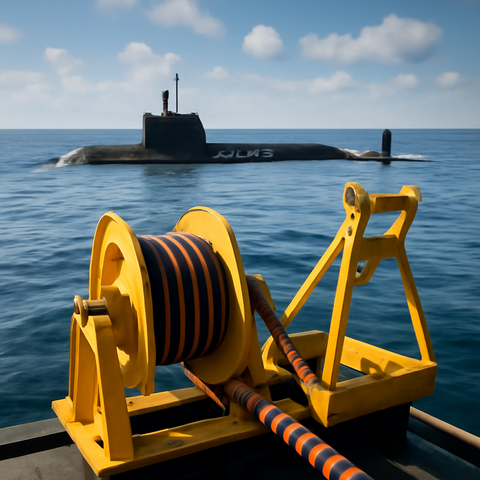
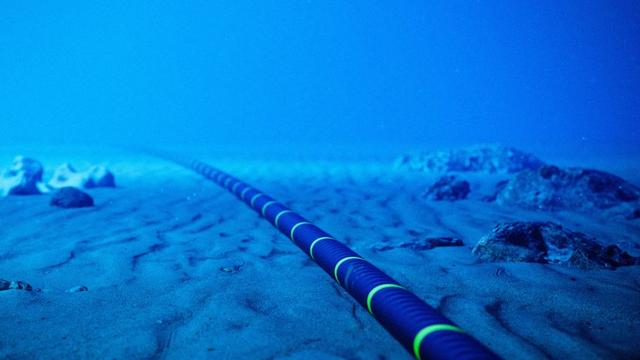
Subsea cables power global commerce. Though rare, cable attacks impose real costs. But leading technologies are democratizing maritime data and deterring would-be saboteurs. To further deter intentional cable attacks, cable owners should aggressively pursue legal remedies.
Finnish authorities are investigating suspected damage to a subsea telecommunications cable in the Baltic Sea, with two crew members detained and technical seabed inspections underway.
The case underscores how physical infrastructure security intersects with communications resilience and national cyber readiness. Operators reported no service disruption due to redundant network paths.
From a security perspective, what improvements are needed in monitoring and protecting undersea assets?
Source: https://therecord.media/finland-seizes-ship-suspected-damaging-undersea-cable
https://therecord.media/finland-arrests-crew-ship-suspected-cable-break
Join the discussion and follow TechNadu for objective insights on infrastructure and cybersecurity.
#CriticalInfrastructure #SubseaCables #TelecomResilience #CyberRisk #MaritimeSecurity #TechNadu
Weekend Reads
* VPN IPv6 leaks
https://arxiv.org/abs/2512.19698
* ACME protocol brief history
https://blog.brocas.org/2025/12/01/ACME-a-brief-history-of-one-of-the-protocols-which-has-changed-the-Internet-Security/
* Section 230 decisions roundup
https://blog.ericgoldman.org/archives/2026/01/a-massive-roundup-of-section-230-decisions.htm
* Kimwolf residential net threats
https://krebsonsecurity.com/2026/01/the-kimwolf-botnet-is-stalking-your-local-network/
* Subsea cables a hidden battleground
https://www.foreignaffairs.com/guest-pass/redeem/1AfBLobB6zU

How do commercial VPNs interact with IPv6? We show two "rough edges" in how commercial VPNs handle IPv6. First, we show that many IPv4-only VPNs leak IPv6 traffic to the ISP. Individual use VPNs in part to conceal their local IP addresses, so such leaks reduce user privacy. While prior work has studied VPNs in testbeds, we use a new dataset of 129k VPN-using daily visitors to WhatIsMyIPAddress.com that quantifies these leaks and show 12 VPNs previously considered safe still leak for at least 5% of their users. We show native IPv6 addresses leak most commonly in VPNs that claim only IPv4 support, with 5% to 57% of visitors of v4-only VPNs having their native IPv6 address exposed. Second, we show that most dual-stack VPNs users actually select IPv4 instead of IPv6. We observe this problem in our visitor data, and we identify the root cause arises because when user's computer follows standard address-selection rules, VPN-assigned addresses are often de-preferenced. Testing six VPNs on Android, we show that five consistently de-prioritize IPv6. Finally, we suggest a solution to IPv6 de-preferencing: we define a new IPv6 address range for VPNs that is not de-preferenced by address selection. We prototype this solution on Linux. Our findings help identify and address rough edges in the addition of IPv6 support to VPNs.
Reuters: Google to build subsea cables in Papua New Guinea under Australia defence treaty . “Alphabet’s Google will build three subsea cables in Papua New Guinea, which the largest Pacific Island nation said was funded by Australia under a mutual defence treaty, in a key upgrade to its digital backbone.”
Engadget: Meta and Google delay undersea cables over security concerns. “Meta and Google are facing delays with long-promised undersea cable projects, according to a report by Bloomberg. A Meta spokesperson blames the delays on a ‘range of operational factors, regulatory concerns and geopolitical risk.'”
CNBC: Underwater cables are a vital piece of the AI buildout and internet — investment is booming. “Investment into new subsea cable projects is expected to reach around $13 billion between 2025-2027, almost twice the amount that was invested between 2022 and 2024, according to telecommunications data provider firm TeleGeography.”
"Tropical paradise. Smiling faces. This is the fantasy Fiji has successfully sold to the world. And as I drive along the West Coast of Viti Levu, the archipelago’s largest island, the scenery does indeed resemble a tourist advertisement: crystal-blue ocean water, white sandy beaches, and lush tropical forests hugging the shoreline. But Fiji is more than breathtaking landscapes. While most people are aware of the rapid rise of data centers in the US and Europe, the creeping influence of tech giants like Google and Starklink can be seen and felt here, too.
Starlink, a subsidiary of American aerospace company SpaceX (owned by Elon Musk), was launched in Fiji in May 2024 and has quickly integrated itself into the local telecommunications ecosystem. Late that same year on the West of Viti Levu, Google broke ground on a future data center facility that will also house four Google-built subsea cables. The Southern Cross Cable, Fiji’s first subsea cable, was connected on the east coast of the island close to the capital city, Suva, in 2000. Natadola Bay, the chosen site for Google’s future ICT Facility and new cables, is not located near the nation’s capital city. It is, however, conveniently located next to the world-renowned golf course and five-star luxury resort, a fitting location for a project that builds on the colonial legacies of the Pacific."
#DataCenters #BigTech #Google #Starlink #Fiji #SubseaCables #Infrastructure
As big tech companies appeal to small island countries’ anxieties about being left behind, Emma Quilty considers how efforts to transform islands into digital hubs obscure the power and agency of these places and their people.