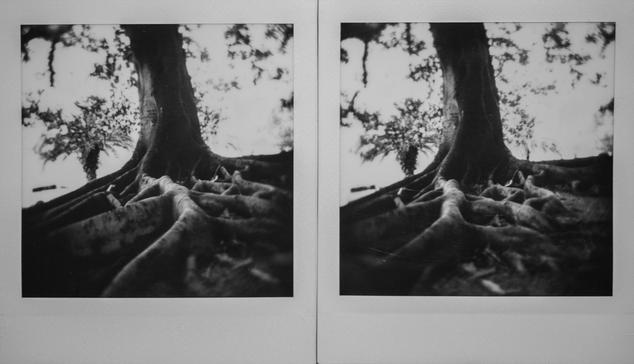
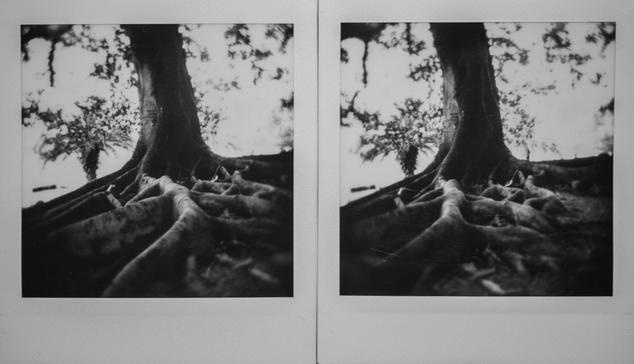
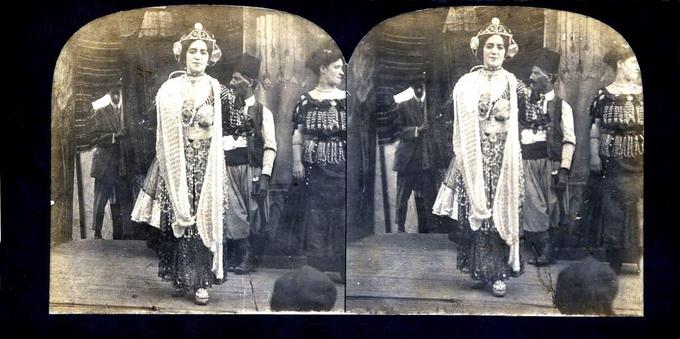
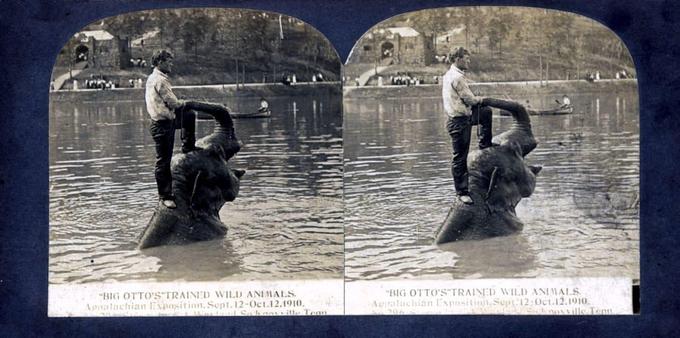
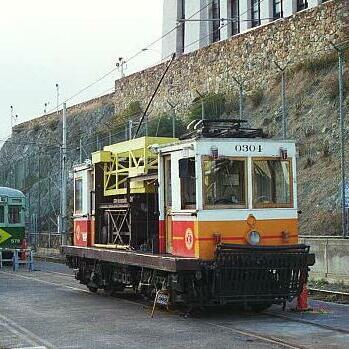
Found this terrific collection of #stereo images from early 1900s around South Knoxville, Tennessee mostly taken by C.A. Wayland
Pictures include animals and acts from the Appalachian Exposition of 1910 and Prohibition Parades of 1907.
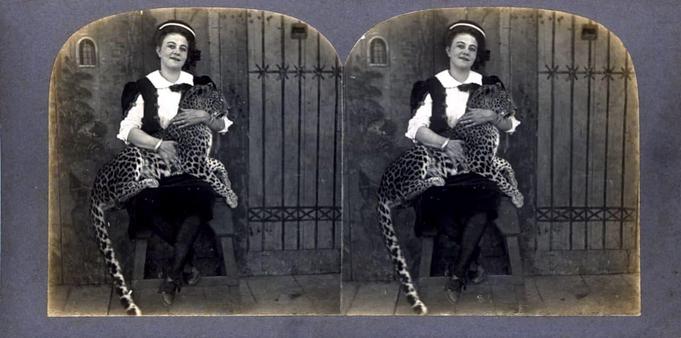
Found this terrific collection of #stereo images from early 1900s around South Knoxville, Tennessee mostly taken by C.A. Wayland
Pictures include animals and acts from the Appalachian Exposition of 1910 and Prohibition Parades of 1907.
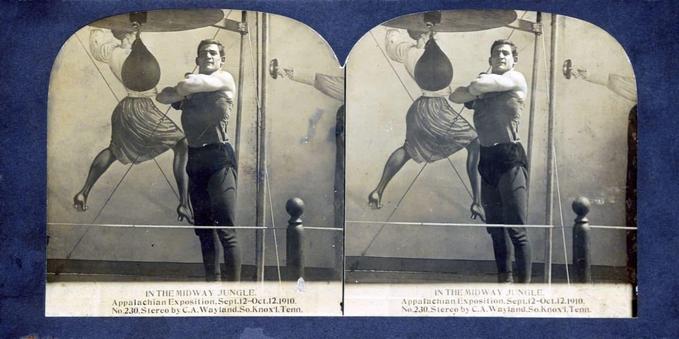
Happy Halloween!!
Another fun but exhausting #Arachtober.
Tropical Orbweaver (Eriophora ravilla)
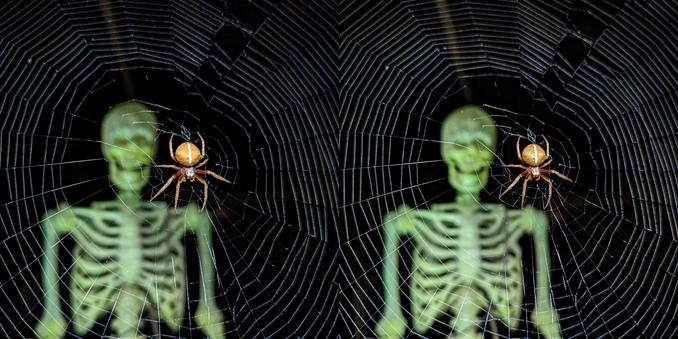
Grass Spider - Genus Agelenopsis - #Arachtober 2nd
Funnel Weavers are a nocturnal family of spiders that resemble Wolf Spiders, but they live in funnel-shaped webs. Their webs aren't sticky, but they are full of velcro like entangling filaments and they react quickly when they feel the vibration of prey. Found in South Texas, USA.
📸 Canon Developing Dual Pixel CMOS 3D Photo Tech
https://petapixel.com/2025/03/20/canon-developing-dual-pixel-cmos-3d-photo-tech/
#gear #photography #canon #3d #stereography #sensors #cmos #electronics #technology

Lens-Artists Challenge #333: Complementary Colours
This week Egídio from Capturing My World Through Brazilian Eyes is hosting the Challenge, and his theme for the week is ‘Complementary Colours‘. ‘Are we ready to have more fun with colors?’ he asks. ‘Let’s … see how we can paint with our cameras and get photos that pop. All you need is to be familiar with complementary colors.’
https://upload.wikimedia.org/wikipedia/commons/b/bc/RGB_color_wheel.png
Complementary colours are those colours that sit roughly opposite on the colour wheel, which in turn is ‘an abstract illustrative organization of colour hues around a circle, which shows the relationships between primary, colours, etc.’ As Egídio observes, ‘Using [complementary colours] in your photography creates the best color contrast, and your images pop.’ But which colours are considered complementary? According to Wikipedia this depends on the colour model being used. ‘Modern colour theory uses either the RGB additive colour model or the CMY subtractive colour model, and in these, the complementary pairs are red–cyan, green–magenta, and blue–yellow.’
For my submission to the Lens-Artists Challenge this week, the complementary colours that I’ll concentrating on is the red-cyan combination, and one particular use of this combination, the red/cyan anaglyph. Stereoscopy, or ‘seeing’ three dimensional depth from a two dimensional image, has been around longer than photography itself. It was first postulated in the early 19th century, and after the invention of photography as a technique was popular until the mid-20th century, at least.
The Lomo Sputnik, a Soviet stereo camera from (I think) the 1960s.Stereo, or 3D photography works by having a camera with two lenses, spaced roughly 6cm apart, that can take two images at the same time. These can be viewed side-by-side with a stereoscope, as an animated ‘wiggle’ GIF file, or with special red/cyan stereo glasses as an anaglyph. There is a slight parallax difference (the distance between the lenses) between the two images, and the 3D effect of the anaglyph is achieved by ‘encoding each eye’s image using filters of different (usually chromatically opposite) colors, typically red and cyan.’ (Wikipedia) … When viewed through the glasses, the brain reconstructs the anaglyph as a three-dimensional image.
Until the late noughties, all stereoscopic photography was analogue, although you could create an anaglyph from scanned images in PhotoShop. But around 2010, with the advent of 3D TVs and the release of some films in 3D, a few manufacturers, FujiFilm and Panasonic among them, released 3D digital cameras onto the consumer market.
I’ve been lucky enough to get my hands on the Fujifilm Finepix Real 3D W3 (that’s really it’s full title, quite a mouthful for sure). It’s been a bit of a task to learn how to make stereoscopic images, and I’m not really sure that I have the technique properly refined yet, but I’m getting there. To make a 3D image for presentation I use the free program Stereo Photo Maker (SPM), which will automatically make stereoscopic images from the raw MPO file that the W3 uses, including the digital anaglyph.
Of course, the chances are that you won’t have any red/cyan stereo glasses around to view the images properly (for the record, I don’t) but at least I hope that you will like the images that I have created. If it helps, I’ve also added a couple of wiggle GIFs of the images to give some idea of what they should look like.
As a bonus, of sorts, I’ve also attached a ‘double exposure’, which I think is what happens when you load a JPG file into Stereo Photo Maker. I’m still not sure how this came about, but I really like it. Also included is what happens when you try intentional camera movement with the W3, and an anaglyph made from that.
Next week, Tina will host the Challenge, so hope that you can join us then. Themes for the Lens-Artists Challenge are posted each Saturday at 12:00 noon EST (which is 4pm, GMT) and anyone who wants to take part can post their images during the week. If you want to know more about the Challenge, details can be found here, and entries can be found on the WordPress reader using the tag ‘Lens-Artists’.
If you are on Mastodon, you can now follow this blog directly. Just go to Mastodon and follow the ‘Snapshot’ WordPress account at @keithdevereux.wordpress.com. All new posts will be automatically updated to your timeline.
#Anaglyph #AnimatedGif #Challenge #ComplementaryColours #Crossview #Experimental #FinepixW3 #LensArtists #Real3D #Stereo3D #Stereography #StereoPhoto #Stereoscopy #LensArtists