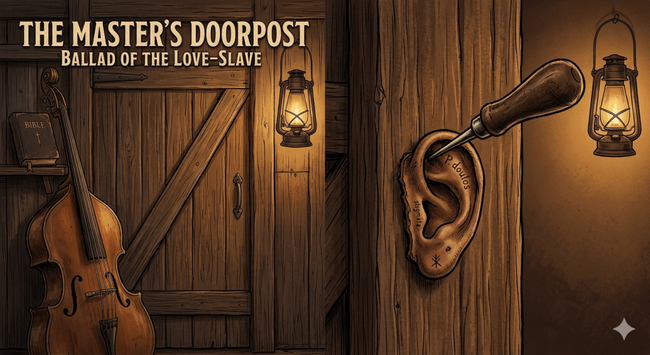
From Kingship to Smallness: The 14-Year Journey from Saul to Paul

1,716 words, 9 minutes read time.

This deep dive into the life of the Apostle Paul is built on the archaeological, cultural, and theological reality of the first-century Roman world. It is a world of harsh lines and absolute ownership. While historical records do not confirm a physical ear piercing with 100% certainty, the internal logic of the Eved (Love-Slave) ritual and the cultural weight of the term doulos provide a compelling framework for understanding Paul’s radical transformation.

The religious elite of the first century were not looking for a savior; they were looking for a judge who could crush dissent. Saul of Tarsus was that judge. He lived in the “kingship” of his own heritage, a high-ranking Pharisee with the legal authority to hunt, bind, and destroy those who followed the Way. This was not a man drifting through life; this was a man of absolute power who was eventually leveled by a light that blinded his physical eyes to open his spiritual ones. The Damascus road was the end of Saul the King. What followed was not an immediate rise to stardom but a systematic 14-year dismantling of his pride, his rank, and his very name. This article deconstructs that journey—the transition from the high-commanded hunter to the “Love-Slave” of Christ. It is a map of decrease, moving from the top of the social ladder to the position of a bondservant, a status held in utter contempt by the world. Face this truth: the wreckage of a life built on self-importance must be cleared before the Master can build anything of value.

The Saul to Paul Name Change and Social Demotion

The transition from the Hebrew name Saul (Sha’ul) to the Latin Paul (Paulus) was not a divine light-switch moment but a calculated, functional shift into radical smallness. Saul was a name of heritage and kingship, likely honoring the first king of Israel from the tribe of Benjamin. By adopting the name Paul, which literally means “small” or “little,” he was signaling a total social freefall. This was a verbal declaration of his bondservice, a public “receipt” that the man who once held the highest religious credentials now viewed them as skubala—a gritty, visceral term for “crap” or “dung”. In a Roman society that worshipped status, Paul chose a name that physically matched the humble submission of a slave.

This name change occurred roughly 14 years after his conversion, appearing in the record as he launched into his mission to the Gentiles. It served as proof of his maturity, showing that the “smallness” was no longer a badge he was trying on but a lived reality. He traded a name of authority for a title of contempt because he realized that for Christ to increase, his own ego had to be ground into the dirt. Stop clutching your titles and your “rank” in a world that is rotting; Paul’s name change proves that true power only comes when you are small enough to be used by the Master.

The 14-Year Silent Period and the Bondservant Proving Ground

Paul did not walk off the Damascus road and into the pulpit; he disappeared into the desert and the shadows for over a decade. This 14-year “silent period” was the spiritual equivalent of the six years a Hebrew servant worked before legally choosing to stay with a master forever. In Arabia, he underwent an intense period of direct revelation, where Jesus personally re-taught him the Scriptures through a new lens. This was not a time of self-reflection but of divine leveling, where the “ear” as the organ of obedience was trained to hear only one voice. After Arabia came a decade of obscurity in Tarsus, a time of ministry where the theory of “smallness” became a daily practice.

This duration of hidden training ensured that by the time he re-emerged with Barnabas in Antioch, his commitment was no longer an impulsive reaction but a settled identity. He had reached the point of freedom and explicitly chose to stay, a voluntary surrender rooted in love for the Master who had intercepted him. This period of silence was the crushing of the old Saul, making way for the bondservant who would eventually be “pinned” to the household of God. If you think your “potential” is enough without the discipline of silence and the weight of obedience, you are sleepwalking toward a mediocre end.

The Theological Pierced Ear and Cultural Marks of Ownership

The core of Paul’s identity as a doulos rests on the ritual of the “Love-Slave” found in Exodus 21, where a servant’s ear was pinned to a doorpost with an awl. While we cannot verify with 100% certainty that Paul wore a physical hole in his ear, his constant identification as a bondservant to a Gentile audience made a physical or social “mark” a legal necessity. In the Roman world, a slave’s status was often worn on the body; without a direct cultural receipt, his claim of total ownership by Christ would have been legally inconsistent. Paul pointed to his stigmata—the scars from lashings, stonings, and beatings—as the physical proof that he belonged to the household of God.

These were his “piercings,” the evidence that he was no longer a free agent or a “hired hand” but the literal property of a Master. Unlike Roman brands used for punishment, the Hebrew ear piercing was a badge of love, signaling that the servant refused to go out free. This voluntary mark would have been the ultimate visual testimony to a skeptical church and a watching world that the hunter had become a servant. Whether the mark was a ceremonial hole or the scars of service, his body was a map of his surrender, testifying that his ear was permanently fixed to the doorpost of the Kingdom. Stop hiding behind flowery language and churchy platitudes; if your life doesn’t carry the “marks” of your service, you aren’t a bondservant, you’re a tourist.

Radical Humility: Reclaiming the Fisher of Men Identity

The life of the Apostle Paul is a direct challenge to the modern church’s obsession with gatekeeping and social rank. Paul traded the “kingship” of a high-ranking persecutor for the “smallness” of a marked slave because he understood that the “doorpost” of God’s household is open only to those willing to be pierced. He bypassed the religious gatekeepers to reach the outcasts—the tax collectors and the “vile”—because he was no longer competing with God for authority. His 14-year descent into obscurity was the necessary training to embrace a status that society held in utter contempt.

The name Paul, the potential piercing, and the scars of his mission all scream one thing: he belonged to another. Get on your knees and face the mirror. If you are still “choosing” who gets grace instead of being a “fisher of men,” you have missed the point of the Gospel. For Christ to increase in the wreckage of this world, you must decrease. The choice to be “pinned” is yours—but once the awl hits the wood, there is no going back to the mediocrity you once called freedom.

Call to Action

Stop hiding behind your credentials and your “rank” in a world that is rotting. If your life doesn’t carry the “marks” of your service, you aren’t a bondservant, you’re just a tourist. The Damascus road was the end of Saul the King, and the next 14 years were a systematic dismantling of his pride to make room for a new Master. Paul’s name change to “Smallness” and his potential pierced ear weren’t just religious fashion; they were a public “receipt” that he had traded his high-ranking authority for the humble submission of a “Love-Slave”.

Get on your knees and face the mirror. Are you still trying to be the one who “chooses” who gets grace, or are you ready to become a “fisher of men” at the bottom of the social ladder? For Christ to increase in the wreckage of your life, you must decrease. The choice to be “pinned” to the Master’s doorpost is yours, but once the awl hits the wood, there is no going back to the gutless mediocrity you once called freedom. Hit your knees tonight and surrender your pride before the Master. Stop competing with God for authority and start listening with the ear of a servant.

Choose smallness. Get to the doorpost. Become the bondservant you were called to be.

SUPPORTSUBSCRIBECONTACT ME

D. Bryan King

Sources

Disclaimer:

The views and opinions expressed in this post are solely those of the author. The information provided is based on personal research, experience, and understanding of the subject matter at the time of writing. Readers should consult relevant experts or authorities for specific guidance related to their unique situations.

#14YearsOfSilence #AcousticAmericana #AntiochChurch #ApostlePaul #BarnabasAndPaul #bibleStudyForMen #BiblicalMarks #BiblicalSubmission #Bondservant #ChristianOutlawCountry #ChurchAuthorityVsDivineAuthority #CulturalContextOfNewTestament #damascusRoadConversion #Deuteronomy15 #divineRevelation #Doulos #EarPiercingRitual #Exodus21 #FindingPeaceInLowliness #FishersOfMen #GraceForTaxCollectors #GrittyChristianMusic #HeartSEmbrace #HebrewSlaveLaws #LoveSlave #MarksOfJesus #MasterSDoorpost #MinistryToGentiles #NameChangeSymbolism #Outcasts #Paulus #Philippians38 #PinnedToTheDoor #PreparationInArabia #RadicalHumility #ReligiousGatekeeping #RomanCitizenship #SaulOfTarsus #ScalesFallingFromEyes #ScripturalPrep #skubala #Smallness #SoulBaringLyrics #SouthernApologetics #SouthernGothicChristianSong #spiritualMaturity #spiritualTraining #Stigmata #TheologyOfDecrease #VoluntaryServitude

Growing Older but Leaning Harder on God

Did you know that growing older does not automatically mean growing deeper in faith?

Many people assume spiritual maturity simply arrives with age, as though wisdom naturally appears with gray hair and passing years. Yet Psalm 71 paints a more honest picture. The elderly psalmist is not coasting on yesterday’s experiences with God. Instead, he is still crying out, still depending, still seeking. “Do not cast me away in the time of old age; forsake me not when my strength is spent” (Psalm 71:9). Those words reveal a man who understands that faith is not a trophy earned after decades of religion. It is a living relationship that must be renewed continually.

There is something comforting in that honesty. Even mature believers can experience weakness, loneliness, and moments of uncertainty. The psalmist does not pretend to be spiritually self-sufficient. Instead, he openly acknowledges his need for God’s nearness. The Hebrew word often translated “refuge” in Psalm 71 carries the idea of shelter or protection. Age had not reduced his dependence upon God; it had increased it. The longer he lived, the more aware he became that God alone was his stability.

Did you know that your testimony becomes more valuable as you grow older?

Psalm 71 repeatedly emphasizes remembrance and testimony. The writer says, “I will come and proclaim your mighty acts, Sovereign Lord” (Psalm 71:16). Older believers possess something younger generations desperately need—evidence of God’s faithfulness across decades. Scars, disappointments, answered prayers, and seasons of endurance become living sermons that no textbook can fully teach.

The apostle Paul expressed a similar spirit in Philippians 4:11–13 when he spoke about learning contentment in every season. Paul did not say contentment arrived automatically. He said he had “learned” it. Spiritual maturity often develops through hardship, waiting, and repeated dependence upon Christ. Elderly believers who continue trusting God quietly demonstrate that faith can survive grief, illness, financial struggle, and disappointment. Their lives become testimonies that Christ remains faithful over the long journey, not merely during moments of emotional excitement.

Did you know that needing God deeply is not weakness but spiritual wisdom?

Modern culture often celebrates independence, self-reliance, and personal strength. Yet Scripture consistently points us in another direction. The psalmist repeatedly prays, “O God, be not far from me; O my God, make haste to help me!” (Psalm 71:12). That is not the prayer of a defeated man but of a wise man. He understands that human strength eventually fades, but God’s strength does not.

Sometimes aging strips away illusions of control. Bodies weaken. Energy fades. Certain dreams disappear. Yet those painful realities can also expose something beautiful: our constant need for God’s sustaining grace. Isaiah later echoed this truth when he wrote, “Even to your old age and gray hairs I am he, I am he who will sustain you” (Isaiah 46:4). God does not abandon His people when their strength diminishes. In many ways, dependence becomes clearer and more sincere in later years because life removes the false confidence youth often carries.

Did you know that mature faith keeps praising God instead of trusting past accomplishments?

One of the most moving parts of Psalm 71 is the writer’s refusal to rely on his spiritual history. Though he has followed God for years, his praise remains present tense: “My mouth is filled with your praise, declaring your splendor all day long” (Psalm 71:8). He does not merely talk about what God used to do. He still worships, still prays, still hopes.

That truth challenges all of us. Faith cannot survive on yesterday’s experiences alone. Church attendance from years ago, old victories, or past seasons of spiritual passion cannot replace present fellowship with God. Jesus taught this same principle in John 15 when He described believers as branches continually abiding in the Vine. Ongoing spiritual life requires ongoing connection. Mature believers are not those who no longer need God. They are those who have learned they never stopped needing Him at all.

Perhaps that is the hidden beauty of Psalm 71. The elderly psalmist does not present himself as spiritually finished. He remains a worshiper, a learner, and a dependent child of God. Maybe true maturity is not becoming less needy before God but becoming more aware of how faithful He has always been. Whether young or old, every believer is invited into that same continual dependence—a life where praise grows deeper because trust grows stronger.

FEEL FREE TO COMMENT, SUBSCRIBE, AND REPOST, SO OTHERS MAY KNOW


#agingAndFaith #Psalm71Devotion #spiritualMaturity #trustingGodDaily

Beyond the Reputation

The church in our generation has learned how to talk about spiritual depth without always walking in it. We can quote authors, attend conferences, sing worship songs with emotional intensity, and still remain strangers to the daily surrendered life Jesus calls us to live. The deeper Christian life is not measured by what we proclaim from the pulpit or profess in the pew. It is revealed quietly in how we forgive, how we pray when nobody sees us, how we respond under pressure, and whether the peace of Christ genuinely governs our hearts. Paul reminded Timothy, “Having a form of godliness, but denying the power thereof” (2 Timothy 3:5). The Greek word for “power” is dynamis, meaning active spiritual force or transforming strength. Christianity was never intended to be mere religious appearance; it was meant to become a transformed life.

Many churches have earned reputations for holiness while quietly tolerating bitterness, pride, division, and spiritual exhaustion beneath the surface. A deeper-life church is not identified by slogans or traditions but by believers who consistently walk with God in humility and obedience. Jesus said, “By their fruits ye shall know them” (Matthew 7:20). Fruit takes time to grow, and genuine spiritual maturity develops in hidden places long before it appears publicly. The deeper spiritual life is often quiet, steady, and unseen by crowds. It is the daily enjoyment of God’s presence, the inward victory over self, and the settled confidence that Christ is enough for every hour ahead.

Triune Prayer

Heavenly Father, as this day begins, I ask You to search my heart and expose every place where I have substituted appearance for authenticity. Forgive me for moments when I have spoken about spiritual things more than I have lived them. Teach me to desire holiness in private before I seek recognition in public. I thank You that Your mercy does not abandon me when I fall short. Your patience continually draws me back toward truth and sincerity. Help me today to walk honestly before You, free from spiritual pretense and empty profession. Give me the courage to pursue the deeper life not as an image to maintain but as a relationship to nurture. Let my thoughts, attitudes, conversations, and actions reflect the quiet character of Christ. Teach me to enjoy obedience instead of merely admiring it from a distance.

Jesus the Son, thank You for demonstrating what a surrendered life truly looks like. You did not seek applause or build Your ministry upon appearances. You walked in humility, truth, compassion, and unwavering obedience to the Father. Lord, I confess that I often become distracted by outward success while neglecting inward transformation. Draw me back to the simplicity of abiding in You. Your words in John 15 remind me that fruitfulness comes from remaining connected to the Vine. Help me today to remain close to You in every conversation, decision, and hidden moment. When pressures arise, let Your peace steady my spirit. When temptations come, let Your strength become my victory. I ask You to remove every divided motive within me so my faith becomes genuine and consistent. May others see less performance and more of Your character alive within me.

Holy Spirit, breathe fresh life into my soul this morning. Quiet the noise within me that constantly seeks approval, recognition, or religious appearance. Form within me the deeper work of grace that only You can accomplish. Convict me where I need correction, comfort me where I carry weariness, and guide me into truth throughout this day. I thank You that You do not merely inform my mind but transform my heart. Let Your fruit grow naturally within me—love, joy, peace, longsuffering, gentleness, goodness, faith, meekness, and temperance. Help me to live beyond two-faced Christianity and into a life of integrity and spiritual consistency. Fill my mind with Scripture, my mouth with grace, and my spirit with quiet confidence in God’s presence. Let me walk today in the victory that comes not from striving but from surrender.

Thought for the Day

The deeper Christian life is not proven by what I claim publicly but by how faithfully I walk with Christ privately when nobody else is watching.

FEEL FREE TO COMMENT, SUBSCRIBE, AND REPOST, SO OTHERS MAY KNOW


#authenticFaith #dailyWalkWithGod #deeperChristianLife #spiritualMaturity

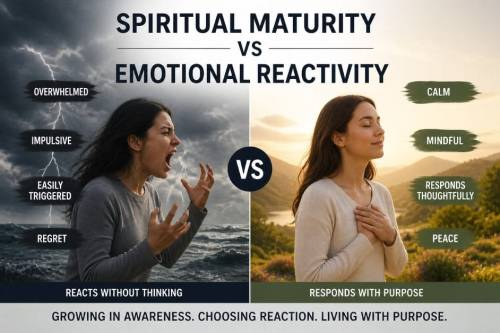
Spiritual maturity vs emotional reactivity is really about whether you’re led by impulse or by awareness. Emotional reactivity takes over quickly, while spiritual maturity creates space to respond with wisdom, patience, and love—choosing growth over impulse in every moment.

#SpiritualMaturity #EmotionalGrowth #SelfControl #InnerHealing #FaithJourney #MindfulLiving

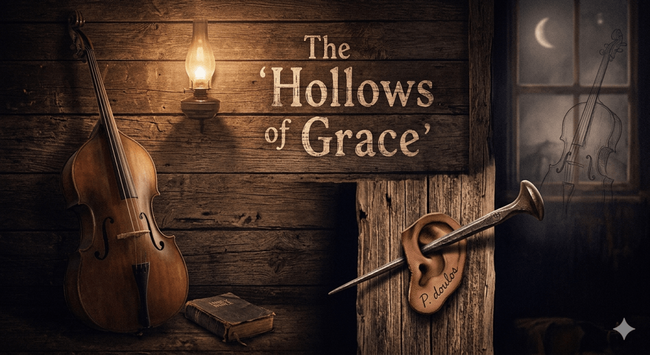
The Hollows of Grace

The Hollows of Grace

[Intro]

(Slow, haunting fingerstyle guitar with a deep, woody tone)
(Low hum of an upright bass)
(Distant, mournful cello note)

[Verse 1]

I stood tall in the halls of the heavy-handed
With a name that tasted like a king
I was the judge, the hunter, the high-commanded
Until the silence started to sing
Three days of dark to break my pride
Then fourteen years to wither inside
I traded my rank for a lowly place
And found my name in the hollows of grace.

[Chorus]

So pin my ear to the Master’s door
I don’t want my freedom anymore
Let me grow small while He grows tall
I’m a servant now, at the beck and call
I’m a love-slave bound by a choice I made
To reach the ones that the church mislaid.

[Verse 2]

The religious men, they love their gates
Choosing who’s worthy and sealing their fates
But I see the taxman, the outcast, the “vile”
And I meet their eyes with a brother’s smile
My former life?
It’s nothing but waste Just skubala (crap) with a bitter taste
I won’t look down from a judging floor
When I’m just a slave at the Master’s door.

[Bridge]

(Music thins out to just piano and a single guitar string)
The elites are gonna be in for a shock
When they see the outcasts on the Rock
The ones they called a “sin” and a shame
Are the ones who carry the Master’s name
My mark isn’t silver, my mark isn’t gold
It’s a hole in my ear that says I’ve been sold.

[Chorus]

(Vocal becomes more raw and raspy)
So pin my ear to the Master’s door
I don’t want my freedom anymore
Let me grow small while He grows tall
I’m a servant now, at the beck and call
I’m a love-slave bound by a choice I made
To reach the ones that the church mislaid.

[Outro]

I’m little, I’m small, I’m finally Paul Just a marked-up man at the Master’s call Listening close with a pierced-up ear To tell the outcasts: “The Master’s here”.

Disclaimer:
The Lyrics of this music is licensed under a Creative Commons Attribution-NonCommercial 4.0 International License. You are free to use, share, remix, or build upon this work—even commercially—as long as credit is given to the original creator: Bryan King, the suggest format is: “The Hollows of Grace” by Bryan King, used under CC BY 4.0

Also, I kindly ask that if you choose to use it, please let me know by using the “Contact Me” feature on this site. Thank you!

#14YearsOfSilence #AcousticAmericana #AntiochChurch #ApostlePaul #BarnabasAndPaul #bibleStudyForMen #BiblicalMarks #BiblicalSubmission #Bondservant #ChristianOutlawCountry #ChurchAuthorityVsDivineAuthority #CulturalContextOfNewTestament #damascusRoadConversion #Deuteronomy15 #divineRevelation #Doulos #EarPiercingRitual #Exodus21 #FindingPeaceInLowliness #FishersOfMen #GraceForTaxCollectors #GrittyChristianMusic #HeartSEmbrace #HebrewSlaveLaws #LoveSlave #MarksOfJesus #MasterSDoorpost #MinistryToGentiles #NameChangeSymbolism #Outcasts #Paulus #Philippians38 #PinnedToTheDoor #PreparationInArabia #RadicalHumility #ReligiousGatekeeping #RomanCitizenship #SaulOfTarsus #ScalesFallingFromEyes #ScripturalPrep #skubala #Smallness #SoulBaringLyrics #SouthernApologetics #SouthernGothicChristianSong #spiritualMaturity #spiritualTraining #Stigmata #TheologyOfDecrease #VoluntaryServitude

The Concrete Grace Found in Shattered Dreams

673 words, 4 minutes read time.

And we know that in all things God works for the good of those who love him, who have been called according to his purpose. — Romans 8:28 (NIV).

This means God is in the middle of your mess. He’s taking the hits you didn’t see coming and using them to build a man who can actually handle what’s next.

The Brutal Truth About Your Loss

You worked hard, you played by the rules, and you still got kicked in the teeth. It feels like a waste. You’re looking at the wreckage of your job, your bank account, or your pride, and you’re waiting for an apology from God that isn’t coming. Here’s the reality: God doesn’t owe you a “yes.” Sometimes the “no” is the only thing that keeps you from becoming a man you’d hate. I’ve been there, sitting in the dirt, wondering how I missed the mark. But the “good” God talks about in this verse isn’t about making your life easy. It’s about making you solid. A man who gets everything he wants becomes soft and useless. A man who survives a gut-punch and keeps walking becomes dangerous to the enemy. Your biggest disappointment is usually God’s way of clearing the junk out of your life so He can put something real in its place. He’s not punishing you; He’s pruning you. He’s cutting off the parts of your life that were never going to go anywhere so you can finally grow in the right direction. The pain is real, but it’s not pointless. Stop acting like the story is over just because one chapter ended in a wreck. If you’re still breathing, God is still working. He’s using this failure to kill your ego before your ego kills you.

Face the New Reality Today

Your job today is to stop looking back. You can’t drive a car forward if you’re staring at the rearview mirror. Take five minutes to admit out loud that your plan failed and that you’re not in control. Once you say it, the power that disappointment has over you starts to die. Pick one small, productive task you’ve been putting off because you were too busy feeling sorry for yourself, and get it done. No excuses. Just move.

Prayer

Lord, this hurts and I don’t like it. But I know You’re in control and I’m not. Take the bitterness out of my gut. Help me stop looking at what I lost and start looking at what You want me to do next. Give me the strength to be the man You called me to be, even when it’s hard. Amen.

Reflection

  • What is one thing you still have right now that you should be thanking God for?
  • What is the one thing you lost that you’re still trying to get back, even though the door is locked?
  • Are you actually mad at God, or are you just mad that you didn’t get your way?
  • How has this loss made you realize you aren’t as “in control” as you thought you were?

Call to Action

Get off the sidelines. If you’re tired of reading about the man you’re supposed to be and you’re ready to start being him, then move.

Stop waiting for a sign or a better mood. God already gave you your orders. Pick up your Bible, get on your knees, and start leading your family and your life with the grit it takes to finish the race. The world has enough soft men—be the one who stands firm when the ground starts shaking.

Decide right now. Are you going to keep making excuses, or are you going to start making progress? Choose the mission.

SUPPORTSUBSCRIBECONTACT ME

D. Bryan King

Sources

Disclaimer:

The views and opinions expressed in this post are solely those of the author. The information provided is based on personal research, experience, and understanding of the subject matter at the time of writing. Readers should consult relevant experts or authorities for specific guidance related to their unique situations.

#biblicalEncouragement #biblicalManhood #biblicalTruth #biblicalWisdom #buildingALegacy #characterBuilding #ChristianDevotionalForMen #ChristianGrowth #ChristianLeadership #ChristianPerspectiveOnFailure #conqueringFear #dailyBreadForMen #dealingWithDisappointment #enduringTrials #facingDefeat #faithInTheRuins #faithUnderPressure #findingPurposeInPain #GodSPlanForMen #GodSSovereignty #gritLitDevotional #hardboiledFaith #hopeForTheBroken #ironSharpensIron #lettingGoOfPride #manOfGod #masculineSpirituality #menSBibleStudy #menSMinistry #menSDevotionalGuide #nonDenominationalMenSStudy #overcomingFailure #overcomingSetbacks #perseverance #practicalTheology #radicalFaith #rebuildingAfterLoss #resilientFaith #Romans828 #solidFoundation #spiritualDiscipline #spiritualGrit #spiritualMaturity #spiritualWarfare #strengthInSuffering #trustInGod #visceralChristianity #walkingWithGod

The Calling Fallacy: Why You Can Stop Searching for God’s Secret Blueprint

1,928 words, 10 minutes read time.

The blueprint is a lie. It is a psychological crutch for the spiritually stunted—a velvet-lined trap for men who are too terrified to bleed, too fragile to fail, and too paralyzed to move. Modern Christian culture has birthed a generation of passengers, men who sit in the driveway of life with the engine idling, waiting for a divine GPS to whisper turn-by-turn directions from the heavens. You call it “discerning the will of God.” I call it gutless. You are hiding behind a veneer of piety because you are afraid that if you make a choice without a mystical guarantee, you’ll drop into some cosmic “Plan B” purgatory. God isn’t hiding your life from you like a set of misplaced keys. He gave you a Book, a brain, and a pulse. Your refusal to use them isn’t holiness; it’s a quiet, rotting cowardice. The “Calling Fallacy” is the belief that God has a secret, micro-managed roadmap for your career, your zip code, and your car choice, and that missing the mark by an inch forfeits your destiny. This is a theological hallucination that breeds nothing but the howling winds of anxious fears. It is time to stop hunting for a secret and start obeying a command.

The Grave of the Ancient Trade: Why Your Career Isn’t a Secret

If you walked into a first-century carpenter’s shop or stood on the salt-crusted deck of a Galilean fishing boat and asked a man how he “discerned his vocational calling,” he would have looked at you like you’d lost your mind. In the grit and heat of the biblical world, men didn’t “find themselves”; they found a tool. You didn’t “follow your passion”; you followed your father into the field, the shop, or the masonry pit because survival demanded it and duty defined it. The Bible is remarkably silent on the specifics of your career path, yet it is thunderous regarding the integrity, diligence, and heart-posture with which you approach your labor. We have traded the hard-earned grit of biblical duty for the vapor of Western individualism, projecting our modern obsession with “self-fulfillment” onto a Creator who is far more concerned with your sanctification than your job title.

The delusion that God has a “Plan A” career for you—and that finding it is the prerequisite for a blessed life—is a modern invention fueled by the luxury of choice. In the ancient world, your “calling” was the work in front of you. Period. The Scripture doesn’t view your job as a vehicle for self-expression; it views it as a theater for obedience. If you are not working “as unto the Lord” in the job you currently despise, you won’t serve Him in the one you think you want. Men today use the quest for “God’s calling” as an escape hatch from the gritty reality of their current responsibilities. They want the crown without the cross, the “ideal role” without the prerequisite of faithfulness in the mundane. You aren’t a “creative,” a “consultant,” or an “executive” in the eyes of Heaven—you are a servant. Stop looking for a slot that fits your ego and start doing the work that feeds your family and honors your King.

This shift from “doing the right thing” to “finding the right slot” has turned men into spiritual shoppers. We treat the will of God like a product on a shelf, comparing features and waiting for a sale. We have forgotten that the will of God is not a destination; it is a direction. The historical reality is that the men God used in the Bible were almost always busy doing something else when the call came. Moses was tending sheep; Peter was mending nets; Matthew was counting tax money. They weren’t sitting in a room “discerning” their next move; they were occupied with the duty of the moment. Your life is rotting in the sun because you refuse to engage with the reality of the present. You are waiting for a voice from the clouds to tell you which way to turn the wheel while you haven’t even put the car in gear. God’s will isn’t a hidden treasure to be discovered; it is a path to be walked by the man who is already moving.

The Blood and Bone of the Revealed Will: Obeying the Open Book

You claim you can’t find God’s will? That is a lie. God has already published His will in an open book, written in black and white and dripping with the blood of men who actually followed it. The fundamental failure of the modern man is his refusal to distinguish between God’s Moral Will and His Sovereign Will. The Moral Will—the “Revealed Will”—is the set of clear, non-negotiable tactical orders found in the pages of Scripture. It isn’t a mystery. Be saved. Be filled with the Spirit. Be sanctified. Be submissive to authority. Be thankful in all circumstances. Be willing to suffer for the sake of the Gospel. This is the “Open Book” will, and it demands immediate, soul-level execution. If you are looking for a “sign” about a job while you are neglecting the clear commands of the Word, you aren’t a seeker—you are a rebel in a suit of piety.

Most men ignore the Revealed Will because it requires work, sacrifice, and a death to self. It is much easier to wait for a “feeling” about a promotion than it is to mortify the sin of lust or to lead your family in the hard path of discipleship. We want the secret blueprint because it feels personalized and special, whereas the Moral Will is universal and demanding. But here is the brutal truth: God has no obligation to show you the next step in your career if you are ignoring the last command He gave you in His Word. The “Secret Will” of God—His sovereign, providential governance over the timeline of history—is none of your business. You don’t “discover” providence; you trust it. You stop trying to pick the lock of the future and start obeying the orders of the present.

The man who hunts for a secret plan while ignoring a clear command is an idolater. He is worshipping his own sense of “destiny” rather than the God who called him to holiness. When you stop treating God like a cosmic vending machine for personal direction and start treating Him as the Sovereign King, the paralysis of choice evaporates. If you are walking in active, blood-earnest obedience to the commands God has already given, the pressure to “guess” His secret thoughts is replaced by the freedom of a son who knows his Father is in control of the outcome. You don’t need a vision when you have a Verse. You don’t need a fleece when you have a Command. Get off the floor, put the “discernment” journals away, and start doing what the Book says. The wreckage of your life isn’t due to a lack of information; it’s due to a lack of submission.

The Brutal Freedom of the Wise: Taking the Weight of Choice

God did not create you to be a puppet on a string; He created you to be a man. Where the Scripture is silent—on which industry you enter, which city you move to, which house you purchase—He has given you the terrifying weight of freedom. It is called wisdom. It is the muscle of the soul, and for most modern men, it has gone soft from disuse. We want God to make the choice for us so we can blame Him if it goes wrong. We want a “sign” so we don’t have to take the responsibility of a decision. But the “Way of Wisdom” demands that you look at the facts, seek counsel from men who have scars and sense, pray for a clear head, and then—for the love of God—move.

There are no “open doors” for the man who refuses to walk. We have turned “waiting on the Lord” into a spiritualized form of procrastination. Proverbs 16:9 declares that the heart of man plans his way, but the Lord establishes his steps. Do you see the order there? The man plans. The man moves. And as he moves, the Sovereign God directs the path. You cannot steer a ship that is anchored in the harbor. You cannot establish the steps of a man who is sitting on his couch waiting for a mystical “peace” that never comes. The “peace of God” isn’t a prerequisite for action; it is often the result of it. You make the best decision you can with the wisdom you have, and you trust that God’s sovereignty is big enough to handle your choices.

The “Calling Fallacy” has turned the Christian life into a high-stakes guessing game where one wrong turn ruins everything. This is a pagan view of God. The true God is not a capricious gamesmaster waiting for you to trip up. He is a Father who delights in His sons using the minds He gave them to make strong, wise, and courageous decisions. If you are walking in the Spirit, your “wants” begin to align with His purposes. You can essentially “do whatever you want” because your “wants” are being sanctified by the Word. This is the freedom of the Gospel. It is the freedom to lead, to risk, and to build without the paralyzing fear of “missing it.” Your life isn’t a destination to be reached; it’s a war to be fought exactly where you’re standing. Take the next hill. If you’re doing that, you aren’t just in God’s will—you are His will in action. Now get off your knees and get to work.

The search for a secret blueprint is over. The map is in your hands, the Guide is in your heart, and the orders are clear. Stop looking for a way out and start looking for a way in—into the lives of your family, into the integrity of your work, and into the depth of your devotion. The “ideal plan” is a ghost story told to keep men quiet and compliant. The real plan is simpler and far more dangerous: Live for God, obey the Scriptures, and love Jesus. Do that, and you will find you were never lost to begin with.

Call to Action

If this study encouraged you, don’t just scroll on. Subscribe for more bible studies, share a comment about what God is teaching you, or reach out and tell me what you’re reflecting on today. Let’s grow in faith together.

D. Bryan King

Sources

Disclaimer:

The views and opinions expressed in this post are solely those of the author. The information provided is based on personal research, experience, and understanding of the subject matter at the time of writing. Readers should consult relevant experts or authorities for specific guidance related to their unique situations.

#biblicalGuidance #biblicalManhood #biblicalMasculinity #biblicalTruth #biblicalVocation #biblicalWisdom #boldLiving #ChristianBlogForMen #ChristianCalling #ChristianCareerAdvice #ChristianDecisionMaking #ChristianEthics #ChristianFreedom #ChristianMan #ChristianStewardship #christianWorkEthic #dailyDiscipleship #discerningGodSWill #divineBlueprint #faithAndAction #findingYourPurpose #followingJesus #gloryOfGod #GodSPlanA #GodSWill #godlyAmbition #gospelCenteredLiving #husbandAndFatherRoles #kingdomWork #livingForGod #lordshipOfChrist #makingWiseChoices #masculineFaith #moralWillOfGod #ObedienceToGod #overcomingFear #pastoralCounsel #practicalChristianity #Proverbs169 #providenceOfGod #PurposeDrivenLife #ReformedTheology #religiousDuty #revealedWillOfGod #sanctification #scriptureGuidance #sovereignGrace #sovereignWillOfGod #spiritualAnxiety #spiritualDiscipline #spiritualGrowthForMen #spiritualLeadership #spiritualMaturity #spiritualParalysis #strengthInChrist #theologyOfWork #trustInGod #vocationalCalling #walkingByFaith

Holding the Line: The Strength of the Divine Stall

668 words, 4 minutes read time.

Wait for the Lord; be strong and take heart and wait for the Lord.
— Psalm 27:14 (NIV).

The core principle here is that spiritual endurance isn’t a stagnant pause; it is the tactical holding of a position while the Commander finishes the logistical work beyond your line of sight.

Finding Strength in the Waiting Room of God’s Timing

The air in the waiting room is stale, and your knuckles are white from gripping a steering wheel that isn’t moving. You’ve done the work, you’ve put in the sweat, and you’ve bled for the vision you believe God placed in your gut, yet the door remains bolted from the inside. It feels like a stall—like the engine of your life has cut out on a dead-end road while the rest of the world screams past you in the fast lane. You start to think God’s watch is broken, or worse, that He’s forgotten your coordinates. But a man of faith knows that the most vital, bone-deep growth happens in the dark, underneath the soil, long before the first sprout breaks the surface. In the kingdom of God, waiting isn’t a passive sentence; it’s a forge where the heat of delay burns off the dross of your arrogance and leaves behind the tempered resolve of your character. If God handed you the promotion, the marriage, or the breakthrough the second you demanded it, your ego would hijack the credit and your soul would be too soft to handle the weight of the blessing. Exegesis—the critical explanation of the text—reveals that David wasn’t writing Psalm 27 from a sun-drenched palace balcony; he was writing it while his enemies were breathing down his neck, proving that waiting for the Lord is an act of high-stakes courage, not a white flag of surrender. You aren’t being sidelined; you’re being prepared for a weight of glory that would crush the man you were yesterday. Stop looking at your watch and start looking at your foundation, because when the season shifts, you’ll need the roots you’re growing right now to keep you from being uprooted by the very success you’re praying for.

Taking Decisive Action in the Midst of the Stall

Identify one area of your life where you have been complaining about the delay and commit today to kill the “why me” narrative. Instead of asking God when the season will end, ask Him what specific piece of your character needs to be hardened or healed before you move forward, and execute the one small, disciplined task in front of you that you’ve been neglecting while waiting for the “big thing” to happen.

Prayer

Lord, I’m tired of the wait and the silence feels heavy against my chest. Give me the backbone to stand my ground and the wisdom to trust Your clock over my own. Strip away my impatience and forge a spirit in me that is ready for the heavy lifting ahead. Amen.

Reflection

  • What is one discipline or habit you can sharpen today while the “big” answer is still over the horizon?
  • What specific “closed door” are you currently trying to kick down instead of trusting the timing of the Architect?
  • In what ways has your character grown during past seasons of waiting that you were too frustrated to notice at the time?
  • Is your current anger born out of a desire for God’s will, or a desire for your own immediate comfort?

Call to Action

If this devotional encouraged you, don’t just scroll on. Subscribe for more devotionals, share a comment about what God is teaching you, or reach out and tell me what you’re reflecting on today. Let’s grow in faith together.

D. Bryan King

Sources

Disclaimer:

The views and opinions expressed in this post are solely those of the author. The information provided is based on personal research, experience, and understanding of the subject matter at the time of writing. Readers should consult relevant experts or authorities for specific guidance related to their unique situations.

#bibleVersesOnTiming #biblicalManhood #BiblicalStrength #characterBuilding #ChristianActionSteps #ChristianDiscipline #ChristianGrowth #ChristianHardboiledStyle #ChristianMenSDevotional #ChristianResolve #dailyBreadForMen #divineAppointments #DivineTiming #Ecclesiastes31 #enduranceForMen #faithForMen #faithInTheDark #faithUnderPressure #GodSSchedule #GodSSovereignty #GodSTiming #GritLitDevotion #grittyDevotionals #holdingTheLine #KingdomOfGod #masculineFaith #menSBibleStudy #menSMinistry #nonDenominationalDevotional #overcomingImpatience #prayerForStrength #preparationSeason #Psalm27Study #Psalm2714NIV #reflectionForMen #spiritualEndurance #spiritualForge #spiritualFoundations #spiritualLogistics #spiritualMaturity #strengthAndHeart #strengthInWaiting #tacticalWaiting #trustGodSPlan #trustingTheLord #visceralFaith #waitingForTheLord #waitingOnGod #waitingRoomOfGod

The Art of Letting Go: A Christian Stoic Perspective

2,773 words, 15 minutes read time.

The Myth of Control and the Idolatry of the Grip

You think you are holding your life together, but you are really just strangling it. Your knuckles are white because you believe that if you let go of the wheel for even a second, the whole car goes off the cliff. This is the great lie of the modern age and the primary rot in your soul. You treat your plans, your kids, your money, and your health like they belong to you. They do not. When you try to own what you only have on loan, you turn into a slave to fear. True strength is not found in a tighter grip but in the steel-toothed resolve to open your hand and look at the sky. You are not the boss of the world, and every second you spend acting like the CEO of the universe is a second you spend in a dark room fighting a ghost that will always win.

Why Your Need for Certainty is a Spiritual Failure

The deep urge to know exactly what happens tomorrow is a form of pride that eats men alive. You want a map because you do not trust the One who made the road. In the cold light of reality, your worry does not add a single hour to your life or a single penny to your bank account. It only burns out your heart and makes you a burden to everyone around you. You call it being “prepared” or “responsible,” but it is really just a lack of faith wrapped in a suit and tie. A man who cannot let go is a man who thinks his brain is bigger than God’s will. This is the ultimate failure of the human spirit because it places your tiny, fragile ego at the center of the world. You are trying to play a part that was never written for you, and the weight of that role is crushing your chest every time you try to sleep.

The Violent Collision of Human Will and Divine Sovereignty

The old Stoics had it half right when they said we should only care about what we can control, but they missed the punchline. They thought the mind was the ultimate fortress, but the Christian knows that even the mind belongs to the Maker. When your will slams into what God has planned, you are the one who is going to break. You cannot out-think a storm and you cannot out-muscle a tragedy. The collision is violent because you are stiff and brittle instead of being fluid and submissive. You fight against the “what is” because you are obsessed with the “should be.” But “should be” is a fantasy that kills your ability to live in the truth. Submission is the only way to survive the impact. It is the act of looking at a wreck and realizing that even in the debris, there is a design you are too small to see.

The Problem: The High Cost of Holding On

Your body knows you are lying to yourself long before your mind admits it. When you refuse to let go, your biology pays the bill that your pride ran up. Science shows us that the human frame was never built to carry the weight of the future. Chronic worry keeps your system flooded with chemicals meant for escaping a predator, but you are using them to sit at a desk and fret about things that have not happened yet. This constant state of high alert grinds down your heart, ruins your gut, and clouds your brain. You think you are being a hero by carrying the world on your back, but you are really just a man breaking his own spine for a prize that does not exist. The data is clear: those who cannot release their grip on outcomes experience a massive spike in inflammatory markers and a total collapse of their immune response. You are literally rotting from the inside because you refuse to acknowledge your own limits.

Data on the Physiological Toll of Chronic Worry and Rigidity

The numbers do not care about your feelings, and they tell a brutal story of what happens when you try to play God. Research from major health institutions shows that the physical cost of mental rigidity is a shortened life and a dimmed mind. When you live in a state of constant “what-if,” your blood pressure stays in the red zone and your sleep becomes a shallow, useless rest. This is not just about feeling stressed; it is about the structural failure of your physical vessel. The stress hormone cortisol is supposed to be a tool for survival, but for the man who won’t let go, it becomes a slow-acting poison. It eats away at your bone density and shrinks the parts of your brain responsible for clear thought and memory. You are sacrificing your health for the illusion of safety, trading your actual life for the mere feeling of being in charge. It is a sucker’s bet that leaves you bankrupt in the end.

A Case Study in Paralysis: When Planning Becomes a Prison

Look at the ruins of any great project or personal life that ended in a heap, and you will find the fingerprints of a man who planned too much and trusted too little. Industry data reveals that the most common reason for catastrophic failure is not a lack of effort, but a refusal to pivot when the ground shifts. There is a specific kind of paralysis that happens when you become so attached to a specific outcome that you cannot see the exit ramp God has provided. You build a prison out of your own expectations and then wonder why the air feels thin. When the market turns, or the health report comes back dark, or the person you love walks away, the rigid man snaps like a dry twig. He has no “give” in his soul because he has spent years convincing himself that his plan was the only way forward. This rigidity is a death sentence in a world that is constantly in motion. You cannot navigate a changing sea if you have bolted your rudder in one direction.

The Root Cause: Misunderstanding the Nature of the Gift

The reason you cannot let go is that you have a warped view of what you actually own. You walk around acting like you built the earth you stand on and brewed the air you breathe. This is a fundamental error in your logic. Every single thing in your life—your sharp mind, your strong hands, the people who love you, even your very next breath—is a gift that was handed to you by someone else. You are not a builder; you are a tenant. When you forget this, you start to view the natural end of things as a personal robbery. You get angry at the sky when it rains on your parade because you think you bought the rights to the sunshine. But the Christian Stoic looks at the world and sees a vast collection of borrowed items. You cannot lose what you never truly owned, and once you realize that everything is a loan from the Creator, the fear of losing it loses its teeth. You can enjoy the meal without being terrified of the empty plate that follows.

The Christian Correction to Stoic Self-Sufficiency

The old Stoic masters thought they could reach peace through sheer brainpower and a cold heart. They believed that if they just toughened up their minds, they could stand alone against the world. They were wrong. Self-sufficiency is just another name for a different kind of prideful prison. The Christian knows that we are not enough on our own, and we were never meant to be. Our strength does not come from a hollowed-out heart that feels nothing, but from a filled-up soul that trusts the Father. You don’t let go because you are “tough”; you let go because you are held by something bigger than yourself. Stoicism without Christ is just a lonely man in a cold room trying to stay warm by hugging himself. Christianity takes that discipline and gives it a target. You don’t just “not care” about the outcome; you actively hand the outcome over to the only One who actually knows what to do with it. This isn’t weakness; it is the highest form of tactical intelligence.

Seeing Every Attachment as a Loan, Not a Right

If you want to stop the bleeding in your spirit, you have to change your vocabulary from “mine” to “ours” or “His.” Every morning you wake up, you should do a mental inventory of everything you value and acknowledge that you have zero legal right to keep any of it. Your career is a stewardship, not a throne. Your family members are souls entrusted to your care for a season, not extensions of your own ego. When you treat your life like a series of short-term loans, the sting of “letting go” vanishes because you were always prepared to return the items to the rightful owner. This mindset shifts you from a defensive, panicked posture to one of gratitude and readiness. You stop fighting the repo man and start thanking the Provider. This is the only way to live with an open hand in a world that is designed to take things away. You realize that the hand that takes is the same hand that gave, and that hand has a much better track record than yours does.

Actionable Fixes: How to Open Your Hands Without Losing Your Soul

If you want to stop the internal bleeding, you have to train your soul to stop flinching every time the world moves. This is not about a soft, passive surrender where you lay in the dirt and let life kick you. It is about a calculated, aggressive release of the things you cannot change so you can put all your fire into the things you can. You start by looking at your fears in the face and stripping them of their power. You do not hide from the worst-case scenario; you walk right up to it, look it in the eye, and realize that even if the world ends, your soul is anchored in something that cannot burn. You practice the art of being ready for anything by being attached to nothing but the Truth. This requires a daily, grueling discipline of the mind where you consciously identify your idols—those things you think you “need” to survive—and you hand them over before they are snatched from you.

The Practice of Premeditatio Malorum Through a Cruciform Lens

The Stoics used a trick called the premeditation of evils, where they would imagine everything going wrong to take away the shock of failure. As a Christian, you take this further. You do not just imagine the house burning down or the job disappearing; you see those things through the lens of the Cross. You realize that the worst thing that could ever happen already happened to the only innocent Man who ever lived, and God turned that execution into the greatest victory in history. When you look at your own potential disasters this way, they lose their fangs. You can imagine losing your wealth because you know your treasure is not kept in a bank. You can imagine losing your reputation because you know your name is written in a place where men cannot reach it. This is not being a pessimist; it is being a realist who knows the ending of the story. You walk through the dark valleys of your imagination and realize that even there, you are not alone, which makes you the most dangerous man in the room—a man who cannot be intimidated.

Active Submission as the Ultimate Form of Strength

Most people think submission is for the weak, but they are dead wrong. Letting go is a violent act of the will. It takes more muscle to keep your hands open when the wind is howling than it does to curl them into useless fists. Active submission means you show up, you work like a dog, you do your duty, and then you leave the results at the altar. You stop trying to manipulate people and events to fit your script. You act with total intensity in the present moment and then you step back and let the chips fall where they may. This is the ultimate form of strength because it makes you untouchable. If you do not need a specific result to be at peace, then the world has no hooks in you. You are free to speak the truth and do the right thing because you are not a slave to the consequences. This is the freedom of a soldier who knows the General is competent; you just do your job and trust the strategy even when you are standing in the smoke.

Conclusion: The Freedom Found in the Final Surrender

At the end of the day, you are going to let go of everything anyway. Death is the final “letting go” that no man can avoid. You can either spend your life practicing for that moment, or you can spend your life fighting a losing battle until your fingers are pried back by force. The Art of Letting Go is really just the art of living in reality. It is the realization that you are a small part of a massive, beautiful, and sovereign plan that you do not need to understand to be a part of. When you stop trying to own the world, you finally become free to enjoy it. You can love your wife, your kids, and your work with a fierce intensity because you are no longer trying to suck your identity out of them. You are no longer a starving man trying to eat a stone.

The peace you are looking for is not at the end of a successful plan; it is at the beginning of a total surrender. It is found in the simple, simple realization that you are not God, and that is the best news you will ever hear. You can breathe now. You can put the weight down. The universe will keep spinning without your help, and the One who keeps it moving loves you more than you love your own life. Open your hands. Look at the sky. Your knuckles have been white for far too long, and it is time to let the blood flow back into your fingers. Stand up, do your duty, and leave the rest to the King. That is the only way to live, and it is the only way to die.

Call to Action

The time for white-knuckled living is over. You’ve read the truth, and now you have a choice: you can walk away and keep trying to choke the life out of your circumstances, or you can finally drop the weight.

Take the first step toward a loose grip today.

Pick the one thing that has been keeping you awake at night—that one outcome you are trying to force through sheer willpower. Write it down on a piece of paper, look at it, and realize it was never yours to control. Offer it up, leave it on the table, and walk out of the room.

The world won’t end when you stop trying to hold it up. In fact, that’s exactly when your life truly begins.

Stand up. Open your hands. Do your duty. Leave the rest to the King.

SUPPORTSUBSCRIBECONTACT ME

D. Bryan King

Sources

Disclaimer:

The views and opinions expressed in this post are solely those of the author. The information provided is based on personal research, experience, and understanding of the subject matter at the time of writing. Readers should consult relevant experts or authorities for specific guidance related to their unique situations.

#activeSubmission #biblicalMindset #biblicalStoicism #biblicalSurrender #ChristianEthics #ChristianLiving #ChristianStoicism #ChristianWorldview #chronicWorryFix #cortisolAndStress #cruciformPerspective #dailyDiscipline #divineSovereignty #dutyAndFaith #emotionalGrit #emotionalResilience #endurance #eternalPerspective #faithAndLogic #faithOverFear #findingPeace #gritLitTheology #hardboiledSpirituality #heartOfStone #humilityInAction #idolatryOfControl #lettingGo #lettingGoOfFear #lettingGoOfOutcomes #masculineFaith #mentalRigidity #mentalToughness #overcomingAnxiety #overcomingPride #peaceOfMind #physiologicalTollOfWorry #premeditatioMalorum #providenceOfGod #psychologicalHealth #radicalTrust #releaseControl #resilienceTraining #sovereignGrace #spiritualDiscipline #spiritualFreedom #spiritualMaturity #spiritualWarfare #stoicExercises #StoicPhilosophy #stoicismVsChristianity #strengthInWeakness #stressManagement #sufferingAndFaith #surrenderToGod #theologicalGrit #trustInGod #trustTheProcess #wisdomLiterature

Executing Faith when God Silent

2,850 words, 15 minutes read time.

The silence of God is not an absence of power; it is the ultimate test of your structural integrity. Most men crumble the moment they stop receiving emotional “hits” from their Sunday service or their shallow, sporadic prayer lives. They mistake the quiet for abandonment because they are spiritually infantile, addicted to the milk of comfort and incapable of the meat of endurance. If you are waiting for a voice in the wind to tell you to do what the Word has already commanded, you are a coward looking for a permission slip to stay stationary. Divine silence is a sovereignly ordained vacuum designed to reveal exactly what you are made of. It is the tactical pause where the King observes whether His soldier will hold the line or desert the post. Hope is not a warm vibration in your chest; it is a calculated, cold-blooded commitment to the last order you received. To execute faith when the heavens seem like brass is the mark of a man who has moved beyond the transactional “bless me” religion of the masses and into the realm of covenantal maturity. This isn’t about feeling God; it is about knowing God, and those are two very different metrics of reality. If you find yourself in a season of profound quiet, do not mistake it for divine apathy. It is a summons to the deep. It is the moment where the superficial layers of your “faith” are stripped away by the friction of reality, leaving behind either the bedrock of a true disciple or the dust of a religious pretender. You must understand that God’s promises are not suggestions, nor are they contingent on your emotional state. They are covenantal anchors forged in the fire of divine sovereignty, designed to hold a man steady when the world around him is screaming in chaos. To understand these promises is to stop negotiating with your excuses and start standing on the objective, unwavering Word of God. This exploration dissects the theological mechanics of biblical hope and the structural integrity of divine covenants, stripping away the sentimental rot that has infected the modern church’s view of “blessing.” We are here to exhume the ancient, masculine truth: God’s Word is a weapon for every season, but it only functions in the hands of a man who has killed his pride and submitted to the King.

Systematic Theology of Covenantal Certainty and Biblical Hope

The current theological climate has reduced the promises of God to a series of therapeutic affirmations, yet the Greek concept of elpis—hope—is not a feeling; it is a confident expectation based on the character of the Giver. In the technical framework of biblical hermeneutics, a promise is an extension of God’s immutable nature, meaning it is mathematically impossible for His Word to fail. When Hebrews 6:18 speaks of the impossibility of God lying, it establishes a formal, legal boundary for human existence: if God has spoken it, the reality is already settled in the heavens, regardless of the wreckage you see in your bank account or your broken relationships. You are currently drowning in anxiety because you have substituted the objective certainty of Sola Scriptura for the subjective whims of your own fluctuating moods. The season of struggle does not negate the promise; it tests the man to see if he actually believes the Sovereign Lord or if he is just playing a religious game. You must understand that biblical hope is built on the historical reality of the Resurrection—a hard, physical fact that redirected the trajectory of human history. If the tomb is empty, every promise of God is “Yes” and “Amen,” and your duty is to align your life with that gravity rather than asking God to align His kingdom with your comfort. This certainty is not rooted in your ability to “visualize” a better outcome or “manifest” your desires through some pseudo-spiritual positive thinking. It is rooted in the ontological reality of a God who exists outside of time and space, who has already seen the end from the beginning and has staked His very reputation on the fulfillment of His Word. When you doubt, you are not being “honest about your struggles”; you are being arrogant enough to believe that your circumstances have more power than the decrees of the Almighty. True masculine faith does not require a daily motivational speech from the pulpit; it requires a deep, abiding immersion in the technical reality of the text. You must treat the Bible not as a book of bedtime stories, but as a manual of engagement for a world at war with its Creator. Every time you open those pages, you are reviewing the terms of your enlistment and the guarantees of your Commander. If you haven’t seen a promise fulfilled, it’s not because God has forgotten; it’s because the timing of the Kingdom is geared toward your sanctification, not your immediate gratification. Most men fail here because they lack the spiritual stamina to wait on the Lord, opting instead for the cheap, immediate “wins” offered by the world. They sell their birthright for a bowl of temporary comfort, then wonder why they feel hollow when the real storms hit. You must cultivate a mind that is so saturated with the objective truth of God that the silence of the heavens sounds like a victory march rather than a funeral dirge.

Hermeneutical Integrity and the Structural Mechanics of Divine Faithfulness

True hope requires a rigorous commitment to the context of Scripture, moving beyond the “verse-picking” that characterizes the spiritually immature man who treats the Bible like a cosmic vending machine. The promises of God are often conditional, nested within a covenantal structure that demands a specific response: repentance, obedience, and the crucifying of the flesh. When a man claims a promise of peace while harboring secret sin, he is not exercising faith; he is practicing sorcery, trying to manipulate the Divine to bless his rebellion. The structural mechanics of faithfulness, as seen in the Abrahamic or Davidic covenants, demonstrate that God’s long-term objectives frequently involve the immediate pruning of the individual. This is the “fire” that modern men avoid at all costs. You want the “hope” of a harvest without the “blood” of the plow. You must realize that the “seasons” mentioned in Ecclesiastes 3 are not merely atmospheric changes but are sovereignly ordained periods of testing designed to strip you of self-reliance. Until you accept that God is more interested in your holiness than your happiness, his promises will remain a closed book to you, and your “hope” will remain a hollow shell of wishful thinking that shatters at the first sign of real pressure. This requires a level of intellectual and spiritual honesty that most men are unwilling to provide. You have to look at your life through the lens of divine justice before you can appreciate divine mercy. If you are ignoring the clear commands of God—if you are failing to lead your family, failing to work with integrity, and failing to kill the lust in your heart—then do not be surprised when the “blessings” seem out of reach. God is not your cosmic servant; He is your King. The covenantal framework is not a negotiation; it is an edict. When God promises to be with you, it is so that you can fulfill His purposes, not so that you can feel better about your mediocrity. The technical term for this is Pactum Salutis, the counsel of peace between the Father and the Son, which ensures that all things work together for the good of those who love Him. But “good” in the Greek sense is agathos—it is that which is intrinsically valuable and morally excellent. It doesn’t mean “pleasant.” Sometimes the “good” God has for you is the total destruction of your ego so that His strength can finally be made perfect in your weakness. If you cannot handle the silence, you cannot handle the weight of the glory that follows. A man who cannot stand in the dark is a man who will be blinded by the light. You must develop a hermeneutic of grit—a way of reading the Bible that looks for the hard duties as much as the soft comforts. Only when you have submitted to the “thou shalts” can you truly find rest in the “I wills.”

Practical Pneumatology and the Execution of Spiritual Endurance

The final test of a man’s understanding of God’s promises is his capacity for endurance in the face of apparent silence. James 1:2–4 is not a suggestion for a better life; it is a command to view trials as the necessary machinery for producing “perfect and complete” character. Your current state of spiritual lethargy is a direct result of your refusal to endure. You have been conditioned by a soft, consumer-driven culture to expect immediate results, but the Kingdom of God operates on the timeline of eternity. The promises are the fuel for the long war, not a shortcut to the finish line. If you are waiting for a “feeling” of hope before you act, you have already lost the battle. You hit your knees and do the work because the King has ordered it, trusting that the “hope” promised in Romans 5:5 is a supernatural deposit of the Holy Spirit that only comes to those who have been through the meat-grinder of tribulation and come out refined. Stop looking for a way out of your season and start looking for the strength to dominate it. The wreckage of your life will only be cleared when you stop acting like a victim of your circumstances and start acting like a son of the Most High God, who holds the universe together by the power of His Word. This is the practical application of pneumatology—the study of the Holy Spirit. The Spirit is not a “vibe” that makes you cry during a chorus; the Spirit is the Parakletos, the Advocate, the one who stands alongside the soldier in the heat of the fray. If you are disconnected from the power of the Spirit, it is because you have grieved Him with your cowardice and your compromise. Faith is not a static belief; it is a kinetic execution. It is moving forward when every physical sense tells you to retreat. It is speaking the truth when it costs you everything. It is leading your household when you feel like a failure. This kind of endurance is the only thing that produces “proven character,” and character is the only thing that produces a hope that does not disappoint. If your “hope” is disappointing you, it’s because it’s based on your own performance or your own expectations of how God “should” act. Real hope is a steel-toed boots kind of faith. It’s gritty, it’s ugly, and it’s relentless. It understands that the silence of God is often the forge of God. In the silence, He is working on the parts of you that no one else sees, the hidden foundations that will support the weight of the calling He has placed on your life. If you short-circuit this process by seeking worldly distractions or temporary relief, you are sabotaging your own future. You are trading a crown for a trinket. The man who executes faith when God is silent is the man who becomes unshakable. He becomes a pillar in the house of God, a source of strength for others who are still trembling in the dark. He knows that the promise is not a destination, but a declaration of the King’s intent. And the King’s intent never changes.

The Ontological Reality of Divine Presence in Desolation

We must confront the lie that spiritual “success” is marked by a constant sense of God’s presence. Some of the most significant work in the history of redemption was done in the pitch blackness of divine withdrawal. Consider the “dark night of the soul,” not as a poetic metaphor for depression, but as a strategic operation of the Holy Spirit to kill off your idolatry of religious experience. If you only serve God when you “feel” Him, you aren’t serving God—you are serving your own dopamine levels. You are a spiritual junkie looking for a fix, not a disciple looking for a cross. The ontological reality of God’s presence is not dependent on your sensory perception. Psalm 139 makes it clear: if you make your bed in the depths, He is there. The silence is a tool to determine if you love the Giver or just the gifts. This is the “meat-and-potatoes” logic of the faith: God is who He says He is, regardless of how you feel on a Tuesday morning when the bills are overdue and your body is failing. To execute faith in this state is to affirm the supremacy of God over the material world. It is a declaration of war against the nihilism of the age. Every day you choose to obey in the absence of an audible confirmation, you are dealing a death blow to the pride of the enemy. You are proving that the Word of God is sufficient. You are demonstrating that the covenant is unbreakable. This is where the “righteous anger” comes in—not at God, but at the weakness within yourself that wants to quit. You should be furious that you are so easily swayed by the shifting shadows of your own mind. You should be disgusted by how quickly you turn to screens, food, or status to numb the ache of the silence. That ache is a gift. It is the hunger pang of the soul, reminding you that you were made for a world that you haven’t fully seen yet. Instead of trying to satisfy it with garbage, use that hunger to drive you deeper into the disciplines. Fasting, prayer, study, and service—these are not “options” for the super-Christian; they are the survival gear for the man who wants to stay alive in the wilderness. If you are sleepwalking through a mediocre existence, the silence of God is His way of shaking you awake. He is stripping away the noise of your distractions so that you can finally hear the heartbeat of the mission. The mission doesn’t change because the weather does. You have been given your orders. You have been given the promises. Now, you must find the gutless-free resolve to execute them until the King returns or calls you home.

The core thesis of this life is simple: God’s promises are the only objective truth in a world of lies, and your failure to trust them is a failure of your own character. There is no middle ground. You are either standing on the rock of covenantal certainty or you are sinking in the sand of your own ego. The urgency of this moment cannot be overstated. You are running out of time to be the man God commanded you to be. Take the steel of these promises and hammer them into the foundation of your daily existence. Stop whining about the season you are in and start asking God for the discipline to survive it and the wisdom to learn from it. The hope of the Gospel is not a safety net; it is a war-cry. If you claim to follow Christ, then live like His Word is more real than the air you breathe. Get off the sidelines, kill your excuses, and start walking in the authority that was bought for you with blood. The silence is not an exit; it is an entrance into a deeper level of command. If you can’t hear Him, it’s because He’s already told you what to do. Now go and do it. The King is watching, and the clock is ticking.

Call to Action

If this study encouraged you, don’t just scroll on. Subscribe for more bible studies, share a comment about what God is teaching you, or reach out and tell me what you’re reflecting on today. Let’s grow in faith together.

D. Bryan King

Sources

Disclaimer:

The views and opinions expressed in this post are solely those of the author. The information provided is based on personal research, experience, and understanding of the subject matter at the time of writing. Readers should consult relevant experts or authorities for specific guidance related to their unique situations.

#biblicalAuthority #biblicalCovenants #biblicalEndurance #biblicalFoundation #biblicalHermeneutics #biblicalHope #biblicalManhood #biblicalPromises #biblicalTruth #ChristianBlogForMen #christianCharacter #ChristianGrit #ChristianIdentity #ChristianMasculinity #ChristianMentor #ChristianResilience #covenantOfGrace #covenantalCertainty #covenantalTheology #divineFaithfulness #divineProvidence #divineSilence #divineSovereignty #enduranceInTrials #enduringFaith #faithAndLogic #faithExecution #faithUnderPressure #GodSPromises #GodSWord #hermeneutics #immutabilityOfGod #leadingYourFamily #masculineFaith #masculineSpirituality #ObjectiveTruth #overcomingAnxiety #overcomingMediocrity #powerOfTheHolySpirit #prayerAndFasting #religiousDiscipline #seasonOfWaiting #SolaScriptura #sovereignLord #spiritualArmor #spiritualDiscipline #spiritualEndurance #SpiritualGrowth #spiritualLeadership #spiritualMaturity #spiritualSanctification #spiritualWalk #spiritualWarfare #SystematicTheology #theSilenceOfGod #theologicalDepth #theologyForMen #theologyOfSuffering #trustInGod