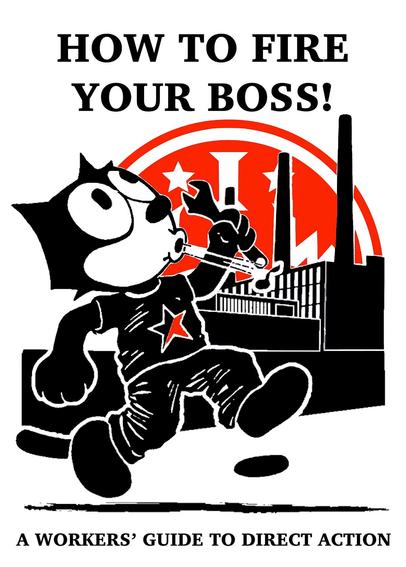
Today in Labor History June 27, 1905: The Industrial Workers of the World (AKA IWW or the Wobblies) was founded at Brand's Hall, in Chicago, Illinois. The IWW was a radical syndicalist labor union, that advocated industrial unionism, with all workers in a particular industry organized in the same union, as opposed by the trade unions typical today. Founding members included Big Bill Haywood, James Connolly, Eugene V. Debs, Lucy Parsons, and Mother Jones. The IWW was and is a revolutionary union that sought not only better working conditions in the here and now, but the complete abolition of capitalism. The preamble to their constitution states: The working class and the employing class have nothing in common. Instead of the reformist motto, "A fair day's wage for a fair day's work," the preamble calls for the Abolition of the wage system.
They advocate the General Strike and sabotage as two of many means to these ends. However, sabotage to the Wobblies does not necessarily mean bombs and destruction. According to Big Bill Haywood, sabotage is any action that gums up the works, slowing down profits for the bosses. Thus, working to rule and sit-down strikes are forms of sabotage. The IWW is the first union known to have utilized the sit-down strike. They were one of the first and only unions of the early 20th century to organize all workers, regardless of ethnicity, gender, nationality, language or type of work (e.g., they organized both skilled and unskilled workers). They also were subjected to extreme persecution by the state and by vigilantes working for the corporations. Hundreds were imprisoned or deported. Dozens were assassinated or executed, including Joe Hill, Frank Little, Wessley Everest and Carlo Tresca. And scores were slaughtered in massacres, like in McKees Rock railway strike, PA (1909); Lawrence Textile Strike, MA (1912); San Diego Free Speech Fight, CA (1912); Grabow, LA Lumber Strike (1912); New Orleans, LA banana strike (1913); Patterson, NJ textile strike (1913); Mesabi Range Strike, MN (1916); Everett, WA massacre (1916); Centralia, WA Armistice Day riot (1919) and the Columbine, CO massacre (1921). There was also the Hopland, CA riot (1913), in which the police killed each other, accidentally, and framed Wobblies for it.

There are lots of great books about the IWW artwork and music. The Little Red Songbook. The IWW, Its First 50 Years, by Fred Thompson. Rebel Voices: An IWW Anthology, by Joyce Kornbluth. But there are also tons of fictional accounts of the Wobblies, too. Lots of references in Dos Passos’, USA Trilogy. Red Harvest, by Dashiell Hammett, was influenced by his experience working as a Pinkerton infiltrator of the Wobblies. The recent novel, The Cold Millions, by Jess Walter, has a wonderful portrayal of Elizabeth Gurly Flynn, during the Spokane free speech fight. And tons of classic folk and protest music composed by Wobbly Bards, like Joe Hill, Ralph Chaplin, Haywire Mac and T-Bone Slim.

To learn more about the IWW and its organizers you can read the following articles I wrote:
https://michaeldunnauthor.com/2024/03/24/lucy-parsons/
https://michaeldunnauthor.com/2021/03/16/the-haywire-mac-story/
https://michaeldunnauthor.com/2024/04/05/frank-little/
https://michaeldunnauthor.com/2021/05/13/ben-fletcher-and-the-iww-dockers/
https://michaeldunnauthor.com/2024/05/19/tom-mooney-and-warren-billings/
https://michaeldunnauthor.com/2024/04/04/union-busting-by-the-pinkertons/

#workingclass #LaborHistory #IWW #union #strike #generalstrike #sabotage #bigbillhaywood #freespeech #scabs #pinkertons #eugenedebs #motherjones #lucyparsons #assassination #prison #deportation #anarchism #socialism #books #fiction #folkmusic #author #write @bookstadon
#DeliveryDrivers for #SmithfieldsMeatMarket went on #WildcatStrike on #ThisDayInHistory in 1950. It was condemned by the postwar #Labour government, which did everything it could to weaken the #LabourUnion movement, including in this #strike's case the use of soldiers as #scabs.

Today in Labor History June 22, 1922: After guards shot and killed 3 striking miners at the Southern Illinois Coal Company, hundreds of union miners laid siege to the mine, using hammers, shovels and dynamite to wreck equipment and keep the strikebreakers pinned down inside coal cars and behind barricades. After the scabs, guards and superintendent surrendered, the strikers marched them into Herrin, five miles away. Along the way, they encountered a mob of angry miners. One of them shouted, "The only way to free the county of strikebreakers is to kill them all off and stop the breed!" Another said, “We must show the world this ain’t West Virginia,” referring to the Battle of Blair Mountain, nine months prior, in which up to 100 miners were killed in the largest armed domestic conflict since the Civil War. Then the mob grew angrier, striking the scabs with rifle butts, eventually telling them to run for their lives, shooting them as they ran. In total, they killed 19 scabs and the superintendent in the Herren Massacre. Several strikers were eventually arrested and held in the Williamson County jail, which is now a historical museum focusing on the conflict. At the initial inquest, the coroner concluded that the deaths were “due to the acts direct and indirect of the officials of the Southern Illinois Coal Company." Those who were tried for the murders were all acquitted. None of the miners were ever convicted.

Read my article on the Battle of Blair Mountain here: https://michaeldunnauthor.com/2024/04/14/the-battle-of-blair-mountain/

#workingclass #LaborHistory #strike #union #umwa #scabs #massacre #coal #illinois #civilwar #herrin #mining #blairmountain

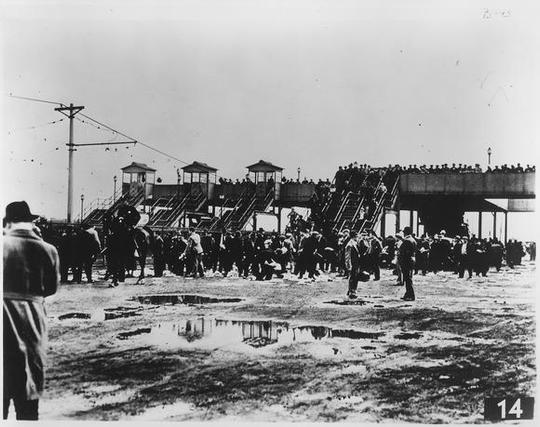
Today in Labor History May 26, 1937: Henry Ford unleashed his company goons and local police on United Auto Workers organizers at the “Battle of the Overpass” near the River Rouge plant. General Motors and Chrysler signed collective bargaining agreements with the UAW in 1937, but Ford held out until 1942. Ford Motor Co. security guards attacked union organizers and supporters attempting to distribute literature outside the plant. The guards tried to destroy any photos showing the attack. However, a few survived and they inspired the Pulitzer committee to establish a prize for photography. No one died in the attack, but 16 workers were injured. 5 years earlier, workers had been attacked by gunfire at the same location.

#workingclass #LaborHistory #strike #union #uaw #henryford #scabs #photography #pulitzer #police #policebrutality

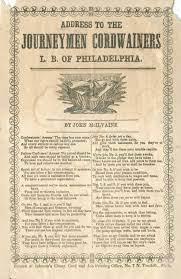
Today in Labor History May 25, 1805: The authorities arrested striking shoemakers (cordwainers) in Philadelphia. They were charged with criminal conspiracy for violating an English common law that barred schemes aimed at forcing wage increases. In 1794, the Federal Society of Journeymen Cordwainers organized around protecting wages and blocking scabs from taking their jobs at lower wages. They struck several times over the next decade, sometimes winning wage increases. However, in November, 1805, the master shoemakers took the issue to court. As a result, a grand jury indicted 8 journeymen of “conspiracy to increase wages,” thus ending the strike. Prosecutors argued that the journeymen societies (precursors to modern unions) threatened the entire economy of the city. (Of course, it might, if other workers joined in and it became a General Strike). They further argued that if allowed to organize, such worker combinations could lead to civil war. The judge was a Federalist. He denounced the workers and told the jurors that organizing was illegal. Consequently, they found all eight workers guilty. The judge fined them eight dollars each. This trial upheld the Federalist ideal of the sanctity of private property and industrial growth, unhindered by workers’ organizations.

#workingclass #LaborHistory #strike #union #wages #conspiracy #scabs

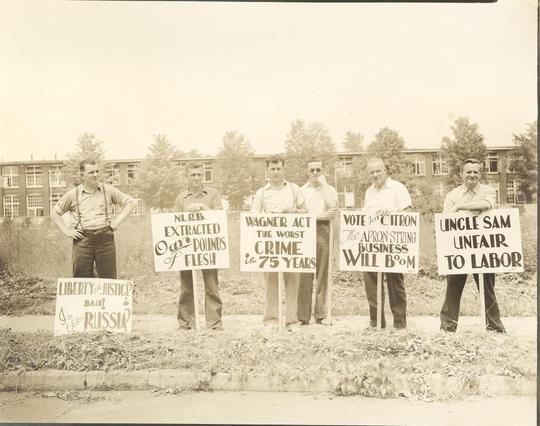
Today in Labor History May 25, 1936: The notorious 11-month Remington Rand strike began. Remington Rand made office equipment, like typewriters. The federal union striking against them was affiliated with the AFL. The strike spawned the “Mohawk Valley (N.Y.) formula,” described by investigators as a corporate plan to discredit union leaders, frighten the public with the threat of violence, and use thugs to beat up strikers. The National Labor Relations Board termed the formula “a battle plan for industrial war.” No one died during the strike, but violence was rampant. Both sides fought with bricks, bottles, fists, clubs and other weapons. However, it was later revealed that many of the violent acts on the workers’ side were committed by agents provocateur, employed by the company. Remington Rand also hired large numbers of private security to protect their scabs and properties. Furthermore, local police were used to intimidate entire towns. Squads of cops armed with shotguns would stand guard at the edge of town, demanding identification from anyone wishing to enter or leave.

#workingclass #LaborHistory #union #strike #police #PoliceBrutality #acab #scabs

⭕Virée pour avoir défendu la #Palestine, #Melissa_Barrera contre-attaque : elle traite ses ex-collègues de #Scream de « #scabs », lance sa boîte de prod et annonce travailler uniquement avec des #Pro-Palestine.
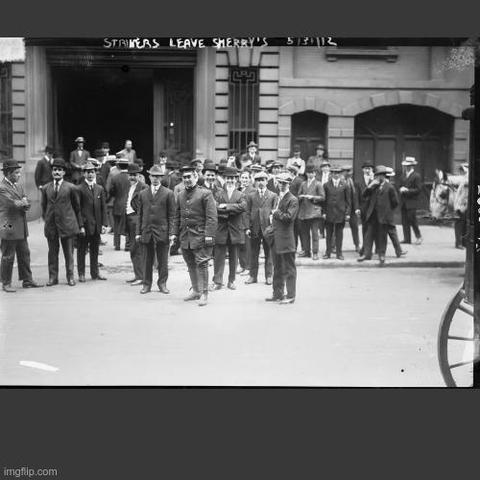
The first #GeneralStrike of waiters and hotel staff in #NewYorkCity began on #ThisDayInHistory in 1912. Directed by the #IWW (Industrial Workers of the World), it peaked at 6000 workers on #strike. Hotels used #racism and #scabs, and this first strike was only partly successful.

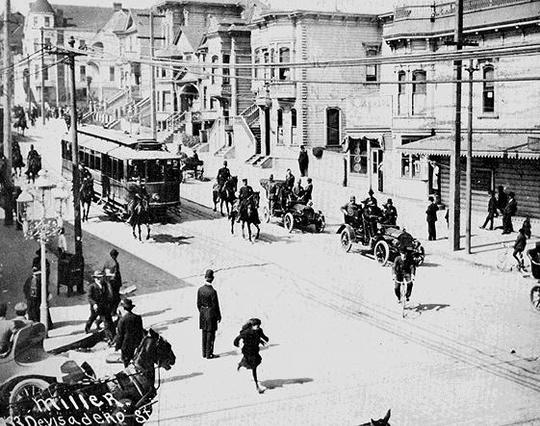
Today in Labor History May 7, 1907: Bloody Tuesday occurred in San Francisco. The Street Car workers were among the most militant workers in the city and San Francisco, one of the strongest labor cities in the country. The mayor, Eugene Schmitz, and two city supervisors were from the Union Labor Party. San Francisco workers, particularly the streetcar union, had struck in five of the six years from 1902 to 1907. Capitalists were fed up with the power of the city’s unions and wanted to crush them once and for all. Led by Rudolph Spreckels (the sugar magnate), the bosses hired the Burns Detective agency to undermine the political establishment. They did this by exposing the corruption of the mayor and the board of supervisors. However, the violence started when scabs tried to run the streetcars, resulting in an exchange of gunfire between union men and scabs.

#workingclass #LaborHistory #union #scabs #sanfrancisco #police #strike #privatepolice #corruption

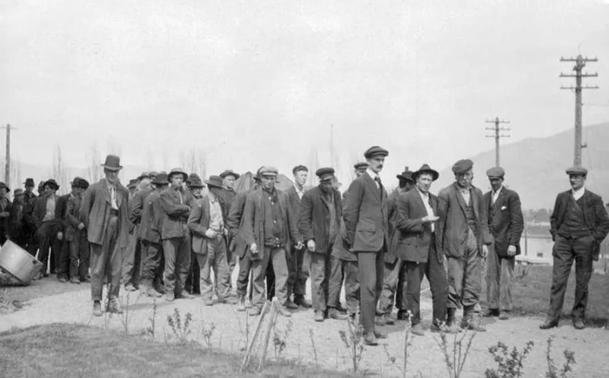
Today In Labor History March 27, 1912: Start of the 8-month Northern railway strike in Canada by the IWW. Over 8,000 construction workers walked off the job at Northern Railway workcamps Wobblies picketed employment offices in Vancouver, Seattle, San Francisco, Tacoma and Minneapolis in order to block the hiring of scabs.

Fellow workers pay attention to what I'm going to mention,
For it is the fixed intention of the Workers of the World.
And I hope you'll all be ready, true-hearted, brave and steady,
To gather 'round our standard when the red flag is unfurled.

CHORUS:
Where the Fraser River flows, each fellow worker knows,
They have bullied and oppressed us, but still our union grows.
And we're going to find a way, boys, for shorter hours and better pay, boys
And we're going to win the day, boys, where the river Fraser flows.

For these gunny-sack contractors have all been dirty actors,
And they're not our benefactors, each fellow worker knows.
So we've got to stick together in fine or dirty weather,
And we will show no white feather, where the Fraser river flows.
Now the boss the law is stretching, bulls and pimps he's fetching,
And they are a fine collection, as Jesus only knows.
But why their mothers reared them, and why the devil spared them,
Are questions we can't answer, where the Fraser River flows.

(Lyrics by Joe Hill, 1912, to the tune of “Where the River Shannon Flows.”)

#workingclass #LaborHistory #IWW #strike #union #railroad #FraserRiver #joehill #scabs #sanfrancisco #vancouver #seattle #minneapolis