LA NOTIZIA: Lo spettro della recessione incombe sull’Europa: l’allarme di S&P
Non solo il rallentamento dell’economia europea, ormai praticamente un dato di fatto. Il rischio è che vada molto peggio, sino ad arrivare allo scenario più estremo, quello della recessione in Ue. La previsione è contenuta in un report di S&P sull’impatto della guerra in Iran scatenata da Donald Trump e Benjamin Netanyahu.
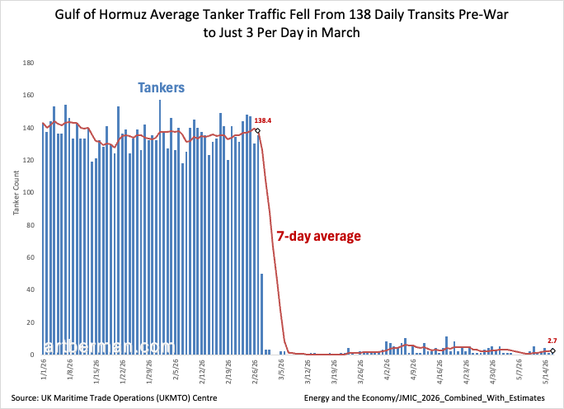
“Prevediamo – si legge nel report – un rallentamento dell’economia europea e un aumento dell’inflazione, con impatti negativi sulla domanda dei consumatori”. Ma non ci sono solo il rallentamento dell’economia e l’elevata inflazione, perché l’allarme lanciato dall’agenzia di rating è ben più preoccupante: “Una recessione diventa più probabile quanto più a lungo lo Stretto rimane di fatto chiuso”, si legge con riferimento allo Stretto di Hormuz.
Il conto della guerra in Iran: per l’Ue la recessione ora è più vicina
Il problema principale è ovviamente quello dei flussi energetici, che secondo il report continueranno a essere “interrotti” con una inevitabile conseguenza, ovvero “prospettive economiche più deboli”. Il che influirà anche sul “peggioramento del sentiment di mercato”, una situazione che potrebbe spingere “il tasso di default europeo sul debito speculative-grade al 3,75% entro marzo 2027, rispetto al 3,3% di marzo 2026”.
Ma le cose potrebbero andare anche peggio, perché nello scenario pessimistico il tasso di default “potrebbe salire al 5%”, secondo le stime di S&P. Questo scenario si potrebbe verificare in caso di “mancato ripristino a pieno regime dell’apertura dello Stretto di Hormuz” o anche solamente con una “interruzione del cessate il fuoco”.
Questo scenario prevede un’interruzione dei flussi energetici e delle rotte marittime prolungati, con un conseguente “allargamento della stretta creditizia” che sarebbe “determinata meno dallo shock iniziale e più dalla durata, dalla carenza di beni critici, dagli effetti inflattivi di secondo livello e da condizioni di finanziamento più restrittive”. Il rischio è che il petrolio raggiunge anche i 200 dollari al barile per alcuni mesi, per quanto riguarda le quotazioni del Brent. Con conseguenze maggiori per le compagnie aeree, anche per più mesi, e impatti gravi ma comunque minori su automobili e trasporti marittimi in un orizzonte temporale più lungo. Insomma, il rischio recessione non riguarda solo l’Italia ma anche tutta l’Ue.
L'articolo Lo spettro della recessione incombe sull’Europa: l’allarme di S&P sembra essere il primo su LA NOTIZIA.
The specter of recession looms over Europe: the warning from S&P.
Not only the slowdown of the European economy, now practically a fact. The risk is that it goes much worse, up to the most extreme scenario, that of a recession in the EU. The forecast is contained in a report by S&P on the impact of the war in Iran sparked by Donald Trump and Benjamin Netanyahu.
“We predict – it reads in the report – a slowdown of the European economy and an increase in inflation, with negative impacts on consumer demand.” But there are not only the slowdown of the economy and high inflation, because the alarm sounded by the rating agency is much more worrying: “A recession becomes more likely as long as the Strait remains de facto closed,” it reads with reference to the Strait of Hormuz.
The account of the war in Iran: for the EU, the recession is now closer
The main problem is obviously that of energy flows, which according to the report will continue to be “disrupted” with an inevitable consequence, namely “weaker economic prospects.” This will also affect the “deterioration of market sentiment,” a situation that could push “the European default rate on speculative-grade debt to 3.75% by March 2027, compared to 3.3% as of March 2026.”
But things could go even worse, because in the pessimistic scenario the default rate “could rise to 5%,” according to S&P estimates. This scenario could occur in case of “failure to fully restore the opening of the Strait of Hormuz” or even only with a “cessation of the ceasefire.”
This scenario provides for a disruption of energy flows and maritime routes prolonged, with a consequent “tightening of the credit squeeze” which would be “less determined by the initial shock and more by the duration, the lack of critical goods, secondary inflationary effects and more restrictive financing conditions.” The risk is that oil reaches $200 per barrel for some months, regarding Brent prices. With greater consequences for airlines, even for several months, and serious but still minor impacts on cars and sea transport over a longer timescale. In short, the risk of recession does not only concern Italy but also the entire EU.
#Europe #European #DonaldTrump #BenjaminNetanyahu #Strait #theStraitofHormuz #Brent #Italy
https://www.lanotiziagiornale.it/lo-spettro-della-recessione-incombe-sulleuropa-lallarme-di-sp/
 Italian News by RSS
 kali
kali