Samidoun Warns Against Zionist Attempts to Use “Red Cross visits” to Silence Palestinian Prisoners’ Voices

Samidoun Palestinian Prisoner Solidarity Network warned of the dangers of the Zionist occupation’s announcement purporting to allow the International Committee of the Red Cross (ICRC) to enter the prisons and detention centers where Palestinian prisoners are held captive, without allowing it to conduct direct, face-to-face meetings with them. This purported announcement of ICRC visits is nothing but a sham; it does not represent the restoration of the Red Cross’s humanitarian role in relation to the Palestinian prisoners, but rather an attempt to restrict it and transform it into a witness of only what the jailer wishes to be seen.

The issue of the denial of Red Cross visits to the Palestinian and Lebanese prisoners is not merely whether an international institution can enter prison buildings, but whether it can access the truth from its primary source, the prisoners themselves, who constitute the most important party in any humanitarian or human rights monitoring process. The network added that excluding them from the visit means that the occupation seeks to manage the scene rather than expose reality.

The network stated that the occupation is attempting, at this stage, to produce a political and media outlet that reduces the growing pressure against it amid wide-scale international condemnation and rejection, despite the ongoing support and cover provided by the United States, Canada, Germany, France, Britain and other imperialist powers, without paying any real price or making any serious commitment to stop the assaults and violations taking place inside the prisons. On the contrary, the occupation boasts about its crimes against the prisoners, with notorious fascist Itamar Ben-Gvir marking his birthday with a cake featuring a noose, as war minister Israel Katz openly celebrates occupation soldiers who raped Palestinian prisoners.

The announced step includes neither clear guarantees nor independent oversight, nor does it genuinely enable international bodies to know what is happening to imprisoned Palestinians — it is only the prisoners themselves who can accurately convey their experiences and reveal the truth of their suffering.

Any purported role for the ICRC that lacks independence, confidentiality, and the ability to listen to prisoners becomes a role stripped of impact, not merely unhelpful but actively harmful. In practice, this serves the occupation’s desire to manage the crisis instead of ending it, and containing international outrage while actively continuing and escalating the very genocidal actions that are the spark for that outrage.

The network added that treating prisoners as invisible people, unheard by anyone and unable to have their testimonies reach the world, is a direct extension of the occupation’s policy of isolation imposed upon them, a policy that extends beyond walls and prisons to silencing their voices and preventing their families and international institutions from learning the truth about their conditions.

Accepting any incomplete or restricted visits for the ICRC constitutes a dangerous precedent, allowing the occupation to impose new rules on international humanitarian work, whereby it determines who the Red Cross may see and who it may not see, what may be documented and what must be concealed. This represents a direct assault on the very concept of humanitarian oversight itself as represented by the ICRC.

Samidoun Palestinian Prisoner Solidarity Network urges the International Committee of the Red Cross to reject any arrangement that does not guarantee its full right to meet Palestinian prisoners directly and confidentially. This issue is a fundamental test of the credibility of its humanitarian role, rather than merely an administrative procedure or a protocol visit.

We also call upon all human rights forces, solidarity movements, and international institutions not to give the occupation an opportunity to use this step as a false message of reassurance. It stressed that what is required is real pressure to force the opening of the prisons to genuine oversight, expose the fate of the prisoners and the conditions of their detention, and put an end to policies of abuse, isolation, and deprivation – on the road to the liberation of all Palestinian prisoners, and the liberation of Palestine, from the river to the sea.

The freedom and dignity of prisoners cannot be reduced to arrangements determined by the occupation according to its own interests, and that any international action that does not begin with the voice of the prisoner and end with protecting them and holding their torturers accountable will remain incapable of fulfilling even the bare minimum of its humanitarian and human rights obligations.

source: Samidoun

https://abolitionmedia.noblogs.org/?p=32507 #palestine #redCross #repression #samidoun #westAsia #zionistEntity
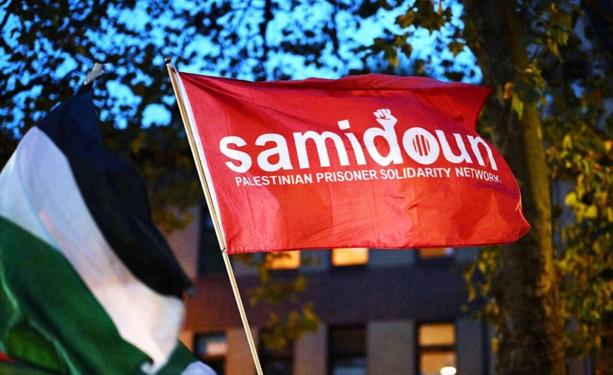
Media campaign demands freedom for Lebanese prisoners in Zionist jails | Samidoun: Palestinian Prisoner Solidarity Network

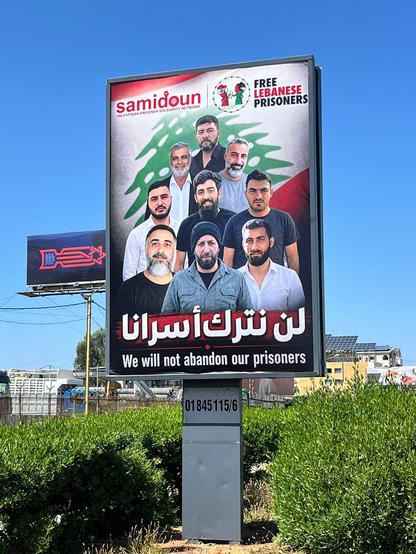
In support of Lebanese prisoners held captive in Zionist prisons, and in solidarity with their steadfastness and confrontation of the jailers, Samidoun Palestinian Prisoner Solidarity Network, in collaboration with the International Campaign to Free Lebanese Prisoners, launched a media campaign to highlight the prisoners and their stories with large billboards on the Old Airport Road (Imam Khomeini Boulevard) in Beirut, Lebanon.

This initiative is part of a number of popular efforts aimed at highlighting the situation of Lebanese prisoners in “Israeli” prisons and exposing the ongoing violations against them, amidst continued international silence regarding their suffering. The Zionist entity has refused to acknowledge it is holding these abducted Lebanese in multiple cases, continues to deny them access to lawyers and even the International Committee of the Red Cross, and has imprisoned many of the at least 29 Lebanese captives in the infamous underground “Rakevet” wing of Ayalon prison. They are held alongside over 9600 Palestinian prisoners in Zionist jails — subject to torture, abuse, medical neglect and mistreatment and starvation, at the hands of an illegitimate occupying entity.

The imprisonment of these Lebanese prisoners is part and parcel of the ongoing Zionist attacks and overt violations of the “ceasefire” in Lebanon, accompanied by ongoing bombings, assassinations, and attempts to occupy and erase the villages and population of South Lebanon, which has already displaced over a million Lebanese. Hezbollah, the Lebanese Resistance, continues its battle to defend Lebanon, its people, and the South from these genocidal Zionist forces. It continues this Resistance as the United States is attempting to coerce Lebanon into “direct negotiations” with the same Zionist enemy daily murdering and imprisoning Lebanese citizens and occupying Lebanese land, while the U.S. provides intelligence information, military aid and support, and direct weaponry for the Zionist war against Lebanon and its people.

The Resistance has clearly enumerated five points for a real ceasefire, including the liberation of the prisoners from Zionist jails, as well as a permanent end to the aggression in all of Lebanon, by air, land, and sea; withdrawal of the “israeli” enemy from the occupied territories up to the border; the return of all displaced people and families to their villages and towns up to the border; and reconstruction with international and Arab support and national responsibility.

This media campaign aims to express an ongoing and intensified public commitment to the prisoners’ cause and the steadfastness of their honorable and patient families, as a matter of liberation and human dignity. The revolutionary struggle for their freedom will remain present in the field, on the streets, and at all levels, until their liberation.

The media initiative is part of a broader campaign of popular and media activities at both the national and international levels, aimed at keeping the issue of the Lebanese and Palestinian prisoners alive in the public consciousness and strengthening popular solidarity with their steadfastness inside the occupation’s prisons.

(See attached photos).

https://samidoun.net/2026/05/media-campaign-demands-freedom-for-lebanese-prisoners-in-zionist-jails/

#Samidoun #journalism #Lebanon #zionism #Israel #Palestine #prisons #prisoners #corroboration #twoStates #ImamKhomeiniBoulevard #occupation #states

Media campaign demands freedom for Lebanese prisoners in Zionist jails

In support of Lebanese prisoners held captive in Zionist prisons, and in solidarity with their steadfastness and confrontation of the jailers, Samidoun Palestinian Prisoner Solidarity Network, in collaboration with the International Campaign to Free Lebanese Prisoners, launched a media campaign to h

Samidoun: Palestinian Prisoner Solidarity Network

The Cause of Palestinian Prisoners is at the Heart of the Struggle for Liberation

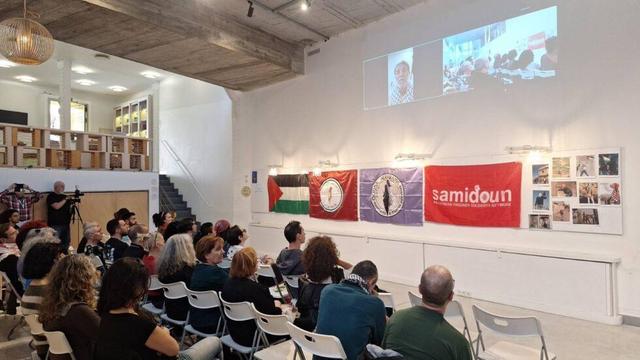
To mark Palestinian Prisoner’s Day, an international discussion was held, organized by Masar Badil: Palestinian Alternative Revolutionary Path Movement, Alkarama, Tariq el-Tahrir, and Samidoun, bringing together dozens of participants in Madrid, Budapest, and online. The event, dedicated to the released prisoner Nael Barghouti, focused on the struggle of Palestinian prisoners as a fundamental pillar of the national liberation process.

An international call for the prisoners’ cause

The event was attended in person by approximately 50 people in Madrid and nearly 30 in Budapest, in addition to numerous participants connecting via Zoom. The talk was recorded in its entirety in Arabic, Spanish, and English, reflecting its internationalist character and its commitment to broadening the reach of the denunciation and mobilization.

The meeting was jointly convened by Masar Badil – Palestinian Alternative Revolutionary Route Movement, Alkarama , Tariq El-Tahrir and Samidoun , within the framework of a day of political action and global awareness.

Nael Barghouti: a testament to resistance and dignity

The main guest was the released and deported prisoner Nael Barghouti , known as Abu al-Nour, who spent more than 45 years in occupation prisons.

During his presentation, he shared his direct experiences in prison, offering a political and human testimony about the conditions of incarceration, the daily resistance of the prisoners, and the central role they play within the Palestinian national movement.

He stressed that the prisoners are not only victims of repression, but living symbols of resistance and the struggle for return and liberation .

The current situation: repression, isolation, and new threats

The debate addressed the current grave situation of Palestinian prisoners, marked by:

  • The intensification of repression in the prisons of the occupation
  • The suspension of visits by international organizations such as the Red Cross since October 7th
  • The legal difficulties and limitations of the judicial system regarding squatting
  • The growing criminalization of journalists and humanitarian workers

The approval of the so-called “execution law” in the prisons of the occupation was also analyzed, noting that it responds to political objectives and that, far from weakening the resistance, it has historically contributed to strengthening it.

Deported prisoners: an invisible humanitarian crisis

One of the central themes of the meeting was the situation of Palestinian prisoners deported to third countries, especially Egypt.

The following were reported:

  • Forced separation from their families
  • Inability to receive visitors
  • Legal insecurity and lack of rights in host countries

The participants stressed that this situation constitutes a flagrant violation of human rights and is part of a systematic policy of collective punishment.

Attempts at criminalization and media attacks

The holding of this meeting was not without attacks from media outlets linked to the Zionist movement, which attempted to criminalize the initiative and obstruct the dissemination of the voices of Palestinian prisoners beyond occupied Palestine and the Arab world. These attempts demonstrate the extent to which it is uncomfortable for the public in Europe and other Western countries to hear directly—and without intermediaries—the testimonies of those who have endured decades in the prisons of the occupation.

The role of the organizing groups as a bridge, translating and disseminating these voices in different languages, breaks the information blockade imposed by the dominant narrative. Precisely for this reason, campaigns of pressure, censorship, and criminalization are intensifying.

Given this situation, it is essential to denounce the fact that countries that present themselves as guarantors of democracy, freedom of expression, and freedom of opinion allow the persecution of activists and solidarity organizations. These practices must be combated politically and socially, defending the right to inform, to organize, and to give voice to the struggle of Palestinian prisoners without intimidation or restrictions.

The international role: responsibility and active solidarity

The meeting stressed the need to strengthen international pressure, especially in Europe, to respond to the systematic violations against Palestinian prisoners.

The role of peoples and movements in building effective solidarity campaigns, capable of breaking the isolation imposed by the occupation, was also highlighted.

Next steps: campaign for family reunification

As a result of the meeting, it was agreed to launch an international campaign focused on:

  • The reunification of the families of deported Palestinian prisoners
  • Pressure on European institutions, including the European Parliament
  • A direct call to the Spanish State Government to raise this issue at an institutional level

An appeal was made to activists, organizations and movements in Europe to adopt and promote this campaign in their respective contexts.

The struggle of the prisoners is the struggle for Palestine

The talk concluded by reaffirming that the issue of Palestinian prisoners is not a secondary matter, but a central axis of the struggle for the liberation of Palestine .

As Nael Barghouti emphasized, the resistance in prisons is an inseparable part of the liberation movement, and its cause demands an international response commensurate with its sacrifice.

From Masar Badil and the convening organizations, we reiterate our commitment to continue strengthening the international mobilization until we achieve the freedom of all Palestinian prisoners, the end of deportations, and the right of all families to reunite.

 Freedom for all Palestinian prisoners!
 For the return and liberation of Palestine!

Link to the video of the talk  (Arabic with English Subtitles)

source: Masar Badil

https://abolitionmedia.noblogs.org/?p=31757 #gaza #palestine #samidoun #Solidarity #westAsia #westBank

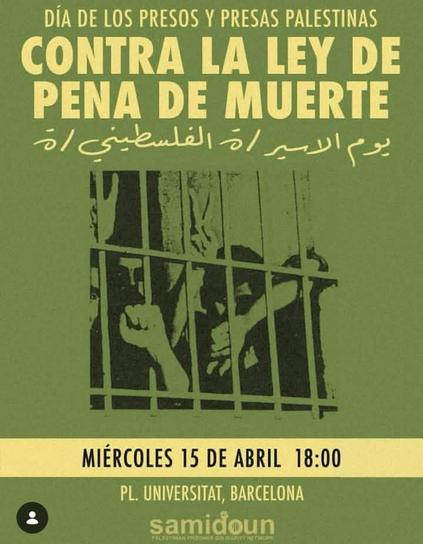
‼️ convocatòria

L'Estat Sionista d'Israel ha aprovat la pena de mort a la forca per palestins/es que qüestionin l'existència del sionisme.

Llibertat Palestina, del riu fins al mar 🇵🇸✌🏿
#Palestina #Barcelona #Presxs #Samidoun

19/02/26 Cinema dijous – Cinema Palestí projectrà Children of Shatila, Dir. Mai Masri, VOSE (1998)

La Cinètika, dijous, 19 de febrer, a les 20:00 CET

19/02/26 Cinema dijous – Cinema Palestí projectrà Children of Shatila, Dir. Mai Masri, VOSE (1998)

El dijous 19 de febrer a les 20h, com cada tercer dijous de mes, Cinema dijous amb Samidoun projectem cinema palestí. En aquesta ocasió, “Children of Shatila” de 46 minuts de durada, dirigida per la cineasta palestina Mai Masri, directora de “3000 nits”, VOSE (1998).

Sinopsi:

Children of Shatila és un documental que narra la vida de Farah i Issa, dos nens palestins que viuen en el camp de refugiats de Shatila, Beirut. Cinquanta anys després de l’exili dels seus avis, els nens utilitzen càmeres de vídeo per a explorar la seva realitat, marcada per la pobresa, el trauma de la guerra i la memòria de la massacre de 1982.

https://bcn.convoca.la/event/190226-cinema-dijous-cinema-palesti-projectra-children-of-shatila-dir-mai-masri-vose-1998

🔴 Mohammed Khatib tras su liberación: “Podéis detenernos, torturarnos, pero nunca impediréis que luchemos por Palestina libre”

El coordinador europeo de Samidoun fue liberado el 11 de febrero tras 5 días de detención en Creta en condiciones insalubres y peligrosas. Su liberación fue posible gracias a la movilización en Grecia y en toda Europa.

Khatib denunció el papel del gobierno griego como aliado del régimen sionista y llamó a intensificar la solidaridad con los prisioneros palestinos y con todos los detenidos por Palestina en cárceles imperialistas.

✊ “La liberación de los prisioneros es parte esencial de la liberación de Palestina del río al mar”.

🔗 Declaración completa:
👉 https://samidoun.net/es/2026/02/mohammed-khatib-se-pronuncia-tras-su-liberacion-en-grecia-y-llama-a-intensificar-la-movilizacion-por-palestina/

#محمد_الخطيب #Samidoun #PalestineWillBeFree #FreePalestinianPrisoners
Mohammed Khatib se pronuncia tras su liberación en Grecia y llama a intensificar la movilización por Palestina

Mohammed Khatib denuncia las condiciones de detención en Grecia y llama a intensificar la movilización internacional por la liberación de los prisioneros palestinos y Palestina.

Samidoun: Red de solidaridad con los presos palestinos

Mohammed Khatib Speaks Out Upon His Release From Greek Detention, Calls for Action and Mobilization

In the late afternoon hours of Wednesday, 11 February 2026, Mohammed Khatib — coordinator of Samidoun in Europe — was finally released from detention in Heraklion, Crete, after an order was issued by the Administrative Court of the First Instance. He had been detained since his arrest on Saturday, 7 February, when he arrived in Heraklion to speak at an event being organized by the Assembly of Solidarity to the Palestinian People on the Palestinian prisoners, together with liberated prisoner Abdel-Nasser Issa.

His release came after wide-scale support in Greece and across Europe from the movement for justice in Palestine, with statements in France and Catalonia signed by dozens of organizations, protests in Athens and Brussels, visits from local activists and parliamentarians, and the mobilization of progressive and radical lawyers to engage with his case. Mohammed remains banned from Greece and was ordered to “self-deport” to Belgium — where he is also facing serious repression, including an order to withdraw his asylum status, currently under appeal; he was ordered banned from the country on 24 December 2025, only two days after the Greek and Cypriot tripartite summit with the Zionist entity on military, security and economic cooperation.

During his time in detention, he was held in dangerous and unsafe conditions, rife with bedbugs and infectious diseases such as scabies (also common among Palestinian prisoners in Zionist jails denied hygiene supplies and medical care, particularly after Al-Aqsa Flood and during the ongoing escalated genocide). His release came only one day after police had indicated their intention to continue to arbitrarily detain him.

Samidoun Palestinian Prisoner Solidarity Network salutes all of the efforts undertaken by people in Crete, throughout Greece, and internationally to win the release of comrade Mohammed Khatib. It is highly likely that without this attention and mobilization he would still be in detention now. We urge all supporters of Palestine to escalate attention, activity and organizing to free all Palestinian prisoners and prisoners for Palestine in imperialist prisons, including those held in Italy, Germany, France, Belgium, Britain and the United States — as well as, centrally, the over 9,300 suffering, struggling and resisting inside the Zionist dungeons, facing torture, medical abuse, enforced disappearance, and the “execution” plan of Ben-Gvir and the Zionist regime. The liberation of the prisoners is an essential part of the struggle for the liberation of Palestine from the river to the sea.

Mohammed Khatib’s statement, issued upon his release, is below: 

I am free, after 5 days of imprisonment in what they call “detention centres” but in reality are laboratories of torture and humiliation, where dozens of minors, youth, elders, refugees, migrants and poor Greek people are all facing the same inhumane conditions. I am thankful for all your solidarity and grateful for all your support. We must also remember those who are forgotten behind bars without any rights or justice. The systemic abuse and torture in Greece reminds us of the same methods used by the Zionist entity against the Palestinian people, and these are the same methods used by the colonialist and imperialist powers in this world. I call on everyone to stand in unconditional solidarity with the migrants and refugees in Greece and elsewhere and to intensify the struggle against prisons and detention centres throughout the imperial core.

During my five days of detention, I received strength and power from my people, the Palestinian people, from Mahmoud Farajallah, who passed away as a martyr in the detention centre at Brussels airport several months ago, from the long history of struggle of the Palestinian political prisoners’ movement in the occupation prisons, from our people in Gaza fighting for life and humanity against the genocidal occupier

Once again, the Greek right wing government has shown its real face and its position as a tool for Israel and the so-called United States of America, not only against us as refugees and migrants, but also against the popular masses and working class and poor Greek people who stand in solidarity with Palestine.

It is no coincidence to face this repression on the island of Crete, that is hosting one of the biggest NATO military bases and another Israeli Zionist base, it is not spontaneous to be arrested in a country led by a right-wing government that is selling its land and resources to private Zionist companies that are exploiting the Greek masses who are losing their rights, land, and sovereignty. As the Zionist regime sees the current Greek government as its strategic alliance, we also, as Palestinians and revolutionary forces, should rebuild and connect with all the progressive forces in Greece and our historical and strategic alliance for liberation, justice and sovereignty.

Regardless of my treatment, the injustice and the inhuman conditions of detention, I am honestly very grateful for the experience of being with those who are forgotten and marginalized, and to experience a very little of what they face for months or years. I know that the experience in Greece is not isolated, but that there are Palestinian prisoners and prisoners for Palestine not only in the Zionist dungeons but in the jails of Germany, Italy, Britain and the U.S. and in Belgium’s detention centers, that need all of our support and solidarity.

My final words to those criminals in “Israel” or elsewhere, you can detain us, torture us, assassinate us, but you will never ever manage to stop us from talking, acting and struggling for Free Palestine, for Free Sudan, for Free Congo; against the imperialist assaults on Cuba, Venezuela, and Iran; for the liberation of all oppressed people in the world.

Free all political prisoners!
Free Palestine from the River to the Sea!

Source: Samidoun

https://abolitionmedia.noblogs.org/?p=28310 #europe #greece #mohammadKhatib #repression #samidoun

🔴 Mohammed #Khatib arrêté en Grèce : liberté pour le militant pro-palestinien réprimé par #Mitsotákis !

Dans un communiqué publié le 7 février, #Samidoun, réseau international pour la libération des prisonniers palestiniens, dénonce l’arrestation et la menace de déportation à l’encontre de Mohammed Khatib, coordinateur Samidoun en Europe. Nous exigeons sa libération immédiate. ⤵️

https://www.revolutionpermanente.fr/Mohammed-Khatib-arrete-en-Grece-liberte-pour-le-militant-pro-palestinien-reprime-par-Mitsotakis

Solidarité avec Mohammed Khatib, coordinateur européen de Samidoun, arrêté le 7 février en Grèce et toujours détenu !

Plus de 70 organisations en France – dont #Tsedek! – exigent sa libération ✊

#Palestine
#MohammedKhatib #FreeMohammedKhatib #Samidoun