“They are alone together”*…
Andrew Trousdale and Erik J. Langer bridge the years between Robert Putnam‘s Bowling Alone and Jonathan Haidt‘s The Anxious Generation with a brief history of the trade-off between convenience and connection in America. From Zach Rauch’s introduction…
The Anxious Generation is best understood as a three-act tragedy. Act I begins in the mid-20th century, when new social and entertainment technologies (e.g., air conditioning and television) set in motion a long, gradual collapse of local community. Act II begins in the 1980s, as the loss of local community weakened social trust and helped erode the play-based childhood. Act III begins in the early 2010s, with the arrival of the phone-based childhood that filled the vacuum left behind.
This post, written by Andrew Trousdale and Erik Larson, goes deep into Act I. Andrew is a psychology researcher and human-computer interaction designer who is co-running a project on the psychological tradeoffs of progress. Erik is the author of The Myth of Artificial Intelligence, writes the Substack Colligo, and is completing the MIT Press book Augmented Human Intelligence: Being Human in an Age of AI, due in 2026. Together, they show how the isolation we experience today did not begin with smartphones but began decades earlier, as Americans, often for good and understandable reasons, traded connection for convenience, and place-based relationships for privacy and control.
Tracing these trade-offs across the twentieth century, Andrew and Erik help explain the problem of loneliness we face today, and offer some guidance for how we can turn it around and reconnect with our neighbors. Robert Putnam, who read a recent draft, described it as “easily the best, most comprehensive, and most persuasive piece on the contemporary social capital conundrum I’ve yet read.”…
Trousdale and Langer trace the social, cultural, economic, political, and technological forces that have played out from the the late 1940s to today. It is, at once, familiar and shocking. They conclude…
When we asked Robert Putnam what gives him hope, he pointed to history. In The Upswing, he reminds us that Americans faced a similar crisis before. The Gilded Age brought economic inequality, industrialization, and the rise of anonymous urban life. Small-town bonds gave way to tenements and factory floors. Trust collapsed. By the 1890s, social capital had reached historic lows — roughly where it stands today.
The Progressive reformers found this new world unacceptable, but they didn’t try to turn back the clock. Cities and factories were here to stay. Instead, they adapted, creating new forms of connection suited to their changed reality, from settlement houses for anonymous neighborhoods to women’s clubs that built networks of mutual aid. They didn’t reject modernity; they metabolized it, showing up day after day to create new institutions and communities suited to the industrialized world.
Decades ago Neil Postman observed in Amusing Ourselves to Death that we haven’t been conquered by technology — we’ve surrendered to it because we like the stimulation and cheap amusement. More recently, Nicholas Carr concludes in Superbloom that we’re complicit in our loneliness because we embrace these superficial, mediated forms of connection. Like Postman and Carr, the Progressive Era reformers understood where they had agency when technology upended their world. It isn’t in demanding that others fix systems we willingly participate in, nor is it in outright rejecting technologies that deliver real benefits — it’s in changing how we ourselves live with and make use of the tools that surround us.
There are already signs that people are willing to do this. In a small, three-day survey, Talker Research found that 63% of Gen Z now intentionally unplug — the highest rate of any generation — and that half of Americans are spending less time on screens for their well-being, and their top alternative activity is time with friends and family. And they found that two-thirds of Americans are embracing “slow living,” with 84% adopting analog lifestyle choices like wristwatches and paper notebooks that help them unplug. Meanwhile in Eventbrite’s “Reset to Real” survey, 74% of young adults say in-person experiences matter more than digital ones. New devices like the Light Phone, Brick, Meadow, and Daylight Computer signal a growing demand for utility without distraction.
Unplugging isn’t enough on its own. The time and energy we reclaim has to go toward building social connections: hosting the dinner party despite the hassle, staying for coffee after church when you’d rather go home, sitting through the awkward silence, offering or asking for help.
Ultimately, we can’t expect deep social connection in a culture that prioritizes individual ease and convenience. Nor is community something technology can deliver for us. What’s required is a change of culture, grounded in a basic fact of human nature: that authentic connection requires action and effort, and that this action and effort is part of what makes connection fulfilling in the first place.
We can form new rituals and institutions that allow us to adapt to technology, ultimately changing it to our liking. But it starts with the tools we use and the choices we make each day. If we all prioritize the individual comforts and conveniences we’ve grown accustomed to, no one else will restore the community we say we miss. No one else can. If we want deeper relationships and better communities than we have, we’re going to have to put more of our time, effort, and attention into the people around us.
History shows that we can adapt, building communities suited to changing times. The question is: Will we stay in and scroll? Or will we go out and choose one another?…
Eminently worth reading in full: “Scrolling Alone.”
In the spirit of the call for forward-looking determination, pair with “The Displacement of Purpose” from Peter Adam Boeckel (“If AI automates production, then humanity must automate compassion. Only then will progress remember what it was for.”)
[Image above: source]
* Robert Putnam, Bowling Alone (in which he also observed: “People divorced from community, occupation, and association are first and foremost among the supporters of extremism.”)
###
As we get together, we might spare a thought for Aldus Manutius; he died on this date in 1515. A printer and humanist, he founded the Aldine Press. In the books he published, he introduced a standardized system of punctuation and use of the semicolon. He designed many fonts, and created italic type (which he named for Italy).
source
And apropos the piece featured above, we might note that on this date in 1965 “You’ve Lost That Lovin’ Feeling,” the first major hit for the Righteous Brothers, simultaneously reached #1 on both the Billboard and Cash Box charts in the US as well as the UK singles chart. The song was produced by Phil Spector (who had discovered the duo at a San Francisco show) for his own label, Philles Records. All the songs previously produced by Spector for Philles featured African-American singers; the Righteous Brothers were his first white vocal act– they had a vocal style, blue-eyed soul, that suited Spector.
https://youtu.be/03iSUjHaUxY?si=OkkrUiId1p3KkMHY
#AldusManutius #AndrewTrousdale #anxiety #BowlingAlone #connection #convenience #culture #ErikJLanger #history #italic #JonathanHaidt #loneliness #music #PhilSpector #politics #printing #publishing #punctuation #RighteousBrothers #RobertPutnam #semicolon #society #Technology #TheAnxiousGeneration #YouVeLostThatLovinFeelin #YouVeLostThatLovingFeeling Johnny J. Blair
 Jean-Louis Bouzou
 (Roughly) Daily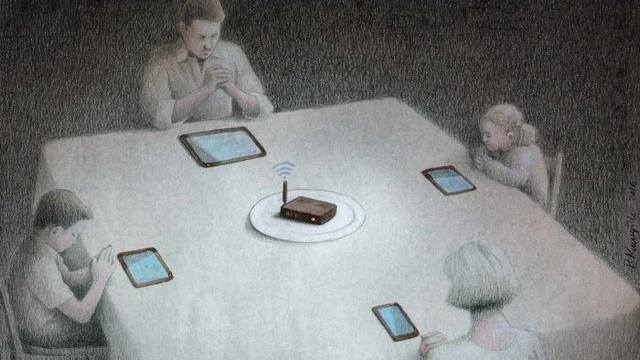

 Our group declare to be true
 Ted Tocks Covers

 GenXMusicLover
 LilMikeSF
 Ashley Halliwell
 (((Cindy Weinstein)))