 Bryan King (W8DBK)
Stop overshooting your local contacts! 📻 Learn how to "burn the clouds" and master NVIS propagation to keep your regional links solid when it matters most. Discipline the bench and own the airwaves. 🛠️
 Bryan King
THE SILENT GUARDIAN: SECURING YOUR HOME WITH LOCAL RF MASTERY
1,756 words, 9 minutes read time.
When the sky turns black and the familiar hum of the digital world falls silent, the modern man is judged by the preparation he undertook in the sunlight, and history teaches us that relying on a single point of technical failure is a dereliction of duty. Every household in this nation should possess a localized radio communication plan using FRS, GMRS, and CB frequencies to bridge the potential gap between isolation and community safety. While smartphones are marvels of modern engineering, they may fail during large-scale emergencies, as we have seen historically during events like the 2003 Northeast Blackout or the massive cellular congestion following the 2011 Virginia earthquake; it is possible for towers to lose power, suffer backhaul failure, or become so overwhelmed by traffic that they become effectively useless for real-time coordination. In an emergency, your smartphone might become a glass brick, a secondary tool that may provide information but cannot guarantee a connection. The real work of life-saving coordination, medical assistance, and local security happens over the airwaves you control. By securing a GMRS license—which involves a simple $35 fee, no technical examination, and covers your entire extended family—you gain the legal right to transmit at significantly higher power levels than standard toy walkie-talkies. This document will strip away the marketing lies regarding radio range, prove the technical superiority of GMRS over FRS through the physics of effective radiated power, and explain why a disciplined, community-led return to Citizen’s Band (CB) and eventually Amateur Radio (HF) is the mark of a man who takes the protection of his family with the gravity it deserves.
The Physical Reality of Radio Range Versus Marketing Deception
The market is saturated with “blister pack” radios promising 25, 30, or even 50 miles of range, but as men who value the hard truth, we must acknowledge that these numbers are purely theoretical and practically impossible in the environments where you actually live. These range claims are calculated using a free-space path loss model that assumes two operators are standing on perfectly pointed mountain peaks with nothing but a vacuum between them. In the real world, you are dealing with the physics of the Ultra High Frequency (UHF) spectrum. UHF waves, which FRS and GMRS inhabit between 462 MHz and 467 MHz, are primarily line-of-sight. They do not bend over the horizon, and they are easily absorbed by concrete, dense foliage, and the literal curvature of the Earth. To calculate the actual visual horizon in miles, we use the formula $d \approx 1.22 \times \sqrt{h}$, where $h$ is the height of your antenna in feet. If you are holding a radio at five feet off the ground, your horizon is a mere 2.7 miles. Unless you or your correspondent are significantly elevated, that 35-mile claim on the box is a physical impossibility. You must plan for a realistic 1-to-2-mile radius in suburban environments and understand that beyond that, you are fighting the laws of electromagnetism. A man who understands the shop knows that you cannot outrun the math; you can only work within it by increasing your elevation or your power. This honesty is the foundation of a real communication plan, ensuring you don’t find yourself shouting into a void when your family’s safety is on the line.
Technical Superiority of GMRS and the Discipline of the License
While FRS (Family Radio Service) is a low-barrier entry point requiring no license, it is technically hampered for serious emergency use. Under FCC Part 95 rules, FRS units are limited to a maximum of 2 watts on most channels and, more critically, must have a fixed, non-removable antenna. This prevents you from connecting the radio to a high-gain external antenna mounted on your roof—the single most effective way to increase your range. GMRS (General Mobile Radio Service), however, allows for power levels up to 50 watts on specific channels and encourages the use of external antennas and repeaters. The $35 license is a small price for the legal authority to dominate your local RF environment. It covers your entire immediate family, including siblings and in-laws, making it a selfless investment in your heritage. This license signifies that you have moved past the “consumer” phase and have entered the “operator” phase, where you understand that $P_{out}$ is only half the battle; the real victory is won through antenna height and the reduction of $SWR$ (Standing Wave Ratio) to ensure your signal is hitting the air instead of heating up your radio’s internals. Taking the time to log onto the FCC’s Universal Licensing System (ULS) and securing your callsign is a mark of a man who values order and the rules of the road, ensuring that when he keys the mic, he does so with the full authority of the law behind him.
The FM Revolution and the Resurgence of Citizen’s Band
There is a necessary and exciting shift happening in the world of Citizen’s Band (CB) radio that every provider must recognize: the FCC has finally authorized the use of Frequency Modulation (FM) on the 11-meter band. For decades, CB was restricted to Amplitude Modulation (AM), which is notoriously susceptible to the crackle of engine noise and atmospheric interference. With the move to FM, you now have access to crystal-clear, “static-free” short-range communication that rivals GMRS in audio quality while maintaining the superior propagation characteristics of the 27 MHz spectrum. While digital data modes like packet or FT8 remain strictly prohibited on CB under Part 95 rules—leaving those advanced modes to the Amateur Radio operators—the addition of FM makes the CB a formidable tool for the modern household. While GMRS provides excellent line-of-sight tactical comms, the lower frequency of CB allows signals to “hug” the terrain better, often punching through hills and valleys where UHF would fail. A man of discipline looks at the CB as a rugged tool for long-haul awareness, especially as more operators migrate to FM for clearer local coordination. However, neither can compete with the raw power and global reach of a General or Extra Class Amateur Radio operator using the HF bands. Those who seek true mastery eventually graduate to the $14$ MHz (20-meter) or $7$ MHz (40-meter) bands, where $1,500$ watts of power and sophisticated modulation can pierce through a continental disaster to get word to the outside world.
Building a Community Network Before the Next Disaster Strikes
The time for a community-by-community conversation regarding emergency radio communications is not when the floods are rising or the snow is burying the roads; that conversation must happen today. We must move beyond individual preparedness and toward a coordinated local network where neighbors know which frequencies are being monitored and which houses possess the equipment to reach emergency personnel. In many jurisdictions, local emergency management and ARES (Amateur Radio Emergency Service) groups are the backbone of disaster response, but they cannot help you if you cannot reach them. Establishing a neighborhood watch on GMRS or a local FM CB net ensures that even if the primary 911 dispatch systems are overwhelmed, there is a path for critical information to flow. This requires the discipline to conduct regular “radio checks” and the leadership to educate those around you on basic radio etiquette. Having a way to get ahold of emergency personnel is the key to survival, and an organized community that speaks the same RF language is a community that cannot be easily broken. You must take the initiative to map out your local repeaters and identify the men in your area who have the technical skills to maintain these systems when the commercial infrastructure fails.
Leadership Through Technical Preparedness and Christ-Like Service
Ultimately, your responsibility as a man is to lead with strength and provide a sanctuary for those you love, including the vulnerable and the marginalized in your community who may not have the technical inclination or resources to build these systems themselves. Strength is best used in service to others. By setting up a GMRS base station with a high-gain antenna or a new FM-capable CB rig, you aren’t just buying a gadget; you are establishing a lighthouse. You are creating a point of contact for your neighbors—the single mother, the elderly, or the LGBTQ+ couple down the street—who will look to those who were prepared when the standard systems of the world might fail. This is the essence of Christ-like leadership: possessing the power and the technical skill to act, but using it to protect and unify. Start with GMRS for its ease and family-wide licensing, be honest about the range limitations of your gear, and embrace the new FM capabilities of the CB frequencies. The time to build your network is now, while the airwaves are quiet and the lessons are cheap. By mastering the airwaves and fostering a community of operators, you ensure that no matter what may happen to the digital infrastructure of this world, your home and your neighborhood remain a beacon of order, communication, and hope.
Call to Action
Don’t just own a radio—be the connection your community needs when the grid goes dark. Follow these three steps to turn your gear into a life-saving tool:
- Map Your Range: Don’t guess; test. Walk your neighborhood with a partner and find the “dead zones” where your signal drops. Knowing exactly where your “line-of-sight” ends ensures you won’t be wasting time trying to call for help from a radio shadow during a real crisis.
- Join (or Start) a CERT Team: Check if your city has an active Community Emergency Response Team (CERT) and sign up for training. If your town doesn’t have one, gather a few neighbors and contact your local fire department about starting a program.
- Master Your Tech: As part of your training, learn to program your radio manually (without a computer) and teach your team how to do the same. Being able to change frequencies or remove “privacy tones” on the fly is a critical survival skill.
- Monitor Channel 1: During any emergency or severe weather—even in a neighboring city—keep your radio on Channel 1 (No Tones). If you still have internet or phone service while they don’t, you can relay life-saving information from a stranded neighbor to emergency responders. You might be the only bridge between a crisis zone and the help they need.
D. Bryan King
Sources
- General Mobile Radio Service (GMRS) – Federal Communications Commission, 2024
- Family Radio Service (FRS) – Federal Communications Commission, 2024
- 47 CFR Part 95 – Personal Radio Services – Electronic Code of Federal Regulations, 2024
- Personal Radio Services for Neighborhood Watch Groups – Federal Communications Commission, 2022
- Build A Kit: Maintaining Communication – Department of Homeland Security, 2024
- Amateur Radio Emergency Service (ARES) Manual – American Radio Relay League, 2023
- NOAA Weather Radio All Hazards – National Oceanic and Atmospheric Administration, 2024
- Radio Frequency Safety – FCC Office of Engineering and Technology, 2023
- Public Safety Radio User Guide – Public Safety and Homeland Security Bureau, 2021
- Interoperable Communications Technical Assistance – Cybersecurity & Infrastructure Security Agency, 2023
- Citizens Band Radio Service Overview – Federal Communications Commission, 2023
- Report and Order: Authorization of FM in CBRS – Federal Communications Commission, 2021
- Federal Government Spectrum Management – National Telecommunications and Information Administration, 2024
- Time and Frequency Division Standards – National Institute of Standards and Technology, 2024
Disclaimer:
The views and opinions expressed in this post are solely those of the author. The information provided is based on personal research, experience, and understanding of the subject matter at the time of writing. Readers should consult relevant experts or authorities for specific guidance related to their unique situations.
#11MeterBand #27MHz #462MHz #70cmBand #AMVsFMCB #antennaHeight #CBRadioFM #communicationsDiscipline #disasterCommunication #emergencyCommunicationPlan #emergencyPersonnelContact #EmergencyPreparedness #familyRadioService #familySafetyTech #FCCPart95 #frequencyModulation #FRSVsGMRS #GMRSLicense #GMRSRadio #gridDownComms #hamRadioVsGMRS #handheldRadioRange #highGainAntenna #homeBaseStation #localizedRFNetwork #neighborhoodWatchComms #preparednessForMen #radioEtiquette #radioHorizonFormula #radioOperator #radioPropagation #repeaterCoordination #RFPhysics #signalAttenuation #survivalRadio #SWR #TacticalRadio #UHFLineOfSight #walkieTalkieRangeReality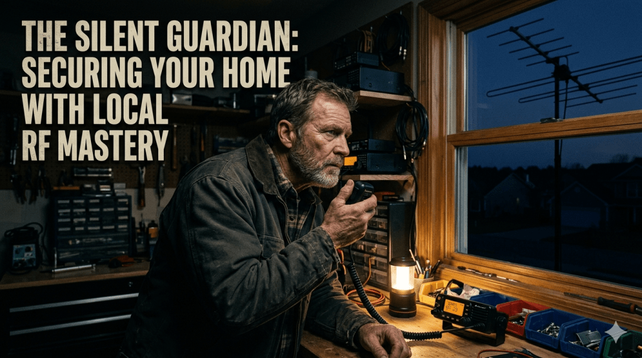
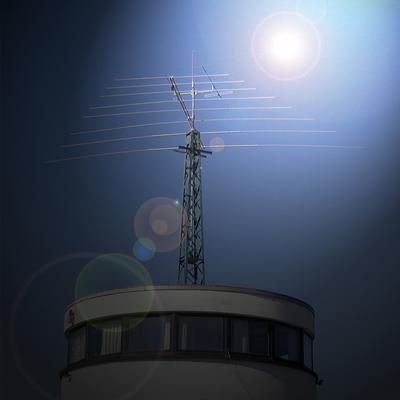 DARC e. V. | PR und ÖA
🚢 QRV zum Gedenken an die Titanic: Sonderrufzeichen EG1912T
Diesen April gedenken wir einer der bewegendsten Tragödien der Seefahrt und ehren die Helden an den Tasten. 📻⚓️
Vom 10. bis zum 15. April wird das Sonderrufzeichen EG1912T in der Luft sein, um an das Schicksal der RMS Titanic und die mutigen Telegrafisten zu erinnern, die bis zum Ende ihr Bestes gaben.
Die Helden der Funkwelle 🎙️
Im Fokus der Aktivität stehen:
Jack Phillips & Harold Bride: Die Funker der Titanic.
Harold Cottam: Der Telegrafist der RMS Carpathia, der den Notruf empfing und die Rettung einleitete.
Details zum Funkbetrieb
🗓 Zeitraum: 10. April (Auslaufen) bis 15. April (Untergang).
🌐 Bänder: Kurzwelle & V/U/SHF.
📡 Modi: Alle Betriebsarten sind willkommen.
🎼 Schwerpunkt: Ein besonderer Fokus liegt auf CW (Telegrafie) zu Ehren der historischen Morse-Kommunikation.
QSL & Bestätigungen 📧
Jeder Kontakt zählt! QSL-Karten werden via Büro, eQSL und LoTW versendet.
Special: Wer die Station in CW arbeitet, erhält eine exklusive Sonder-QSL-Karte speziell für Telegrafie-Kontakte!
Hört rein und helft uns, diese Geschichte lebendig zu halten. Wir freuen uns auf viele QSOs!
Siehe dazu auch: https://www.ure.es/memorial-titanic-eg1912t/.
#HamRadio #Amateurfunk #Titanic #EG1912T #MorseCode #Telegraphy #CW #History #RMSCarpathia #Sonderrufzeichen #RadioOperator #QSO #April2026
 RandomBaywatch
Baywatch Nights 2x01 - Terror of the Deep
#RandomBaywatch #lvdlpx #Baywatch #BaywatchNights #TerrorOfTheDeep #Ocean #TheHoff #ScoobyHoff #Offshore #ShipWreck #Brunette #Gorgeous #Fashion #RadioOperator #HotChick #Mystery #KnockOffXfiles #Rescue #Boat
 VU3DXR
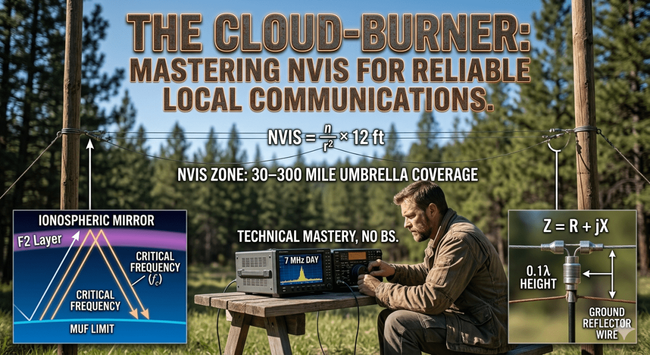
Ever wonder why your HF signal skips over the next town but hits the next continent? 🌎
Master NVIS (Near Vertical Incidence Skywave) to close the gap! Perfect for regional nets and emergency comms when the repeaters go down.
Check out the definitive guide here: 👇 https://vu3dxr.in/near-vertical-incidence-skywave-nvis-the-definitive-guide-to-reliable-regional-hf-radio/
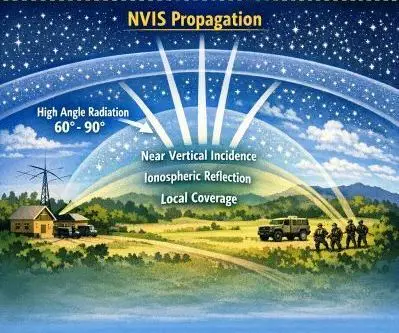
Ever wonder why your HF signal skips over the next town but hits the next continent? 🌎
Master NVIS (Near Vertical Incidence Skywave) to close the gap! Perfect for regional nets and emergency comms when the repeaters go down.
Check out the definitive guide here: 👇 https://vu3dxr.in/near-vertical-incidence-skywave-nvis-the-definitive-guide-to-reliable-regional-hf-radio/
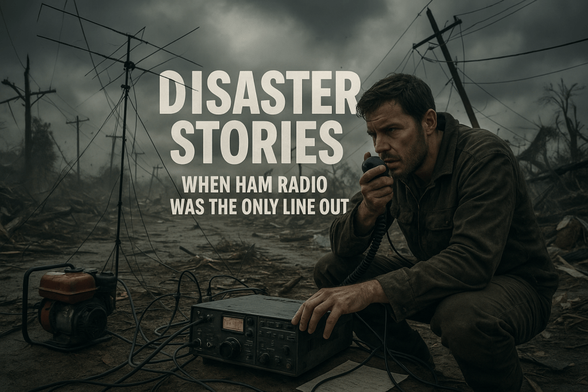
Disaster Stories: When Ham Radio Was the Only Line Out
979 words, 5 minutes read time.
In the face of disaster, when power grids fail, cell towers collapse, and the world falls silent, a group of dedicated individuals remains steadfast—amateur radio operators, or “hams.” These men and women, often working quietly behind the scenes, have been the lifeline for countless communities during emergencies. Their stories are not just about radios and frequencies; they’re about courage, community, and the unyielding spirit of service.
The Genesis of Amateur Radio in Emergency Communications
The roots of amateur radio’s involvement in emergency communications trace back to the early 20th century. In 1914, the American Radio Relay League (ARRL) was established, marking a significant step in organizing amateur radio operators. By the 1920s and 1930s, hams were actively engaging in disaster response, providing crucial communication links during floods and ice storms in New Mexico and Minnesota.
The need for organized emergency communication became even more apparent during World War II. In 1942, the Federal Communications Commission (FCC) formed the War Emergency Radio Service (WERS) to ensure that amateur radio could be quickly mobilized in times of national crisis. This laid the groundwork for future emergency services.
The Rise of ARES and RACES
In 1935, the ARRL introduced the Amateur Radio Emergency Service (ARES), aiming to provide organized communication support during emergencies. This initiative was further strengthened in 1952 with the establishment of the Radio Amateur Civil Emergency Service (RACES), a service authorized by the FCC to assist government agencies during civil emergencies.
These organizations have been instrumental in numerous disaster responses. For instance, during the 2003 North America blackout, amateur radio operators played a pivotal role in relaying information and coordinating efforts when traditional communication systems were overwhelmed.
Real-Life Heroes: Ham Radio in Action
The true measure of amateur radio’s impact is best understood through the stories of those who have experienced its benefits firsthand.
During Hurricane Katrina in 2005, over a thousand ARES volunteers provided essential communication services. Hancock County, Mississippi, had lost all contact with the outside world, except through ARES operators who served as 911 dispatchers and message relayers.
Hurricane Michael in 2018 left many areas without power and communication. Amateur radio operators were among the first to establish communication links, coordinating rescue and relief efforts when other systems were down.
During Hurricane Helene in 2024, in Asheville, North Carolina, ham radio operators played a significant role in keeping residents informed during this deadly tropical storm. They provided updates and coordinated emergency responses when electrical grids and telephone communications were disrupted.
The Mechanics of Ham Radio in Emergencies
Amateur radio’s effectiveness in emergencies lies in its unique capabilities. Unlike commercial communication systems that rely on infrastructure vulnerable to damage, ham radios can operate independently. Operators use battery-powered equipment, solar panels, and portable antennas to establish communication links, often without the need for external power sources.
One of the key tools in emergency communications is the use of repeaters. These devices amplify radio signals, extending the communication range, especially in mountainous or obstructed areas. Additionally, digital modes like Winlink allow for the transmission of emails and messages over long distances, even when traditional internet services are unavailable.
Training and Preparedness: The Backbone of Emergency Response
The readiness of amateur radio operators is a result of continuous training and preparation. Events like Field Day, held annually, simulate emergency conditions, allowing operators to practice setting up equipment and establishing communication links without relying on commercial power sources. These exercises ensure that when real disasters strike, operators are prepared to respond swiftly and effectively.
Organizations such as ARES and RACES provide structured training programs, ensuring that volunteers are equipped with the necessary skills and knowledge to handle various emergency scenarios. Their involvement is crucial in maintaining a state of preparedness within communities.
The Future of Ham Radio in Disaster Response
As technology advances, so does the role of amateur radio in emergency communications. The integration of digital modes, satellite communications, and software-defined radios enhances the capabilities of ham operators, allowing for more efficient and reliable communication during disasters.
Legislative support also plays a vital role in ensuring the continued effectiveness of amateur radio. Initiatives like the Amateur Radio Emergency Preparedness Act aim to prevent homeowner associations from banning amateur radio antennas, ensuring that operators can maintain their equipment and remain ready to assist during emergencies.
Conclusion: A Call to Action
The stories of amateur radio operators during disasters are a testament to the power of community, preparedness, and resilience. Their unwavering commitment ensures that when all else fails, communication remains possible.
For those interested in becoming part of this vital network, obtaining an amateur radio license is the first step. By doing so, you not only gain the skills to operate radio equipment but also become a crucial link in a chain that can make all the difference during emergencies.
To learn more about amateur radio and how you can get involved, consider subscribing to our newsletter at https://wordpress.com/reader/site/subscription/61236952 or joining the conversation by leaving a comment, or contact me using the contact form at https://bdking71.wordpress.com/contact/.
D. Bryan King
Sources
- A Brief History of the Amateur Radio EmComm Organization
- Amateur Radio Emergency Service – Wikipedia
- Ham Radio History – ARRL
- Stories about Amateur Radios and Emergency Rescue
- Amateur Radio Emergency Communications – Wikipedia
- Amateur Radio and Emergency Communications – AlertFind
- Ham Radio: A Valuable News Source Especially During Emergencies
- History – CCARES
- Hamming It Up – The Planet Magazine
- Ham Radio Emergency Communications Guide – Ham Radio Prep
- History of ARES and NTS
- Ham Radio Serving Southeast US Recovery Efforts
- Unleashing the Power of Amateur Radio in Times of Emergency
- Amateur Radio Emergency Communication: Lifeline in Crisis
Disclaimer:
The views and opinions expressed in this post are solely those of the author. The information provided is based on personal research, experience, and understanding of the subject matter at the time of writing. Readers should consult relevant experts or authorities for specific guidance related to their unique situations.
Related Posts
Rate this:
#AmateurRadio #amateurRadioCallToAction #amateurRadioClubs #amateurRadioCommunicationMethods #amateurRadioDisasterHistory #amateurRadioEmergencyCases #amateurRadioEmergencyTips #amateurRadioHistory #amateurRadioLicense #amateurRadioLifeSaving #amateurRadioNetwork #amateurRadioNetworking #amateurRadioNews #amateurRadioOutreach #amateurRadioPreparation #amateurRadioPreparedness #amateurRadioRescue #amateurRadioRescueStories #amateurRadioSatelliteCommunication #amateurRadioService #amateurRadioTraining #amateurRadioVolunteerStories #antennaSetup #ARES #batteryPoweredRadio #communicationLifeline #communicationsDuringBlackout #communityRadioService #digitalRadioModes #disasterCommunication #disasterCommunicationExamples #disasterCommunicationTips #disasterRelief #DisasterResponse #disasterStorytelling #earthquakeCommunication #EmergencyCommunication #emergencyCommunicationStrategies #emergencyCommunicationSystems #emergencyCommunicationsNetwork #emergencyMessaging #emergencyOperator #emergencyOperatorTraining #EmergencyPreparedness #emergencyPreparednessTraining #emergencyRadio #emergencyRadioTraining #emergencyResponse #emergencyVolunteer #fieldDay #floodCommunication #hamRadio #hamRadioAntennaTips #hamRadioBenefits #hamRadioCommunity #hamRadioCommunitySupport #hamRadioDigitalModes #hamRadioEmergencyExercises #hamRadioEmergencyService #hamRadioEquipment #hamRadioFieldDayTips #hamRadioFieldOperations #hamRadioHero #hamRadioHeroStories #hamRadioHistoryTimeline #hamRadioInAction #hamRadioInspiration #hamRadioLicense #hamRadioNewsCoverage #hamRadioRealStories #HamRadioSafety #hamRadioStories #hamRadioSurvivalSkills #hamRadioTechnicalGuide #hamRadioTechnology #HamRadioTraining #hamRadioVolunteer #HFRadio #hurricaneCommunication #portableRadio #RACES #radioDisasterExamples #radioEmergencyPreparedness #radioEmergencySupport #radioForEmergencies #radioInCrisis #radioOperator #radioOperatorSkills #radioSkills #repeaters #solarPoweredRadio #SurvivalCommunication #UHFRadio #VHFRadio #volunteerRadioOperator #Winlink
 RandomBaywatch
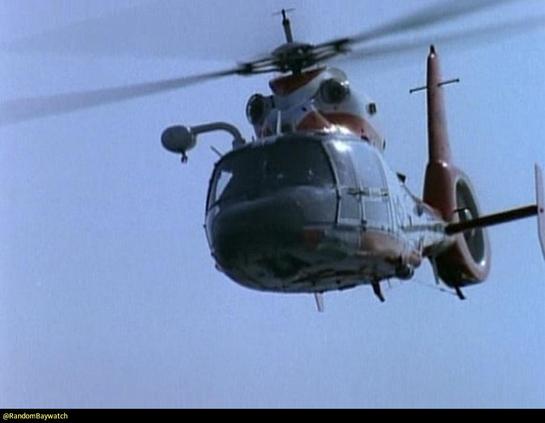
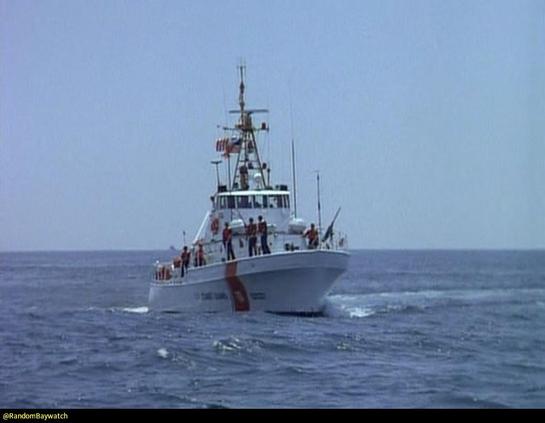
The Coasties Arrive
Baywatch Nights 2x01 - Terror of the Deep
#RandomBaywatch #lvdlpx #Baywatch #BaywatchNights #TerrorOfTheDeep #Ocean #TheHoff #ScoobyHoff #Offshore #ShipWreck #Brunette #Gorgeous #Fashion #RadioOperator #HotChick #Mystery #KnockOffXfiles #Rescue #Boat #CoastGuard
Baywatch Nights 2x01 - Terror of the Deep
#RandomBaywatch #lvdlpx #Baywatch #BaywatchNights #TerrorOfTheDeep #Ocean #TheHoff #ScoobyHoff #Offshore #ShipWreck #Brunette #Gorgeous #Fashion #RadioOperator #HotChick #Mystery #KnockOffXfiles #Rescue #Boat

Understanding the Metric System in Amateur Radio: A Comprehensive Guide for Success
1,426 words, 8 minutes read time.
The metric system is one of the most universally used systems of measurement, and it’s crucial for success in amateur radio. From frequencies to power ratings, resistance, and voltage, the metric system provides a standardized framework for understanding and communicating technical data. For those preparing for the Amateur Radio Technician exam, mastering the metric system is essential to navigating the test with confidence and accuracy. This guide will explain the importance of the metric system in amateur radio, its relevance to the exam, and offer tips and tricks to help you succeed.
The Metric System and Amateur Radio: Why It Matters
In the world of amateur radio, the metric system plays a fundamental role in creating a consistent, universal language for communication. The metric system, or International System of Units (SI), is used worldwide, except in the United States, Myanmar, and Liberia. This system simplifies the process of sharing technical information across borders, ensuring that radio operators in different countries can understand one another’s measurements without confusion.
Whether you’re measuring frequency, power, voltage, or resistance, the metric system provides clear, standardized units for all these parameters. It helps create a foundation for understanding complex radio concepts, such as signal propagation, radio wave behavior, and power calculations. As the most widely used system for scientific and technical applications, it’s indispensable for anyone interested in becoming an amateur radio operator.
For example, frequency in amateur radio is measured in hertz (Hz), and its multiples are expressed in kilohertz (kHz) or megahertz (MHz). Similarly, power is measured in watts (W), with milliwatts (mW) and kilowatts (kW) as commonly used multiples. Resistance is measured in ohms (Ω), with kiloohms (kΩ) and milliohms (mΩ) as commonly used units for different levels of resistance. Voltage is measured in volts (V), with common multiples being millivolts (mV) and kilovolts (kV).
The Role of the Metric System in the Amateur Radio Technician Exam
The Technician Class license exam for amateur radio requires knowledge of the metric system because it is directly related to various technical questions about frequency, power, voltage, resistance, and more. The exam is structured with 35 multiple-choice questions, covering a wide range of topics including basic electronics, radio wave propagation, safety, and regulations. Understanding the metric system is crucial for answering questions related to these concepts.
One of the challenges that exam-takers face is converting between different units within the metric system. For instance, you may be asked to convert a frequency value from kilohertz (kHz) to megahertz (MHz), or convert milliwatts (mW) into watts (W). Having a solid grasp of the metric system and how to make these conversions is key to answering these types of questions correctly.
In the context of amateur radio, conversions often come up when you’re working with different power levels or adjusting to varying frequency bands. The ability to convert seamlessly between units can help you save time and avoid making mistakes during the exam. That’s why it’s essential to know the common prefixes used in the metric system, like milli (m), kilo (k), and mega (M), and their corresponding values.
Understanding Metric Units and Prefixes
To fully comprehend the metric system in amateur radio, you must first understand the most common units and their prefixes. These prefixes are used to represent different scales of measurement. Here are some of the most important prefixes and their values:
- Milli (m) = 0.001 or 10^-3
- Centi (c) = 0.01 or 10^-2
- Deci (d) = 0.1 or 10^-1
- Kilo (k) = 1,000 or 10^3
- Mega (M) = 1,000,000 or 10^6
These prefixes are applied to various units such as watts, volts, ohms, and hertz, and they help simplify calculations. For instance, you might encounter a situation where you need to convert a signal’s power from milliwatts (mW) to watts (W). To convert from milliwatts to watts, you would divide by 1,000. So, if you have 500 mW, you would divide by 1,000 to get 0.5 W.
Additionally, when working with frequencies, you might need to convert between kilohertz and megahertz. If a radio signal’s frequency is given in kilohertz, but the question asks you to provide the value in megahertz, you can divide the frequency by 1,000. For example, 2,500 kHz is equivalent to 2.5 MHz.
Metric System Practice for the Technician Exam
To perform well on the Technician Class exam, it’s vital to practice working with the metric system. Start by memorizing the common prefixes and their corresponding values. After you’ve committed these to memory, practice applying them to different types of radio-related problems.
One of the most effective ways to practice is by using sample questions from previous exams. These questions often cover the key concepts you need to know, such as frequency conversions, power calculations, and understanding units of voltage and resistance. By solving practice problems, you’ll develop a deeper understanding of the metric system and become more comfortable making conversions under pressure.
You can find numerous online resources that provide practice questions and detailed solutions, such as websites and apps designed specifically for amateur radio exam preparation. These resources will help you hone your skills and identify areas where you need more practice.
Test Tips and Tricks for Metric System Success
Here are a few test-taking strategies to help you succeed in the Technician Class exam when dealing with metric system questions:
- Memorize Key Metric Prefixes: The metric system relies heavily on prefixes like milli, kilo, and mega. Make sure you commit these prefixes to memory, as they will appear frequently in exam questions. Understanding these conversions will be essential for quick and accurate answers.
- Practice Unit Conversions: While the concept may seem simple, unit conversions can trip up even experienced radio operators. Practice converting units between milliwatts and watts, kilohertz and megahertz, and so on. Familiarity with these conversions will save you valuable time during the exam.
- Use Mnemonics: Mnemonics are a great way to remember the prefixes and their values. For instance, you could use a simple phrase like “King Henry Died By Drinking Chocolate Milk” to remember the order of prefixes (kilo, hecto, deka, base unit, deci, centi, milli). Finding your own creative mnemonic can make learning more enjoyable.
- Don’t Overthink It: During the exam, it’s easy to second-guess yourself when it comes to conversions. If you know the formula and the units, don’t waste time doubting your answer. Take a deep breath, stick with what you know, and move forward.
- Time Management: The Technician exam has a time limit, so don’t get bogged down on any one question. If you’re stuck on a question about the metric system, skip it and come back to it later. Answer the questions you know first, then focus on the more challenging ones.
Common Mistakes to Avoid
When working with the metric system in amateur radio, there are a few common pitfalls to be aware of:
- Confusing Similar Prefixes: It’s easy to mix up similar prefixes like milli (m) and mega (M). Remember that milli is 0.001, and mega is 1,000,000. A mistake in identifying these prefixes can lead to huge errors in calculations.
- Misplacing Decimal Points: Decimal point errors are common when converting between units. Be careful with your decimal places, as a single misplaced decimal can cause a significant error in your answer.
- Ignoring Units of Measurement: Always double-check that your units match when performing calculations. Mixing units, such as milliwatts and watts, can lead to confusion and incorrect results.
Conclusion
The metric system is a crucial aspect of amateur radio, and understanding it is essential for success in the Technician Class exam. By learning the common prefixes, practicing unit conversions, and using effective test-taking strategies, you’ll be well-prepared for the exam and confident in your ability to apply these concepts in real-world radio operations.
For anyone aiming to pass the Technician Class exam, dedicating time to mastering the metric system will make a significant difference in your performance. As with any subject, practice is key, and by utilizing available resources and committing the important concepts to memory, you’ll be ready to tackle the exam with ease.
With the right preparation and understanding of the metric system, you’ll not only pass the exam but also gain valuable knowledge that will serve you well as you embark on your journey as an amateur radio operator.
D. Bryan King
Sources
- ARRL – Think Metric
- MDARC – Metric System in Amateur Radio
- Mometrix – Ham Radio Technician Class Exam Information
- K0NR – Common Mistakes When Using Metric Units
- Copasetic Flow – Converting Metric Units for Ham Radio Exam
- Ham Radio Prep – Technician Class Practice Test
- Fox Radio – Technician Exam Study Guide
- ARRL – Amateur Radio Licenses Overview
- Ham Test Online – Practice Exams for Technician Class
- QRZ.com – Online Resources for Amateur Radio
Disclaimer:
The views and opinions expressed in this post are solely those of the author. The information provided is based on personal research, experience, and understanding of the subject matter at the time of writing. Readers should consult relevant experts or authorities for specific guidance related to their unique situations.
Related Posts
Rate this:
#AmateurRadio #amateurRadioKnowledge #amateurRadioStudy #conversionTips #examPrep #examSuccess #examSuccessTips #frequencyConversions #hamOperator #hamRadio #hamRadioLicense #hamRadioPreparation #hamRadioTips #hertz #kilo #kilohertz #mega #megahertz #metricConversions #metricPrefixes #metricSystem #metricUnits #milliwatts #ohms #powerCalculations #powerRatings #radioCommunication #radioEquipment #radioExamGuide #radioExamQuestions #radioExamTips #radioFrequency #radioHobby #radioKnowledge #RadioLicensing #radioMeasurementUnits #radioOperator #radioSafety #radioTechnician #radioTests #radioTraining #radioWaves #resistance #SIUnits #technicalKnowledge #TechnicianClassExam #TechnicianExamPractice #testStudyGuide #testTakingStrategies #voltage #volts #watts