The Silent Siege: Defending the Radio Spectrum in an Age of Noise
3,286 words, 17 minutes read time.
The electromagnetic spectrum is currently facing an unprecedented siege from commercial expansion, environmental noise pollution, and regulatory encroachment, threatening the viability of independent communication. This conflict involves a diverse cast of actors ranging from multinational telecommunications conglomerates and unsuspecting homeowners to a dedicated community of radio operators who stand as the last line of defense for this invisible public resource. While the general public remains largely unaware of the radio waves passing through them, a fierce battle is being waged for control of these frequencies, occurring in corporate boardrooms, legislative chambers, and the backyards of suburban neighborhoods. The stakes are considerably higher than mere hobbyist chatter; at risk is the ability to maintain decentralized, resilient communication infrastructures independent of the fragile commercial grid. As the demand for wireless data explodes and the noise floor rises, the preservation of the spectrum requires a concerted response from informed men willing to understand the physics, the policy, and the practical application of radio technology.
The Commercial Encroachment on Finite Resources
The most immediate and powerful threat to the radio spectrum comes from the insatiable commercial appetite for bandwidth. As modern society transitions into an era defined by the Internet of Things and 5G connectivity, corporate entities are aggressively lobbying for access to every available slice of the radio frequency pie. This creates a direct conflict with existing services, including the bands historically allocated for amateur and emergency use. The spectrum is a finite physical resource; unlike fiber optic cables where more strands can be laid, there is only one electromagnetic spectrum. When a frequency band is auctioned off to the highest bidder for billions of dollars, it is often lost to the public domain forever. This commoditization of the airwaves treats a law of nature as a piece of real estate to be fenced off and monetized.
The pressure is particularly intense because the specific frequencies that are most desirable for long-range communication or high-penetration data signals are the very same frequencies that have been cultivated by amateur operators for decades. Telecommunications giants view these bands as underutilized assets waiting to be exploited for profit. The concept of “use it or lose it” has never been more relevant. If a community of capable operators does not actively occupy and defend these frequencies through demonstrated utility and public service, regulators face immense pressure to reallocate them to commercial interests. This reality turns every licensed operator into a stakeholder in a global resource management crisis. The defense against this encroachment is not just about complaining to regulators; it involves demonstrating the unique value of non-commercial spectrum access, particularly its role in disaster recovery when profit-driven networks fail.
The Rising Tide of the Noise Floor
While commercial reallocation attempts to steal the spectrum from above, a more insidious threat is rising from below: Radio Frequency Interference (RFI). This phenomenon is often referred to as the rising “noise floor.” In the past, turning on a radio receiver resulted in a quiet hiss of static, out of which a voice or signal would clearly emerge. Today, that quiet background is increasingly replaced by an angry roar of electronic smog. This pollution is generated by millions of poorly shielded consumer electronic devices. LED light bulbs, variable speed pool pumps, cheap switching power supplies, and solar panel inverters spew stray radio frequency energy into the environment. To a casual observer, these devices are harmless conveniences; to a radio operator, they are jammers that blind receivers and render communication impossible.
This environmental degradation of the electromagnetic spectrum creates a scenario where even if the frequencies are legally protected, they become practically useless. It is akin to owning a plot of land that has been flooded by toxic waste; you may hold the deed, but you cannot build on it. The physics of radio reception rely on the signal-to-noise ratio. As the noise floor rises, stronger and stronger signals are required to break through, effectively shrinking the range of communication systems. A handheld radio that could once talk to a station thirty miles away might now struggle to reach three miles across a noisy city. This threat is largely unregulated at the consumer level, as the enforcement of interference standards has lagged behind the proliferation of cheap electronics imported from manufacturers who cut corners on shielding.
Community Response and Technical Stewardship
The response to these threats has catalyzed a sophisticated movement within the radio community focused on stewardship and technical innovation. This is not a passive group; it consists of technically minded individuals who view the spectrum as a public trust. The primary weapon in this response is education and technical adaptation. Operators are developing new digital transmission modes designed specifically to function in high-noise environments. These modes use advanced signal processing and error correction to decode messages that are buried deep beneath the electronic smog, effectively reclaiming territory that was thought to be lost. This demonstrates a resilience and ingenuity that defines the spirit of the radio community. Rather than surrendering to the noise, they engineer their way through it.
Furthermore, the community response involves active monitoring and “fox hunting”—the practice of locating sources of interference. When a rogue signal or a malfunctioning device disrupts communications, operators use directional antennas and triangulation techniques to physically track down the source. This can lead to diplomatic engagements with utility companies to fix arcing power lines or helping a neighbor replace a noisy power supply. It is a form of neighborhood watch, but for the electromagnetic environment. This hands-on approach requires a deep understanding of wave propagation and electronics, skills that are honed through the pursuit of licensure and regular practice. It reinforces the idea that the spectrum is a shared backyard, and it is the responsibility of the residents to keep it clean.
The Regulatory Battlefield and Property Rights
Beyond the technical challenges, a significant battle is being fought on the regulatory front involving Homeowners Associations (HOAs) and private land covenants. These restrictions often prohibit the installation of external antennas, effectively locking millions of potential operators out of the spectrum. The “CC&Rs” (Covenants, Conditions, and Restrictions) that govern many modern housing developments prioritize aesthetic uniformity over functional resilience. This creates a paradox where a resident may legally hold a federal license to operate a radio station for emergency communications but is contractually banned from erecting the antenna necessary to use it. This represents a clash between private contract law and the public interest in maintaining a dispersed, capable civil defense network.
The community response to this has been a mix of legislative lobbying and stealth engineering. Legislation like the Amateur Radio Parity Act has been introduced in various forms to try and force a compromise, arguing that reasonable accommodation for antennas is a matter of national safety. On the ground, operators have become masters of stealth, deploying “invisible” antennas disguised as flagpoles, hidden in attics, or woven into landscaping. This ingenuity allows men to remain active and capable despite the restrictions, maintaining their readiness and their connection to the airwaves. It is a quiet act of rebellion, asserting the right to communicate and the duty to be prepared, regardless of arbitrary rules set by a housing board.
Strategic Implications of Spectrum Dominance
The importance of this subject extends into the realm of national security and strategic independence. In an era of cyber warfare and potential infrastructure attacks, reliance on centralized communication networks—like cell towers and the internet—is a vulnerability. These systems are fragile; they depend on the power grid, fiber backbones, and complex software stacks that can be hacked or jammed. The radio spectrum, accessed through decentralized amateur equipment, offers a fallback layer that is robust because of its simplicity and distribution. There is no central switch to turn off the ionosphere. There is no server farm to bomb that will silence point-to-point radio communication.
Understanding the spectrum allows an individual to step outside the “matrix” of commercial dependency. When the cellular networks are congested during a crisis, or when internet service providers suffer outages, the radio operator remains connected. This capability is not just about personal safety; it is a community asset. The response to spectrum threats is fundamentally about preserving this capability for the greater good. It aligns with a masculine ethos of protection and provision—ensuring that when the primary systems fail, a secondary, hardened system is ready to take over. This requires a workforce of licensed operators who are not just hobbyists, but disciplined communicators who understand the strategic value of the frequencies they guard.
Historical Context of Spectrum Allocation
To fully appreciate the current threats, one must understand the history of how the spectrum was tamed. In the early days of radio, the airwaves were a chaotic frontier, much like the Wild West. There were no lanes, no rules, and constant interference. The catalyst for order was the sinking of the Titanic in 1912. The tragedy highlighted the deadly consequences of unregulated communication, where distress calls could be missed or jammed by irrelevant chatter. This led to the Radio Act of 1912, which established the principle that the spectrum is a public resource to be managed by the government for the public good. It established the licensing structure that exists today, creating a hierarchy of users and prioritizing safety of life.
Over the last century, this allocation has evolved into a complex map of frequency blocks assigned to military, aviation, maritime, commercial, and amateur users. The amateur allocation was not a gift; it was carved out by pioneers who proved that the “useless” shortwave frequencies could actually span the globe. Today’s operators are the inheritors of that legacy. They occupy the bands that their predecessors explored and charted. The threat of losing these bands is a threat to erase that history and the public’s right to access the airwaves directly. The historical perspective reinforces why the community is so defensive of its privileges; they know that once a frequency is surrendered to commercial interests, it is never returned.
The Human Element of the Network
Technology and policy are critical, but the most vital component of spectrum defense is the human operator. A radio is merely a collection of capacitors and transistors until it is powered by a human intent on communicating. The decline in the number of active, knowledgeable operators is perhaps the greatest threat of all. A spectrum that is silent is a spectrum that is vulnerable to reallocation. The community needs fresh blood—men who are willing to learn the code, understand the electronics, and join the network. This is not about nostalgia for old technology; it is about maintaining a vital skill set in the modern world.
The culture of the radio community is one of mentorship and rigor. It welcomes those who are willing to put in the work to understand the medium. When a man decides to study the spectrum, he is not just preparing for a test; he is learning the language of the universe. He learns how the sun’s cycles affect communication, how the terrain shapes a signal, and how to build systems that survive when others fail. This human element is the ultimate check against the threats of noise and encroachment. An educated, active populace is the strongest argument for the continued preservation of the amateur bands.
Technological Adaptation and the Future
Looking forward, the defense of the spectrum will rely heavily on software-defined radio (SDR) and cognitive radio technologies. These advancements allow radios to be smarter, sensing the environment and finding clear frequencies automatically. The community is at the forefront of experimenting with these tools. By pushing the boundaries of what is possible with limited power and bandwidth, amateur operators often innovate solutions that are later adopted by the commercial and military sectors. The fight against spectrum pollution is driving the development of better filters and more robust digital protocols.
This technological evolution transforms the operator from a passive user into an active researcher. It makes the pursuit of a license an entry point into a world of high-tech experimentation. The threats facing the spectrum are forcing the community to up its game, resulting in a renaissance of technical learning. Men who engage with this subject find themselves gaining proficiency in computer networking, antenna physics, and signal processing—skills that are highly transferrable and economically valuable in the modern marketplace. The defense of the hobby thus becomes a pathway to professional development and technical mastery.
The Role of Organized Advocacy
No individual can fight the telecommunications lobby or the tide of electronic noise alone. The response is coordinated through national and international bodies that represent the interests of the non-commercial user. Organizations act as the shield, employing legal experts and engineers to testify before government commissions and international bodies like the International Telecommunication Union (ITU). They monitor legislative proposals, file comments on rule-making proceedings, and alert the membership when immediate action is required.
Supporting these organizations is a key part of the community response. It involves a recognition that rights must be defended collectively. The effectiveness of this advocacy depends on the size and engagement of the membership. A large, active body of licensed operators commands respect in Washington and Geneva. It signals to regulators that this is a voting block and a skilled workforce that cannot be ignored. The political aspect of spectrum defense is dry and often bureaucratic, but it is the trench warfare that keeps the frequencies open for the operator to use.
Natural Threats and Solar Cycles
The spectrum is also subject to threats that are entirely natural and beyond human control. The sun, the ultimate source of all radio propagation on Earth, goes through eleven-year cycles of activity. During the peak of these cycles, solar flares and coronal mass ejections can cause radio blackouts, wiping out communication across entire hemispheres. While this is not a “threat” in the sense of a malicious actor, it is a challenge that requires a deep understanding of space weather. The operator must know how to read the solar indices and adjust their strategies accordingly.
This connection to the cosmos adds a profound dimension to the spectrum. It reminds the operator that they are dealing with forces of nature. The community response to solar weather involves building networks of automated beacons that monitor propagation in real-time, providing data that is used not just by hams, but by scientific institutions. It turns the operator into a citizen scientist, contributing to our understanding of the sun-earth connection. This resilience in the face of natural variation is part of what makes radio operators so valuable during earthly disasters; they are accustomed to adapting to changing conditions.
The Economic Reality of Spectrum Auctions
It is impossible to discuss spectrum threats without addressing the sheer scale of the money involved. Governments view spectrum auctions as a painless way to raise revenue. Billions of dollars are exchanged for the exclusive rights to transmit on specific frequencies. This creates a David and Goliath dynamic. The amateur community cannot buy the spectrum; they can only argue for its value based on public service and educational merit. This is a difficult argument to make in a capitalist system that prioritizes immediate revenue over long-term resilience.
However, the economic argument is shifting. As infrastructure becomes more vulnerable to cyber-attacks, the “insurance policy” value of a trained volunteer radio corps is being reassessed. The cost of a total communications blackout during a hurricane or terrorist attack is astronomical. The community argues that the spectrum they occupy is a down payment on national safety. By maintaining these frequencies for public use, the government avoids the cost of building and maintaining a redundant emergency network of their own. It is a symbiotic relationship, but one that requires constant reminder and defense against the lure of quick auction cash.
Cybersecurity and the Radio Spectrum
The convergence of radio and computing has introduced cyber threats into the spectrum domain. Modern radios are often computers with antennas, and like any computer, they can be vulnerable. Malicious actors can exploit software vulnerabilities to jam networks, spoof signals, or inject false data. The “spectrum threat” now includes the possibility of hostile state actors using electronic warfare techniques to disrupt civil society.
The community response has been to embrace cybersecurity best practices. This includes verifying signal integrity, using digital signatures, and developing “air-gapped” systems that can operate without connection to the public internet. The modern operator must be part hacker, part engineer. This evolution appeals to men who are interested in information security and systems architecture. It frames the license not just as a permit to talk, but as a credential in the field of information assurance.
The Imperative of Self-Reliance
Ultimately, the drive to understand and defend the spectrum is rooted in the imperative of self-reliance. In a world where systems are increasingly interconnected and interdependent, the failure of one component can lead to cascading collapse. The man who holds a radio license and understands the spectrum possesses a tool of independence. He is not reliant on a monthly subscription or a functioning cell tower to ensure the safety of his family or community.
This self-reliance is the core motivation that drives the community response. It is why they build their own antennas, why they fight the HOAs, and why they study for the exams. It is a refusal to be helpless. The spectrum is the medium through which this independence is exercised. Protecting it is protecting the ability to act when others are paralyzed by a loss of connectivity. It is a masculine pursuit of competence and readiness in an unpredictable world.
Conclusion: The Future of the Frequency
The future of the radio spectrum is far from guaranteed. It stands at a crossroads between total commercialization and a balanced model that preserves public access. The threats of noise, regulation, and encroachment are unrelenting. However, the response from the community has been equally persistent. Through technical innovation, political advocacy, and a commitment to service, the guardians of the airwaves are holding the line.
For the man looking from the outside, this struggle represents an opportunity. It is a chance to join a fraternity of capable individuals who are not content to be passive consumers of technology. By engaging with the subject, understanding the physics, and eventually stepping up to earn the credentials, one becomes part of the solution. The spectrum is a heritage and a responsibility. It requires vigilant defense to ensure that when the world goes silent, there is still a signal in the noise, clear and strong, ready to carry the message.
Call to Action
If this breakdown helped you think a little clearer about the threats out there, don’t just click away. Subscribe for more no-nonsense security insights, drop a comment with your thoughts or questions, or reach out if there’s a topic you want me to tackle next. Stay sharp out there.
D. Bryan King
Sources
Disclaimer:
The views and opinions expressed in this post are solely those of the author. The information provided is based on personal research, experience, and understanding of the subject matter at the time of writing. Readers should consult relevant experts or authorities for specific guidance related to their unique situations.
#5GExpansion #AirGappedSystems #Airwaves #AmateurRadio #AntennaParity #antennaTheory #BandwidthScarcity #CivilDefense #CognitiveRadio #CommercialEncroachment #CommunicationBlackout #CoronalMassEjections #cyberSecurity #DecentralizedNetworks #digitalModes #DigitalSignatures #DirectionFinding #DisasterRecovery #electromagneticSpectrum #ElectronicSmog #ElectronicWarfare #ElectronicsHobby #emergencyCommunications #errorCorrection #FCCRegulations #FoxHunting #FrequencyAllocation #frequencyCoordination #FrequencyGuard #FutureOfRadio #GridDown #hamRadio #HFBands #HOARestrictions #IndependentInfrastructure #InformationAssurance #InterferenceHunting #IonosphericSkip #ITUStandards #LicensedOperator #MensHobbies #MicrowaveFrequencies #MonitoringStations #NationalSecurity #NeighborhoodWatch #NetworkResilience #NoiseFloor #OffGridComms #Preparedness #PropertyRights #PublicResource #publicSafety #RadioAct #radioBlackout #RadioEngineering #RadioFrequencyInterference #RadioLicensing #RadioPhysics #radioReceiver #RadioSilence #radioSpectrum #ResilientSystems #RFI #SDRTechnology #SecureComms #SelfReliance #shortwaveRadio #signalProcessing #signalStrength #SignalToNoiseRatio #softwareDefinedRadio #SolarCycles #SpaceWeather #SpectrumAnalyzer #SpectrumAuctions #SpectrumDefense #SpectrumManagement #SpectrumThreats #StealthAntennas #STEMSkills #StrategicIndependence #TacticalRadio #TechnicalMastery #TechnicalStewardship #TelecommunicationsLobby #TitanicRadioHistory #transceiver #VHFUHF #VolunteerCorps #WavePropagation #WirelessPolicy #WirelessTelegraphy
 Bryan King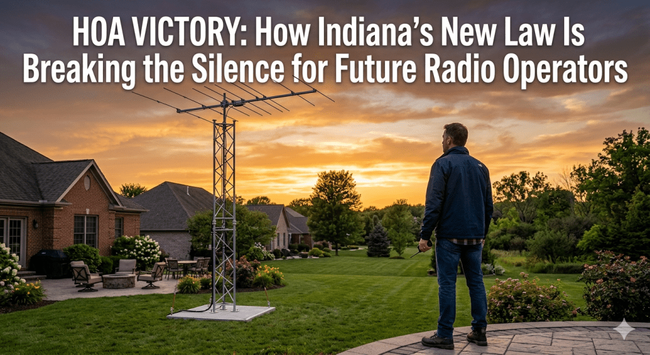

 SWLing Post
 Dr. Juande Santander-Vela
 Nicklas Johnson 🏳️🌈