Author Spotlight: Queer Cyberpunk Author Stefanie Carter (AKA Wayward Sparx/Fox N. Locke)

I’m an AuDHD trans femme enby (they/them) who writes queer genre fiction under the pen names Fox N. Locke and Wayward Sparx. An on again off again journalist, poet, comms professional, and amateur romancer of mech pilots.

Author Links:

Website: foxenlock.com

Bluesky: @foxenlock.bsky.social

Samples of Work: Samples for all my books can be found via my website – foxenlock.com – by clicking on the relevant book title.
For Trans_lucent click here.

Book Club/Reader Book Pitch for TRANS_LUCENT:
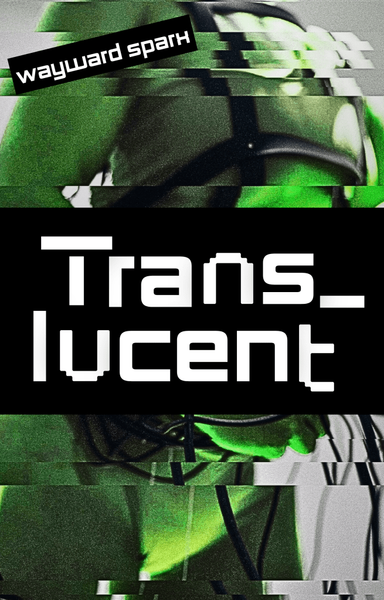
A collection of cyberpunk stories carving space out for Trans+ characters in near-futures ravaged by rampant capitalism, terminal environmental decline, state surveillance, poverty, and the rolling back of human rights.

Buy now from Barnes & Noble
Buy now from Itch.io
Buy now from Amazon
Buy now from Apple Books

Welcome to Stefanie Carter, writing as Fox N. Locke and Wayward Sparx, who is currently working on a nonfiction cyberpunk book, but who is here to talk about their Sci-Fi collection, Trans_Lucent. First of all, can you tell us what prompted the creation of a collection of stories with trans+ characters, and why pick Sci-Fi as your genre for this (instead of, say, fantasy or horror)?  

Thanks for having me! I’ve loved cyberpunk almost as long as I can remember, but it was galvanised after watching The Matrix at the tender age of eight. In the aftermath, I wrote short stories that either flirted with cyberpunk themes or were out and out love letters.

It wasn’t until coming out as trans a few years ago that I started reading more trans authors and discovered a cache of incredible stories centring people like me. Aubrey Wood’s incredible Bang Bang Bodhisattva was like a lightning rod and has become one of my favourite books. I then embarked on my own trans cyberpunk story which became ‘Cumulative Realities’.

At the time, the intention was to try and get it in a magazine, but I quickly realised I had enough scattered shorts that I could redraft and refine to put a collection together. Some of them took so much rewriting they may as well have been new stories (think Ship of Theseus) while others were more effortless.

In particular was ‘Risingson’, co-written with my partner (Trans+ and disability advocacy journalist, William Elisabeth Cuthbert).

And then there’s ‘Venus as a T-Boy, Saturn as a Femme’ which started life as a novel but ended up becoming a short instead. It never occurred to me to tell these stories any other way, because cyberpunk not only provides a common language for Trans+ and queer readers, but is a perfect vehicle through which to explore transness in worlds that are becoming increasingly like our own. It’s such a great way to position allegory alongside explicit representation and get underneath big existential themes.

What sort of Trans+ rep can readers expect to find within the collection, and how did you develop these characters, were there sensitivity readers involved in the process etc?

I knew from the get-go I wanted to try and include a broad cross section of people in these stories, both in terms of gender identity but also racial backgrounds.

As an English writer, I’m also always keen to reflect the country around me. It would be so dishonest and unrealistic to not include people from Indian, Caribbean, or Eastern European backgrounds, for example.

A lot of this stems from lived experience, first and second hand. I’m trans femme and my partner is trans masc, we’re both non-binary, so it’s only natural those identities would crop up in the stories. But I wanted to reflect the wider Trans+ community as much as I can with characters whose gender expression fall outside of my own, incorporating things like neopronouns which aren’t something I personally use.

Shani, from the final story, might be my favourite character in the collection and fae’s a computer wizard with Caribbean heritage, a Brummy accent, and a love for football. All but one of the stories are set from a Trans+ perspective.

‘Progeny’ follows finance professional Alana Khoury, of Middle Eastern heritage, who grapples with reproductive rights and motherhood in a near-future where birth is strictly controlled by government programmes. The story is framed around the fallout of a terror attack committed by her progeny, who illegally left the programme, transitioned and became pregnant herself.

A lot of how I approach writing characters this far outside of my own experience is cumulative. I’ve worked with sensitivity readers on other projects, lived and worked alongside people from different backgrounds, read as much as I can, and pay attention. Some aspects are meticulously researched, finding first hand accounts, and some is approached from a position of empathy and intuition. I think belonging to any kind of minority group enables you to have a greater level of awareness for others – but by no means a full and total understanding of their lives. These are different, albeit often intersecting, experiences and backgrounds, and I’d never pretend or assume authority or total knowledge.

Do/How do these stories reflect present-day realities and anxieties for trans people and the wider queer community, and can you give some examples of these from the story premises/what inspired each story?

At its best, I think cyberpunk – and sci-fi more broadly – must reflect modern day realities and anxieties. Without, you end up with empty aesthetic and a story propelled only by superficial vibes. The stories are therefore filled with modern concerns around trans rights, bodily autonomy, and the power of community.

The most explicit here are the collection’s first and last stories. ‘Cumulative Realities’ is named after the Marsha P. Johnson quote that opens the story and is all about the importance, safety, and power of community alongside the need to preserve queer and trans art, otherwise it’ll be lost. It’s something we’re already seeing taking place as creators struggle to get their work seen and huge swathes of the internet are banning queer content on pornographic grounds. I’m trying to buy as many physical trans books as I can as part of an ongoing preservation project. There are decades of stories at risk of being lost if we don’t all try and help.

The final story, ‘Venus as a T-Boy, Saturn as a Femme’, made one reviewer so anxious they had to stop reading. But it was about an England where it’s flat-out illegal to be trans, so I knew it had to be heavy going. We’re already seeing things moving in this direction, so it wasn’t a stretch to imagine.

How does your collection approach themes of transhumanism & bodily autonomy, and within the fictional worlds of the stories, how are these aspects of selfhood developed and understood both within community contexts, and in isolation as something individual and personal?

The most explicit example of transhumanism and bodily autonomy is in ‘Risingson’ which concerns a trans masc cyborg called Calder.

As a cobbled together collection of parts, what does it mean to feel misaligned with the assigned – or remembered – gender of those parts? What does it mean to be trans when you’ve gone beyond the parameters of being human?

The scene in which Calder talks about exactly that was incredibly moving to write, beautiful and horrifying in equal measure.

Speaking of trans masc cyborgs, you should all go read Franklyn S. Newton’s Synthetic Sea.

Another story, ‘In Wait of Obsolescence’, takes a different route. Environmental disasters mean everyone is kept inside capsules 24/7 that see to all their needs. No one sees one another anymore, all communication is done through screens, the body has become a burden, and things would probably be easier if we were all digitised. Functionally, we’ve become transhuman. So, what does it mean to nurture the first flourish of one’s transness in this kind of physical isolation, to explore your gender presentation for no one else other than yourself?

How did you choose which stories to open and close the collection, and is there any thematic importance to the order, or can they be read out of sequence? 

I wanted the two longest stories to bookend the collection. More than that, they’re both ultimately hopeful stories that showcase the power of community and depending on one another. They’re about survival.

Although length played a role, the sequencing is based more around emotional ups and downs, balancing the light and the dark, and being mindful of how I’m leaving the reader.

It’s a bit like an album, this is the intended way to read, but not the only. I’m happy for people to read in whatever order they like and, of course, skip over stories where most comfortable.

Finally, do you see cyberpunk as a subgenre being picked up more as a vehicle for telling these kinds of stories in recent years, and do you see its readership expanding among the trans+ and wider queer communities? What do you think the future holds for queer cyberpunk?

I don’t want to beat around the bush. Cyberpunk belongs to Trans+ people. So many people have decried the genre as dead, or passé, but they can’t see beyond the mainstream, where we keep getting derivative stories that can’t do much more than regurgitate what Gibson, Bethke, Stephenson, and Sterling et al were doing in the eighties. But look beneath the surface and there’s a vibrant world of incredible Trans+ writers, artists, game designers, and musicians making innovative, beautiful, frightening, and timely cyberpunk works. And we’ve been here creating and actively influencing cyberpunk for decades.

That’s why I’m writing an entire book about cyberpunk from a Trans+ perspective, covering the early years all the way through the thriving self-pubbed scene.

Trans in the Machine: Chronicling the New Cyberpunk Canon is the first book of its kind to tackle the topic and is due for release in 2027.

What always surprises me is how cis people assume trans art has no audience. How laughable is that? Look at the success of indie books like The Hades Calculus or Magica Riot or films like The People’s Joker to name a few. It’s no different with cyberpunk.

There’s a huge audience here hungry for more. And I genuinely think plenty of cis readers and viewers are bored with mainstream cyberpunk and want something that’s truly subversive and, frankly, more interesting. And who knows, maybe engaging with these kinds of stories is how some might realise they’re trans themselves.

Like This? Try These:

#cyberpunk #queerAdultSFF #queerAuthor #sciFi #transBooks

Author Spotlight: Queer Sci-Fi Author Astrid Abell

Astrid E. Abell (they/she/zhe/fae) is an autistic and ADHD author with a passion for storytelling, drawing, and languages. They have a bachelor’s degree in Asian Studies with a minor in Japanese—almost double minored in political science as well. They live at home with their parents, their younger brother, and their four cats. When they’re not writing and drawing, they can be found either practicing Spanish, Japanese, and Arabic, playing FFXIV, or looking for more books to add to their book hoard.

Author Links:

Website: astridabellauthor.com

Order Inarora’s Excursion: books2read.com/InarorasExcursion

Bluesky: @astridabellauthor.com
IG & Threads: @astridabellauthor
yGen, Tumblr, Pillowfort: seraphrdm

Read a Free Sample on BookFunnel: bookhip.com/KXRLSDK

Book Pitch for Readers/Book Clubs:
Inarora is sent into the past by an unknown group where she meets her great-grandpas and stays with them. While she waits for the Council of Sorcerers to get her home, she finds herself on a journey of self-discovery. Meanwhile, her father is left in the present, desperately searching for her.

Pre-order Inarora’s Excursion: released 28th March 2026

We’re spotlighting your novel,  Inarora’s Excursion, a queer SFF novel in which the main character  Inarora is kidnapped and sent 50 years into the past. It deals with family, self-discovery, and useless bureacratic institiutions. How did all this come together in your mind for the story, and what were the frustrations, aims, and inspiration that went into this novel?

I don’t even know where to start on this. I mean, Inarora originally started years and years ago as a Naruto fanfic with the serial numbers filed off, but back when I was 16 and writing this, it didn’t have as much nuance and political aspects in it. It took a 5 year hiatus, where I came back with more education and experience in my back pocket, and realizing, I want to tell a story that comments on real issues and also reflects the world I see and the one I want to see. The original inspiration was Dungeons & Dragons, although it’s drastically changed from that, and now is more heavily inspired by Final Fantasy XIV and Naruto rather than D&D.

Inarora actually was my character when I started playing, and she was a half-elf sorcerer. And, well, that definitely changed!

Some of the frustrations I ran across, was trying to get feedback that helped. And I did get some! But one of the first instances, at least with the new version, was I once had Inarora’s Excursion on a critique site called “Scribophile” (I think), and… oh gods. That was a nightmare. Firstly, it’s not all that useful for novels especially because people never really go back and read earlier chapters. Just whatever’s in the spotlight. So a lot of people reading her was getting zero context, and they were confused (I can’t imagine why). Others were mean about their criticisms, including some who were like “Oh, Kaedan’s crying? How melodramatic!” (But his child is missing, I don’t know why it’s a problem for him to cry). After getting a harassing message in my DMs because I had to set up guidelines for critiques, I left and deleted my account.

Then, a year later, I’m getting my first edits. Now, I can’t really discuss the whole thing, but… I selected an editor I later found out I did not mesh with. And my book suffered for it. I didn’t know at all until it was too late and I had to pull Inarora’s Excursion down because of it. I felt pretty humiliated that I went through that. But I had great friends help me get back up, so shout out to Gigi Kiersten and S. A. Pavlik, and my partner Laika L. Gagarin! (Admittedly, Gigi wouldn’t let me stay down, they straight up dragged me back to my feet haha).

I selected a new editor, one I clearly mesh with, and S. A. Pavlik helped me rework my book with her alpha reading skills. And that’s the story of the blood, sweat, and (literal) tears that went into this one little book.

Where does your love of SFF come from, and what are your favourite pieces of media in this genre?

I think just how I grew up. I grew up watching everything from Angel to Star Trek, to Naruto and Natsume’s Book of Friends. Reading Warriors and well, basically anything I could get my hands on. Playing games like Ratchet and Clank, and when I was old enough, The Witcher 3 and Final Fantasy XIV.

Basically, SFF has been my whole life lol. In this genre, Final Fantasy XIV is my favorite in terms of gaming.

For books, I ADORE The Ashfire King by Chelsea Abdullah, Perception Check by Astrid Knight, We Free the Stars by Hafsah Faizal, and more!

As a queer, disabled author, what rep do you want to see more of in SFF, and what rep can readers expect in Inarora’s Excursion?

I think over all, I want to see more characters who are aspec (aromantic and/or asexual, and any other identities that falls under the umbrella) and people with chronic pain and chronic illness. I grew up watching and reading media where I didn’t see my dad represented—except in House, which I think was the only time I saw a cane user.

As an adult I’ve realized, I don’t see people in media like my friends—most of them disabled in one way or another. So I took it upon myself to research the different chronic illnesses my loved ones and friends experience, and I started incorporating them into my writing. After all, why wouldn’t I want to see my friends and loved ones represented? They’re part of the world I see, so naturally I have to represent them.

With queer characters in general, well like chronic illnesses and chronic pain, I have friends of many flavors of queer—and me, myself haha. I had almost no rep for aroaces growing up, but my dad knew I was ace when he heard about it for the first time. I was 17, and my dad said, “Astrid, you know, I heard the word ‘asexual’ and it being defined in this one show. I think you might be ace.” And that was when I realized, representation matters.

And as I got older, I learned more and more about myself as well like that I’m aromantic and non-binary, agender I think is what I am. And that was important to represent as well. So in all, I have as many queer characters as possible, though the main family all are aspec. Except Aymeria. She is the oddball but, I love her for it. She’s a lesbian though. I have aros, aces, non-binary peeps, some intersex, some trans, some gender queers. Gay grandpas, of course.

For disabilities, I’ve got auDHD characters, characters with hEDS (Which I also needed representation of!), fibromyalgia, lupus, rheumatoid arthritis, and back injury. And there are more to come!

The theme of family is really central in this novel, but it’s got a lot of positivity and gay elders. How did you develop this family and its dynamics, and why was this important to you to include in this novel?

Well the family dynamics stem from my real family. Mostly. The loving home, loving parents, that’s from my family. And I know not everyone has a good, loving family—I lucked out with mine—but I like the idea of showing that it is, in fact, possible to have loving parents. But the way I developed like Ina, Kaedan, Byron, Lysander and Seri? I don’t even really know how it came out that way. Ina, Kaedan, Byron were originally inspired by my Naruto fanfic, where it was Tsukiya (my OC), Kakashi, and Sakumo. Almost nothing of Kakashi and Sakumo remain in their counterparts, though haha.

Lysander was originally inspired by a former friend’s character who was Sakumo’s father in her fanfic.

Seri was inspired by her character who was not even in love with Sakumo’s father LOL. That’s a super long story though.

The way Lysander and Seri’s relationship came to be stemmed from multiple drafts and me trying to figure out who these two were. At first, they were friends. Then, they were polyam and had their own biological families. Eventually, this became too confusing for me to keep track of, and I decided Lysander and Seri were together from the start and for their children, Lysander had met someone who was willing to be a surrogate for them and also willing to stay in the kids’ lives. And the kids would spend time with both their biological mother but spent a majority of the time with their fathers.

Inarora does, in fact have a mom. But we don’t like her, and we don’t talk about her. For Kaedan’s sake lol. I don’t even know how I got Inarora’s mom to be a horrible person, because my mom is amazing. But somehow… that happened. Oh well.

What draws you to cat people as characters, and for your own author avatar?

Because I’m jealous of cats for their tails, haha. I wish I had a cat tail! Honestly, playing too much FFXIV did it. And as I wrote the cat people, I realized how much fun it is to incorporate ear and tail language into the toolbox of showing emotions. Nothing like a lashing tail to let you know the character is *not* happy. Also my author avatar, that’s actually my Naruto character, Tsukiya. They aren’t a cat person, although they wish they were too. I just loved the drawing, and also Tsukiya has always been a major part of me. Like I said, Ina was inspired by Tsukiya.

Lastly, what would you love readers to get from this book?

I gotta sit with this a bit. Because I want readers to get to see themselves, their loved ones, and see how useless bureaucracy can be. As well as a good laugh and a good cry. But also encourage people to think critically of the institutions in place, and question whether its set up is necessary. Why is there unnecessary red tape in areas, and unnecessary laws and law enforcement? There has to be a better way, that kind of thing. I want my readers to question this with me.

Release Date: 28th March 2026 Pre-Order the book

Like This? Try These:

Subscribe to my newsletter to stay updated! I send newsletters around once a month. You can also subscribe to my site so you don't miss a post, but I also do a post round-up in my monthly newsletters, along with what I've been working on, what I've been reading, and what I've been watching. I will often update newsletter subscribers first with news, so stay ahead of the game with my announcements and discount codes, etc!

First name Last name Email #queerAdultSFF #sciFi

Author Spotlight: Sci-Fi & Horror Author Thomas Wrightson

Born in 1994, Thomas Wrightson (he/him) has spent much of his life creating narratives and characters. Home schooled, he currently lives on the island Ynys Mon in Wales, surrounded by beautiful scenery and unpredictable weather.

His current projects are The Cluster Cycle, an ongoing space opera series retelling old stories with a modern twist; and The Angry House, a horror audio drama produced by Alternative Stories.

Author Links:

Website/Book Links: thomaswrightson.co.uk
Horror Audio Drama: The Angry House

YouTube: YouTube Channel

BlueSky: @thomaswrightson.bsky.social
Mastadon: mastodon.social/@ThomasWrightson
Instagram/Threads: @twrightson1994
Facebook: thomas.wrightson.54

Today is a bit different as we’re spotlighting not only your book series, The Cluster Cycle, but also a Horror audio drama in development, The Angry House. What’s it like being a multi-genre author, and how do you pivot from one project to another, e.g. from Sci-Fi to Horror, from prose to scriptwriting for audio?

Science fiction and fantasy have some overlap, but I found working in multiple genres helpful. Unless something else happens to mess things up, switching between two different genres prevents the stories from homogenising. I tried writing two sci-fi stories at the same time once, and they just began bleeding into each other and overwriting their unique aspects. Because of that, if I do more than one project at a time, the two have different genres. And I have a gift for holding multiple stories in my head at once, so long as they’re not the same genre.

As to prose versus script writing, especially audio scripts, it’s a very different skill.

While I’ve felt my skill is with dialogue, you need to do some things with audio writing you wouldn’t with normal prose. For instance, you need to have characters say each other’s names more than people would in real-life. You also need to put in sound effects, and keep it all in mind when you’re crafting a scene. What could be five or six pages in a prose book, needs to be three pages of tightly-written dialogue and scene setting in audio format.

Believe it or not, while I dabble in horror elements in The Cluster Cycle, my audio play The Angry House is the first pure horror story I’ve ever produced. And I may have spooked myself while writing it.

Can you tell us about your series, The Cluster Cycle, and where the idea came from to blend retellings of classics like Macbeth and Golden Age Detective Fiction with Sci-Fi settings and plots?

The series began as a random idea when I was watching Gankutsuou, an anime sci-fi retelling of The Count of Monte Cristo from Studio Gonzo. I decided “What the heck, I’ll try that.” I was still submitting stories at the time, and the book–which eventually released as Starborn Vendetta–got picked up. Because of how I submitted it, I needed to produce five or six books in this universe including Starborn Vendetta. So I decided to carry on with the overall theme: old stories retold with sci-fi twists and a modern lens.

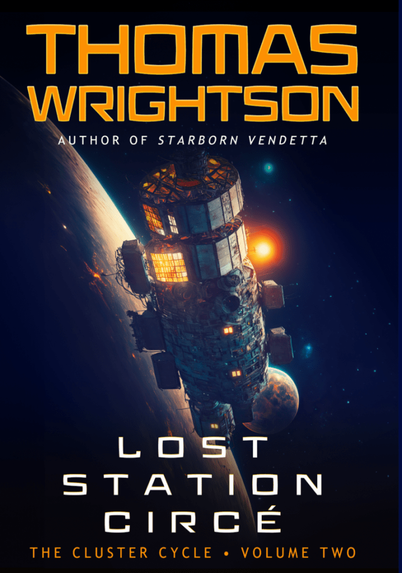
I wrote the next four books over two years, right through COVID. For instance, while Starborn Vendetta (2023) uses The Count of Monte Cristo as its core with flourishes of Macbeth and Faust, the second book Lost Station Circé (2024) blended story elements from Treasure Island and Homer’s Odyssey into an adventure/horror.

The Murderer’s Lament (TBA) is my very first attempt at a detective mystery, and drew heavy inspiration from Dorothy L. Sayers among others.

The final two in the series, provisionally titled ‘Sphear‘ (no, that’s not a typo) and ‘Ancient Earth Explorers‘, are respectively a first contact story and a gay romance.

I made two resolutions when creating the series. First while I used these old stories as a base, I would skew modern with themes and representation. The lead characters are either women, non-human, LGBTQIA+, or all three (fun fact, I’m actually truly terrible at writing straight male characters). And almost all the human characters are BIPOC (there’s a Watsonian reason shown in the final book).

Many characters explore topics including cycles of violence, abuse, complex relationships, philosophy, politics and trauma.

Second, I would write the series so readers can literally jump in anywhere, as it’s a non-linear chronicle spanning a millennium. There are nods to other stories and a couple of recurring figures, but you don’t need to read the books in order. I’m very much against the MCU school of needing all the preceding content to understand the latest entry.

Are there any Easter eggs for readers in your third book, The Murderer’s Lament, relating to specific Golden Age Detective authors/stories/plots, or is it purely the atmosphere, themes, and aesthetics you used for this book?

Absolutely there are easter eggs. In general it carries over the structure and tropes you would find in the novels of Sayers, Agatha Christie, Margery Allingham, Gladys Mitchell (mostly women, they’re generally the best writers in the genre).

The tropes include an isolated location, a closed circle of well-heeled suspects, a fountain of clues and statements, and a late-game twist. I also make specific reference to one author through a location later in the story, a nightclub called Ngaio de Lune. ‘Ngaio’ isn’t only a tree’s name, but a reference to author Ngaio Marsh.

Additionally, each chapter or ‘File’ opens with a quote from a detective writer’s work, which ties into the theme of that chapter. For instance, File 18 uses this quote from ‘Brother Cadfael’s Penance‘ by Ellis Peters: “Truth is a hard master, and costly to serve, but it simplifies all problems.”

I admittedly don’t restrict myself strictly to Golden Age stories. One key moment is strongly inspired by an early episode of the ITV series Rosemary and Thyme, but I think that partly counts as it uses many Golden Age tropes.

I enjoyed adopting bits and pieces from different stories–a plot point reference in one chapter, a scene homage in another. That can and may come off as unoriginal, but the central plot was something I created to fit within set tropes and conventions.

Additionally, while many of the stories I reference have been adapted for radio and television, I preferred to referenced the original books. I obviously don’t want to give too much more away, so I hope people will enjoy the mystery when it releases. And if they want, they can check out the previous stories if they would like an initial grounding in this universe.

How did your horror audio drama come about – what made you think that this story idea really lent itself to audio rather than another medium, and what was the scriptwriting process like for you?

Listen to “The Angry House” here

I originally created a short story for my website that used the same basic premise, inspired by older horror fiction in general and specifically Henry James’s “The Jolly Corner“, where the protagonist is haunted not by a literal ghost per say, but by the memory of the person he might have been. I came across a competition by chance, “The Pen to Print Awards” in London, which included an “Audio Drama” category. On a whim, I turned the short story into a radio script, took down the original short story, and submitted the script. It won!

I think horror in general works very well through audio more than it does the visual. If you look back at some of the most effective horror fiction, it leaves a lot up to the imagination and describes sounds and impressions more than solid visuals.

Radio is all voices, music and sound effects, so it’s perfect. So when deciding what to create for the script, this short story fit the medium like a glove.

A lot of it is built on atmosphere and building dread, but it had to be done in a tight timeframe, which screen horror doesn’t seem conducive to.

To be frank, I tend not to enjoy horror with a few exceptions. I can’t touch horror games. But the ones I enjoy lean Japanese (Kairo, AKA Pulse) and British (The Devil Rides Out, Sapphire & Steel). I used an episode of Sapphire & Steel as a reference for the script’s sound effects, and shared it with the drama’s producer and director Chris Gregory for him to use as reference.

What was the process like of getting that script produced, casted, and funded? Do you have any tips for anyone thinking about a similar project?

I was extremely lucky in that the Pen to Print Award’s prize for its audio category was that the winning entry would be produced by Alternative Stories. I knew about them from their work on Emily Inkpen’s Dex Legacy projects, so working with them was exciting in itself, quite apart from this being my first fully produced piece of writing.

To say hearing my words spoken by other voices was surreal is an understatement. In some ways, I was pre-prepared for the production process because of the editing required for The Cluster Cycle. The script used some old-fashioned language, and talking with Chris Gregory, it was agreed to tone down the formality and make it more like it would have been from the 1990s rather than the 1890s.

Chris encouraged me to be involved in as many stages as possible, so I had a hand in choosing the cast, to be in at the recording in October, and now going into the take selection and post-production process.

If readers would like a more thorough behind-the-scenes look at the production of The Angry House, you can check it out through this link: https://thomaswrightson.co.uk/2025/10/26/the-angry-house-its-authors-behind-the-scenes/.

I’m planning a second post going into the later post-production stages. Most of what’s coming up next is Chris Gregory’s responsibility, but I’m still involved and still getting the word out there. And I’ll definitely be updating when a release date is set, and what platforms it’ll be on.

How do you feel your work has evolved from when you started creative writing in its various forms to now, and what do you think will be next for you in terms of projects and creative mediums? 

I have evolved a LOT since I first scribbled Bionicle fan fiction in an exercise book when I was 11 or 12 years old. I have a better grasp on what’s important, what to keep and what to prune, in narratives.

Most of all, I’ve found my calling in writing for characters who aren’t male and straight. Especially in these times with conservative and nationalistic rhetoric being forced on us, we need to write reality, which isn’t just one group and one gender.

I’m bisexual, cosmopolitan, and egalitarian at heart. So I’ve evolved into using the genre forms of sci-fi and fantasy to craft worlds of tolerance and resilience. A fictional norm people can turn into reality.

As to where I’m going next? Who knows? My career is just starting. It may fizzle out, it may continue, it may blow up which I count as an extreme unlikelihood. I would love to work in other mediums again, perhaps a new radio project if the opportunity ever came up, or even something for the screen, or especially a game narrative as some of my favourite stories (13 Sentinels Aegis Rim, Tomb Raider Legend, Nier Automata) come from games.

I’m at the beginning, and if I’ve learned anything from my journey and the turbulent times I’ve lived through these past twenty-five years, it’s that you keep your options open. I have other projects cooking with my publisher, but that’s for the future.

Get the books

Like This? Try These:

#Horror #queerAdultSFF #sciFi

Author Spotlight: Queer Cyberpunk Author Freddie A. Clarke

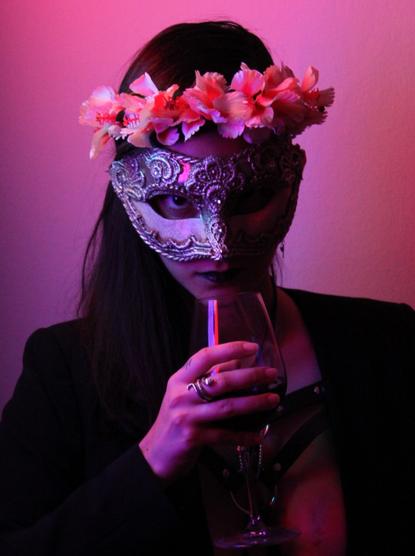
Freddie A. Clark (they/them) is the entity hiding in a thread of cables and flowers, a cyborg riding their motorcycle in the streets of a Cyberpunk metropolis, a masked alchemist traversing Venetian canals. Proud human slave of three former stray cats, Norse Pagan and hopeless nerd, Freddie is influenced by the work of William Gibson, Neal Stephenson, Pat Cadigan, Anne Rice, and Neil Gaiman among many others. Their creativity draws from ‘80s aesthetic, movies and pop culture, and from an endless pile of books, graphic novels, manga and video games.

Website: freddieaclark.com

Instagram: @freddieaclarkauthor

Goodreads: Freddie_A_Clark

Itch.io: freddie-a-clark.itch.io

Book links for Umbra: books2read.com/u/4AdRDN

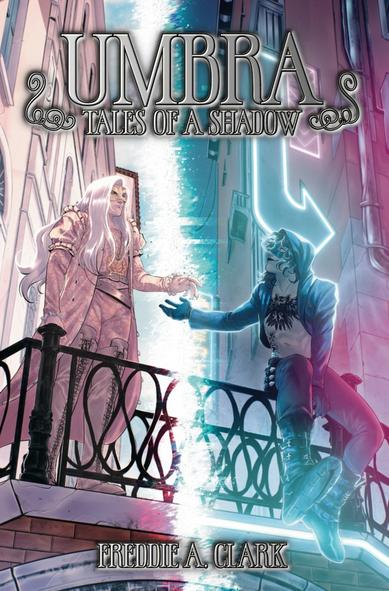
What were your main influences for Umbra: Tales of a Shadow, and how did they help to shape the book?

My main influence for Umbra: Tales of a Shadow was certainly Assassin’s Creed II, a game I always mention among its comp titles. I’m a big fan of the franchise, hence I’ve always loved the idea of writing a story about a stealthy assassin hiding in the dark corners of a breathtaking city, a silent shadow who uses his weapons and his charm to bring justice. Since Venice is one of the main locations in Assassin’s Creed II, the inspiration became even more obvious once I started drafting this story.

A fun fact I’ve never shared in the past: the idea for Umbra: Tales of a Shadow came to me exactly when, moved by nostalgia, I rewatched the first trailer from E3 2009! My love for Venice heavily influenced the world I described and it’s another inspiration worth mentioning, as well as my love for Cyberpunk literature, its detective aspects, and the concept of low-life/high-tech, like in the works of William Gibson and Richard Morgan.

What makes the themes of transformation and healing so important to you?

These themes are part of me and my personal history. My endless journey of self-discovery as a trans person made the theme of transformation particularly dear to me. My past experiences and trauma shaped the person I am; I wouldn’t be so proud of how far I’ve gone if healing hadn’t become an important personal goal. My identity affects my writing and that’s why the themes of transformation and healing are so recurrent in every story.

What elements of Venetian history did you include in the novel, and how did you adapt them for the story?

The historical facts that inspired the society of Florydia, Umbra: Tales of a Shadow’s setting, mostly come from Renaissance Venice. Figures like the Cortigiane Oneste, well-educated women who worked as sex workers and patrons of the arts, and the Lords of the Night, a mysterious judicial body of night vigilantes which was neglected by the men of power until its dissolution in XVIII century, have their counterparts in the city I created. Florydia’s government is also heavily based on the politics of the Serenissima and its several, intricate government bodies.

What made you choose cyberpunk as the genre for this story, and how does this genre create space to explore the themes?

Cyberpunk is my favourite literary genre. The idea of a Cyberpunk Venice is so rare it’s basically unheard of. Currently, Venice is a modern city with an ancient façade, a city in which modernity and tradition perfectly blend. I couldn’t help but imagine Venice in the future, with holograms, cyborgs, and neon lights. I described a counterpart of Venice as powerful as in the past, but even more modern than it is now, although still in love with its ageless and picturesque appearance. I can proudly say that the mix worked!

How do you see queerness and alchemy intersecting, and how do they work together in the novel? 

Alchemy is first and foremost a philosophical system based on spiritual growth. Alchemists weren’t merely ancient scientists, but philosophers as well. The stages of the Great Work were used by the legendary scholar Hermes Trismegistus as metaphors for self-discovery: the Blackening is the death of one’s old self, the Whitening is the awakening, the Yellowing is the awareness, and the Reddening is the illumination, the final stage of transmutation.

I went through these stages myself when I started exploring my identity and finally figured out my gender. Self-discovery as a whole is a concept that alchemy and queerness share. Besides, alchemy includes the concept of Rebis, the divine androgyne, the reconnection of spirit and body represented by a being who’s both male and female. I love this idea so much that the co-protagonist of this story, the non-binary alchemist Soleluna, is compared to the Rebis on-page.

Is there anything you wanted to include in the novel (facts about history, culture, alchemy, or philosophy) that you had to leave out in the end? Can you share one of your favourite facts?

There were many facts I would’ve loved to include in Umbra: Tales of a Shadow, but my favourite is the mask named Gnaga. This cat-shaped mask is tied to Italian queer history and was worn by gay and bisexual men during the Carnival as a secret code. This fact is canon in my story, but unfortunately I had to leave it out and it’s not mentioned in the book. If I ever write another story set in this world, I’ll definitely add it!

Like This? Try These:

#AuthorInterview #AuthorSpotlight #cyberpunk #darkFiction #fiction #italianSFF #queerAdultSFF

Author Spotlight: SFF Author Katherine Shaw

Katherine Shaw (she/her) is a multi-genre writer, bi and grey ace disaster, and self-confessed nerd, hailing from Yorkshire in the UK. She spends most of her time dreaming up new characters or playing D&D, and you can find more about her and her latest work at her website (katherineshawwrites.com).

Author Links:

Instagram, Threads and Facebook: @katherineshawwrites

Bluesky: @katheroony.bsky.social

Website: katherineshawwrites.com

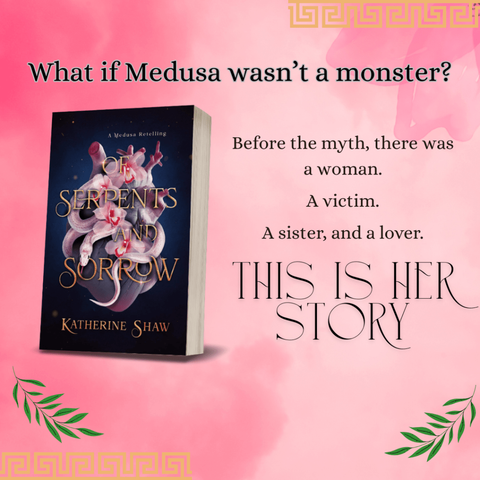
Your Historical Fantasy / Romantic Tragedy  sapphic Medusa retelling, Of Serpents and Sorrow, came out in August (2025). Can you tell us about the premise, and where that premise came from?

I’ve been a Greek Mythology geek ever since I was a child, so I’ve always had an urge to delve into retellings at some point. I’ve been re-reading some of my favourite stories in recent years, and growing a little frustrated by how we’re only told the point of view of the “hero”, and learn virtually nothing about characters around them, including the “monster” they often have to slay.

Perseus’ goal is to slay Medusa and take her head, but who was Medusa before this moment? What life had she led, and what did she mean to those around her? This is what I wanted to explore with Of Serpents and Sorrow. I wanted to give Medusa the backstory she deserves.

There are many different variations of the Medusa myth – which did you read/know about, and how did you go about developing them into a retelling?

I’m fairly well-versed in the mythology of Medusa, but I did delve a little deeper than I had done before to make sure I was aware of the various versions throughout history (though it’s likely many more have been lost to time). There are two main myths to be aware of: the older one told by Hesiod where Medusa is always a gorgon as the offspring of Phorcys and Ceto, alongside her sisters Euryale and Stheno (who are also in my story), and the later one told by Ovid where she begins life as a woman and is transformed following an assault by Poseidon.

The latter is probably the most famous nowadays, and many SA survivors use iconography of Medusa for this reason. I focused my retelling on this version, as it provides the opportunity to give Medusa a human life before she becomes the gorgon most people know her as, and allowed me to show her as a real, living, breathing person before she is killed.

Can you tell us more about Ismene and how you developed her character?

I love Ismene, and it’s been fascinating (and wonderful) to see how many readers connect to her. I knew going into the book that I wanted the story to be sapphic, and so when creating Ismene I went in with the idea of developing a potential partner for Medusa, whilst also providing her own identity, backstory and room for character development.

A lot of Ismene’s struggles came from my own research into what life was like for women in Ancient Greece (spoiler: it wasn’t great!). While Medusa was a priestess, and so would have some privileges other women would not have access to, Ismene wouldn’t have any of that, and would be under the control of her father until she was married off. This fact really planted the seed of who Ismene was going to be, and what the conflict would be in her life outside of her relationship with Medusa.

Can you tell us more about the setting, and the research and worldbuilding you did to create the historical fantasy feel? 

I always wanted to keep the Ancient Greek setting, and so I went into the writing process wanting to make my descriptions as accurate as possible. What I soon realised is how most of the information we get about historical cultures is through the lens of the aristocracy, and finding out about the day-to-day lives of average people is actually really tough. It’s easy to find out about kings and temples and palaces, but when you want to know what a typical person might have in their house, what they might have eaten, what furniture they had… that takes some digging! I enjoyed it, though, especially when I visited a museum in Corfu and got to see some of those sorts of items myself.

While everyone else was looking at the statues and artwork, I was peering into the glass cases of bowls and tools and equipment, taking photos and soaking it all in. Ismene’s time on the island of Crete was a little easier, as I’ve spent time there myself and could draw on my own experiences, especially when describing the city of Knossos, and the surrounding fields of herbs and flowers (I’ve never forgotten the amazing smell).

While I’m sure there are some accidental mistakes in there, I did my very best, and the feedback I’ve had from readers so far has been really great, which is a relief!

What are the key themes of Of Serpents and Sorrow and what would you like readers to be aware of before they go in (any CWs etc)? 

One the taglines I use for the book is “who is the real monster?”, and I think that summarises one of the core themes quite well. We look at monstrous characters and assume they must be evil, must be the villain of the story, but appearances aren’t everything. Beyond this, there are some obvious feminist themes, given both Ismene and Medusa’s battles against their positions within a highly patriarchal society, but with this comes a strong feeling of women being their most powerful when they come together.

As in most of my writing, there is the theme of found family, and that the strongest sense of love and belonging can come from unexpected places. Even with Perseus, he is not just a two-dimensional hero blindly fulfilling a quest, but he has his own struggles and insecurities due to the class structure of his homeland, and his desire to prove himself to his superiors is what drives him forward.

This is definitely an emotional book, and I always make sure to describe it as a tragedy so readers go in with their eyes wide open. While there is a beautiful love story at the core of the book, there are also some deeply upsetting moments, so be prepared for an emotional rollercoaster with this one.

There is a full list of content warnings on Storygraph for readers to check they are comfortable with the content before they continue.

Which books from your back catalogue do you think would help your readers’ book hangover once they’ve finished this one?

If you’re left wanting more sapphic romance, my short story “The Knucker of Lyminster” appears in the anthology Once Upon a Summer (alongside other summer-themed fairy- and folk tales). Similarly, if you’re still hungry for Greek mythology retellings, my fae Narcissus retelling (where Narcissus is NOT the villain) appears in Once Upon a Spring. If you want a novel but don’t mind a jump into another genre, my domestic thriller Gloria also has themes of found family, female friendship, and rage against an oppressive, abusive man.

Like This? Try These:

Romantic tragedy Shattered Fate by M.T. Envy – Greek myth retelling with queer rep.

Read the Author Spotlight interview.

Read More:

#AuthorInterview #AuthorSpotlight #greekMythology #historicalFiction #queerAdultSFF #sapphicBooks

Author Spotlight: Gay Romantasy Author Katy Haye

Katy Haye (she/her) lives in the UK where she leans into the Brit stereotype by drinking gallons of tea, and the writer stereotype by staring into space and letting a solid 50% of the tea go cold.

When not writing, she can be found enjoying her garden or spoiling her two indulged cats.

Author Links:

Newsletter sign-up: KatyHayeNL
Website: katyhaye.com

Twitter/X: @katyhaye
Instagram: @katyhaye
Facebook: katyhayewriter
Goodreads: Katy_Haye

Photo by Elaine Bernadine Castro on Pexels.com

Operation Olive Branch: https://linktr.ee/opolivebranch

GoFundMe’s Highlighted by Authors for Palestine Event: https://afp.ju.mp/#info

For the AfP event we have selected the following 3 families to help boost their fundraisers. The details below were taken from the OOB spreadsheet.

Mohammed’s fundraiser: GoFundMe
Mohammed’s Instagram: @mohammedalbaredei

Ibrahim’s fundraiser: GoFundMe
Ibrahim’s Instagram: @ibrahimwithi

Rula’s fundraiser: GoFundMe
Rula’s Instagram: @rula_mohammed

xr:d:DAGARGRwe30:15,j:8359103696784855754,t:24032514

You were one of the authors involved with the Authors for Palestine event – can you tell us why you chose to get involved with this, and which of your works you put up as raffle prizes?

I’ve been a low-key supporter of Palestine for years (by which I mean, supporting a charity working in Palestine and signing petitions and sending the occasional email to my MP). Like many people, I was horrified by both Israel and the world’s response to October 7th and needed to do more.

I was thrilled when a young man in Gaza, Akram, reached out to me on social media (we followed each other on Twitter) and asked for help. Finally – something concrete I could do to help! I set up a fundraiser for him (https://gofund.me/11ce9bab – still open for donations which are so needed and so, so appreciated!) and have been posting about the genocide and boosting him and others ever since.

The Authors for Palestine event was another welcome opportunity to help. It also provided a much-needed sense of community. It’s hard not to feel isolated when the media is acting as though nothing extraordinary is happening while a genocide rages, and “normal” life continues relentlessly. It was a breath of fresh air to join a group of people all wanting to help. I offered a paperback copy of Assassin, the first book in my Prince’s Soulmate series. All participants could also get a download of my short story collection, Only One Bed.

Do you find your sense of social justice and activism informs the philosophy of your writing, in terms of narrative and character arcs? If so, how?

I believe one of the most important roles of stories is to debate who we are – as people, civilisations and as humanity itself. A key role for science-fiction and fantasy in particular is to tell us who it’s possible to become, on both a personal and a societal level. Especially with the world as it currently is, I want to read and write stories that give hope for what we’re capable of becoming. My stories are set in worlds with medieval-levels of tech, but I use that to develop ideas around cross-cultural harmony, gender equality and queer normality, largely because that’s important for me in the world I live in.

As I age, I’m getting more radical (or perhaps that’s just a reflection of the world right now!). I’m currently undertaking a course on non-violent resistance and I’m planning a new fantasy world with a strong element of community and collective action rather than the usual myth of a single, extraordinary hero who rises up and makes everything better. I’m starting to wonder if myths of a lonely hero who is the only one able to spearhead change have been promulgated deliberately to stop us understanding the power we have if we stand together. And if nothing else, it’ll be an interesting writing exercise!

In The Merchant and His Lout you have some strong themes of familial betrayal and abandonment – how does romance (and specifically pirate romance) give you space to explore these heavier themes?

Romance gets so much snobbish denigration, but I adore it! For a start, human relationships are a key part of everyone’s life and romantic relationships are a big element of that. And crucially, romance stories are a known quantity – as a reader, you know characters will meet, endure ups and downs, and end united.

With that pre-established, as a writer you can then have fun with what else is happening in the story. In The Merchant and his Lout, it meant I could have Zakaria’s family absolutely pull the rug out from under him with the assurance that everything would – somehow – work out okay in the end.

What appeals to you about queer pirate romance, and when did your interest in this subgenre start?

In the same way that Zakaria looks enviously at Ozzo’s laid-back, free-spirit approach to life, I may very well have chosen to write about a pirate crew because they’ve made their own community and are largely free of social norms, which is very appealing to someone still fighting “good girl” expectations from my upbringing.

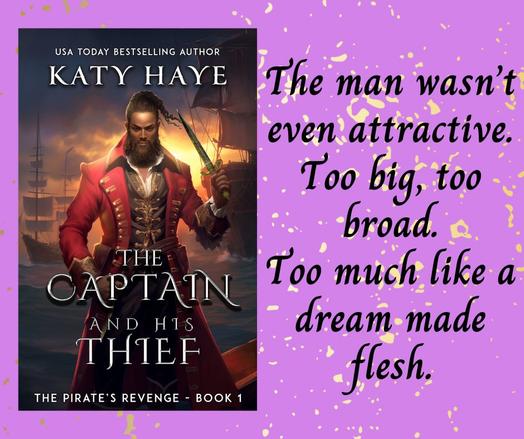
I think we all like pirates because they represent that sense of freedom from social constraints that we’d all like to enjoy – at least temporarily! And my interest in writing the series started when pirate captain Hakan (who discovers his own happy ending in The Captain and his Thief) swaggered on scene in Hostage, the third in my Prince’s Soulmate series, and utterly stole the stage. He was the cliché of the side character begging for his own story from the moment he appeared!

What research have you done for your worldbuilding, and can you share something fun or interesting that you learned during this process?

I write medievalesque worlds because I’m fascinated by medieval Europe (on the woo-woo side of things I’m convinced I had a very happy past life in the middle ages!). So there’s a lot of background research that’s been on-going for years which informs my books and worlds. To counter that, I write fantasy because I don’t want to be constrained by what’s real or what actually happened. I was in conversation with a couple of historical writers not long ago and they were discussing how they research even the tiniest things meticulously and I was, “Yeah, I just do what I like and if the vibes feel right, that’s good enough.”

Researching for my pirate books was, naturally, great fun. My best discovery was that pirate crews provided an early version of gay marriage. Same sex crew members might pair off (resulting in the word ‘matelot’ for sailor evolving to become the modern ‘mate’ as in friend), and if one was then killed (it was a risky profession!) their partner would get their share of booty.

Do you have a favourite romance trope to write, and if so, what is it? 

I have so many favourites! Looking at my books, though, I’d have to say I especially love Opposites-Attract or Fish-Out-of-Water.

I love putting characters somewhere they don’t belong or throwing them into a new world or a new relationship where they’re completely off-kilter and seeing how they get on. Assassin (and the rest of the Prince’s Soulmate series) was an extreme example of this.

Kit is off-balance from the moment he meets Prince Talal, and has to revise almost everything he believes about the world. Writing that was terrific fun – and, this being a romance, I gave him Talal for stability while he was finding his way in his crazy new world. Similarly, Zakaria upsets his own world, realises he’s way out of his depth, and learns to navigate a new reality with Ozzo and the rest of the crew’s help in The Merchant and his Lout.

Like This? Try These:

#AuthorInterview #AuthorSpotlight #gayPirateRomance #mMRomance #pirateRomance #queerAdultSFF #queerRomance #romance

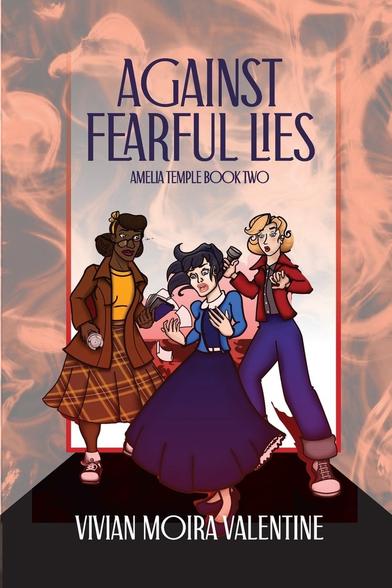
Author Spotlight: Queer SFFH Author Vivian M. Valentine

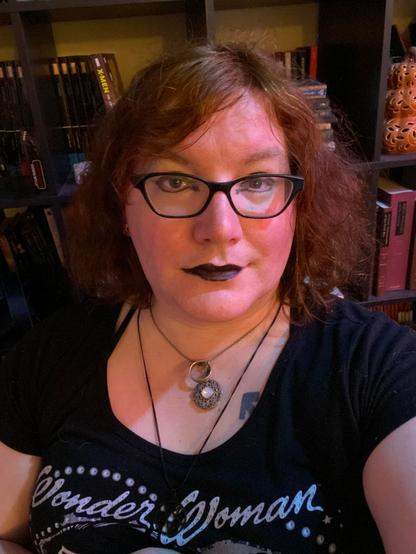
Vivian Moira Valentine (she/her) is a rad trans lady who loves monsters. When she was a child, she found the Crestwood House Monster Series at her local library and it’s all been downhill from there. Now everything she likes is horrible. When not writing, Vivi enjoys card and board games and plotting out more tabletop RPG campaigns than she will ever have time to run. Vivi lives in Virginia Beach with her amazing wife Frankie and their son, as well as an ever-growing collection of action figures. She is the author of The Amelia Temple Series, and her short fiction has appeared in a number of publications.

Book Links: mybook.to/AmeliaTemple

BlueSky: @itsviviactually.bsky.social

What made you choose the 1950s as the setting for the Amelia Temple series, and how does the setting work with the development of the characters and their identities?

I chose the 1950s for three reasons, two thematic and one practical. On the thematical level, there’s this cartoon version of the 1950s in the US that has captured imaginations for generations. America was Strong, the Family was Strong, and Those People Knew Their Place, Darnit. As the sort of person who wouldn’t be allowed to exist back then, I find deconstructing that cartoon to be irresistible.

The 1950s were a time of prosperity for some people, but even that prosperity was a thin wallpaper over rotten drywall. For the rest, it was a time of repression, oppression and suppression. The decade also serves as the next generation after the pulps. It’s fun to assume something like the stories of Lovecraft and others happened in the ‘20s and ‘30s, and then ask, what happened next? What did those weird fiction protagonists do as they got older, what did their children and mentees do?

Practically, the 1950s also serve as one of the last times Amelia Temple can plausibly emerge into society with a handful of forged identifying documents and no real formal education to speak of. If the series took place a generation later, the fact that she doesn’t legally exist would become a lot harder to handwave.

How do you see your work interacting with weird fiction from that period, and what drew you to incorporate these mythos elements?

I’m definitely in conversation with the pulp writers, although from my end a lot of that conversation can be summed up as, “You guys had some messed-up ideas.” I want to focus my attention on the sort of people Lovecraft et al would have considered to be monsters. Horror frequently deals in the fear of the outsider, the other. Queer horror more often explores the fear of being the other. On the one hand, that means Black people, queer people, political radicals, etc. On the other, it means asking, “What if Wilbur Whateley was a trans woman?” I like to think that my existence as a trans woman is proof that Lovecraft was right in the wrong way. What happens when we reject the shackles of propriety? We dance to race music, we reject the gender binary, we drink and we cuss and we shout and revel and enjoy ourselves, and it’s awesome.

I like swimming in the pool of cosmic horror, although in my case that means looking at the uncaring vastness of the universe and feeling awe instead of terror at my insignificance. However, I didn’t want to shackle myself to Lovecraft’s Yog-Sothery. If you look at his own work, the Mythos doesn’t really hang together in clear taxonomies; I don’t think he cared too much about fitting everything into neat little categories for a Monster Manual. Later writers have gone and made things more defined, and I didn’t want to restrict myself or explain why My Shoggoths Are Different. I like to think that I’ve taken the spirit of the Mythos in formulating a messy cosmos of my own. Nothing is clearly defined; while people within the texts have tried to impose some order onto it, it’s deliberately incomplete and contradictory. No one has the full picture, not even Amelia herself.

As you’ve plotted the other books in the series, have any characters surprised you in terms of their development and arcs?

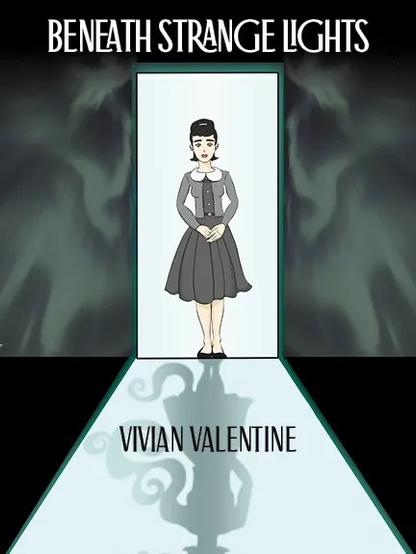
It took me a while to get a handle on Lucille Sweeney! In the original novella that became Beneath Strange Lights, she was just the girlfriend. It wasn’t until about halfway through Against Fearful Lies that I understood she had the heart of a pulp adventurer. It makes plotting a lot easier; left to her own devices, Amelia doesn’t really want to be a protagonist, but she’ll follow Luci into all sorts of trouble.

What were your strongest influences for the series in general, and the latest book in particular?

The Amelia Temple Series owes a lot to Ruthanna Emrys. Her Innsmouth Legacy books got me thinking about Lovecraft’s work in a way that quickly created Amelia Temple.

Amelia may be the most human of the various eldritch horrors readers encounter, but all of my gods and aliens and demons are fairly comprehensible. The Watchers Above are just colonizers, albeit even better at it than white people! Another really big influence is Grant Morrison’s late-Nineties comic series The Invisibles. Mostly because it informs how I approach the conspiracy of mad science wizards who are behind everything.

Conspiracy theory is uncomfortable to play with once you realize most of them are just thinly disguised antisemitism. The Invisibles solves that by centering its conspiracy around members of the Establishment – specifically, a British intelligence officer with ties to the Royal Family and a senior US military officer. I’ve tried to follow that lead with the Apollonian Society for Illumination and its offshoots. There’s no secret group running things behind the scenes; it’s the same government officials and rich corporatists you thought were in charge, and they’re up to even worse things than you imagined.

How do you approach queerness and queer identity in your work, and what informs this approach?

My view on queerness is that the whole point is to get away from boxes and prescriptive labels. With regard to sex, gender, sexual orientation and all of that, I think we’re all fumbling in the dark trying to describe the elephant. A label is useful if it’s something you picked out that makes sense to you; it’s not something to be imposed on another person. Because of the time period, it’s difficult to have the characters talk about this openly. Not only is it forbidden, a lot of the language we take for granted hasn’t yet been developed or widely disseminated.

I try to approach these as needless restrictions for the characters to navigate – there’s a point early in Book Three where Amelia laments that her new friends can’t just talk to her about their queerness. At the same time, it doesn’t prevent the characters from finding one another, just as it didn’t prevent our elders who lived through those times. Queerness is, ultimately, liberating … in exactly the way that would make Lovecraft turn in his grave.

If you had to pick 3 things you want readers to take away from your work, what would they be?

1. Evil isn’t a force or an identity or an energy. It’s nothing more and nothing less than treating other people as things.

2. Being an outsider is frightening, but it’s also liberating.

3. Girls kissing makes everything better.

Shop Now

Like This? Try These:

#AuthorInterview #AuthorSpotlight #horrorBooks #queerAdultSFF #transBooks #weirdFiction #WomenInHorror

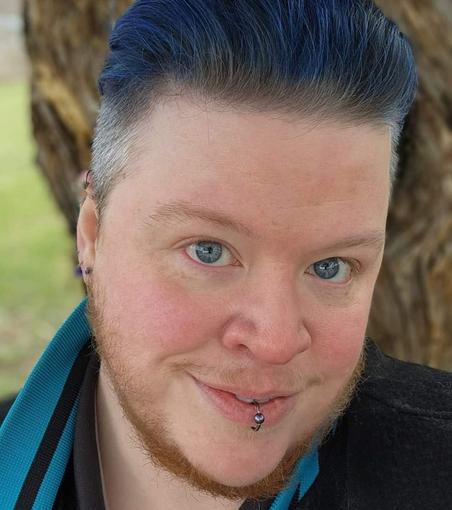
Author Spotlight: Queer SFF and Vampire Fiction Author H.S. Kallinger

H.S. Kallinger (he/they) has been actively writing (on paper) since he was 13 and was first published in a teaching magazine in high school. His favorite subject tends to be vampires, but they love most of the fantasy and sci-fi genres. A scientist at heart, they enjoy looking for the ‘why’ behind everything. The unifying theme to their works is LGBTQIA+ characters, a subject they are passionate about. He majored in Criminal Justice with a minor in psychology and lives in Kansas with his husband, four children, and five kitties who fill them with love.

Author Links: https://linktr.ee/hskallinger
Ko-Fi: ko-fi.com/hskallinger

Photo by Elaine Bernadine Castro on Pexels.com

Operation Olive Branch: https://linktr.ee/opolivebranch

GoFundMe’s Highlighted by Authors for Palestine Event: https://afp.ju.mp/#info

For the AfP event we have selected the following 3 families to help boost their fundraisers. The details below were taken from the OOB spreadsheet.

Mohammed’s fundraiser: GoFundMe
Mohammed’s Instagram: @mohammedalbaredei

Ibrahim’s fundraiser: GoFundMe
Ibrahim’s Instagram: @ibrahimwithi

Rula’s fundraiser: GoFundMe
Rula’s Instagram: @rula_mohammed

You were one of the authors involved with the Authors for Palestine event – can you tell us why you chose to get involved with this, and which of your works you put up as raffle prizes?

The situation with Palestine has been stressing me out since I started learning about the history of the area. I abhor suffering. However I can help alleviate some, I try to. I am vehemently opposed to the actions of the Israeli government. I put up my entire published works as raffle prizes.

Do you find your sense of social justice and activism informs the philosophy of your writing, in terms of narrative and character arcs? If so, how?

I write queer characters. I write neurodivergent and disabled characters. I write characters like me. That is an act of politics. All art is political, but especially writing. When it comes to science fiction and fantasy, politics is in the very roots of the genres and everything we do. My sense of social justice informs everything I write, from making certain I’m not only avoiding racism but am actively anti-racist to writing worlds where the activism makes a difference. There are likely all sorts of messages and meanings that I am oblivious to having woven into my stories. The whole ‘the curtains are blue’ thing–I just like blue. But it doesn’t mean that I’m not unconsciously inserting layers into the narrative that mean more than I was aware of during writing. And my current protagonist is a social justice advocate himself.

As for character arcs? They’re all about healing on both a micro and macro level. I’m a criminal justice major, so there are definitely themes of restorative justice. When I delve into near future writing, I include societal reforms that I want to see happen here. Well, except the post-cyperpunk dystopian universe, but cyberpunk has always been about critique.

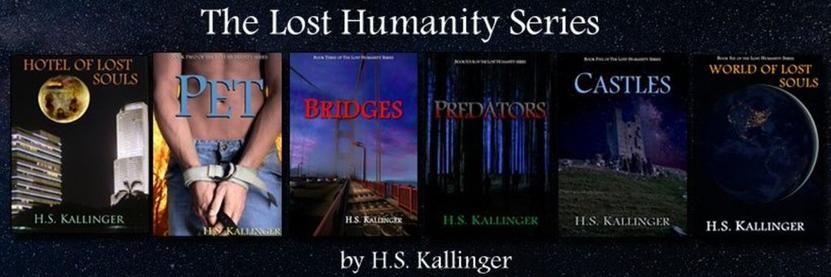
Let’s talk about your work a bit more; you have 2 series that you’re developing, “Lost Humanity” and “Found Humanity”. What for you is the underscoring theme/s that follows through these series?

Both series are about ‘otherness,’ healing, finding community (and family), and finding who you’re meant to be (self-discovery). They’re also about love in all its forms. I suppose the big theme is that “People are monsters, and monsters are people,” and everyone chooses what that means for them, personally. With Lost Humanity, it’s about a human protagonist (initially), Zack, who becomes a villain’s lackey and more and more monstrous as he goes along. At the same time, he’s trying to balance that against its conflict with his internal sense of self. He doesn’t want to be evil, but he also feels he has no choice. At the same time, he’s aware that he is responsible for those choices. He’s a mess. With Found Humanity, my dhampir protagonist, Gabriel, wants to change the world for the better. He wants to be a hero. And as he progresses and becomes physically less human, he loses the monstrous aspects of himself as he heals.

How do you work with the interplay of queerness and monstrosity, in a world of queer characters and vampires, dhampirs, and so on?

Well, first, none of the monsters I write are metaphors. They’re literally what they’re supposed to be. So, being a vampire isn’t a metaphor for being queer or something, but I do believe that we’d treat vampires pretty much the same as queer people, and there’s a lot of similar experiences. Vampires ‘transition’ after they change/become/transform/are elevated–whichever term their culture uses (there’s no universal language happening here) as they mature both physically and mentally from a newly changed (the most common American terminology for the time period of these books) into a mature vampire who can return to human society. So, you can read metaphor into that, for sure, even though I approached it from a more scientific POV. Having new systems develop, new instincts, having to adapt, relearn, etc. It’s a lot like a fast-forward second childhood. So, a trans vampire could be said to be in ‘third puberty.’ Yikes.

My vampires aren’t monsters. They are a subspecies of human who undergo a kind of metamorphosis after being infected and become potentially-symbiotic super-predators. Like any people, they can be monsters, and it’s more likely that someone with superhuman abilities who see other people as food might become monsters, for sure, but in the end, it’s entirely their choice. I might enjoy the ‘all vampires are queer’ jokes, but I don’t agree in practice.

As for the actual monsters, the diversity of queerness remains the same as in our own population. The Lost Humanity world has no Gabriel Belmont to change the fact that there are only humans, vampires, and dhampir on Earth… or at least, as far as I know. It has the same chance as our own world to harbor ghosts and such. If they’re real here, they are there, but I can’t say for either universe. With Found Humanity, Gabby’s ability to break through into other universes changes the equation. He finds worlds where queerness was never othered. He finds masked worlds (which he hates). He learns magic and makes friends with a demon, werewolves, fairies, dragons, and more. Anyone who becomes more than friends with him (or her or xem–Gabby is genderfluid) is going to be some flavor of queer, most likely. Someone once mentioned that Hotel of Lost Souls blended the vampires in so naturally to our world that it wasn’t a story about vampires, but rather, a story about abuse and change that happened to have vampires in it.

Where do you see your take on vampires fitting into other literary traditions like Gothic Horror, Paranormal Fiction, etc that feature them, and why choose Sci-Fi as a vehicle for yours?

I chose sci-fi (though it’s properly sci-fantasy, there is enough hard science to fit both) because I love science. I first learned basic quantum physics theories (well, what we had in the late 1980s, anyway) at 9 years old when a college physics professor saw me reading OMNI magazine and struck up conversation with me at the dojo where my mom worked, and I spent most of my time when I wasn’t at school. We’d have conversations about science every week after that while he waited for black belt class to start. I don’t remember when or why they stopped. Science was always my favorite subject. Many of my favorite teachers were my science teachers. Especially the clearly neurodivergent weirdos, like me. I got into Star Trek at ten (my husband beat me by getting into it at age 4, lol), and while I’d watched some other sci-fi here and there, that’s what really hooked me. I don’t think I can write a modern world book that isn’t at least a little sci-fi.

There are definitely vampires in my world who’d fit in just fine in Gothic Horror. I prefer to deal with psychological and social issues precisely as they are, as opposed to metaphor. Call the duck a duck in part to remove stigma. And my first book in the Lost Humanity series was primarily psychological horror.

There are aspects of Paranormal Fiction in my works. Some of the things that control the rules for vampires can’t be explained neatly by science. For example: the threshold. There are theories that it’s a psychological block, but those are defeated by what happens when you move an unconscious vampire inside on without an invitation. What happens to them is almost entirely in their mind, except that they can end up having seizures and burn through their blood supply. It can’t kill them, but they’ll wish they were dead in seconds. Another is their ability to move at impossible speeds. If they’re carrying someone, the rider isn’t really jostled any more than being carried by anyone else. They don’t create the levels of friction they should. However, there may be elements of some kind of ‘bubble’ protecting them from standard physics that forms… which doesn’t explain the bubble itself, either. The science is as incomplete there as it is here. It might be discovered later, or it might not. And gifted vampires can have gifts that are very difficult to explain by science. There are certainly theoretical sciences that can explain many of them but not necessarily all of them. And that’s why it’s sci-fantasy.

What are your publishing plans for “Lost” and “Found” – what should we be looking out for?

Well, the Lost Humanity series is over and done, except for a collection of short stories. You can purchase all six books at multiple retailers. More of the short stories will be published on my blog to read for free, but I’m currently finishing up a novella that will be the final piece of the Lost Stories compilation (that is, short stories from that series) that will only be available in the published book. I’m hoping to finish it and put it out this year, but I can’t say for certain.

The best places to watch for release dates are on my Patreon, Facebook (H.S. Kallinger), Threads, or Bluesky.

The Found Humanity series will be a rapid release of over twenty books when it’s finished. They’re a lot shorter than the Lost Humanity books (which were mostly epic-length), which better fits the less plot-driven nature that rejects the standard western story format. The first few books are in the polishing stage, but the last hasn’t been written yet, so I can’t say when, exactly, they’ll be ready to be released. Hopefully, when that day comes, I’ll be putting out a new book every couple months for a few years.

Like This? Try These:

#AuthorInterview #AuthorSpotlight #queerAdultSFF #vampireBooks

This is the most wildly abundant month for queer SF/F/H book releases since I started tracking them. SEVENTY-SIX new books on my October list, and I’m sure I missed some (I always do!) #QueerBooks #QueerAdultSFF

https://kilagreene.dreamwidth.org/3859.html

Today is the final day of my 40% off sale on my Ko-Fi. Get stickers, sapphic books, bookmarks, and pins for 40% off and help support your local trans author while doing so!

#writingcommunity #sapphicseptember #bookstadon #queeradultsff #scifi

https://ko-fi.com/anotherindiewriter/link/KSREWARD

40% discount off S. Morgan Burbank - Another Indie Writer's nonbundle

Visit S. Morgan Burbank - Another Indie Writer at Ko-fi for 40% discount off nonbundle

Ko-fi