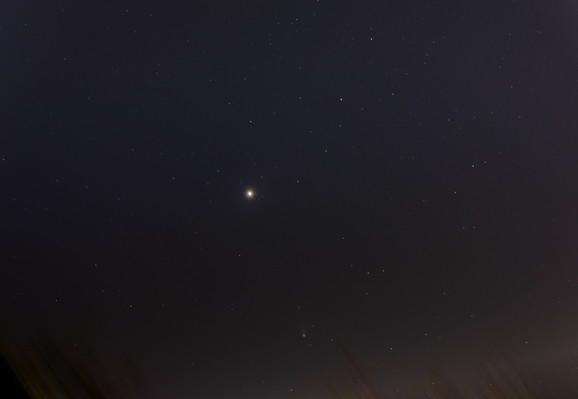
Another timelapse of comet Pons Brooks setting behind Kapiti Island, New Zealand.
Taken over an hour and twenty minutes from 6:26pm NZST this evening 4May2024.
#comet #PonsBrooks #cometPonsBrooks #astronomy #satellites

#Comet #12P #PonsBrooks below Jupiter sinking into the murk on April 11. Probably my last opportunity for this one

#Astrophotography #Astrodon

Turn your eyes to the sky for a two-for-one astronomical spectacle as the 'devil comet' finally creeps into view for the southern hemisphere just in time for the Lyrid meteor shower! ☄️

The Comet Pons–Brooks is visible to the naked eye, but only if you know where to look.

Want to see it for yourself? Check out our guide… https://ausgeo.co/devilcomet

#ausgeo #australia #seeaustralia #comet #devilcomet #cometponsbrooks #ponsbrooks #sky #space #astronomy #astro #star #stars #galaxy #spacephotography #as
#space #astronomy #astrodon

How to see the ‘devil comet’ from Australia

It is now Australia's turn to see the 12P/Pons–Brooks comet as it creeps into view for the southern hemisphere.

Australian Geographic

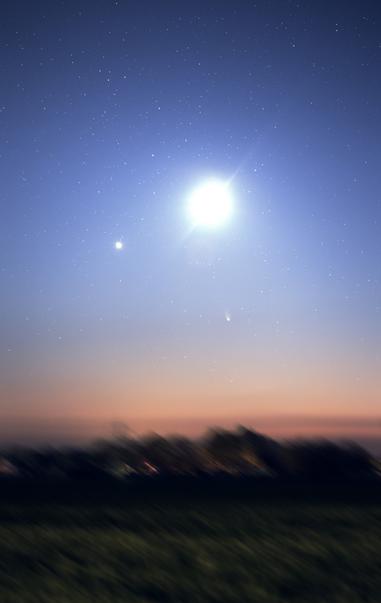
Unser Mond, der Planet Jupiter und Komet Pons-Brooks am Mittwochabend aus der Wedemark nördlich von Hannover.

Our Moon, the planet Jupiter, and comet Pons-Brooks on Wednesday evening. Picture taken north of Hannover, Germany.

#PonsBrooks #Astrofotografie #astrophotography #Astronomie #Astronomy #Komet #Comet

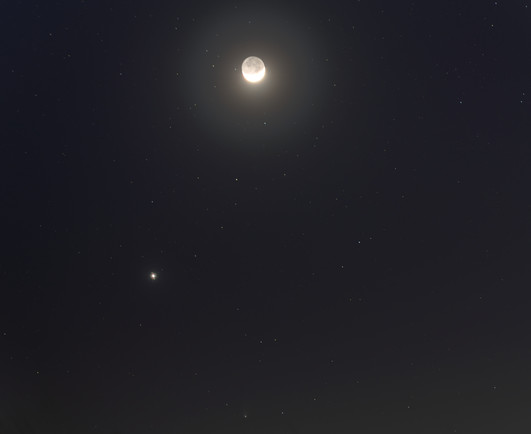
#Comet #12P #PonsBrooks (bottom center) below the #Moon last night, a bit later, more exposure and more frames than the previous shot. Again somewhat fake: Composite of the same stack aligned separately on the moon and stars.
Also visible: #Jupiter, Callisto, Ganymede, maybe Europa if you squint at the glare around Jupiter, and #Uranus (relatively bright blueish object almost directly above Jupiter)
#Astrophotography #Astrodon
La comète a rendez-vous avec la lune #photography #astronomy #ponsbrooks #moon

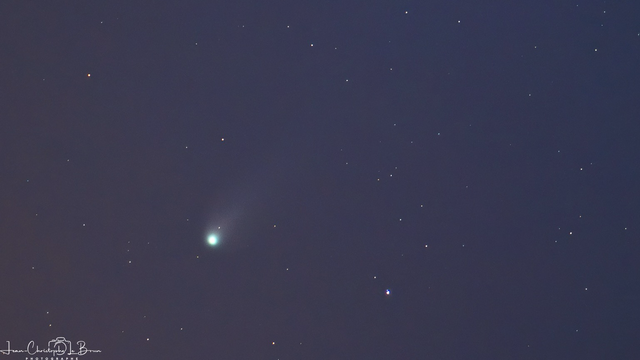
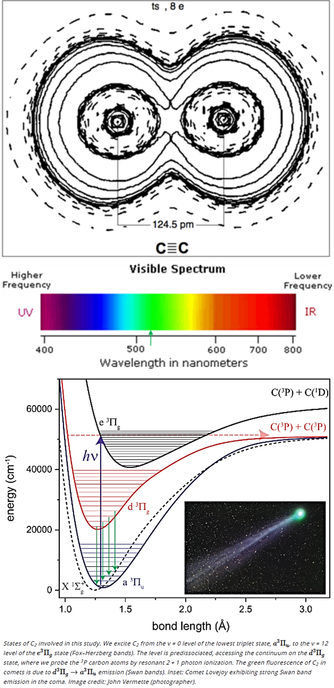
The green color seen in the coma of most comets, but not in their tails, is due to emissions from Diatomic carbon C2 (aka dicarbon) molecules.

Sunlight heats the comet’s ice and organic material to produce C2 molecules, which break apart in ~2 days before they reach the tail. C2 is excited by solar UV radiation and emits mostly in infrared but its triplet state radiates at 518 nm (d3Πg → a3Πu transition below).

https://physicstoday.scitation.org/do/10.1063/pt.6.1.20220110a/full/
https://www.pnas.org/doi/10.1073/pnas.2113315118
#dicarbon #PonsBrooks
5/n

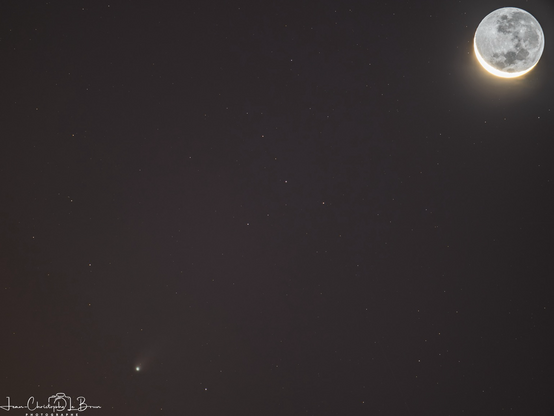
#Comet #12P #PonsBrooks (very faintly visible, upper left) over the #Moon last night. This is a somewhat fake composite of 100 4 second frames, aligned separately on the stars, moon and foreground. Too close to twilight to get much of the comet

#Astrophotography

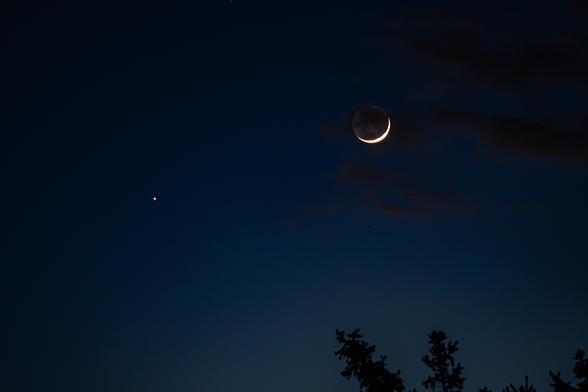
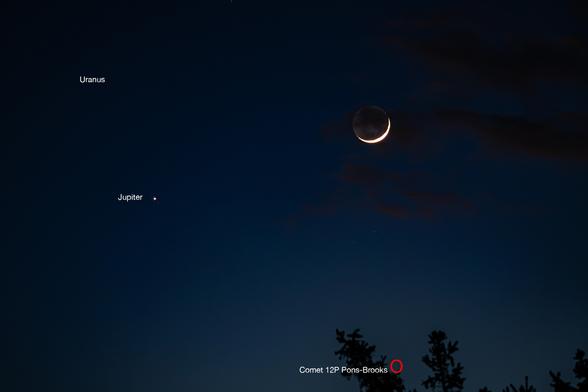
Too bad: The clouds were eventually gone, but when it finally got dark enough to make out #Comet12p #PonsBrooks on the photos of my amateur camera, it disappeared behind the trees. So, no chance of getting a shot of its tail. 🙁

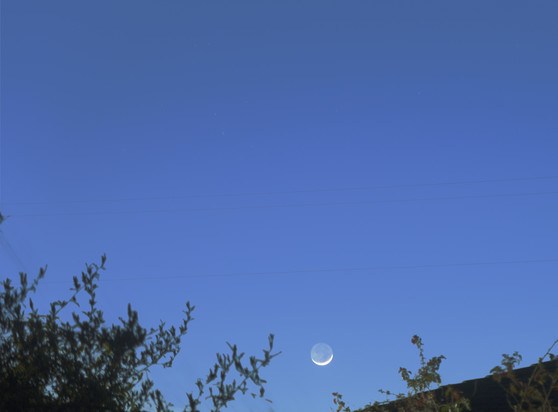
Still: A nice constellation of the crescent Moon, Jupiter (with three of its own moons), and Uranus. 🙂

(photos: @kernpanik | license: public domain as described in CC-0 https://creativecommons.org/publicdomain/zero/1.0/deed.en)

Deed - CC0 1.0 Universal - Creative Commons