An exoplanetary system about 116 light-years from Earth could flip the script on how #planets form.
Four planets orbit LHS 1903 β a red dwarf #star, the most common type of star in the #universe β and are arranged in a peculiar sequence.
The innermost #planet is rocky, while the next two are gaseous, and then, unexpectedly, the outermost planet is also rocky.
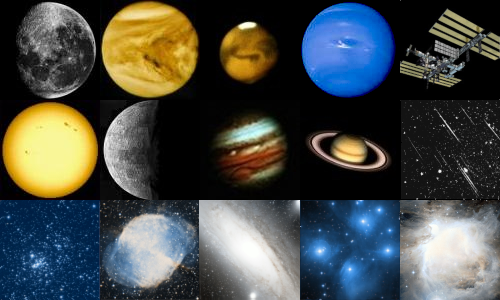
This arrangement contradicts a pattern commonly seen across the galaxy and in our own solar system, where the rocky planets (#Mercury, #Venus, #Earth and #Mars) orbit closer to the sun and the gaseous ones (#Jupiter, #Saturn, #Uranus and #Neptune) are farther away.
Astronomers suspect this common pattern arises because planets form within a disk of gas and dust around a young star, where temperatures are much higher close to the celestial body.
In these inner regions, volatile compounds such as water and carbon dioxide are vaporized while only materials that can withstand extreme heat β such as iron and rock-forming minerals β can clump together into solid grains. The planets that form there are therefore primarily rocky.
A discovery of a planet breaking this pattern is telling about anomalies in the common formation process.
#exoplanets #astronomy
https://www.ksl.com/article/51447598/astronomers-detect-a-solar-system-they-say-should-not-be-possible