 OpenBSD España
Nuevo video de The OpenBSD Guy sobre la nueva versión de #OpenBSD 7.9
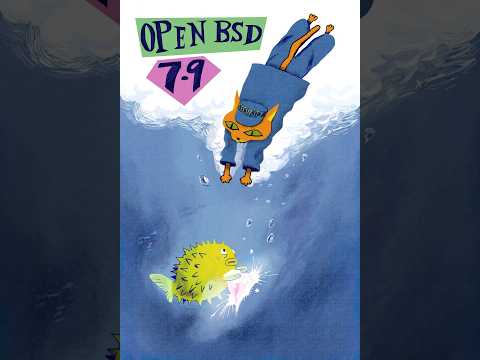
Nuevo video de The OpenBSD Guy sobre la nueva versión de #OpenBSD 7.9
I just learned that my father, a retired medical doctor, has now more #linux computers running at home than myself.
Still have the upperhand in unix diversity with #freebsd and #openbsd though. But in rough numbers, he is ahead ;-)
I really like that. And it also shows that stuff isn't as hard as some people say it is. You just need to be interested and not afraid.

Router upgrade day.
$ uname -a
OpenBSD router.home.perkin.org.uk 7.9 GENERIC#190 octeon
Pretty painless sysupgrade. Nice. Still need to upgrade this host to something a bit more modern though, I'm sure having everything run off of:
umass0 at uhub0 port 1 configuration 1 interface 0 "SanDisk' Cruzer Fit" rev 2.00/1.00 addr 2
sd0: 15264MB, 512 bytes/sector, 31260672 sectors
is going to bite me one day, and upgrading is slooooow! N150 still a reasonable choice?
By the way:
You're looking for some blatant error from objdump. The point of those flags is to make it attempt to read all of the elements of the ELF file structure, using their recorded lengths, not to actually analyse them in detail.
The boot loader is reading just a block of bytes, so you're looking for a failure where objdump gets an error likewise trying to read an entire ELF section from file, not in the details of what it dumps out interpreting the contents of those sections.
There are ways in which you doing objdump from within a booted operating system is going to cut out some possible root causes for the error. You won't be relying upon the firmware's I/O services, for starters. But it's mystifying how one could get errno 255 via that route, and it seems unlikely that's your problem because you say that it's only changing the kernel that makes the difference on the machine.
 Red Riding Root
 Network == Abstraction Layer
 Michael Jack
 noreen Farwana
 Peter N. M. Hansteen
 Jonathan Perkin
 benzogaga33
 ckeen
ckeen JdeBP
JdeBP