Wie man ein lächerliches Google-Docs-Problem löst
Ein simples Anliegen: In Googles Office-Umgebung sollen Dovkumente flexibel und konsistent mit Absatzformatierungen ausgestattet werden. Das geht – aber im Vergleich zu Microsoft Word auf
I gotta reread dat fic where Bruce Wayne gets s a baseball bat shoved up his pussy
#OnItOh god yeah thats hell haha. We should talk with the bridgy team.
#On-it ALWAYS DOING DEALS! 💪🤝
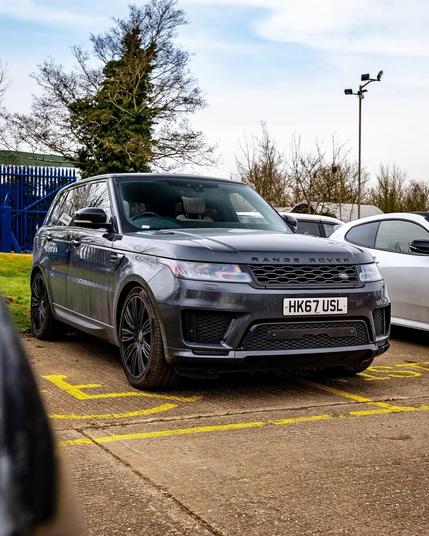
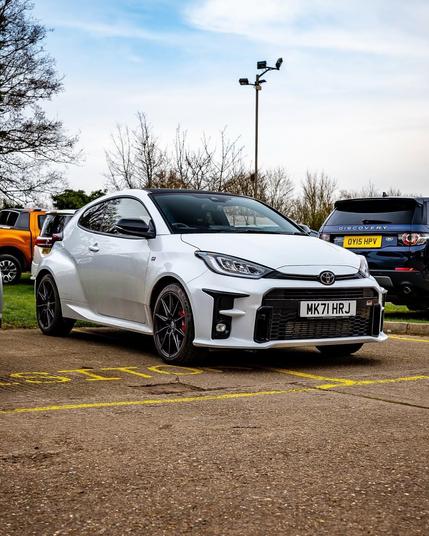
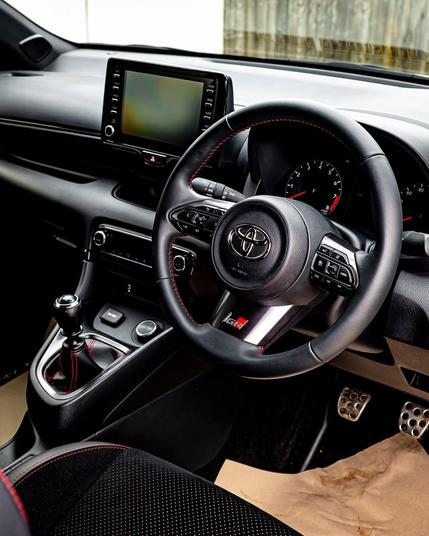
My friend Ben popped down to buy his GR Yaris and he organised a ride home in his other car, a damaged Range Rover Sport. I obviously had to ask if he wanted to do a deal on both 😂
Full video now live go check it out to see what happened 🎬
#CarDealer #Cars #GRYaris #RangeRover #ONIT
#Onit is an open-source
#AI chat assistant that lives in your desktop
https://github.com/synth-inc/onit 
GitHub - synth-inc/onit: Onit iOS client
Onit iOS client. Contribute to synth-inc/onit development by creating an account on GitHub.
#KünstlicheIntelligenz trifft auf Geschichte! 💻
Der #DigHis23-Beitrag von Michela Vignoli, Doris Gruber, Rainer Simon und Axel Weißenfeld zeigt anhand des #ONiT-Projekts mit der Untersuchung verschiedener Repräsentationen von Natur, wie #KI-Methoden zur multimodalen Analyse von Text-Bild-Beziehungen in historischen Drucken eingesetzt werden können.
🗞️ Zum Paper: https://doi.org/10.5281/zenodo.8322398
____
#DigitalHistory #ArtificialIntelligence #AI #histodons #history
Impact of AI: Gamechanger for Image Classification in Historical Research?
Ein Beitrag zur Digital History 2023: Digitale Methoden in der geschichtswissenschaftlichen Praxis: Fachliche Transformationen und ihre epistemologischen Konsequenzen, Berlin, 23.-26.5.2023. Abstract: AI opens new possibilities for processing and analysing large, heterogeneous historical data corpora in a semi-automated way. The Ottoman Nature in Travelogues (ONiT) project develops an interdisciplinary methodological framework for an AI-driven analysis of text–image relations in digitised printed material. In this paper, we discuss our results from the first project year, in which we explore the potential of multi-modal deep learning approaches for combined analysis of text and image similarity of “nature” representations in historical prints. Our experiments with OpenCLIP for zero-shot classification of prints from the ICONCLASS AI Test Set show the potential but also limitations of using pre-trained contrastive-learning algorithms for historical contents. Based on the results and our learnings, we discuss in which way computational, quantitative methods affect our underlying epistemology stemming from more traditional “analogue” methods. Our experiences confirm that interdisciplinary collaboration between historians and AI developers is important to adapt disciplinary conventions and heuristics for use in applied AI methods. Our main learnings are the necessity to differentiate between distinct visual features in historical images versus representations of “nature” that require interpretation, and to develop an understanding for the features an AI algorithm can be retrained to detect.
Continuing the attempt to
#debias the success stories we (rightfully) report on social media: Just received a
#reject. Time for that playlist today. And then rolling up the sleves again. But only tomorrow.
#OnIt #sciencerocks #yesreally Matthias Schüssler
 tar
tar 


 Gabbo the wafrn dev guy
 Calvin Fehr
 st1nger
  🏴☠️
🏴☠️ 

 Digital History Berlin
 Chris Arnold
 unsponsor