 Snow
SnowFeeding the Flowers
Welcome back for another episode of Animals in the wild. This week we are continuing our feature on bears during mating season.
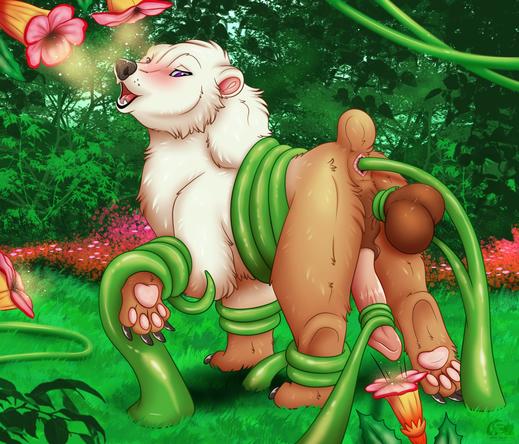
Here we find the smaller pizzly male again. As we saw last week, he was unable to compete with the bigger males for the females ... and was even used as a substitute by some of the other males unable to acquire a mate.
The way he is sniffing the air suggests he is tracking a female in heat. Will he find her uncontested, and if so will she accept the runts advances? Let’s watch and see!
Oh dear ... it seems the bear has been lured into a trap. The scent he is following isn't from a she bear, but from a patch of Venus Ursidae plants. Venus Ursidae’s are carnivorous plants which have evolved an amazing way to hunt bears though specialized vines. Luckily for this pizzly it’s not him it wants to consume, but his potential offspring.
And the vines have him! Watch as they wrap and entangle his limbs to prevent escape!
*Black Screen with warning "The next 10 mins of this program may not be suitable for young viewers. Parental discretion is advised"*
First the restricting vines catch and immobilize its prey. Next flowering vines move in to eject their pollen on the bears face, forcing him to breathe it in. The pollen is the first of these plants amazing evolution, when inhaled by bears it causes several effects - causing them to become submissive, acting like a strong aphrodisiac and stimulating sperm production. As we can see from the bears visible arousal these effects take effect rapidly.
Now that its prey has become calm and compliant vines begin to seek out the bear intimate parts. One pulls at and probes the bears scrotum, attempting to determine how much sustenance it can harvest from its prey. Other vines enter the bears anus to apply stimulation to its prostate while others wrap around and stroke its penis. How the vines evolved the instincts needed to milk a bear of its seed is still a mystery of nature.
Finally another type of flowering vine gets in position to collect the seamen the vines extract. Given that this bear was unable to find a mate he will no doubt provide it a substantial meal.
It will be many hours before it considers its prey spent and releases him. When the pollen wears off the bear will no doubt wander off confused as to why his hind regions feel tender and over stimulated. But this is unlikely to be his last encounter with the Venus Ursinae. Bears caught by the plant often return to it repeatedly every year. Studies suggest its pollen may have an addictive property that subconsciously leads bears back to the plants.
Art by Little Bean Art - https://www.furaffinity.net/user/xblueashesx
 Unofficial PetaPixel Bot
 Consent Games


 Nonilex
 PrivacyDigest

 br00t4c
 CBC Business