 MultiX-6G Project
🎉 #NewPaperAlert! MultiX research on human sensing with mmWave radar accepted.
⚡️We tackle open-set gait recognition with a privacy-preserving Edge #AI approach.
Dataset & code are public! 🚀
🔗 https://zenodo.org/records/15907211
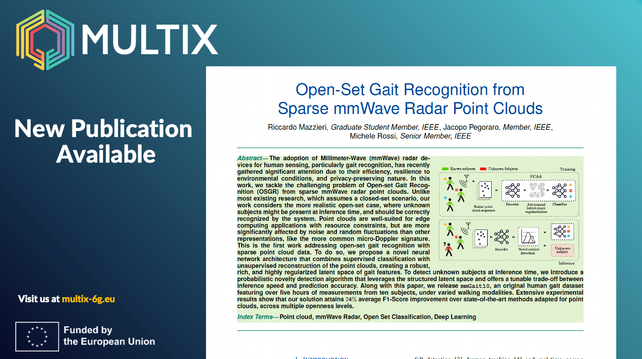
🎉 #NewPaperAlert! MultiX research on human sensing with mmWave radar accepted.
⚡️We tackle open-set gait recognition with a privacy-preserving Edge #AI approach.
Dataset & code are public! 🚀
🔗 https://zenodo.org/records/15907211
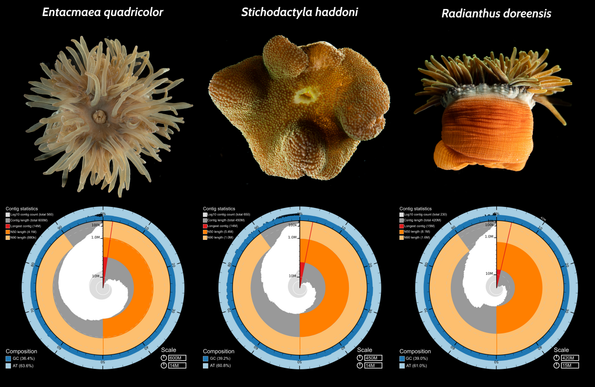
De Jode & Titus publish new HiFi assemblies for three clownfish-hosting sea anemones provide important resources to study the evolution of symbiosis from the host perspective
How do plants from different environments handle temperature extremes? Andrew et al. studied 20 Australian species and found conserved gene expression responses to heat and cold (with biome-specific differences).
Do signaling pathways evolve in a predictable order? Picolo et al. studied 47 pathways across 315 animal species, finding little evidence for a universal link between gene age and pathway position - this suggests stochastic pathway evolution.
Research led by Stephan Baehr shows liquid-phase mutation accumulation experiments can speed up mutation rate studies and better reflect real environments.
New paper by Lewin & Eyre-Walker finds a strong negative correlation between generation time and yearly mutation rate. This highlights generation time as a key driver of molecular evolution across eukaryote clades.
New paper by Howell et al. infers the demographic history of Boston Harbor’s white-footed mice, demonstrating that integrating multiple summaries of genome-wide variation enhances the temporal resolution of population history.
Queen–worker differences are linked to gene duplication and differential gene expression, in particular in reproductive tissues. Study by Xu & Colgan sheds light on how social insects resolve genomic conflict to produce distinct castes.
A large, rare, 225 kb deletion containing six snake venom metalloproteinase genes in eastern diamondback rattlesnake adds to the striking venom diversity shaped by structural variation.
Bacterial operons may persist in eukaryotes (e.g. fungi) after horizontal gene transfer, according to Kogay et al. Operon-derived gene pairs suggest initial neutral retention and later functional integration or degeneration.
 GenomeBiolEvol
 Molecular Biology & Evolution