 Hendrik
#Haskell #mooc #Speedrun
(part 1 - going in blind)
Starts in 15 minutes at
https://www.twitch.tv/boardgamespluslogic
inspired by the excellent video series by @peterb
#Haskell #mooc #Speedrun
(part 1 - going in blind)
Starts in 15 minutes at
https://www.twitch.tv/boardgamespluslogic
inspired by the excellent video series by @peterb
#MOOC sur les #pollinisateurs par #OFB #France: "Bienvenue dans le monde fascinant des pollinisateurs
Cette formation en ligne, gratuite et ouverte à tous, créée par l’Office français de la biodiversité, vous invite à explorer la richesse et la complexité de ces alliés essentiels de la nature.
Que vous soyez débutant ou déjà connaisseur, deux parcours vous attendent pour vous initier ou vous perfectionner si vous le souhaitez." https://elearning.ofb.fr/enrol/index.php?id=163
▪️ Liquid jets: dynamics and instability▪️
Learn how liquid jets form and break up
➡️ Essential for understanding Leidenfrost droplet trajectories.
Video from the "Dynamics of fluid interfaces" MOOC by ESPCI Paris - PSL.
🎥 https://www.youtube.com/watch?v=L2i1meVgtEI&list=PLcbz7zf4dTyk9BqlBPLpgI48i9TiorpEi&index=16

I'm trying to find a hub / directory / central for publishing e-learning courses.
I gave up, there is no more hub.moodle.org or anything similar.
What am I missing? Where do course developers publish (free) courses nowadays?
EPALE seems to be the only such platform, but it's clunky (as most EU related websites).
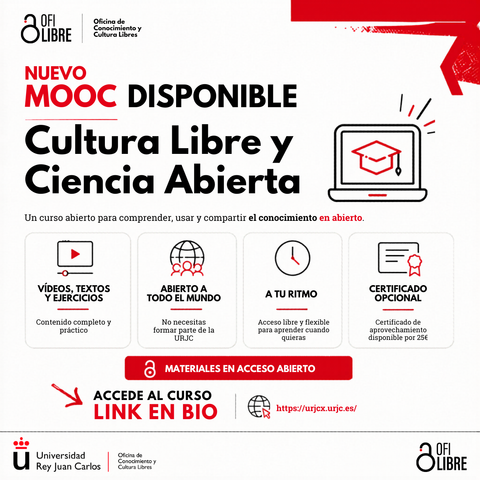
🎓 Ya está disponible el MOOC Cultura Libre y Ciencia Abierta
Un curso online abierto para comprender cómo se crea y comparte el conocimiento en abierto.
📚 Vídeos, textos y ejercicios
🌍 Abierto a cualquier persona
⏱ A tu ritmo
🔓 Materiales en acceso abierto
🎓 Certificado opcional (25€)
🔗 https://urjcx.urjc.es/courses/cultura-libre-y-ciencia-abierta/
#CulturaLibre #CienciaAbierta #OpenScience #AccesoAbierto #MOOC #URJC
Another policy brief has been published by #GES4SEAS. It is about how healthy oceans relate to healthy societies. This was the topic of our very first #MOOC about ocean #health.
See the policy brief here:
🔗 https://zenodo.org/records/19201997
If you want to revisit the first MOOC, you can do it here:
🔗 https://www.ges4seas.eu/mooc-1/
This Policy Brief supports all marine practitioners, those who devise and apply policy and those affected by the policies, who need to show that the seas should remain healthy. This must be both for nature, by supporting the ecological structure and functioning, and for humans who can continue obtaining goods and benefits from the seas. It gives existing and new approaches and methods which focus on healthy oceans. It furthermore emphasises how practitioners should define natural and societal health and focus on the metrics available for determining whether or not management reaches these as a goal.
I met a young Hungarian volunteer here in Kyiv who is studying in Copenhagen. He’s thrilled to be able to register for this course on organizational #resilience based on #Ukraine’s experience. I hope they eventually turn it into a #MOOC.
https://www.cbs.dk/study-programmes/courses/resilience-ukrainian-experience
This course examines the concept of organisational resilience through the lens of Ukraine's unique history — from the COVID-19 pandemic to four years of full-scale war. This turbulent context provides a rare opportunity to study how organisations sustain themselves, adapt and transform in the face of prolonged uncertainty and challenges. By combining theoretical foundations with empirical research, students will gain an academically rigorous yet practice-oriented understanding of organizational resilience that is relevant not only in times of crisis but also for building future-proofing organizations. The course is based on a combination of lectures, case discussions and guest sessions. Lectures provide conceptual foundations and global perspectives on resilience; case studies and guest lectures illustrate how Ukrainian enterprises across diverse sectors have developed their resilience capabilities and adapted their management approaches. The pedagogical approach emphasises active participation, critical thinking and cross-sectoral learning. Key topics:The structure of organizational resilience – frameworks for assessment and dimensions such as purpose, innovation, adaptability, stakeholder engagement, and leadership.The nature of Ukrainian resilience – historical, cultural, and institutional factors shaping organizational and societal resilience.Transformation of the mindsets and resilience strategies – how approaches have evolved in response to the challenges of war and global transformations since 2019.Leadership and organizational culture under pressure – the role of values, communication, innovation/digitalization and team cohesion in sustaining resilience.Case studies of Ukrainian businesses – analysis of resilience practices across IT, agriculture, retail, finance, and industrial sectors.Global lessons and future outlook – what international management and policy communities can learn from the Ukrainian experience of resilience.
🌍 Vous avez déjà trouvé des cours facilement, vous avez suivi un #MOOC (Massive Online Open Course - Cours en Ligne Ouvert et Massif)? c'est grâce à cet élan de partage de la connaissance, qui a lieu depuis 25 ans tout autour du monde, et souvent au plus près de la recherche! #OpenEducation
⤵️ Pourquoi partager? les #REL Ressources Educatives Libres sont des cours que les enseignants et auteurs ont souhaité partager au plus grand nombre. Découvrez les travaux de la Chaire Unesco RELIA https://chaireunescorelia.univ-nantes.fr/
qui a publié des réponses variées et riches du monde entier sur la question du partage, avec le soutien de Nantes Université EUniWell - European University for Well-Being (l'Alliance Européenne des universités à laquelle appartient Nantes Université) et le réseau des Chaires Unesco dédié aux Ressources Educatives Libres Unitwinn UNOE https://unitwin-unoe.org/le-reseau/?lang=fr
*Governança*
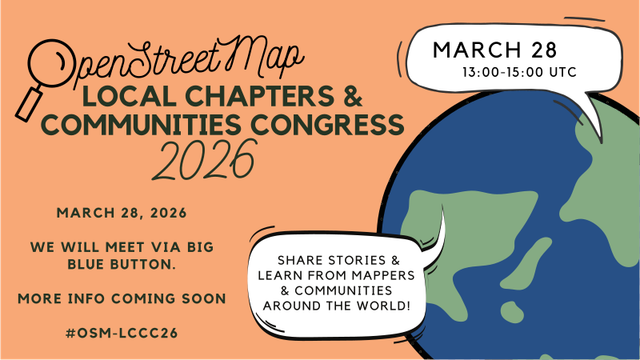
Da lista à la Prévert de rphyrin sobre Congresso 2026 dos capítulos locais e comunidades #OpenStreetMap destaco duas frases:
«Como adaptar práticas de #tagging à realidade local?». Há uma verdadeira falta de tags para o Sul, e o pessoal raramente os propõe, por nunca ter feito isso antes. É preciso começar!
“Documentação principalmente em inglês”. Não, passei quase três anos fazendo #MOOC em 6 idiomas (EN, ES, FR, IT, PT, ZH) #UNMappers #Learning Hub https://
maps.un.org/learning/

 Izha ✊🖤💚
 LeidenForce
 Gary Ackerman
 tomi
tomi OfiLibre URJC
 GES4SEAS MOOCs
 Djembro, RO, supports 🇺🇦🇬🇪
 OEG Francophone
 SeverinGeo