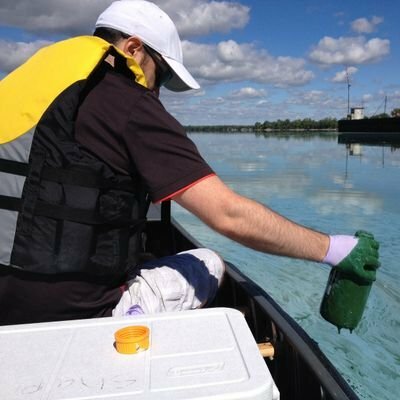
Cyanobacteria diversity challenges 'one-size-fits-all' algal bloom solutions

When populations of tiny aquatic organisms called cyanobacteria (formerly known as blue-green algae) explode, their toxic overgrowth can threaten human drinking water and cause wildlife deaths in events known as harmful algal blooms (HABs). In freshwater environments such as lakes, ponds and streams, a cyanobacterium known as Microcystis aeruginosa is responsible for most toxic harmful algal bloom episodes.


Phys.org
What's really 'fueling' harmful algae in Florida's lake Okeechobee?

Lake Okeechobee is the largest lake in Florida and the second largest in the Southeastern United States. Over the past two decades, blooms of blue-green algae (Microcystis) have emerged in the lake and have been flushed into nearby urban estuaries, causing serious environmental and public health issues.

Phys.org

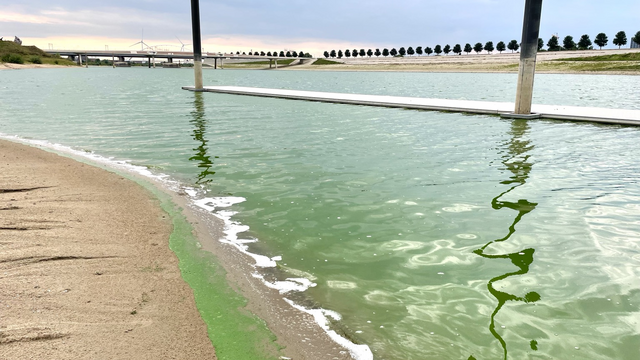
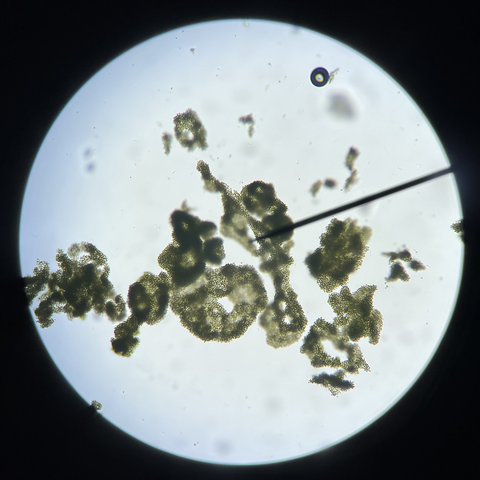
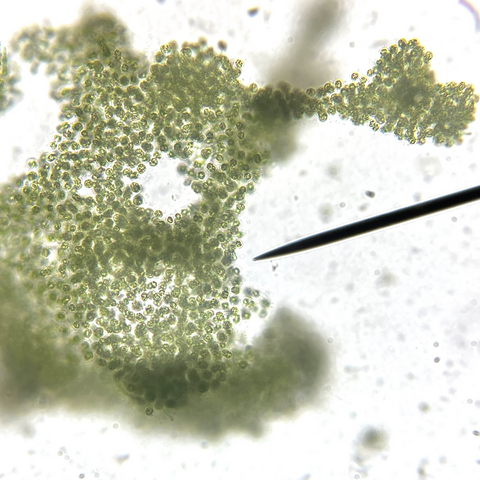
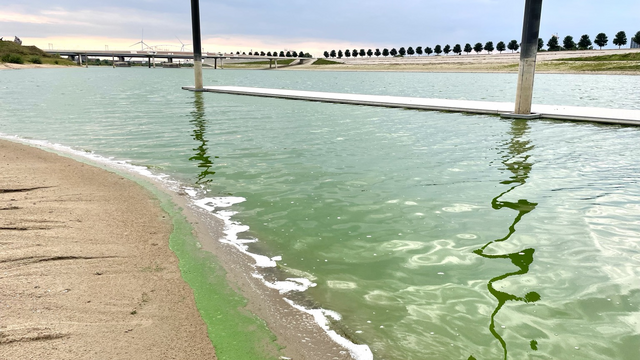
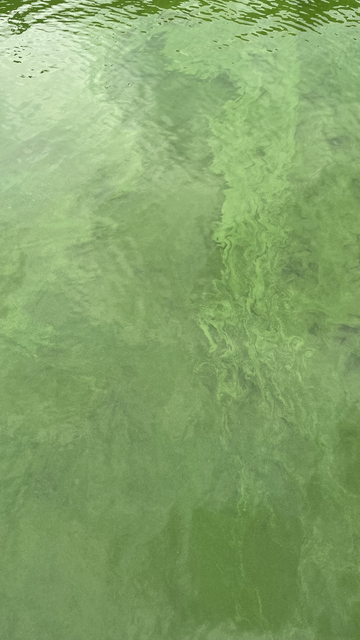
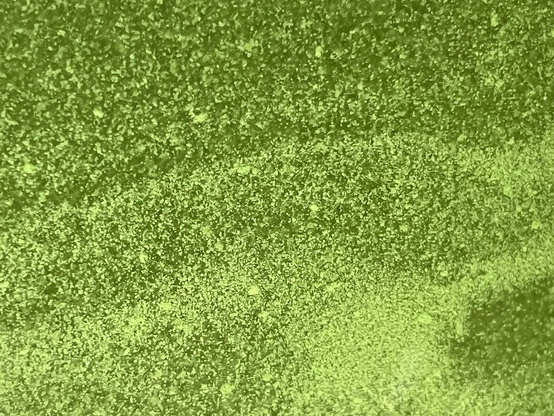
De Spiegelwaal bij #Nijmegen vol #blauwalgen. Ik denk #Microcystis en dan waarschijnlijk M. aeruginosa.

Een waarschuwing om hier niet te gaan zwemmen: het water -en vooral ook die drijflagen met algen- kunnen hoge concentraties microcystine bevatten die maag/darm- en huidklachten veroorzaken of zelfs levenschade.

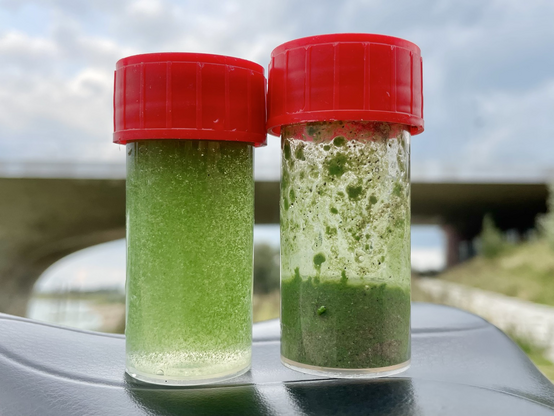
Het is weer zo ver: #algenbloei in de #Spiegelwaal in #Nijmegen. Monsters genomen om te bekijken wat het is. Lijkt wel op #microcystis net als vorig jaar.
Research improves ability to identify and study algae species

Harmful algal blooms create challenges around the globe for water quality and health risk management for humans, wildlife and pets. A team of researchers from the University of Oklahoma is leading an effort toward better management of Microcystis blooms and toxins through a new genome-based taxonomy.

Phys.org
Single-colony sequencing reveals microbe-by-microbiome phylosymbiosis between the cyanobacterium Microcystis and its associated bacteria - Microbiome

Background Cyanobacteria from the genus Microcystis can form large mucilaginous colonies with attached heterotrophic bacteria—their microbiome. However, the nature of the relationship between Microcystis and its microbiome remains unclear. Is it a long-term, evolutionarily stable association? Which partners benefit? Here we report the genomic diversity of 109 individual Microcystis colonies—including cyanobacteria and associated bacterial genomes—isolated in situ and without culture from Lake Champlain, Canada and Pampulha Reservoir, Brazil. Results We identified 14 distinct Microcystis genotypes from Canada, of which only two have been previously reported, and four genotypes specific to Brazil. Microcystis genetic diversity was much greater between than within colonies, consistent with colony growth by clonal expansion rather than aggregation of Microcystis cells. We also identified 72 bacterial species in the microbiome. Each Microcystis genotype had a distinct microbiome composition, and more closely related genotypes had more similar microbiomes. This pattern of phylosymbiosis could be explained by co-phylogeny in only two out of the nine most prevalent associated bacterial genera, Roseomonas and Rhodobacter. These phylogenetically associated genera could enrich the metabolic repertoire of Microcystis, for example by encoding the biosynthesis of complementary carotenoid molecules. In contrast, other colony-associated bacteria showed weaker signals of co-phylogeny, but stronger evidence of horizontal gene transfer with Microcystis. These observations suggest that acquired genes are more likely to be retained in both partners (Microcystis and members of its microbiome) when they are loosely associated, whereas one gene copy is sufficient when the association is physically tight and evolutionarily long-lasting. Conclusions We have introduced a method for culture-free isolation of single colonies from nature followed by metagenomic sequencing, which could be applied to other types of microbes. Together, our results expand the known genetic diversity of both Microcystis and its microbiome in natural settings, and support their long-term, specific, and potentially beneficial associations. Video Abstract

BioMed Central
How do #diatoms respond to challenges from #Microcystis (and why does Microcystis win?). Brittany Zepernick and colleagues explain why pH might be one of Microcystis' key weapons in competition in #lakes

https://www.frontiersin.org/articles/10.3389/fmicb.2022.1044464/full
Morphological, physiological, and transcriptional responses of the freshwater diatom Fragilaria crotonensis to elevated pH conditions

Harmful algal blooms (HABs) caused by the toxin-producing cyanobacteria Microcystis spp., can increase water column pH. While the effect(s) of these basified conditions on the bloom formers are a high research priority, how these pH shifts affect other biota remains understudied. Recently, it was shown these high pH levels decrease growth and Si deposition rates in the freshwater diatom Fragilaria crotonensis and natural Lake Erie (Canada-US) diatom populations. However, the physiological mechanisms and transcriptional responses of diatoms associated with these observations remain to be documented. Here, we examined F. crotonensis with a set of morphological, physiological, and transcriptomic tools to identify cellular responses to high pH. We suggest 2 potential mechanisms that may contribute to morphological and physiological pH effects observed in F. crotonensis. Moreover, we identified a significant upregulation of mobile genetic elements in the F. crotonensis genome which appear to be an extreme transcriptional response to this abiotic stress to enhance cellular evolution rates–a process we have termed “genomic roulette.” We discuss the ecological and biogeochemical effects high pH conditions impose on fresh waters and suggest a means by which freshwater diatoms such as F. crotonensis may evade high pH stress to survive in a “basified” future.

Frontiers