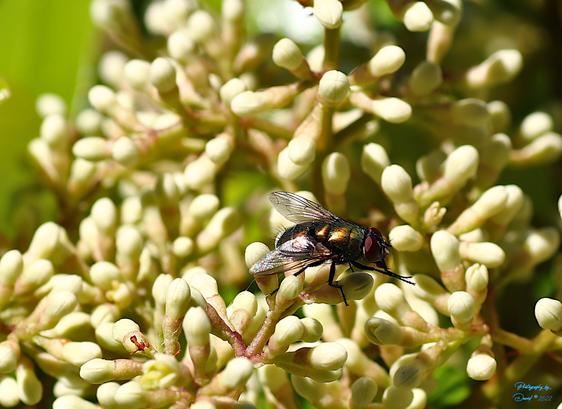
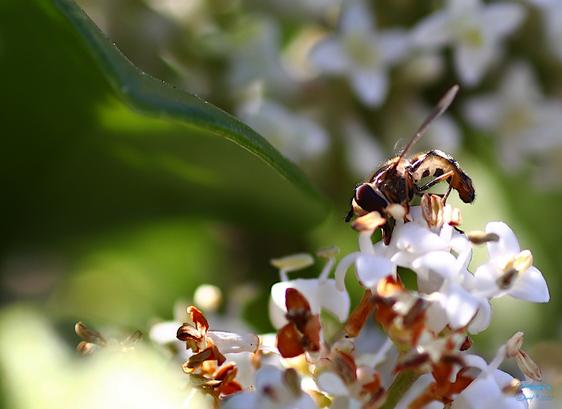
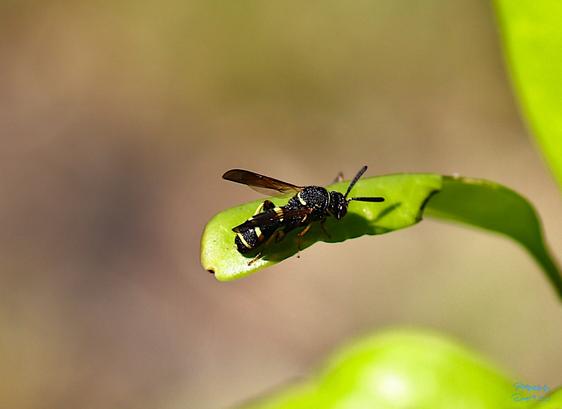
Brown Mason Wasp - Euodynerus sp
Mason wasps (or Potter wasps), the Eumeninae, are a cosmopolitan wasp group presently treated as a subfamily of Vespidae, but sometimes recognized in the past as a separate family, Eumenidae. Most eumenine species are black or brown, and commonly marked with strikingly contrasting patterns of yellow, white, orange, or red (or combinations thereof), but some species, mostly from tropical regions, show faint to strong blue or green metallic highlights in the background colours. Like most vespids, their wings are folded longitudinally at rest. Eumenine wasps are diverse in nest building. The different species may either use existing cavities (such as beetle tunnels in wood, abandoned nests of other Hymenoptera, or even man-made holes like old nail holes and screw shafts on electronic devices) that they modify in several degrees, or they construct their own either underground or exposed nests. The nest may have one or several individual brood cells. The most widely used building material is mud made of a mixture of soil and regurgitated water, but many species use chewed plant material, instead. (Source: Wikipedia)
#wildlife #animals #insects #masonwasp #photography #australia Hunter Lindsay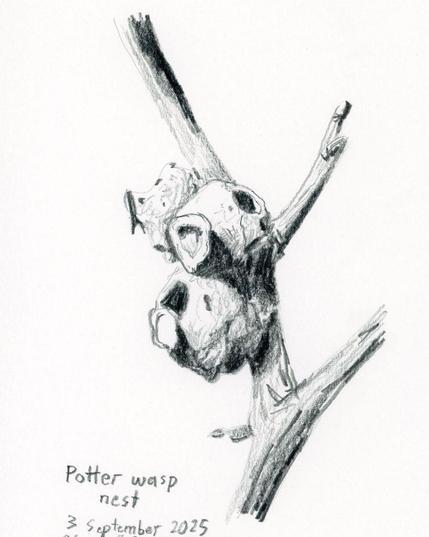
 Tom
Tom


 Ollie
Ollie YouCanToo