Bloomsday

C’è chi festeggia il Natale, chi aspetta con impazienza il Carnevale e chi non vede l’ora che arrivi il compleanno. Poi esistono gli amanti della letteratura, che ogni anno il 16 giugno celebrano una delle ricorrenze più originali e affascinanti del mondo: il Bloomsday, una festa che trasforma le strade di Dublino in un gigantesco libro a cielo aperto.

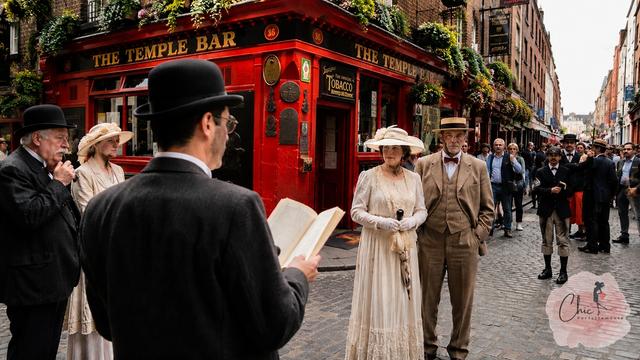
Non si tratta di una semplice commemorazione letteraria. Durante il Bloomsday migliaia di persone si vestono come agli inizi del Novecento, passeggiano lungo gli stessi percorsi compiuti da un personaggio immaginario, leggono brani di un romanzo nei pub, mangiano una colazione molto particolare e celebrano uno dei più grandi scrittori di tutti i tempi: James Joyce.

Perché si chiama Bloomsday?

Il nome deriva da Leopold Bloom, il protagonista del celebre romanzo Ulisse, considerato uno dei capolavori assoluti della letteratura mondiale. L’intera vicenda del libro si svolge nell’arco di una sola giornata: il 16 giugno 1904. Durante quelle ventiquattro ore Bloom attraversa Dublino vivendo situazioni ordinarie che Joyce trasforma in un’avventura letteraria straordinaria.

Il 16 giugno 1904 rappresentava un giorno molto speciale nella vita dello scrittore: fu infatti il primo appuntamento con la donna che sarebbe diventata sua moglie, Nora Barnacle. Un momento romantico che Joyce decise di immortalare per sempre nel suo romanzo.

Quando è nato il Bloomsday?

La prima celebrazione ufficiale avvenne nel 1954, esattamente cinquant’anni dopo gli eventi raccontati nell’Ulisse.

L’idea fu di un gruppo di scrittori, artisti e intellettuali irlandesi che desideravano rendere omaggio a Joyce in modo originale. Tra loro figurava lo scrittore Flann O’Brien, una delle personalità letterarie più brillanti dell’Irlanda del Novecento.

L’iniziativa prevedeva di ripercorrere fisicamente gli spostamenti di Leopold Bloom per le vie di Dublino. Quella che doveva essere una semplice commemorazione si trasformò rapidamente in una tradizione annuale destinata a conquistare il mondo.

Una città che diventa un libro

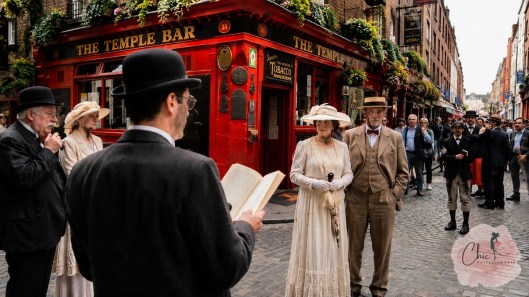
Se vi trovate a Dublino oggi, 16 giugno, potreste avere l’impressione di essere entrati in una macchina del tempo. Ovunque compaiono uomini con pagliette, baffi curati e completi edoardiani. Le donne indossano eleganti abiti d’epoca, cappelli decorati e ombrellini in stile Belle Époque.

Le strade percorse da Leopold Bloom vengono ripopolate da lettori, attori e appassionati che seguono fedelmente il percorso del protagonista. Molti partecipanti portano addirittura con sé una copia dell’Ulisse per leggere ad alta voce i passaggi ambientati nei luoghi che stanno visitando.

La famosa colazione con i rognoni

Tra le tradizioni più curiose del Bloomsday c’è senza dubbio la colazione. Nel romanzo Leopold Bloom ama particolarmente i rognoni di maiale fritti, una pietanza che oggi può sembrare insolita ma che all’epoca era abbastanza comune. Così, ogni anno, numerosi ristoranti e pub di Dublino servono ai partecipanti una colazione ispirata al libro.

Non tutti trovano l’idea irresistibile, ma molti visitatori accettano la sfida gastronomica per vivere un’esperienza il più possibile autentica.

Letture nei pub e maratone letterarie

Uno degli aspetti più affascinanti del Bloomsday è l’atmosfera festosa che invade la città. Nei pub vengono organizzate letture pubbliche, spettacoli teatrali, concerti, conferenze e incontri con studiosi di Joyce.

Non è raro imbattersi in attori che interpretano i personaggi dell’Ulisse direttamente per strada, trasformando il centro cittadino in un palcoscenico permanente. Alcuni lettori particolarmente coraggiosi affrontano persino maratone di lettura che possono durare molte ore, data la notevole lunghezza del romanzo.

Una festa che ha conquistato il mondo

Anche se Dublino resta il cuore delle celebrazioni, il Bloomsday è ormai diventato un evento internazionale. Manifestazioni dedicate a Joyce si svolgono in molte città europee e non solo. Biblioteche, università, librerie e associazioni culturali organizzano incontri, letture e spettacoli dedicati all’autore irlandese.

Tra le città che negli anni hanno ospitato eventi speciali figurano Trieste, dove Joyce visse per diversi anni, Zurigo, Parigi e numerose località degli Stati Uniti.

Curiosità che forse non conoscevi

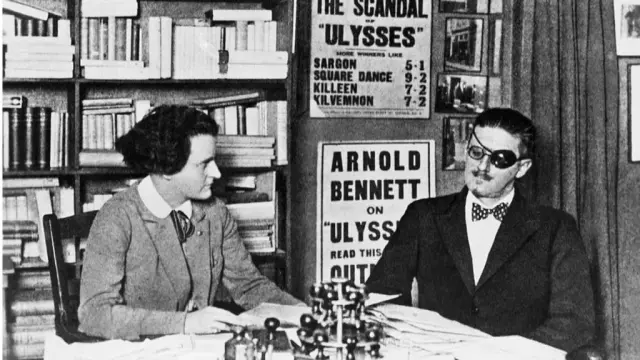
  • Il romanzo fu considerato scandaloso. Quando venne pubblicato, Ulisse suscitò enormi polemiche. In diversi Paesi fu persino censurato perché ritenuto troppo audace per l’epoca.
  • Dublino può essere ricostruita grazie al libro. Joyce descrisse la città con tale precisione che molti studiosi sostengono che sarebbe possibile ricostruire gran parte della Dublino del 1904 utilizzando soltanto le informazioni contenute nell’Ulisse.
  • Esiste una farmacia “letteraria”. Una delle tappe più famose del percorso di Bloom è una farmacia realmente esistita che ancora oggi attira visitatori da tutto il mondo.
  • Alcuni fan seguono ogni passo del protagonista. Esistono appassionati che ogni anno ripercorrono integralmente l’itinerario di Leopold Bloom, fermandosi negli stessi luoghi e rispettando persino gli orari descritti nel romanzo.
  • C’è chi impiega anni per leggere l’Ulisse. L’opera è considerata una delle più complesse mai scritte. Molti lettori confessano di aver impiegato mesi o addirittura anni per completarla.

Perché il Bloomsday continua ad affascinare?

Probabilmente perché celebra qualcosa di molto speciale: la capacità della letteratura di trasformare una giornata qualunque in un’avventura straordinaria.

Joyce riuscì a dimostrare che anche le azioni più semplici — fare colazione, passeggiare, incontrare amici o entrare in un pub — possono diventare materia per un capolavoro.

Ed è proprio questo il messaggio più bello del Bloomsday:

ogni giorno della nostra vita può nascondere una storia degna di essere raccontata.

Così, ogni 16 giugno, Dublino smette di essere soltanto una città e diventa un romanzo vivente, dove lettori e personaggi camminano fianco a fianco tra realtà e immaginazione.

Autore: Lynda Di Natale
Fonte: web
Immagini: AI #16GiugnoIrlanda #abitiEdoardiani #anniversarioUlisse #appassionatiDiLibri #Bloomsday #BloomsdayDublino #BloomsdayEuropa #capolavoriDellaLetteratura #celebrazioniDiJoyce #celebrazioniEuropee #celebrazioniLetterarie #classiciDellaLetteratura #culturaEuropea #culturaIrlandese #curiositàBloomsday #curiositàIrlanda #curiositàLetterarie #DublinoLetteraria #eventiADublino #eventiCulturaliGiugno #eventiCulturaliIrlanda #eventiLetterariEuropa #eventiPerBibliofili #festaDeiLettori #festaDellaCultura #festaLetterariaIrlanda #festivalDelLibro #festivalLetterari #giornataDedicataAJamesJoyce #giornataMondialeDellaLetteratura #IrlandaEventiGiugno #itinerariLetterari #JamesJoyce #JamesJoyceBiografia #JoyceFestival #LeopoldBloom #letteraturaETurismo #letteraturaIrlandese #letteraturaMondiale #lettureNeiPub #letturePubblicheJoyce #libriDaLeggere #NoraBarnacle #passeggiateLetterarie #patrimonioCulturaleIrlandese #percorsoLeopoldBloom #PerfettamenteChic #personaggiLetterariCelebri #pubLetterariDublino #romanziDelNovecento #scrittoriIrlandesiFamosi #storiaBloomsday #storiaDellaLetteratura #tradizioniBloomsday #tradizioniIrlandesi #turismoCulturaleIrlanda #turismoLetterario #UlisseJoyce #UlisseRomanzo #viaggioADublino

📚☘️ Il 16 giugno Dublino si trasforma in un romanzo vivente! Scopri la magia del Bloomsday, la festa dedicata a James Joyce e al suo indimenticabile Leopold Bloom tra abiti d'epoca, letture nei pub, curiosità sorprendenti e tradizioni davvero uniche.

Leggi l'articolo su Perfettamente Chic! ✨

#Bloomsday #JamesJoyce #LeopoldBloom #Ulisse #Dublino #Irlanda #Letteratura #Cultura #EventiLetterari #PerfettamenteChic

http://perfettamentechic.com/2026/06/16/bloomsday/

Bloomsday

Giorno in cui Dublino diventa un romanzo vivente

Perfettamente Chic

Bloomsday 2026

So it’s 16th June, a very special day in Ireland – especially Dublin – because 16th June 1904 is the date on which the story takes place of Ulysses by James Joyce. Bloomsday – named after the character Leopold Bloom – is an annual celebration not only of all things Joycean but also of Ireland’s wider cultural and literary heritage.

If you haven’t read Ulysses yet then you definitely should. It’s one of the great works of modern literature. And don’t let people put you off by telling you that it’s a difficult read. It’s a long read,  that’s for sure -it’s over 900 pages – but the writing is full of colour and energy and it has a real sense of place. It’s a wonderful book. I’ve read it three times now, once as a teenager, once in my thirties, and again a few years ago when I’d reached sixty. Don’t worry if you don’t understand all of Ulysses. It’s like life: most of us never figure out what that’s all about, and it doesn’t really matter.

Joyce once said of Ulysses

I’ve put in so many enigmas and puzzles that it will keep the professors busy for centuries arguing over what I meant.

Well, he wasn’t wrong about that! They’re still arguing, The text is a kind of cultural celebration: references to Greeky mythology jostle with popular songs, lists, parodies, question-and-answer sections, and records of the characters innermost thoughts. The book is full of allusions and part of the fun is trying to follow them up. And anyone who likes puns will have a field day!

Anyway, here’s an excerpt. It’s from near the start of Chapter 4, where we meet Mr Leopold Bloom for the first time and discover that he’s fond of cats. He is making breakfast for his wife Molly, who is still in bed. I don’t know if Joyce ever had a cat, but he obviously knew a lot about them!

–o–

Another slice of bread and butter: three, four: right. She didn’t like her plate full. Right. He turned from the tray, lifted the kettle off the hob and set it sideways on the fire. It sat there, dull and squat, its spout stuck out. Cup of tea soon. Good. Mouth dry. The cat walked stiffly round a leg of the table with tail on high.

—Mkgnao!

—O, there you are, Mr Bloom said, turning from the fire.

The cat mewed in answer and stalked again stiffly round a leg of the table, mewing. Just how she stalks over my writingtable. Prr. Scratch my head. Prr.

Mr Bloom watched curiously, kindly the lithe black form. Clean to see: the gloss of her sleek hide, the white button under the butt of her tail, the green flashing eyes. He bent down to her, his hands on his knees.

—Milk for the pussens, he said.

—Mrkgnao! the cat cried.

They call them stupid. They understand what we say better than we understand them. She understands all she wants to. Vindictive too. Cruel. Her nature. Curious mice never squeal. Seem to like it. Wonder what I look like to her. Height of a tower? No, she can jump me.

—Afraid of the chickens she is, he said mockingly. Afraid of the chookchooks. I never saw such a stupid pussens as the pussens.

—Mrkrgnao! the cat said loudly.

She blinked up out of her avid shameclosing eyes, mewing plaintively and long, showing him her milkwhite teeth. He watched the dark eyeslits narrowing with greed till her eyes were green stones. Then he went to the dresser, took the jug Hanlon’s milkman had just filled for him, poured warmbubbled milk on a saucer and set it slowly on the floor.

—Gurrhr! she cried, running to lap.

He watched the bristles shining wirily in the weak light as she tipped three times and licked lightly. Wonder is it true if you clip them they can’t mouse after. Why? They shine in the dark, perhaps, the tips. Or kind of feelers in the dark, perhaps.

I’ll also mention that if you have about 30 hours to spare you can listen to all of a radio broadcast of Ulysses from 1982.

#Bloomsday #cats #JamesJoyce #LeopoldBloom #Ulysses

Ulysses: Celebrating 100 years of a literary masterpiece – BBC

James Joyce met publisher Sylvia Beach in 1920 shortly after he moved to Paris

Ulysses: Celebrating 100 years of a literary masterpiece

1 February 2022.

By Colm Kelpie, BBC News, NI

In the spring of 1921, Paris bookseller Sylvia Beach boasted about her plans to publish a novel she deemed a masterpiece that would be “ranked among the classics in English literature”.

“Ulysses is going to make my place famous,” she wrote of James Joyce’s acclaimed and challenging novel, written over seven years in three cities depicting the events of a single day in Dublin.

And it did.

On 2 February 1922, Beach published the first book edition of Ulysses, just in time for Joyce’s 40th birthday.

Stylistically dense in parts, it tells the stories of three central characters – Stephen Dedalus, Leopold Bloom and his wife, Molly – and is now celebrated as one of the world’s most influential texts.

‘Tosh’

TS Eliot, writing in 1923, believed Ulysses was “the most important expression which the present age has found”.

But the path to publication was not a smooth one. The novel sparked controversy and was greeted with revulsion by many – even among some in the literary community.

Sylvia Beach’s Paris bookshop was a haven for American expatriates during the 1920s and 1930s

Virginia Woolf described it as “tosh”.

Parts had been serialised by US magazine Little Review in 1920, resulting in an obscenity trial that concluded with the editors being fined and ordered to cease further publication. It was also censured in Great Britain.

Beach, the owner of Shakespeare & Company on the Rue Dupuytren, was determined to have it published in book form, which she did, bankrolled in part by her own money on the promise of subscribers.

Writing about the task at the time, she said she had to “put every single centime aside to pay” the book’s printer.

Prof Keri Walsh, outside the modern incarnation of Shakespeare & Company, in Paris

Prof Keri Walsh, director of the Institute of Irish Studies at New York’s Fordham University, says Beach’s decision to publish turned her into a “culture-hero of the avant-garde.”

“There was a sense that people knew that this was going to be one of the defining books of modernism, so she understood that she would assure her own place in literary history by being the publisher of it,” Prof Walsh tells BBC News NI.

Ulysses: ‘Don’t read the criticism, read the book’

Joyce and Beach first met in 1920, not long after he moved to Paris.

He had long left Ireland in self-imposed exile, living in Trieste, Zurich and the French capital.

Beach described that meeting as a powerful moment, says Prof Walsh.

“Joyce was very tired at this point. He had spent so much time fighting to finish Ulysses, and get through [World War One] and survive, he felt she could provide some sort of stability and support for him and his family,” she adds.

“She was much more than a publisher – a banker, agent, administrator, friend of the family. For a very long time that relationship worked well.”

But following disputes over publishing rights, the relationship between Joyce and Beach soured and the latter ultimately ceded the novel’s rights, writes Prof Walsh in The Letters of Sylvia Beach.

Sylvia Beach eventually ceded the publishing rights to Ulysses after her relationship with Joyce soured

Random House published Ulysses in 1934 after the US ban on publication was overturned the previous year.

That marketed it to a bigger audience, but it was 20 years before writers began to “claim” Joyce, says John McCourt, professor of English at the University of Macerata in Italy.

While Joyce was deeply frustrated by the reception Ulysses had received, he was equally unrelenting, adds Prof McCourt.

“He wouldn’t change a comma to make it more acceptable to whatever public taste deemed was OK.

“He saw himself becoming a cause celebre and played it for all it was worth.”

Tips for reading (or attempting to read) Ulysses

Prof John McCourt, University of Macerata, Italy

Nobody is fully prepared to read the book.

If you know something about music that would be a big help.

If you know something about Ireland and its history, that would help.

Don’t try and read it too quickly. Read it out loud as it does come alive.

Editor’s Note: Read the rest of the story, at the below link.

Continue/Read Original Article Here: Ulysses: Celebrating 100 years of a literary masterpiece

#100Years #BBC #BBCNews #Bookshop #ColmKelpie #February21922Published #From2022 #JamesJoyce #LeopoldBloom #LiteraryMasterpiece #MollyBloom #Paris #Publication #PublishedIn1934InUS #Publisher #RandomHouse #ReadingUlysses #ShakespeareCompany #StephenDedalus #SylviaBeach #TSEliot #Ulysses

@SergKoren
And to you as well.

One is in a little box next to the towels.

The other one I carry with me like #LeopoldBloom.

Bloomsday 2025

So it’s 16th June, a very special day in Ireland – especially Dublin – because 16th June 1904 is the date on which the story takes place of Ulysses by James Joyce. Bloomsday – named after the character Leopold Bloom – is an annual celebration not only of all things Joycean but also of Ireland’s wider cultural and literary heritage.

If you haven’t read Ulysses yet then you definitely should. It’s one of the great works of modern literature. And don’t let people put you off by telling you that it’s a difficult read. It’s a long read,  that’s for sure -it’s over 900 pages – but the writing is full of colour and energy and it has a real sense of place. It’s a wonderful book. I’ve read it three times now, once as a teenager, once in my thirties, and again last year when I’d reached sixty.

Anyway, here’s an excerpt with an astromomical theme, which seems to me to fit this blog:

With what meditations did Bloom accompany his demonstration to his companion of various constellations?

Meditations of evolution increasingly vaster: of the moon invisible in incipient lunation, approaching perigee: of the infinite lattiginous scintillating uncondensed milky way, discernible by daylight by an observer placed at the lower end of a cylindrical vertical shaft 5000 ft deep sunk from the surface towards the centre of the earth: of Sirius (alpha in Canis Maior) 10 lightyears (57,000,000,000,000 miles) distant and in volume 900 times the dimension of our planet: of Arcturus: of the precession of equinoxes: of Orion with belt and sextuple sun theta and nebula in which 100 of our solar systems could be contained: of moribund and of nascent new stars such as Nova in 1901: of our system plunging towards the constellation of Hercules: of the parallax or parallactic drift of socalled fixed stars, in reality evermoving wanderers from immeasurably remote eons to infinitely remote futures in comparison with which the years, threescore and ten, of allotted human life formed a parenthesis of infinitesimal brevity.

I’ll also mention that, starting at 8am on  RTÉ Radio 1 Extra (but also available at other times on the RTÉ player), you  can listen to the classic radio broadcast of Ulysses from 1982.

#Bloomsday #JamesJoyce #LeopoldBloom #Ulysses

"Love, I mean the opposite of hatred"

Leopold Bloom, from Ulysses by James Joyce!

Get this print and many more from yours truly this weekend at the Bloomsday event in Dublin held by the James Joyce Centre! #JamesJoyce #LeopoldBloom

Yom Bloom Sameach to all those who celebrate.

#LeopoldBloom #JamesJoyce #Ulysses #Bloomsday