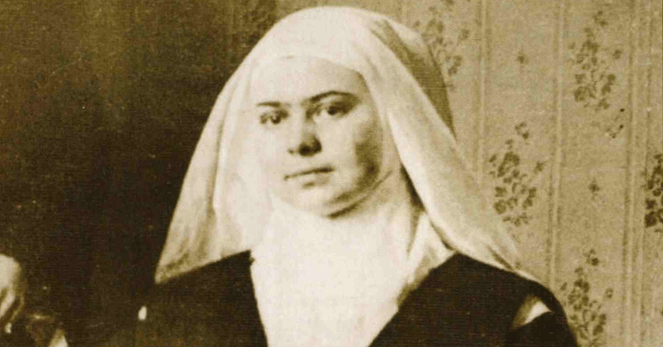
Quote of the day, 25 December: St. Edith Stein

We know not, and we should not ask before the time, where our earthly way will lead us. We know only this, that to those that love the Lord all things will work together to the good, and, further, that the ways by which the Saviour leads us point beyond this earth.

It is truly a marvellous exchange: the Creator of mankind, taking a body, gives us His Godhead. The Redeemer has come into the world to do this wonderful work. God became man, so that men might become children of God. One of us had broken the bond that made us God’s children; one of us had to tie it again and pay the ransom. This could not be done by one who came from the old, wild and diseased trunk; a new branch, healthy and noble, had to be grafted into it.

He became one of us, more than this, He became one with us. For this is the marvellous thing about the human race, that we are all one. If it were otherwise, if we were all autonomous individuals, living beside each other quite free and independent, the fall of the one could not have resulted in the fall of all. In that case, on the other hand, the ransom might have been paid for and imputed to us, but His justice could not have passed on to the sinners; no justification would have been possible.

But He came to be one mysterious Body with us: He our Head, we His members. If we place our hands into the hands of the divine Child, if we say our Yes to His Follow Me, then we are His, and the way is free for His divine Life to flow into us.

This is the beginning of eternal life in us. It is not yet the beatific vision in the light of glory; it is still the darkness of faith; but it is no longer of this world, it means living in the kingdom of God. This kingdom began on earth when the blessed Virgin spoke her “Be it unto me”, and she was its first handmaid.

And all those who have confessed the Child by word and deed before and after His birth, St. Joseph, St. Elizabeth with her son, and all those surrounding the crib, have entered the kingdom of God. The reign of the divine King showed itself to be different from what people had expected it to be when they read the Psalms and the Prophets. The Romans remained masters in the land; high priests and scribes continued to oppress the poor.

Those who belonged to the Lord bore their kingdom of heaven invisibly within them. Their earthly burden was not taken away from them; on the contrary, many another was added to it; but within them there was a winged power that made the yoke sweet and the burden light.

The same happens today with every child of God. The divine life that is kindled in the soul is the light that has come into the darkness, the miracle of the Holy Night. If we have it in us, we understand what is meant when men speak about it. For the others, everything that can be said of it is an incomprehensible stammering. The whole Gospel of St. John is such a stammering about the eternal light that is love and life.

God in us and we in Him, this is our share in God’s kingdom, which is founded on the Incarnation.

Saint Edith Stein

The Mystery of Christmas (1931 lecture), “Union With God”

Stein, E 1931, The mystery of Christmas: incarnation and humanity, translated from the German by Rucker, J, Darlington Carmel, Darlington UK.

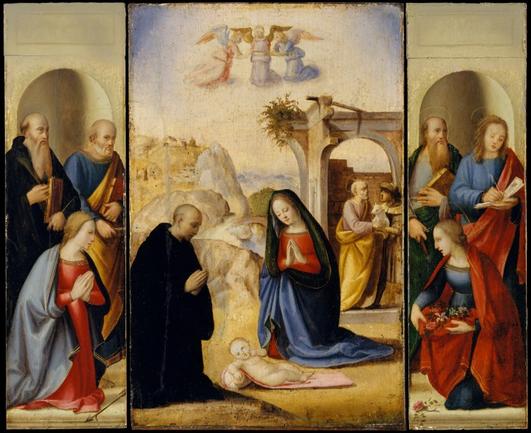
Featured image: The Nativity With Saints, Ridolfo Ghirlandaio (Italian, 1483–1561), oil on wood panel painting ca. 1514. Image credit: Metropolitan Museum of Art, New York (Public domain).

#Christmas #divineChild #incarnation #kingdomOfHeaven #StEdithStein

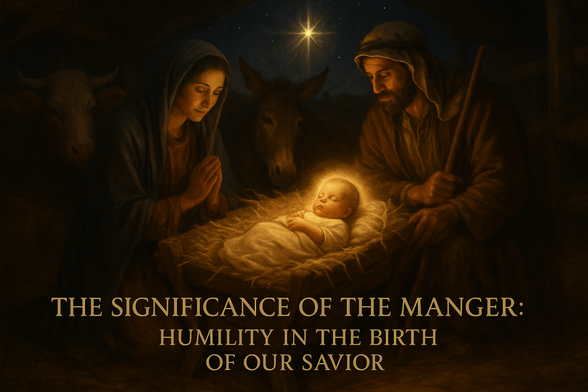
The Significance of the Manger: How Christ’s Humble Birth Shapes a Man’s Strength and Leadership

1,444 words, 8 minutes read time

I want to take you back to Bethlehem, the quiet town, the Roman census rolling through, the air thick with expectation and tension. Picture a young couple arriving late at night, streets bustling with shepherds, travelers, and the faint glimmer of torchlight flickering on stone walls. There is no royal palace, no grand fanfare, no ceremonial welcome. Instead, a stable—a place for animals—is their sanctuary. And in that lowly manger, wrapped in swaddling clothes, lies the King of kings.

This is the scene that defines humility at its most radical. The birth of Jesus wasn’t just a story to warm hearts at Christmas; it was the blueprint of God’s upside-down kingdom values, a blueprint for every man called to lead with strength, courage, and integrity. Humility, service, and courage in obscurity—these are not soft virtues; they are the hallmarks of true leadership.

In this study, we’ll explore three pillars emerging from the manger that shape a man’s character. First, humility before God: why the King chose the lowliest place to enter the world and what that means for us. Second, leadership through service: how Jesus’ life demonstrates strength under submission. Third, courage in obscurity: thriving faithfully when no one is watching. By the end, you won’t just see a story of a baby in a trough—you’ll understand a call to embody a life of resilient, humble strength.

Humility Before God: Lessons from the Manger

The Greek word used for “manger” in Luke 2:7 is phatnē, a simple feeding trough for animals. It’s not glamorous. It’s not the kind of place a man imagines for a king’s birth. And yet, this is where God chose to plant His Son. This choice wasn’t random; it was deliberate theology in action, showing that God values humility over pomp, service over status.

Bethlehem at the time was under Roman occupation. The Jews longed for a Messiah who would sweep in with armies and crowns, a conqueror to restore their pride and sovereignty. But God’s Messiah came quietly, unarmed, dependent, and vulnerable. The King who commands angels chose the lowliest of entry points, signaling that true power is often hidden under weakness.

For men today, humility before God is not about groveling or self-deprecation; it’s about recognizing our place in the grand scheme of life and aligning our strength under God’s authority. It’s about showing up as you are, stripped of pretense, ready to follow rather than dominate. Think of it as the foundation of a building: invisible but crucial. A man who refuses to kneel in humility may boast outward power, but without that grounding, the whole structure risks collapse.

Here’s a truth I’ve had to wrestle with personally: humility doesn’t mean you are weak. It means you are aware of what you can and cannot control, and you are willing to carry responsibility with integrity. It’s like showing up to the battlefield with nothing but a trusted blade—no armor, no pomp, just readiness to serve. That’s the heart of a man shaped by the manger.

Leadership Through Service: Strength in Submission

When you look at the manger, you see more than a scene of humility; you see a model of servant-leadership. Philippians 2:5–8 frames this perfectly: Christ, though in the form of God, did not grasp at status. He emptied Himself, taking the form of a servant. This is leadership that wins not through intimidation but through example, commitment, and sacrifice.

Worldly power often equates leadership with control, title, or recognition. But God’s standard is different. True leadership is lifting others, absorbing the strain, making the hard choices without applause, and guiding people with a heart of service. For men, this applies across every arena—family, workplace, community. The strongest men I’ve known lead quietly, consistently, and sacrificially. They don’t need a throne; they need character.

Consider the metaphor of a yoke. A man’s strength is measured by how well he can bear the yoke—responsibilities, burdens, and trials—without complaint. Jesus’ birth in a lowly manger prefigures the ultimate act of leadership: carrying the cross for the world. In your own life, you may not face crucifixion, but every act of leadership is a chance to serve with courage, humility, and vision. This is the marrow of masculine strength.

And here’s the kicker: service-driven leadership doesn’t just bless others; it refines you. It teaches patience, self-control, and endurance. It forces you to operate in alignment with truth rather than ego. Jesus’ life started in a manger and ended on a cross, a testament that leadership is forged in quiet, humble service, not public accolades.

Courage in Obscurity: Faithful Work When No One’s Watching

There’s a raw courage in the manger that often gets overlooked. No one expected God to enter the world this way. No crowds, no coronation, no pomp. Just a couple of parents, some animals, and a feeding trough. The first Christmas is a story of working faithfully in obscurity, trusting God even when recognition is absent.

Life as a man of integrity often mirrors that scene. Most of the work that shapes character is unseen: the quiet discipline at the gym, the late nights working to provide for family, the decisions made when no one is watching. The courage to persist without immediate reward is exactly what the manger teaches.

Biblically, God frequently works through hidden, humble circumstances. Joseph, David, and even Paul had seasons where their faithfulness was invisible. Men are called to the same quiet bravery—faithfulness not measured by applause, but by steadfastness under pressure. Strength in obscurity is the kind that lasts, the kind that shapes generations.

A metaphor I’ve lived by: real men are forged in the grind. You don’t become steel in the spotlight; you become steel in the heat of daily struggle, in rooms no one sees, in choices no one notices. The manger tells us: God honors that kind of courage, and it’s the foundation of enduring manhood.

Conclusion

The manger is more than a Christmas story. It is a blueprint for men striving to embody humility, leadership, and courage. Christ’s birth calls us to a strength that is rooted in humility, a leadership measured by service, and a courage defined by faithfulness rather than recognition.

We’ve seen three pillars here: humility before God, leadership through service, and courage in obscurity. Each one challenges men to measure strength not by status or applause but by character, perseverance, and faithful obedience. The manger doesn’t just whisper; it calls us to build lives of lasting integrity.

So, ask yourself: Where are you seeking recognition instead of doing the work? Where are you carrying burdens without leaning into humility and service? Where is your courage tested in the quiet spaces of life? The wood of the manger still speaks. Let it teach you to be strong, faithful, and humble. Let it shape you into a man who leads not with ego, but with purpose and conviction.

If this message resonated, I invite you to join the conversation: leave a comment, share your reflections, or subscribe to continue growing as a man of faith, courage, and integrity. The path won’t be easy, but as the manger teaches, greatness in God’s kingdom begins in humility.

Call to Action

If this post sparked your creativity, don’t just scroll past. Join the community of makers and tinkerers—people turning ideas into reality with 3D printing. Subscribe for more 3D printing guides and projects, drop a comment sharing what you’re printing, or reach out and tell me about your latest project. Let’s build together.

D. Bryan King

Sources

Disclaimer:

The views and opinions expressed in this post are solely those of the author. The information provided is based on personal research, experience, and understanding of the subject matter at the time of writing. Readers should consult relevant experts or authorities for specific guidance related to their unique situations.

Related Posts

#AdventStudy #Bethlehem #biblicalApplication #biblicalCourage #biblicalExample #biblicalHumility #biblicalPrinciplesForMen #BiblicalReflection #biblicalStudyForMen #birthOfJesus #characterFormation #ChristCenteredLife #ChristLikeHumility #ChristSBirth #ChristSHumility #ChristSMission #ChristianDiscipleship #ChristianMasculinity #ChristianMentorship #ChristianReflection #Christology #courage #dailyDiscipline #divineExample #faithInAction #faithBasedLiving #faithfulness #godlyCourage #godlyManhood #humbleLeadership #humility #humilityInLeadership #incarnation #integrity #kingdomValues #Leadership #leadershipPrinciples #lifeLessonsFromJesus #livingWithIntegrity #Luke2 #manger #manhood #masculineFaith #modernMan #moralCourage #obedience #perseverance #personalTransformation #practicalTheology #quietBravery #responsibility #servantLeadership #servantHeartedLeadership #spiritualDiscipline #SpiritualGrowth #spiritualObedience #spiritualStrength #spiritualWisdom #strengthThroughService #swaddlingClothes #unseenWork

Cradled Power, Gentle Salvation

As the Day Begins

The mystery of the Christian faith does not begin with thunder but with tenderness. It opens not with a sword raised in judgment but with a child wrapped in cloth and laid in a feeding trough. Isaiah’s portrait of the Servant of the Lord prepares us for this unsettling reversal of expectations: “Here is my servant, whom I uphold, my chosen one in whom I delight… A bruised reed he will not break, and a smoldering wick he will not snuff out” (Isaiah 42:1–3). Matthew recognizes in Jesus the fulfillment of this promise, emphasizing that He does not quarrel, cry out, or crush the weak (Matthew 12:18–20). Paul presses the point further by drawing our eyes to the inner posture of Christ Himself, who “did not consider equality with God something to be used to his own advantage; rather, he made himself nothing” (Philippians 2:6–7). The Greek term Paul uses, kenōsis (κένωσις), speaks of a self-emptying—not the loss of divinity, but the deliberate refusal to wield divine power for domination.

Bernard of Clairvaux’s reflection captures this beautifully. The weakness of the infant Christ is not a disguise but a revelation. God chooses vulnerability as His first language to humanity because terror never heals the heart. An infant’s cry awakens compassion, not resistance. In a world conditioned to associate power with control, speed, and force, God introduces Himself through dependence, patience, and restraint. The Hebrew word Isaiah uses for “bruised,” rātsûts (רָצוּץ), conveys something crushed but not beyond hope. The Servant’s mission is not to finish the breaking but to restore what is already damaged. This reframes how we interpret both divine authority and human weakness. Weakness, in God’s economy, is not failure; it is often the chosen doorway of grace.

This truth speaks directly into the rhythms of ordinary life. Pride tells us to present ourselves as strong, composed, and self-sufficient. Christ meets us by doing the opposite. He enters history as one who must be held, fed, and protected. The incarnation confronts our assumptions about what salvation should look like. As theologian N.T. Wright has observed, God defeats evil not by mirroring its violence but by absorbing it and exhausting it through love. Jesus does not come to bind humanity tighter under fear but to unbind us from it altogether. When we carry this vision into the day ahead, we begin to treat fragility—our own and that of others—not as an embarrassment but as sacred ground where God is already at work.

Triune Prayer

Heavenly Father, I begin this day mindful that You chose gentleness as the vessel of Your saving work. I thank You that You do not overwhelm me with fear or coerce me into obedience, but patiently draw me through mercy. You see the bruised places in my heart, the areas where disappointment, pride, or exhaustion have left me fragile. Teach me today to trust Your way rather than my instincts for control. Shape my decisions so they reflect Your compassion, and help me remember that Your strength is most clearly revealed when I rely on You rather than myself.

Jesus the Son, I give thanks that You willingly embraced humility for my sake. You entered our world not as a conqueror demanding allegiance, but as a servant offering Yourself. Your life reminds me that power exercised without love destroys, but power surrendered in love redeems. As I move through my responsibilities today, guard me from arrogance and impatience. Let Your example guide my words, my reactions, and my ambitions. When I am tempted to prove myself, remind me that You chose faithfulness over recognition and obedience over applause.

Holy Spirit, I invite You to shape my inner life today. Quiet the restless need to appear strong and replace it with a settled confidence in God’s presence. Help me discern where gentleness is required, where silence is wiser than argument, and where humility opens doors that force never could. Strengthen me to walk attentively, noticing those whose bruised reeds are close to breaking. Empower me to reflect Christ’s restraint and mercy so that my life becomes a living testimony to His saving work.

Thought for the Day

Carry Christ’s gentleness into every encounter today, trusting that humility guided by love accomplishes more than strength driven by pride. Thank you for beginning your day in God’s presence.

For further reflection on Christ’s humility and the meaning of the incarnation, see this article from The Gospel Coalition:
https://www.thegospelcoalition.org/article/meaning-of-christs-humility/

FEEL FREE TO COMMENT, SUBSCRIBE, AND REPOST, SO OTHERS MAY KNOW


#ChristianDevotion #humilityOfChrist #incarnation #ServantOfTheLord #weaknessAndStrength

As we encounter Jesus, it is crucial that we aren't just encountering a spokesperson, because a spokesperson is frequently powerless to solve any meaningful problem. And we have those. So, let's think about who Jesus really is... https://youtube.com/live/jFvDmeObuMg

#Christianity #Salvation #Christmas #Advent #Incarnation #Theology

A Knowable Name (December 22, 2025)

YouTube

When the Word Draws Near to Rest the Soul

As the Day Ends

As evening settles and the noise of the day recedes, Advent invites us into a quieter posture of wonder. This sacred season does not rush us past mystery; it asks us to dwell within it. John’s Gospel opens that mystery with words that are both majestic and intimate: “In the beginning was the Word, and the Word was with God, and the Word was God” (John 1:1). As the day ends, these words do not merely inform our theology; they steady our hearts. The One who existed before time has entered time. The eternal has drawn near, not to overwhelm us, but to meet us where we are—tired, reflective, and longing for rest.

Leo the Great gives voice to this holy paradox when he writes that the Word, co-eternal and co-equal with the Father, took our humble nature into union with His Godhead. This is Advent’s quiet miracle. “The Word became flesh and dwelt among us” (John 1:14). The Greek verb eskēnōsen—“dwelt” or “tabernacled”—evokes God pitching His tent among His people. As night falls, this truth reassures us that God is not distant from the ordinary contours of human life. He knows weariness. He understands limitation. He enters darkness not to condemn it, but to illumine it with mercy and truth.

John tells us that in Him was life, and that life was the light of all people. “The light shines in the darkness, and the darkness has not overcome it” (John 1:5). Evening can sometimes feel like a reckoning, a time when unfinished tasks and unspoken regrets surface. Advent does not deny those shadows, but it insists they are not final. The Light that comes in Christ is not fragile. It is resilient, steady, and victorious. Even as the day ends, the Light remains. This is not optimism; it is incarnation. Mercy has descended to sinners. Truth has come to those who wander. Life has entered places that feel spent and depleted.

Jesus later declares, “I am the way, and the truth, and the life” (John 14:6). As we prepare for rest, this statement gently reorients us. Our worth is not measured by productivity. Our peace is not earned by completion. The Way holds us when paths feel unclear. The Truth steadies us when emotions distort perspective. The Life sustains us when strength is gone. Union with Christ means we do not lay ourselves down alone. We rest within the care of the One who is fully God and fully human, born God of God and Man of man, carrying us through the night and into His promised dawn.


Triune Prayer

Heavenly Father, as this day comes to a close, I pause in gratitude before You. You are the source of all that has been good today, even when I failed to notice it in the moment. I bring You the fullness of this day—the accomplishments and the disappointments, the words spoken wisely and the words I wish I could reclaim. You know the weight I carry, both visible and hidden. In this quiet hour, I release it into Your care. Forgive me where I have trusted myself more than You, where impatience has crowded out faith, and where fear has spoken louder than hope. Thank You for Your mercy that does not diminish at nightfall. As I rest, remind me that Your love does not depend on my performance. Hold me in Your peace and grant my soul the assurance that I belong to You.

Jesus the Son, Word made flesh, I thank You for drawing near to humanity and to me. You entered our world not from a distance but from within, sharing our weakness without sharing our sin. As this day ends, I reflect on Your truth and how often I resist it when it challenges my comfort. I confess my need for Your grace, for I cannot navigate life rightly apart from You. Thank You for being the Way when I feel uncertain, the Truth when I am confused, and the Life when I am weary. Tonight, I rest not in answers but in Your presence. Teach me to trust You more deeply, to surrender what I cannot control, and to believe that Your light is still at work even when I cannot see it.

Holy Spirit, gentle Comforter, I welcome Your quiet work as I prepare for rest. You have been present throughout this day, guiding, restraining, and encouraging me, even when I was unaware. I ask You now to search my heart with kindness, revealing anything that needs healing or release. Calm my thoughts where they race and soften my spirit where it has grown tense. Breathe peace into places still unsettled within me. As I sleep, guard my mind and renew my strength. Shape my inner life so that tomorrow I may walk more attentively with Christ. Thank You for remaining with me through the night, faithfully drawing me into deeper communion with God.


Thought for the Evening

As the day ends, rest in this truth: the Word who was with God and was God has drawn near to you, and His light does not fade with the night.

Thank you for your service to the Lord’s work today and every day. May your rest be filled with His peace.

For further reflection on the Incarnation and the meaning of Christ’s coming, see “The Wonder of the Incarnation” from Desiring God:
https://www.desiringgod.org/articles/the-wonder-of-the-incarnation

FEEL FREE TO COMMENT, SUBSCRIBE, AND REPOST, SO OTHERS MAY KNOW


#AdventDevotional #DivinityAndHumanityOfJesus #eveningPrayer #incarnation #UnionWithChrist

Emmanuel Still With Us, Even Now

As the Day Ends

As Advent draws our attention toward the mystery of God with us, evening becomes a fitting hour to linger over what that truth truly means. Isaiah’s promise, “The virgin will conceive and give birth to a son, and will call him Immanuel” (Isaiah 7:14), is not only a prophecy fulfilled in Bethlehem; it is a reality that stretches into heaven itself. Matthew reminds us that Immanuel means “God with us” (Matthew 1:23), but Richard Sibbes presses the insight further: God with us did not end at the manger, nor even at the cross or the empty tomb. God with us continues because God in our nature is forever in heaven. As the day ends, this truth invites deep rest for the soul.

Hebrews 4:14–16 draws our gaze upward: “Since then we have a great high priest who has passed through the heavens, Jesus, the Son of God, let us hold fast our confession.” Jesus did not discard His humanity when He ascended. He carried it with Him. The incarnate Son now stands before the Father as our representative, our intercessor, our advocate. Advent teaches us that the humanity Christ assumed was not temporary clothing but an eternal union. God did not merely visit our condition; He joined it forever. That means our weakness, our fatigue, and even our failures are known from the inside by the One who reigns in heaven.

As evening settles in, this is not abstract theology; it is personal comfort. Hebrews 7:25 assures us that Jesus “always lives to intercede” for those who come to God through Him. When the day has exposed our limits, when our words were imperfect and our efforts incomplete, Christ’s intercession does not waver. Sibbes’ language is tender and deliberate: our Brother is in heaven, our Husband is in heaven. These relational images remind us that salvation is not merely legal standing; it is enduring communion. There is no fear of a breach, no looming fracture in the relationship between God and us, because the bond is preserved by Christ Himself.

Advent evenings are meant for this kind of reflection. We wait for the celebration of Christ’s birth while resting in the assurance of His present ministry. The child born into our nature now carries that same nature into glory. Heaven is not distant from human experience; humanity is already there, seated at the right hand of God in the person of Jesus Christ. As the day ends, we are invited to entrust everything unfinished, unresolved, and unspoken into the care of One who knows us completely and represents us faithfully.

Triune Prayer

Heavenly Father, as this day comes to its close, I come before You with gratitude and honesty. I thank You that You are not a distant God, but One who has drawn near and remains near. You sent Your Son not only to rescue me but to unite me to Yourself forever. I confess that I often carry anxiety into the evening, replaying conversations, questioning decisions, and measuring my worth by today’s outcomes. Tonight, I lay those burdens before You. Teach me to rest in Your steadfast purpose and to trust that Your love does not rise or fall with my performance. As I prepare for sleep, quiet my thoughts and anchor my heart in the assurance that I belong to You.

Jesus the Son, I thank You that You took on my nature and have carried it into heaven. You know weariness, disappointment, and sorrow from within. You also know obedience, trust, and joy lived out in human flesh. As my great High Priest, You intercede for me even now. I confess the moments today when I failed to reflect Your love clearly or relied too heavily on my own strength. Thank You that my standing before the Father does not depend on my consistency, but on Yours. As night falls, I rest in the truth that You are awake on my behalf, preserving an unbreakable union between God and me.

Holy Spirit, I welcome Your gentle work as this day ends. Search my heart with kindness, bringing to light anything that needs confession or healing, not to trouble my rest but to deepen it. Remind me of the promises I have heard today and press them into my spirit as I sleep. Where my soul feels unsettled, speak peace. Where my faith feels thin, strengthen it quietly. Prepare me for tomorrow by renewing my inner life tonight, so that I may rise again mindful of Emmanuel—God with us, God in us, and God for us.

Thought for the Evening

Rest tonight in the assurance that your humanity is already represented in heaven, and nothing can separate you from the God who has joined Himself to you forever.

Thank you for your service to the Lord’s work today and every day. May your rest be deep and your hope secure as you sleep in His care.

For further reflection, you may find this article helpful:
https://www.desiringgod.org/articles/why-the-incarnation-never-ends

FEEL FREE TO COMMENT, SUBSCRIBE, AND REPOST, SO OTHERS MAY KNOW


#AdventDevotional #emmanuel #eveningPrayer #incarnation #JesusOurHighPriest #UnionWithChrist

Justice Satisfied, Mercy Released

The Cost of Love Revealed

As the Day Begins

The gospel dares to say something unsettling and yet deeply consoling: God did not set aside His justice in order to save us; He fulfilled it. In Romans 3:25, Paul writes that “God presented Christ as a sacrifice of atonement, through the shedding of his blood—to be received by faith. He did this to demonstrate his righteousness.” The Greek word Paul uses, hilastērion, carries the sense of a mercy seat, the place where wrath is not denied but met, where justice is not ignored but satisfied. God’s glory shines not in bypassing judgment but in bearing it Himself. The cross, therefore, is not divine leniency; it is divine fidelity to righteousness expressed through sacrificial love.

Ezekiel Hopkins captures this tension when he argues that God was more glorified in justice by sending His Son than by condemning all humanity. This assertion forces us to reconsider how we understand wrath. Scripture does not portray the wrath of God as impulsive anger but as His settled, holy opposition to sin. In 1 John 2:2 we read, “He is the atoning sacrifice for our sins, and not only for ours but also for the sins of the whole world.” The Greek term hilasmos emphasizes appeasement—not of a capricious deity, but of a just God whose moral order cannot be violated without consequence. Justice demanded satisfaction; love provided the offering.

Hebrews 10:5 draws us into the mystery of the incarnation with startling intimacy: “Therefore, when Christ came into the world, he said: ‘Sacrifice and offering you did not desire, but a body you prepared for me.’” The Son did not merely appear human; He assumed flesh fully. The humanity of Jesus is essential here. Justice could not be satisfied by animal sacrifice or symbolic gesture. It required obedience, suffering, and death lived out in real human vulnerability. The Son entered our condition so completely that divine justice could be fulfilled from within humanity rather than imposed upon it from above.

This reframes how we walk into the day ahead. If justice has been honored at such cost, then our lives are no longer driven by fear of punishment but by reverent gratitude. As 1 John 4:10 reminds us, “This is love: not that we loved God, but that he loved us and sent his Son as an atoning sacrifice for our sins.” Love did not emerge because wrath disappeared; love triumphed because justice was met. The cross stands as both warning and welcome—sin is serious, yet mercy is stronger. To begin the day under this truth is to live soberly, humbly, and confidently before God.

Triune Prayer

Heavenly Father, as this day begins, I come before You mindful of Your holiness and Your unwavering commitment to justice. I thank You that You did not compromise Your righteousness to rescue me, nor turn away from the moral weight of sin. Instead, You revealed the depth of Your character by providing what Your justice required. Teach me today to honor You not casually, but reverently, remembering that grace is costly and obedience matters. Shape my decisions so they reflect gratitude rather than entitlement, and help me walk in a manner worthy of the mercy I have received.

Jesus the Son, I thank You for taking on flesh, for entering fully into the human story with all its pain, limitation, and sorrow. You offered Yourself willingly, “without blemish,” fulfilling what no other sacrifice could accomplish. As I move through this day, help me to live in the freedom You secured, not returning to guilt that You have already borne. Let Your obedience inspire my own, Your humility guide my posture, and Your love define my interactions with others. I receive again the gift of Your sacrifice with awe and trust.

Holy Spirit, I invite You to make the reality of the cross active within me today. Illuminate my understanding so that justice and mercy are not abstract ideas but lived truths shaping my conduct and conscience. Convict me where I drift toward self-justification or indifference to sin, and strengthen me to walk in holiness empowered by grace. Guide my thoughts, words, and actions so that they bear witness to the redeeming work You continually apply in my life. Keep me attentive to Your voice as You form Christ within me.

Thought for the Day

Because God’s justice has been fully satisfied in Christ, I am free to live today not under fear, but under grateful obedience shaped by love.

Thank you for beginning your day in God’s presence. May this truth steady your heart and guide your steps.

For further reflection, consider reading a related article on the atonement at Desiring God:
https://www.desiringgod.org/articles/what-happened-on-the-cross

FEEL FREE TO COMMENT, SUBSCRIBE, AND REPOST, SO OTHERS MAY KNOW


#atonement #incarnation #JusticeOfGod #Romans325 #SacrificeOfChrist #WrathAndMercy

We need something that lasts, not just a temporary banner of God's love. Fortunately, that's exactly what God provides for us. https://youtube.com/live/C_mAZjSrdu8

#Christianity #Advent #Incarnation #Revelation #Jesus

The Spirit of Christmas isn't a Spirit Store (December 15, 2025)

YouTube
Don’t be afraid

The Bible talks a lot about fear and being afraid. I read somewhere that that specific phrase — “Don’t be afraid” — appears about 70 times in scripture. That’s a lot. I know there are many other va…

The OW Factor

Christ in the Cradle

The Holiness of Every Child

As the Day Begins

Luke 2:7; 2 Corinthians 9:15

As the morning light rises, we remember that the Child laid in a manger is the clearest revelation of God’s gift to the world. In Jesus Christ, God entered our humanity not as a mighty warrior, not as a philosopher, but as a baby. And in doing so, He sanctified childhood itself. Today’s meditation invites us to consider how the incarnation reshaped the world’s understanding of children, joy, and the holiness of every beginning.

Christian tradition has long recognized that wherever Christ is received, childhood becomes treasured. In lands shaped by the gospel, parents instinctively cherish their children differently than in the ancient world, where infanticide was common and where poets seldom drew meaning from childhood innocence. But the birth of Jesus changed everything. He was “God’s unspeakable gift,” yet He arrived as an infant. Through His infancy, He dignified every baby who would ever be born. A baby is holy because of Him. And childhood is joyful because He walked through every stage of human development—infancy, boyhood, and the fullness of adulthood.

This is why every Christian child instinctively celebrates Christmas with a special kind of happiness. Even when they do not yet understand theology, their joy reflects the joy that burst into the world the night Christ was born. And as we grow older, we never outgrow the comfort embedded in His story. Every boy can know that Jesus understands his heart, his questions, and his growth. Every girl can know the same, because in His perfect humanity, He embraced the fullness of human experience. No woman feels unseen by Jesus; likewise, no girl needs to fear that He cannot understand her simply because He was born a boy. He is the Messiah who entered childhood so that He might redeem it—and in doing so, He placed a blessing over every cradle and every stage of our lives.

As you begin your day, consider the grace of God expressed in smallness, vulnerability, and simplicity. Jesus does not begin His story with majesty but with meekness. This truth invites us to embrace the small holy moments of our own lives—the quiet acts of kindness, the unnoticed sacrifices, the tenderness we show to the weak. If the Savior of the world began His mission in swaddling cloths, then no act of love offered today is too small to be holy.

Let this truth settle deeply: God gives Himself not only in glory but also in the quiet gift of a Child. Every time we honor children, protect them, teach them, and bless them, we echo the heart of the God who once lay in Mary’s arms. And every time we welcome the childlike posture of trust and wonder into our own hearts, we align ourselves with the One who said, “Let the little children come to Me.” Today, may the holiness of Christ’s infancy shape how you live, speak, and see the world around you.


Triune Prayer

Father,
As I enter this new day, I thank You for the gift of life and for the holy mystery that You revealed in the birth of Your Son. You chose humility as the doorway of salvation, and through the Child in the manger, You taught us the value of tenderness, innocence, and new beginnings. Father, help me to see every person—especially the smallest and most fragile—as a reflection of Your heart. Grant me the grace to cherish what You cherish and to honor the sacredness You place upon every human life. I ask for wisdom to walk gently and faithfully in the path You set before me.

Jesus the Son,
I thank You for entering our world not as a king enthroned but as a baby held. Your infancy brings comfort to every child and encouragement to every adult who longs to be known and understood. You sanctified childhood by living it Yourself. Today, let Your compassion shape my words, let Your humility guide my actions, and let Your understanding teach me how to love those around me. Remind me that You recognize every emotion, every struggle, and every hope I carry, because You lived our human life from its very first breath.

Holy Spirit,
I open my heart to Your presence as the day begins. Breathe into me a renewed sense of wonder and gratitude for the gifts God has placed in my life. Empower me to reflect the holiness of Christ in all things—whether in encouraging a child, showing patience when it is difficult, or walking into moments that require both strength and gentleness. Shape my spirit so that I may embody the childlike trust Jesus praised and the maturity He modeled. Lead me into a day marked by compassion, clarity, and courage to live out the gospel in the small and quiet ways that honor the heart of Christ.


Thought for the Day

Honor the holiness of every child and every small beginning, for Christ Himself began small and made childhood sacred.

Thank you for beginning your day in God’s presence.

For deeper reflection on the incarnation and Christian faith, consider reading this article from The Gospel Coalition:
https://www.thegospelcoalition.org/articles/why-god-became-a-baby/

FEEL FREE TO COMMENT, SUBSCRIBE, AND REPOST, SO OTHERS MAY KNOW


#birthOfJesus #childhoodAndFaith #ChristianParenting #incarnation #morningDevotional