
New #ISEPpapers! Description and prevalence of #gregarines infecting the amphipod #Gammarus pulex, in the Water of Leith, Scotland, UK https://www.sciencedirect.com/science/article/pii/S0932473924000348 #protists #microbes #parasites #amphipods
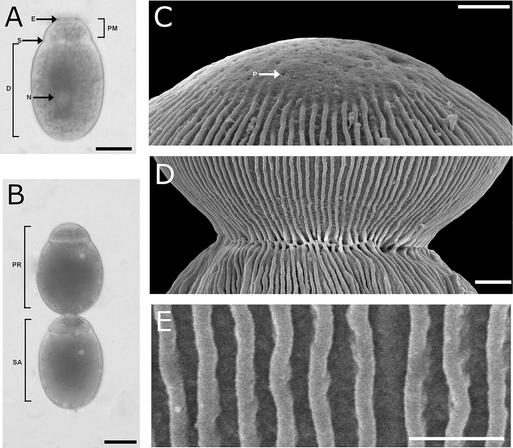
Description and prevalence of gregarines infecting the amphipod Gammarus pulex, in the Water of Leith, Scotland, UK

Gregarines are symbiotic protists that are found in a broad spectrum of invertebrates, including insects, crustaceans, and annelids. Among these the g…

Result of a couple of #biodiversity #FieldDays: hidden gems of streams visited; #amphipods sampled and identified (#Gammarus rules the world, at least the one I visited...); distribution records added and expanding knowledge on πŸ‡¨πŸ‡­ fauna; reviving my old passion for taxidermy with a cool find of a skull (guess what?).
Very satisfying indeed.

My Boxing Day tradition: do some field work in winter with my son to see some #biodiversity.

Warm weather and no snow made us look for #amphipods in #streams up to 1000 m a.s.l., adding records to the distribution of #aquatic organisms in πŸ‡¨πŸ‡­. Saw lots of #EPT & #Gammarus, and had a fun day out.

Goal for 2023: resolve the Swiss distribution of the G. fossarum complex and its species/lineages A, B and C at fine scale and figure out where they overlap.


Puppet master: when parasites manipulate the behaviour of their hosts. Our new meta-analysis on the subject. Congratulation to Marion for this nice work. #science #biology #parasite #animalbehaviour #amphipod #gammarus
πŸ“„ Fayard et al(2020) Magnitude and direction of parasite-induced phenotypic alterations: a meta-analysis in acanthocephalans. Biological Reviews:brv.12606 http://dx.doi.org/10.1111/brv.12606
Congratulation to Christelle Couchoux: her master research project is published in the last issue of Animal Behaviour.
#science #biology #ecology #evolution #animalbehaviour #shrimp #gammarus #parasite #sperm
Couchoux et al. 2018. Male Gammarus roeseli provide smaller ejaculates to females infected with vertically transmitted microsporidian parasites. Animal Behaviour 137:179-185 https://www.sciencedirect.com/science/article/pii/S0003347218300228
Redirecting