I still think that #GrapheneOS should not chain themselves to a single vendor but rather release actual proper specs for support.

  • Otherwise we'll continue to see lazy ripoffs / rebadgings of their #ROM / #Android - #distro instead.

I also doubt that #Motorola will release any affordable device with @GrapheneOS support.

  • And I'm not even talking about their ≤€250 retail budget phones they neglect and refuse to update, but rather anything in the ≤ €500 price bracket.
    • Pretty shure only ≥ €1k devices will get any chance of that, making it even more classist.

And unlike @tails_live / @tails / #Tails dropping #32bit support amidst the fact that there are almost no #32bitOnly machines that can run it, I don't see the benefit of trusting into an unauditable blackbox of a "#SecurityChip".

  • I'm shure @stman could run entire semester-long classes at a university explaining why this blatant violation of #KerckhoffsPrinciple is irredeemably bad, but I digress…
GrapheneOS (@[email protected])

@[email protected] GrapheneOS has an official long term partnership with Motorola and will support many of their future devices, not one. It will support multiple new Motorola devices every year. We aren't lowering our security requirements but rather their devices are being improved to meet our requirements. The reason GrapheneOS won't support their currently available devices is because those don't meet our security requirements. Currently, only Pixels meet our requirements. https://grapheneos.social/@GrapheneOS/116159602850585685

GrapheneOS Mastodon
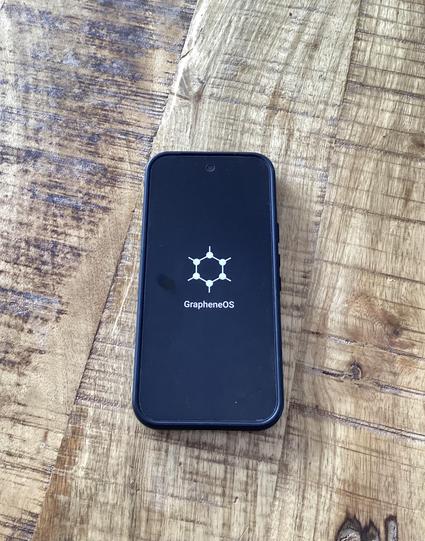
Installing GrapheneOS on the Pixel 6 was a success.

Easy to follow instructions on their website that worked, first time. I used the Web-based USB installer with the Brave browser.

https://grapheneos.org/

#GrapheneOS #Pixel
GrapheneOS: the private and secure mobile OS

GrapheneOS is a security and privacy focused mobile OS with Android app compatibility.

GrapheneOS
#grapheneos Habe ein google pixel vor einem Jahr damit beszückt, aber eines bekomme ich nicht hin: In einer App diktieren, das ist immer ausgegraut umd ich finde die Einstellung dafür nicht.
Weiß wer was?

Am listening to an older episode of QSO Today podcast, Episode 482 Ram Muthukrishnan VU2JXN, and they mention GrapheneOS!

#hamRadio
#QSOToday
#GrapheneOS

It's nice when multiple interests come together.

Are you considering OS's for your Android phone like #GrapheneOS or #lineageos to escape the #Android lock and #Google
spying?

The only tricky part is that GrapheneOS only supports Pixel phones while LineageOS supports a wider variety of vendors and phones but you may still need a generation or two down.

https://lineageos.org/

LineageOS – LineageOS Android Distribution

LineageOS Android Distribution

This is the way to do it: refuse to comply

GrapheneOS refuses to comply with new age verification laws for operating systems — group says it will never require personal information | Tom’s Hardware

https://www.tomshardware.com/software/operating-systems/grapheneos-refuses-to-comply-with-age-verification-laws

#Android #GrapheneOS #privacy

GrapheneOS refuses to comply with new age verification laws for operating systems — group says it will never require personal information

Doesn’t care if its devices can’t be sold in regions that require ID verification.

Tom's Hardware

RE: https://mstdn.plus/@privacynews/116280027113647393

what a piece of shit for real?! I didn't know about it at all pretty good for you all in #grapheneos but wait GNU/Linux distros are you thinking on it ? even a local API ??? it's clear that the main issue isn't internet, the origin of this and all the internet deformation is the governments worldwide - you're pushing us back to the cave ages

GrapheneOS will Altersverifikation nicht unterstützen.

In einigen Ländern und Regionen wird eine #Altersverifikation bei der Einrichtung eines Betriebssystems Pflicht. #GrapheneOS wird das ignorieren.

Das sichere Betriebssystem für Smartphones macht bei der #Altersverifikation nicht mit.

In einigen Ländern und Regionen wird eine #AgeVerification bei der Einrichtung eines Betriebssystems Pflicht. #GrapheneOS wird das ignorieren.
#Android #Pixel
https://www.linux-magazin.de/news/grapheneos-will-altersverifikation-nicht-unterstuetzen/?mc_cid=a40919e782&mc_eid=53157800ee#

GrapheneOS will Altersverifikation nicht unterstützen

In einigen Ländern und Regionen wird eine Altersverifikation bei der Einrichtung eines Betriebssystems Pflicht. GrapheneOS wird das ignorieren. Der Hersteller des Android-Forks GrapheneOS will geplante und bereits existierende Altersverifikationen bei der Einrichtung von Betriebssystemen ignorieren. Wie die GrapheneOS Foundation erklärt, werde man es akzeptieren, wenn aufgrund entsprechender Gesetze GrapheneOS-Geräte in bestimmten Märkten nicht verkauft werden könnten. GrapheneOS ist ein Android-Fork, der auf AOSP basiert und auf Datenschutz und Sicherheit ausgelegt ist. Dazu gehören die Möglichkeit des Sandboxings sowie Änderungen bei den Berechtigungen. „GrapheneOS wird weiterhin für jeden weltweit nutzbar sein, ohne dass persönliche Daten, eine Identifizierung oder ein Konto erforderlich sind“, erklärt die GrapheneOS Foundation. „Wenn GrapheneOS-Geräte aufgrund der geltenden Vorschriften in einer Region nicht verkauft werden dürfen, dann soll es so sein.“ Kooperation mit Motorola ist geplant Die GrapheneOS-Foundation verkauft selbst keine Smartphones, es gibt aber verschiedene Händler, die Geräte mit dem Betriebssystem anbieten. Kürzlich kündigten die Entwickler zudem eine Kooperation mit Motorola an, in deren Rahmen Motorola-Smartphones direkt mit GrapheneOS erscheinen sollen. Im US-Bundesstaat Kalifornien müssen Nutzer ab dem 1. Januar 2027 bei der Installation von Betriebssystemen ihr Alter angeben. Eine wirkliche Verifikation wird nicht stattfinden, das Alter wird aber weitergeleitet und etwa Entwicklern zur Verfügung gestellt. Bei der Installation von Apps könnte dann der Download blockiert werden, falls das Alter nicht passt. In Brasilien trat ein vergleichbares Gesetz am 17. März 2026 in Kraft. Die Strafen können bis zu zehn Prozent des Umsatzes eines Unternehmens in Brasilien betragen – oder 50 Millionen Real. Das sind umgerechnet über 8 Millionen Euro.   Dieser Artikel ist zuerst bei Golem.de erschienen.

Linux-Magazin