New assessment on
#Sucralose (E955)
Our experts concluded that sucralose continues to be safe for consumers at its currently authorised uses.
Experts could not confirm the safety of extending its use, especially with prolonged high temperatures.
🔗
link.europa.eu/kBXKJ3
#FoodAdditive #FoodSafetyEFSA finds sucralose safe when...
EFSA finds sucralose safe when used as currently authorised; cannot confirm safety of extending its use
EFSA’s experts concluded that the sweetener sucralose (E 955) continues to be safe for consumers for its currently authorised uses as a food additive.
Turmeric
Curcumin is inflammation’s worst enemy.
It:
• Blocks cytokines and COX-2
• Lowers C-reactive protein (CRP)
• Fights free radicals
#Turmeric #healthcare #Foodadditive #natural #organic #plantextractTartaric acid: A versatile intermediate for pharmaceutical
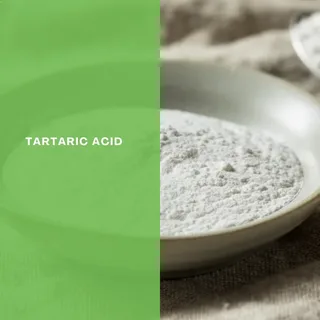
Tartaric acid is an important organic acid widely used in food and pharmaceutical industries. It is found naturally in many plant sources like grapes, tamarinds and bananas. Tartaric acid is colorless and water soluble and has a sour taste.
Tartaric Acid- https://logcla.com/blogs/514901/Tartaric-Acid-Properties-Uses-and-Applications
#CoherentMarketInsights #FoodAdditive #Acidulant #Winemaking #FoodPreservative

Tartaric Acid: Properties, Uses and Applications | LogCla.com
Tartaric acid is an organic acid that is particularly found in grapes and wines. It is one of the main acids present in wines, giving them their characteristic taste. Chemically known as ((2R,3R)-2,3-dihydroxybutanedioic acid), tartaric acid has the formula C4H6O6. It is one of the toughest acids...
Tartaric Acid: Properties and Applications
Tartaric acid is an organic acid that occurs naturally within grapes and other fruits. It's primarily used as an antioxidant and pH regulator in food and beverage production. In this article, we will explore the key properties and uses of this versatile acid.
Tartaric Acid- https://timessquarereporter.com/business/the-history-and-applications-of-tartaric-acid
#CoherentMarketInsights #FoodAdditive #AcidityRegulator #WineMaking #Antioxidant #OrganicAcid #FoodIngredient

The History and Applications of Tartaric Acid | Times Square Reporter
In herbal medicine, tartaric acid is used to make salts and improve the solubility of certain medicines.

A Common Food Additive May Be Messing With Your Brain
Emulsifiers are additives that help oil and water mix, making smoother food products. But they may carry a big downside for your gut.

PLS: Re-evaluation of erythritol (E 968) as a food additive
DisclaimerThis Plain Language Summary (PLS) is a simplified communication of EFSA Re-evaluation of erythritol (E 968) as a food additive. The full EFSA opinion can be found here.The purpose of the PLS is to enhance transparency and inform interested parties on EFSA’s work on the topic using simplified language to present a summary of the main findings.
50 years ago, it was plain that #BrominatedVegetableOil is not a safe #FoodAdditive. Britain banned it. Others followed. This week, @US_FDA got around to it. We need “a more nimble process for evaluating chemicals in the food supply,” says FDA.
They're right about that.
https://conscienhealth.org/2023/11/the-long-goodbye-to-brominated-vegetable-oil/

The Long Goodbye to Brominated Vegetable Oil - ConscienHealth
After half a century, FDA is finally winding up a long goodbye to brominated vegetable oil – a toxic ingredient in some citrus drinks.
📢🆕 We've updated our safety assessment of #CalciumCarbonate (E 170) when used as #FoodAdditive
No safety concerns associated with exposure to E 170 per se. However, intake of aluminium, which can be present as an impurity in E 170, represents a concern
https://europa.eu/!3rYHvP
🐦🔗: https://n.respublicae.eu/EFSA_EU/status/1684544865885884417

Re‐evaluation of calcium carbonate (E 170) as a food additive in foods for infants below 16 weeks of age and follow‐up of its re‐evaluation as food additive for uses in foods for all population groups
Calcium carbonate (E 170) was re‐evaluated in 2011 by the former EFSA Panel on Food Additives and Nutrient sources added to Food (ANS). As a follow‐up to this assessment, the Panel on Food Additives and Flavourings (FAF) was requested to assess the safety of calcium carbonate (E 170) for its uses as a food additive in food for infants below 16 weeks of age belonging to food category 13.1.5.1 (Dietary foods for infants for special medical purposes and special formulae for infants) and as carry over in line with Annex III, Part 5 Section B to Regulation (EC) No 1333/2008. In addition, the FAF...
Re #DYK #CalciumCarbonate is used as white food colour, anticaking agent or to regulate the acidity or alkalinity of foods such as fruit juices, pastes and preserves.
E 170 can also be used as a source of #calcium in different foods and food #supplements
#FoodAdditive
🐦🔗: https://n.respublicae.eu/EFSA_EU/status/1684544872273825792
EFSA (@EFSA_EU)
#DYK #CalciumCarbonate is used as white food colour, anticaking agent or to regulate the acidity or alkalinity of foods such as fruit juices, pastes and preserves.
E 170 can also be used as a source of #calcium in different foods and food #supplements
#FoodAdditive
EUR-Lex - 32023H0965 - EN - EUR-Lex
 European Food Safety Authority
 anderli
 prahicmi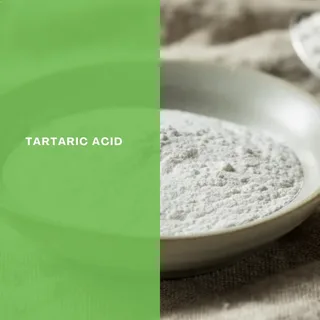
 Steve Dustcircle 🌹
 EFSA
EFSA ConscienHealth
 EUR-Lex