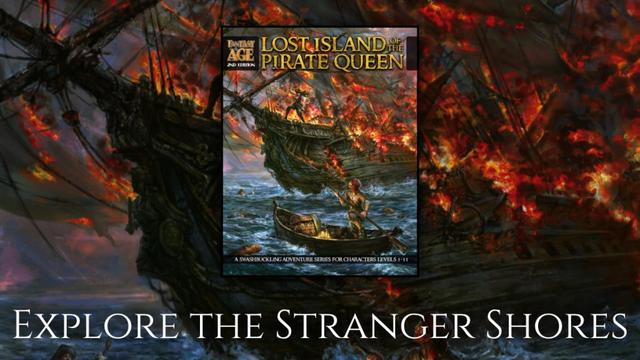
Lost Island of the Pirate Queen

Lost Island of the Pirate Queen is an adventure series for the Fantasy Age roleplaying game. It contains five adventures that will take heroes from 1st level to 11th level. It is set in the game’s default maritime setting for Fantasy Age’s Second Edition, Stranger Shores, and expands on the Breakwater Bay region described in the Core Book. I have not yet had a chance to run or play in the adventure, so this review is only based on reading it.

The book is described as a series of five adventures, but I think it’s more accurate to say it is one big adventure with five parts. Each chapter of it builds on the previous ones and it would be hard to jump into the later ones without first running the preceding chapters.

I’ll talk a bit about the five parts, but first I want to cover some general aspects so that anyone who wants to avoid spoilers can read a bit more before stopping.

One aspect of the book that I really appreciate is that it offers guidance on character creation for groups playing it. It provides a list of focuses and talents that will be useful during the adventure. Then it also introduces a set of legacies that can be taken by a character to provide both a drawback and an advantage. Only some of these legacies directly influence the adventure as written, but they all provide thematic links that a group could decide to lean into throughout it.

Another good choice in the book is having the stat blocks for characters and monsters collected in an Allies & Adversaries section rather than as they come up. Not having these inline might make it a bit harder to run the adventure without prep due to needing to flip back and forth, but overall I like the decision. AGE statblocks tend to be unwieldy in layout, and not having them inline with scene descriptions makes the adventure easier to read.

Taking place in the Stranger Shores setting and starting in Breakwater Bay means that this adventure fits in well with several other shorter adventures for the game. There is a sidebar with suggestions of how to incorporate Set Sail for Breakwater Bay (Fantasy AGE Core Rulebook), Terror of the Ghost Ship (Fantasy AGE Quickstart), and The Breakwater Curse (Fantasy AGE Game Master’s Toolkit) while running this adventure.

Spoiler Warning: I’m going to give overviews of the adventure’s five parts below, so if you want to avoid spoilers, you should skip the rest of this review.

For the first chapter, the characters are brought together thanks to a chance meeting with a dying man. Attempting to help him and one of his relatives will result in the characters exploring a dungeon, learning some of the main plot, and acquiring part of an important magical artifact.

The second chapter is focused on finding the other pieces of that artifact. The characters are able to follow leads in whichever order they want as they explore Kassa Island to either recover the pieces from dangerous situations or complete tasks so that their current owners will hand them over.

After collecting the completed artifact, or at least more of it, the characters are able to use it as a map for a sea journey in the third chapter. This uses a new set of rules for naval engagements so that you can play out battles between ships. It also includes some encounters with aquatic monsters, sea devils and sirens, and strange magic.

The fourth chapter picks up when the characters journey across the sea finishes and they are able to explore the lost island that the map was leading them to. As they search for the Pirate Queen’s treasure, they encounter dinosaurs, undead, and carnivorous merfolk. Then when they find the hoard, they also find a dragon that they need to deal with.

The final chapter picks up right after the dragon is dealt with. An ancient being trapped in the island confronts the characters and refuses to allow them to leave. The characters can try to negotiate their release, but then get a helping hand when their enemies approach the island in force. They then have a choice of whether to free the ancient being so that she can help them in the coming battle or to try to face off the undead pirate and monster attack by themselves. The best approach seems to be releasing the ancient being and forging an alliance with some of the pirates, but the adventure does try to support other choices even if they will be more difficult for the characters.

The adventure’s conclusion is meant to be a victory over the necromancer in command of the undead pirates. It is also written to leave a few loose ends that a group could use for follow on adventures. The ancient being might now be on the loose, and agents of an ancient empire might now focus on the characters as their enemies.

As I mentioned earlier, I have not seen the adventure in play yet either as a GM or player, but from reading through it, I like that it offers a range of scene types. A group will get a dungeon delve, open-ended island exploration, naval battles, and negotiations as they make progress through the adventure.

If the adventure sounds like something you’d be interested in, you can purchase a copy of Lost Island of the Pirate Queen from either of these stores:

#AGE #FantasyAge #LostIslandOfThePirateQueen

On the Blog
Worlds Enough: Archaea
A setting seed for any #fantasy #ttrpg
Inspired by Diablo and Indiana Jones.
#TalesOfTheValiant #dnd #5EFeed #GURPS #FantasyAge
https://www.ofgodsandgamemasters.com/blog/worlds-enough-archaea
Worlds Enough: Archaea — Of Gods and Gamemasters

Long ago, the Ancients built a vast empire, spanning the entire Archaean continent. They were masters of magic, especially magic contained in items, and they were particularly adept with spells of conjuring, of gates and portals. They created a network of gates connecting all their major settlements

Of Gods and Gamemasters
New on the website, a mini-blog.
Worlds Enough: Extorris, a setting seed.
#ttrpg #worldbuilding #gurps #FantasyAge
https://www.ofgodsandgamemasters.com/blog/worlds-enough-extorris
Worlds Enough: Extorris — Of Gods and Gamemasters

The world now called Extorris has always been the home of mankind. They had their start here, created or evolved. Near the dawn of human civilization, arcanists opened doors to other worlds, and other species came through. The elves, mostly friendly to man, sometimes reclusive, low in numbers and lo

Of Gods and Gamemasters
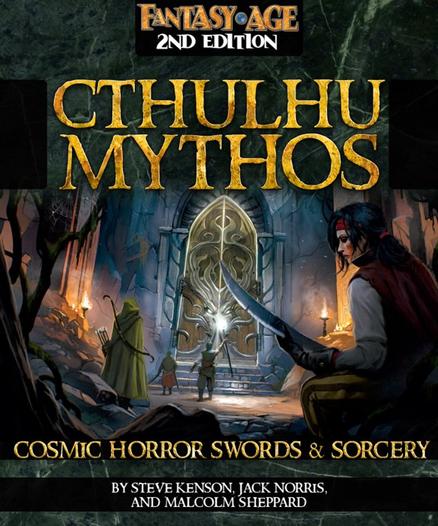
Today on the blog, we're going to revisit Fantasy AGE 2e, with a look at the supplement Cthulhu Mythos. #TTRPGs #FantasyAGE

What Do I Know About Reviews? ...

What Do I Know About Reviews? Fantasy Age 2nd Edition: Cthulhu Mythos

Green Ronin has adopted a strategy of releasing smaller PDF products to support the various lines they publish. I like this development because some of Green Ronin’s properties have been extremely interesting, but supporting everything they release with physical releases seemed to bottleneck a lot of support. While some of these products in the past have been smaller releases, like single villains or teams for Mutants and Masterminds, many of the AGE system releases have been about half the size of what modern publishing would likely publish in hardcover format. 

Today, I’m going to look at a supplement for Fantasy AGE 2nd Edition, Cthulhu Mythos: Cosmic Horror Swords & Sorcery. Some of these supplements adapt material developed for the Modern AGE-powered Cthulhu Awakens. While the two systems are very similar, they aren’t identical. But this isn’t just an adaptation of Cthulhu Awakens material; it also presents fantasy from an angle that resembles some of the more sinister, horror-adjacent Conan stories, and the introduction even mentions the connections between Lovecraft and Robert E. Howard. 

Disclaimer

While I have received review copies from Green Ronin in the past, I purchased my copy of this product to review. I have yet to have the opportunity to play with or run games with material from this supplement, but I am familiar with the AGE system.

Fantasy Age 2nd Edition: Cthulhu Mythos

Writing and Design: Steve Kenson, Jack Norris, and Malcolm Sheppard
Adventure Game Engine (AGE) created by Chris Pramas
Development: Steve Kenson and Malcolm Sheppard
Editing: Steve Kenson
Graphic Design: Hal Mangold
Art Direction: Hal Mangold
Cover Illustrations: Krasen Maximov & Cardin Yanis
Interior Art: Joewie Aderes, Michele Boceda, Carlos Diaz, Danil luzin, Krasen Maximov, Victor leza Moreno, Mirco Paganessi, Julie Sakai, Andrey Vasilchenko, and Cardin Yanis
Publisher: Chris Pramas

The PDF for Cthulhu Mythos is 66 pages long. It includes a front and back cover, a credits page, and a table of contents. Green Ronin’s products have amazing artwork, which continues in this PDF. There are many adventurers fighting mythos creatures, like deep ones and ghouls wearing wizard robes and carrying a staff. 

Eldritch Verses

Like most AGE game products, the material in the product is modular, meaning that most of it can be used without using other parts of this supplement. That said, some concepts, like the Dreamlands, require you to adopt some of the rules in one section to use other rules in the supplement. The sections of the PDF include the following:

  • Mythos Characters (player character options)
  • Exploring the Mythos (new game rules)
  • Mythos Magic (standard Fantasy AGE spellcasting and rituals)
  • Mythos Game Mastering (tone, campaign styles, deities, monster qualities, new monsters)

As mentioned above, the introduction mentions the connection between H.P. Lovecraft and Robert E. Howard and mentions the elements introduced into the mythos beyond Lovecraft’s stories. It also contains the standard “Lovecraft was Racist” section, which I am all for. 

Mythos Characters

This section contains a pair of new ancestries: the Deepblooded and the Dreamghoul. The Deepblooded are people with Deep One ancestry who have manifested some of the traits of the Deep Ones. Dreamghouls are a species of ghoul that often develop their traits later in life and are connected to the metaphysical Dreamlands. 

Like other ancestries in the game, there are a handful of traits that all members of that ancestry will have, like movement speed, special senses, and special movement rates (like having a swimming speed). Like other ancestries, there are charts of additional traits that can be chosen or rolled randomly. Each character gets two of these, so if a character wants to reflect a character with parents of different ancestries, one of the two benefits can come from that ancestry.

These have similar benefits to the game’s core ancestries. Both are logical additions to a fantasy campaign that is introducing mythos elements. While the Deepblooded are presented more as “you have elements of surface humanoids as well as Deep One traits,” the Dreamghoul still plays with the Lovecraft trope of “you might pass for some other ancestry until your true bloodline comes out.” They also have to eat intelligent creatures, so a little additional guidance probably wouldn’t be bad.

There are several new talents, some of which are good additions even in a non-mythos Fantasy AGE game. Bookworm and Stalwart Style are good examples. I love Strange Estate, where you inherit a weird location from your family and gain certain benefits from this bizarre inheritance. Some traits interact with the other rules in the products, like gaining access to Eldritch Rituals or having an enhanced ability to interact with the Dreamlands.

The Strange Legacy trait reintroduces some of the “you’re changing into your precursors” flavor that you don’t get in the Deepblooded ancestry, where you have one of many different traits, like gills that let you breathe water, unnaturally armored skin, wings, or natural weapons. I like that this trait mentions that it could come from proximity to Eldritch sources of power, but any “you had ancestors that were different than what you expected” just makes me want to make sure everyone knows you don’t want to engage in Lovecraft’s “isn’t it scary that your bloodline might not be pure” tropes.

The following specializations are also included:

  • Alienst (Envoy or Mage, you analyze the psyches of others)
  • Antiquarian (Mage or Rogue, you specialize in learning about hidden ancient history)
  • Cultist (Any, you have traits based on the practices you endured while in the cult)
  • Eldritch Sorcerer (Mage, you gain access to the ritual rules)
  • Unconquered (Warrior, you’re Conan, you’re just Conan)
  • Weird Explorer (Envoy of Rogue, you’re a fantasy version of Indiana Jones or Lara Croft)

As with the talents, several of these work fine for Fantasy AGE games that don’t focus on the mythos, either. I also appreciate that this product presents an Alienst as someone who assesses another person’s mental state. I’m looking at you, D&D 3e. You know what you did.

Exploring the Mythos

This section includes expanded rules for Fear Tests. In the core rules, spells and creatures might cause the character to gain the Frightened Condition, but this adds more instances of how to include Fear Tests in other aspects of the campaign. It includes examples of what would trigger a fear test and what the Target Number would be to resist fear in that instance. 

There is a section that expands on Relationships and Bonds. It’s meant to reframe these in light of how they can be used for a game where cult entanglements or ties to organizations can affect the character, but I’ll be honest. For some reason, reading through these examples, I understood Relationships and Bonds better than I did reading the core rulebooks. 

Cthulhu Awakens introduces the concept of Alienation. Instead of framing the stress of learning the reality-warping truths of the mythos as causing mental illness, Alienation introduces the idea that the more you are exposed to the mythos, the more your thought process tries to make sense of the rules of the mythos, making it harder to focus on the physics of day to day life. 

Alienation is tracked by establishing a bond to the element causing the adventurer’s mental stress, creating a bond to Terror and a bond to Enlightenment. Eventually, a character with enough Alienation gains a Distortion, a trait that your character adopts to process mythos truths that may hinder your day-to-day life. Some of these resemble what other games would present as sanity effects. One key difference is that these don’t involve diagnosing a character with real-world mental illnesses or randomly assigning an actual mental illness to someone based on stimuli that may make no sense for the person’s history and the event witnessed.

There are two new Stunt tables, the Enlightenment Stunts Table and the Terror Stunts Table. Once you have bonds to an Enlightenment that has occurred to you due to supernatural mental stress, you can spend your stunt points for new stunts, like temporarily being skilled at something your character has not trained in or gaining a clue about something going on. Terror Stunts are adverse modifications that the GM can spend stunt points to trigger, giving you an additional challenge, like second-guessing your actions and forcing you to reroll in future tests.

The Dreamlands

This chapter lays out rules for the Dreamlands, including how to enter the Dreamlands and what statistics change when you are in the Dreamlands. Because this supplement references mythos stories, the Dreamlands have specific trappings, like the Cavern of Flame and the White Ship. To get this out of the way, if you die in the dream, you just react badly to the experience until some healing can be applied to you.

Waking up before your dream ends forces you to make an Alienation test, potentially giving you a Melancholy bond (which makes it harder for reality to be more attractive to the Dreamlands), or, if you roll poorly, something makes its way out of the Dreamlands when you wake up.

Mythos Magic

This section introduces several new rules to Fantasy AGE 2e. The first is the concept of Eldritch spells. Eldritch spells don’t use magic points; they use a Price Test, a check that shows what toll the spell takes on your character. This exists alongside the standard version of a spell, so you can know an Eldritch version of any spell. If you know the Eldritch and non-Eldritch versions, you can cast the spell as an Eldritch spell, but you may end up paying the points and making an Eldritch Price Test for the same casting. Every Eldritch version of a spell manifests disturbingly compared to its typical manifestation. Since every spell can be learned as an Eldritch Spell, there isn’t a list of these spells, and you’re on your own to make up your disturbing manifestations.

Eldritch spells become progressively more dangerous, adding to the difficulty of Price Tests. You can rest to lower the threat that is building up, and when you suffer Alienation, you reduce the difficulty that’s been building up because you’re seeing the reality where those Eldritch spells make more sense. Failing a Price Test has many potential dangers, from an ongoing penalty to spellcasting, fatigue, injury, or uncontrolled spells.

Eldritch Spells have their own Stunt Table, which allows you to change what abilities the target uses to resist the spell, frighten everyone witnessing your spell, or enable you to manifest the Elder Sign in addition to the spell you cast. 

This section also introduces the Astral, Draining, Radiant, and Spacial Arcana, with eight new spells for each Arcana. While these are grouped under the heading of Eldritch Arcana, these spells aren’t automatically Eldritch spells, but all of them can be learned as Eldritch spells. This is probably one of the best examples of material that would be useful outside a mythos-themed campaign. The most overt mythos element is the Radiant spell Color out of Space.

Rituals are long-form magical workings that include the following steps:

  • Define the Ritual
  • Gather Participants
  • Choose Subjects
  • Perform the Ritual
  • Apply Potential
  • Spellcasting Test
  • Pay the Cost

Some example rituals show you what spells are needed for them, the total score you need to accumulate from your stunt dice, what some of the standard elements are (which may affect the difficulty if they aren’t present), and what applications are used. In addition to the example rituals, spells can be boosted by adding applications to the spell, letting you affect additional targets, cast the spell at range, and other modified effects. Each one of the applications adds points to the Potential of the spell, which is the total of the stunt dice needed to activate the ritual. 

This section wraps up with Eldritch Items, in this case defining the traits of Eldritch Grimoires. These usually allow someone to learn the Eldritch version of spells included in the book, as well as detailing some rituals, granting bonuses to someone using the book to repeat the ritual. Examples of grimoires include The Book of Dead Names and The Rule of Yith. 

Mythos Gamemastering

For a shorter supplement, there is some solid advice on running mythos or fantasy campaigns featuring unknowable supernatural elements. I like easily digestible advice, and I appreciate that after a few paragraphs on each topic being addressed, there are a handful of bullet-pointed examples.

The section on running campaigns includes three different ways to include mythos elements:

  • Garnish
  • Spice
  • Ingredient

Each section explains the difference between using the mythos sparingly, as one of many recurring themes, or as the primary theme of the campaign and provides an example of what that looks like in a campaign. 

The monster section includes some of the monstrous qualities from the core rules that are especially suited to mythos-themed games and discusses how these qualities may appear in a mythos setting. There are eleven brand-new qualities in the PDF, as well as the following templates:

  • Deep-Dweller
  • Otherworldly Stalker
  • Eldritch
  • Starspawned

The following new stat blocks appear in the supplement:

  • Amorphite
  • Cultist
  • Deep One
  • Knight of Yith
  • Minion
  • Thanatosaur

A sidebar also talks about what monsters from the core rules work as mythos-adjacent campaign elements.

Elder Sign

This is a packed supplement for standard Fantasy AGE 2e and mythos-themed campaigns. The talents, specializations, and arcana are accessible introductions into a campaign that doesn’t require too much modification to the standard Fantasy AGE 2e assumptions. There is very effective advice on gamemaster advice for mythos-themed campaigns.

Unspeakable Knowledge

The core Fantasy Age 2e book does a good job of explaining the importance of not overgeneralizing typical members of an ancestry, but I think we could have used a more focused discussion on some of Lovecraft’s “tainted bloodline” themes. I like Alienation and Rituals, but both are very involved sets of rules that may complicate the standard level of complexity in Fantasy Age 2e. 

Qualified Recommendation–A product with lots of positive aspects, but buyers may want to understand the context of the product and what it contains before moving it ahead of other purchases.

I continue to enjoy these Green Ronin supplements for various games, especially for the AGE system. This is a very good supplement, but to get maximum value from it, you and your table may need to be willing to embrace rules that are a little more involved. Some great inclusions work with just the core game, but it helps to want mythos material that brings in its own additional rules for maximum effect. 

#Cthulhu #CthulhuMythos #FantasyAGE #FantasyAGE2e #ffcc00 #GreenRonin #rpgs #ttrpgs

Today on the blog, we're going to revisit Fantasy AGE 2e, with a look at the supplement Cthulhu Mythos. #TTRPGs #FantasyAGE

http://whatdoiknowjr.com/2024/12/05/what-do-i-know-about-reviews-fantasy-age-2nd-edition-cthulhu-mythos/

What Do I Know About Reviews? Fantasy Age 2nd Edition: Cthulhu Mythos

Green Ronin has adopted a strategy of releasing smaller PDF products to support the various lines they publish. I like this development because some of Green Ronin’s properties have been extremely …

What Do I Know?
Domun Intro and Regional Map — Of Gods and Gamemasters

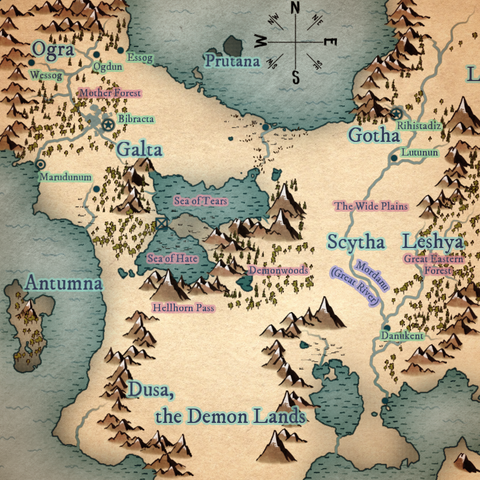
It is said that the Ancients were great and mighty, even larger than the ogres. Their empire lasted many thousands of years, and they learned much lore and arcane science. But like all things, it could not last. They were betrayed by their own hubris, as the greatest of their mages, ever in search o

Of Gods and Gamemasters
Ogre Ancestry for the Hellish Hordes of Domun — Of Gods and Gamemasters

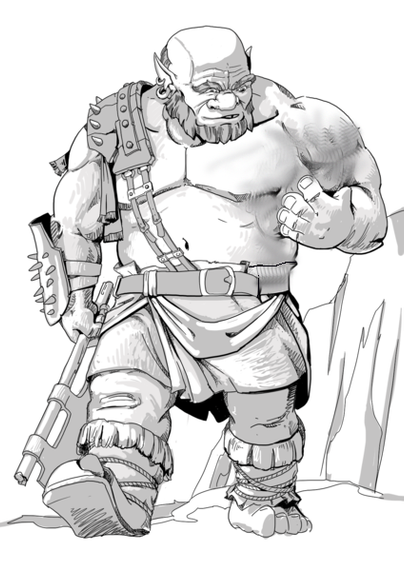
Ogres are tough, pragmatic folk, often dwelling in the cold and mountainous lands of Ogra. It is rumored that they are the true descendants of the Ancients, the great giants who once ruled the lands of Galta and its surrounds. Strong, enduring, and adaptable, the ogres live in places others would no

Of Gods and Gamemasters

I’ve said this before, but I am really grateful that game lines can be supported electronically between larger releases. There are a lot of games that I really want to see remain visible, and these electronic support releases, either on a company website or on a place like DriveThroughRPG, demonstrate that the game is still being actively supported.

Today we’re going to look at an adventure for Fantasy AGE 2nd Edition. If the title Return to the Valley of the Whispering Titans sounds familiar, that may be due to your familiarity with the Fantasy AGE 2nd Edition adventure, The Valley of the Whispering Titans. This is both an updated version of the original adventure, as well as a sequel, with a new follow up scenario included.

Disclaimer

I was sent a review copy of this adventure by Green Ronin Publishing. I have not had an opportunity to run or play the scenarios in this product, but I am familiar with the AGE system and have played it in the past.

Fantasy AGE Journeys: Return to the Valley of the Whispering Titan

Writing and Design: Jesse Decker
Development: Jack Norris
Editing: Matt Click
Graphic Design & Art Direction: Hal Mangold
Art: Rael Dionisio
Cartography: John Wilson

Journey Through the Product

Return to the Valley of the Whispering Titan is a 20-page PDF, with the pages breaking down like this:

  • Cover–1 page
  • Title page–1 page
  • Background material–6 pages
  • Scenario 1–4 pages
  • Scenario 2–4 pages
  • NPC Statblocks–4 pages

The PDF is in a two-column layout, in full color, with the background, text, and header in light tans, browns, and greens. There is a map of the valley, and five pieces of artwork detailing NPCs, locations, and potential encounters.

What Are We Returning To?

In the background information, we find out about the location, its ongoing curse, and some of the malefactors currently inhabiting the valley. On either side of the valley, there are various enormous skulls, three on one side of the valley, and two on the other, with one near the passage out of the valley. The reason the valley is called the Valley of the Whispering Titans is that whenever someone is traveling through the region, they can faintly hear the voices, the voices of the beings to whom the skulls once belonged.

The oldest of the potential adversaries in the Valley, unless you count the titans themselves, is Mallorsa. Mallorsa would have been a mountain nymph, but because she was bonded to the land, and didn’t come into existence until after the titans’ skulls found a home in the valley, she’s become warped by the titans. She doesn’t directly work for Callem, but she does work in what she considers the general interests of the titans.

Callem Ressmil is a druid who was concerned about how the local settlements utilize nature, and after wandering into the valley, Callem began hearing the voices of the Titans. They convinced him that they could give him the power to protect nature. After years of dwelling in the valley, his connection to the titans began to physically change him and has warped his perspective on what it means to protect nature.

The Valley Huntsman is the spectral remains of a hunter who died within the Valley, cursed to continue haunting the region. Whenever an animal dies within the Valley, the Huntsman feels it, and can travel to that location. He can also animate the body of the recently fallen animal for his own purposes.

In addition to the three NPCs above, there are animated vines, swarms of giant mosquitos, corrupted animals, and the vinedolls, humanoid-shaped plant soldiers being grown for a push into the environs near the Valley, to expand the influence of the titan skulls. Each of the skulls has its own traits. The skulls are:

  • The Learning Skull–spell-based stunts and some spells like divinations are cheaper to purchase here
  • The Skull of Fear–characters can embrace corruption to summon corrupted animals and shadow and death spells are cheaper to cast here
  • The Reaping Skull–at this site, you can spend stunt points to cause wounds that can only heal naturally and not with magic
  • The Skull of Fortune–characters can trade health or magic for stunt points, and fate spells are cheaper here
  • The Shaping Skull–characters can warp themselves to make themselves more physically powerful, and spells that transform something’s form are cheaper here

The three main NPC villains are all solid, evocative archetypes. I especially like the recurring danger of the Valley Huntsman inhabiting animals and using the animals form to attack the PCs, then leaving once the body has been worn out. Modifying stunt points and spell points is a solid way to model the subtler effects being caused by the presence of the skulls, and I like that the PCs could warp themselves or touch the corruption of the skulls to gain access to some abilities. It helps to underscore the idea that while it may not be possible to reach Callem, his story is a tragic one that could potentially happen to others who wander into the Valley.

Into the Valley of the Titans

For characters of level 5th through 8th

The first adventure is a standard location-based adventure. There are some hooks that may give the PCs more reasons to explore more of the Valley than they would if they were just trying to travel from end to end, but for now, there isn’t one specific nefarious plan they are trying to thwart. As the PCs travel through the Valley, they may decide that they need to limit the ability of the evil to spread.

Because it’s location-based, this adventure not only assumes you are running for experienced adventurers, but it’s assuming you have a place to put this Valley in your setting, and you have a reason that the PCs need to cross through the Valley to the other end. Because of the geography of the Valley, the PCs are going to pass near the Learning Skull and the Skull of Fear.

At the threshold of the Valley, they are attacked by corrupted animals, which are meant to be obviously acting in an unnatural way. The animals that attack them are animals that should not be working together, like boars and wolves. This is meant to let the PCs know that whatever is going on in this Valley is a perversion of the natural order.

If the PCs travel to The Learning Skull, they encounter Mallorsa for the first time. She doesn’t hide her nature as a fey creature, but she does feel them out to see if they are likely to follow the will of the Skulls, or if they are going to be a problem. Assuming they don’t give Mallorsa potential Titan Skull Cultist vibes, she points them toward the Skull of Fear for more answers. If the PCs are already aware that there are problems with the Valley, Mallorca is willing to portray herself as an innocent spirit trapped within the Valley by the power of the Skulls. If the PCs head to the next Skull as she suggests, the Huntsman has an ambush set up for them.

There are a few more ambushes on the way through the Valley, some connected to the Huntsman and his ability to inhabit dead animals. If the PCs make it to the Skull of Fortune, they find out that they can redirect control of the Skull’s special abilities to themselves, and away from Callem. Mallorsa may visit the PCs again at this skull, worried about what they are going to do with their knowledge, and she tries to convince them that there is a specific order in which they need to redirect the Skulls, which is a lie to give her time to set up ambushes and warn the others.

If they decide to use what they learned at the Skull of Fortune, they can cross back over the Valley to visit each Skull again, and if the PCs avoided the Skulls even when they were right next to them on the trail, this is the chance for them to run into those encounters. They can also move to the Shaping Skull, which is where Callem will confront them.

In addition to wresting control of the Skulls from Callem, the PCs can perform a ritual at each Skull to quiet the Skull’s voice and lessen its control over the Valley. If they do this at each Skull, the Valley will be free of overt evil and corruption for a long time.

If you aren’t going to come up with a reason for the PCs to enter the Valley, I think you may need to juggle some of the components of this adventure if you want to present it as a location based adventure where the PCs have all the information they need to start engaging with sites. I think the Skull that lets the PCs know they can wrest control of the Skulls from Callem should be the Learning Skull, mainly because it’s right next to the stream where the PCs are likely to see it and interact with it without going out of their way. If you make this change, Mallorsa’s deception about visiting the Skulls in a specific order can be introduced immediately.

While the adventure explains that interacting with the Skull of Fortune they learn how to attune to the Skulls, the ritual to quiet the Skulls is introduced near the end of the adventure and isn’t something they specifically learn at any site. It might work better to let the PCs know that they can quiet the Skulls, and Mallorsa can try to deceive them to tell them that they need to attune to the Skulls before they can quiet them, or else the people “trapped” by the Skull’s power will suffer. Otherwise, it seems like the ritual to quiet the Skulls is something they would learn if they asked around after they leave, and it may be challenging to keep the Valley a fresh encounter area if they decide to return and crisscross it all over again.

Rise of the Death Titan

For characters of level 5th through 8th, with an intervening adventure needed if you played through that one

If you performed the quieting ritual, the baseline assumption is that the Valley is quiet for a century. This adventure assumes that either you didn’t quiet the Valley, or somehow, Callem or whomever replaces him as the servant of the Titan Voices learns how to reverse the quieting. Corrupt creatures start coming from the Valley to the nearby lands to harass them, letting the PCs know that evil is still there, and is moving from passive to active.

The structure of the adventure is to take the PCs to each of the Skulls again. From the PCs’ point of view, they are getting clues as to what Callem or his replacement is up to. From Callem or his replacement’s point of view, they want the PCs to travel to each of the Skulls and shed blood there to seal in the ritual sacrifices that have been performed at each site. Each Skull has a clue to what is going on:

  • The Learning Skull–”Blood becomes thought”
  • The Skull of Fear–”Blood becomes instinct”
  • The Skull of Fortune–”Blood becomes destiny”
  • The Shaping Skull–”Blood becomes the body”

If the GM wants an additional encounter, there is an area of the Valley where an army of vinedolls is being grown, to serve the Titan as it’s conquering army. In this adventure, the GM is told that some routes through the Valley can just be clogged by animated vines, which is a little heavy handed, but it does make it easier to keep the PCs on track to engage with the content in the Valley. I also think it’s more acceptable to have this kind of “bumper” available for a follow-up adventure that’s meant to be an epic confrontation, as this adventure is.

The Reaping Skull doesn’t have a clue at the site, because this is where Callem/Callem’s replacement is performing the ritual to allow The Reaping Skull to rise as a 70-foot-tall skeletal colossus. In theory, this is just the first of the Titans to be animated in this manner, but one is enough to cause an enormous amount of damage.

What happens if the PCs pick up on the idea that they are shedding blood at each site as part of a ritual? Mallorsa is held in reserve in this adventure, so that if the PCs manage to skip a site without shedding blood, she will sacrifice herself to activate that site.

I always worry that “the ritual is ending just as you get here” stretches credulity, but the implication in this case is that the Titan is still powering up. Callem summons its full form, doing so before it’s fully charged up, so it’s not so much happenstance as it is pulling the switch early. In theory, PCs can outlast the Titan by keeping it active for an hour, burning out all the power that it’s accumulated.

This second adventure is a good example of how tropes that may be problems, can be structured to pay off. Mallorsa’s sacrifice is a good way to show the fanatical degree that she and the others have been manipulated by the Titan skulls. The Titan animating for a final fight isn’t just in time so much as, “okay, wake up for now, finish them off, and then you can sleep until you’re meant to wake up.”

My biggest wish for this second adventure is that a bigger loophole than, “whoops, you didn’t banish evil for 100 years” existed in the first adventure. Dropping a hint about some item that could reverse the quieting, and then letting the PCs know that item has been stolen would be a great precursor to this.

The adventure mentions that you may want to replace Callem if he was killed in the first adventure, and it implies that spiritual creatures can’t attune to the Skulls, so Mallorsa and the Huntsman can’t take over for him. I was wondering if you could just make sure he was some kind of physical undead to explain why he’s still around, so I went poking around the Fantasy AGE 2e adversaries section. This is when I realized that I have grown accustomed to the Fantasy AGE 1e adversaries section as well as the 1e Bestiary.

I was looking either for a suitable replacement, or for something that would let you present him as perhaps being mutated and changed to bring him back. In the 2e adversary section, you could replace him with a Warlock, either showing him as having left his druidic talents behind or being replaced by a new spellcaster. I was looking for a good special quality to add, but none of them really sung to me.

If you have the 1e books, there are a few good candidates:

  • Give him the Eldritch special quality from the 1e Bestiary, to represent being mutated into an immortal servant of the Skulls
  • Have it look like Callem, but the body is being puppeted by an Eldritch Crown loyal to the Skulls
  • Replace Callem with a Charnel Knight that represents the herald of the ancient Titans
  • Replace Callem with a Soul Harvester called from “elsewhere” to aid the Titans

As an aside, I’m looking forward to a Fantasy AGE 2e Bestiary.

The Time Has Come

The adventure has three very evocative, archetypical adversaries as the primary antagonists, one of which has a great excuse for playing hit and run with the PCs, and another that is a great conduit for roleplaying. The setting with the giant Skulls is evocative, and the special powers is just enough mechanical reinforcement to give them additional narrative weight. The second adventure has a good “backup plan” to keep the villain’s plot moving forward, with an associated cost, and frames the final battle well.

Running Up That Hill

There could be a few more “bumpers” built into the first adventure to entice the PCs to interact with the various sites, and getting false information from an NPC that costs the PCs additional time may not pay off when measured against frustration. The start of the second adventure could feel arbitrary if the ritual to quiet the Skulls was presented as a long-term solution.

Qualified Recommendation–A product with lots of positive aspects, but buyers may want to understand the context of the product and what it contains before moving it ahead of other purchases.

The only thing that keeps me from recommending this more broadly is that it’s a little trickier to drop a whole valley into a campaign that has been running for a while, and that both adventures are stronger together, but they require you to do your own cutting and pasting of content in between them to make them work.

While there is a lot of solid Fantasy AGE-specific mechanical effects with the Skulls and how they interact with spellcasting and stunts, the outline of this adventure works well with any fantasy RPG that’s okay with fantastical elements like 70-foot-tall skeletal titans. It wouldn’t take too much to adapt this for 13th Age, Shadow of the Weird Wizard, maybe even Dragonbane. If you’re looking for campaign settings where this would fit, the Old Margreve forest in the Midgard setting may be a good candidate. It’s large enough to have some hidden valleys in it, and the weird sleeping titans, corrupted fey, cursed huntsmen, and fanatical druids all work pretty well with the themes of that place.

If you are interested in taking a look at this adventure, or Fantasy AGE 2nd Edition, should you be so inclined, the links below are affiliate links that will send a small offering of power to me if you sacrifice some of your budget. Thank you!

https://whatdoiknowjr.com/2024/06/21/what-do-i-know-about-reviews-fantasy-age-journeys-return-to-the-valley-of-the-whispering-titan-fantasy-age-2e/

#808000 #993300 #FantasyAGE #FantasyAGE2e #FantasyAGEJourneys #ffcc00 #GreenRonin #rpgs #ttrpgs #ValleyOfTheWhisperingTitan

DriveThruRPG

Yesterday's #TTRPG mailbag.

#ForbiddenLands I have been eyeballing this one for a while. I really like the #YearZeroEngine and I like a lot of what this has to offer. The only concern I have is the Willpower currency, but online chats have said it works.

(I own way too many fantasy RPGs.)

#Marvel Multiversal: I wasn't sure if I would ever buy this; I prefer ICONS for superheroic stuff. However, the mechanics as similar enough to #FantasyAGE that I was sold.