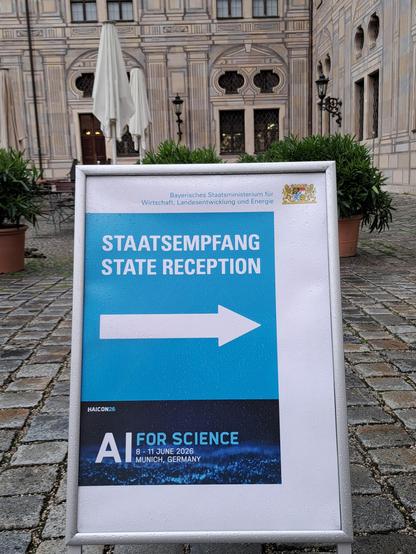
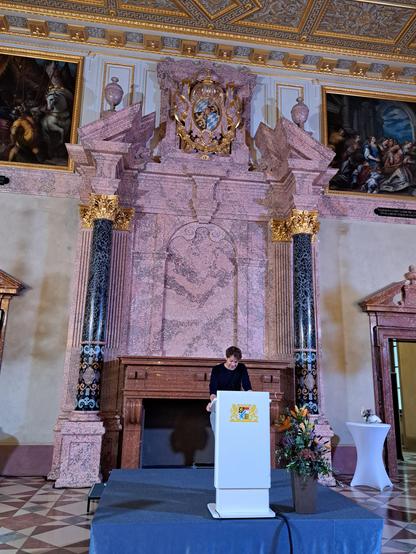
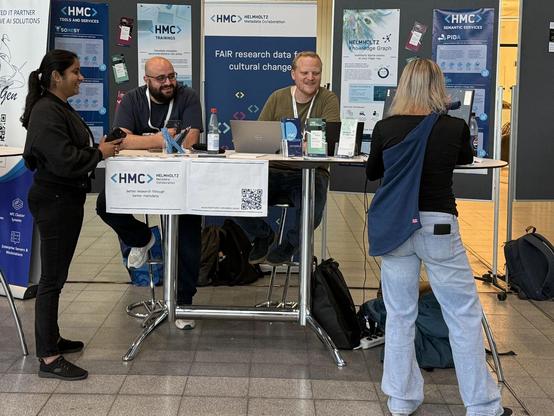
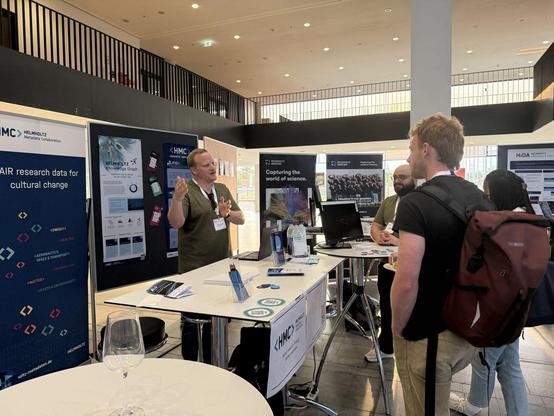
Another day at #HAICON26 delivered plenty of inspiring conversations.

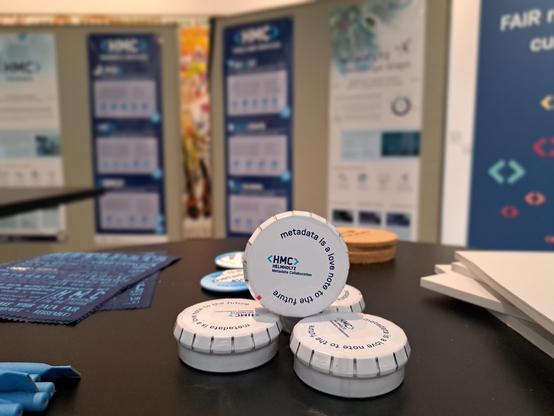
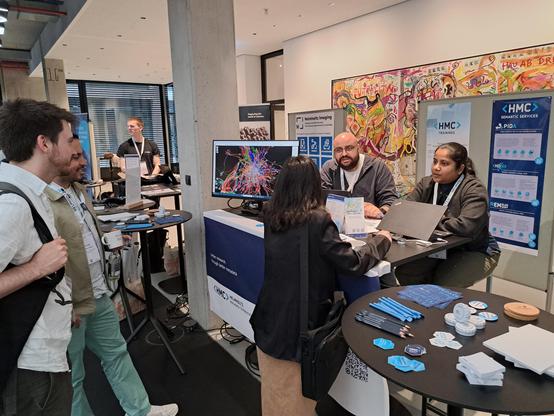
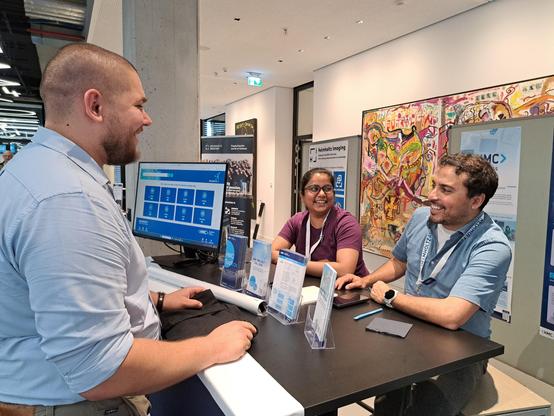
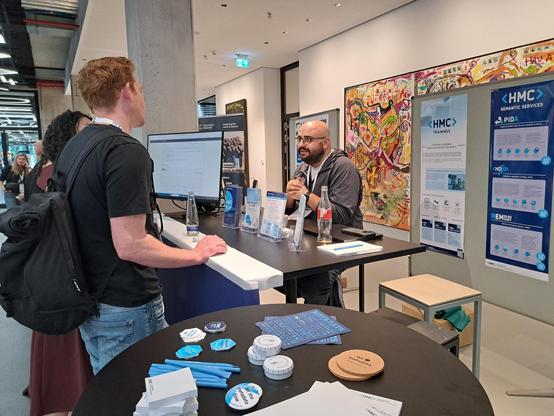
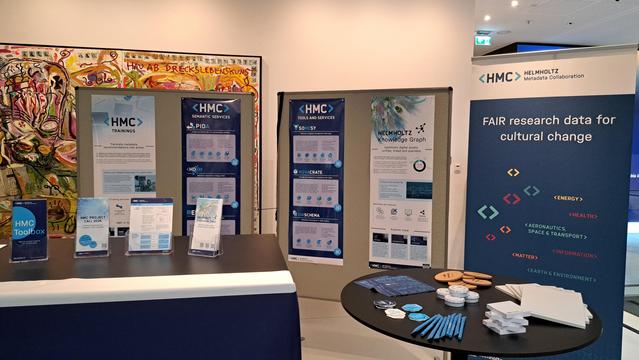
The HMC booth remained busy throughout Day 2, with many visitors interested in metadata, interoperability and FAIR research data.

One topic stood out in particular: Knowledge Graphs. We had many discussions about accessing and using the HMC Knowledge Graph, APIs, metadata harmonization and interoperability across research domains.

#AIforScience #HMC #KnowledgeGraphs #FAIRData #OpenScience

@helmholtz_ai
@HelmholtzImaging

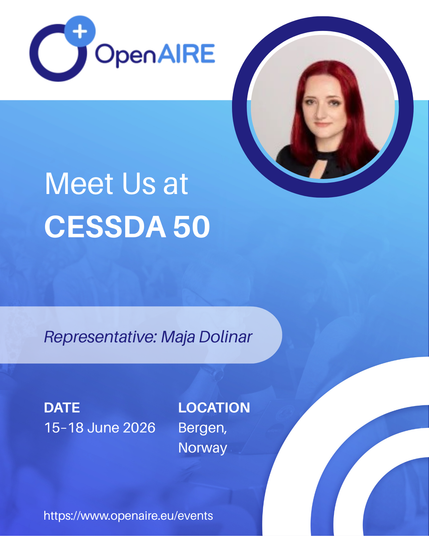
Heading to #CESSDA50 next week?

Meet us to learn how #OpenAIRE supports #research discovery, data management, #interoperability, and the broader development of open and trustworthy research ecosystems across Europe.

🔗https://shorturl.at/2Ugqh

#EOSC #FAIRData

🌧️ Rain outside, great conversations inside!

Day 1 of #HAICON26 brought many visitors to the HMC booth – some even while we were still setting up. We were delighted to meet colleagues from Helmholtz Centers, universities and organizations from Germany and beyond, and to discuss #FAIRdata, #Metadata, #Interoperability, #KnowledgeGraphs and #Training opportunities.

Looking forward to more exchanges over the coming days!

#AIforScience #HMC #AIforScience
@helmholtz_ai @HelmholtzMunich

#inchi #cheminformatics #molecularinformatics #inorganicchemistry #digitalchemistry #fairdata #openscience #chemicaldata #iupac | Sonja Herres-Pawlis

🎆***Advancing the Future of Chemical Identifiers: Technical InChI Meeting on Molecular Inorganics and Stereochemistry*** 🎆 On 1–2 June 2026, experts from academia, industry, software development, and the InChI and the InChI Trust gathered at RWTH Aachen University for the Technical InChI Meeting on Molecular Inorganics and Stereochemistry. The meeting brought together participants from Europe, North America, and New Zealand to advance one of the most challenging frontiers in chemical representation: the reliable encoding of molecular inorganic compounds and their stereochemistry within the InChI framework. Key outcomes included: • Finalization efforts for the beta release of the Molecular Inorganics bond-handling implementation, including agreement on core drawing and bond-disconnection rules. • Resolution of several long-standing edge cases involving organometallic and coordination compounds, such as ferrocenes, Zeise’s salt, metal hydrides, and multinuclear systems. • Significant progress toward a stereochemical framework for molecular inorganics, including discussions on 2.5D representations, spherical coordination systems, hapticity, and enhanced stereochemistry layers. • Acceptance of proposals for enhanced stereochemical encoding, including extensions for double-bond stereochemistry and improved handling of stereochemical uncertainty. • Strategic discussions on future InChI development, specification processes, testing requirements, and preparations for upcoming releases. The meeting also highlighted the growing ecosystem of tools supporting InChI development, including prototype visualization and interpretation software designed to improve transparency and usability for the wider chemistry community. The outcomes of these discussions will contribute directly to the next generation of InChI capabilities and support the accurate digital representation of increasingly complex chemical structures. Test it here: https://lnkd.in/eTP4xQzh Many thanks to all participants for their expertise, constructive discussions, and continued commitment to advancing global chemical informatics (Djordje Baljozovic, Felix Bänsch , Nauman Ullah Khan , Jan Brammer, Markus Nietfeld, Ulrich Schatzschneider, Christoph Müller, Gerd Blanke, Richard Hartshorn, Jonathan Goodman , Andrey Erin). Furthermore, our acknowledgements for financial support go to the VolkswagenStiftung , the Beilstein-Institut and NFDI4Chem !! #InChI #Cheminformatics #MolecularInformatics #InorganicChemistry #DigitalChemistry #FAIRData #OpenScience #ChemicalData #IUPAC  
LinkedIn

Very interesting article about the challenges of applying AI to biological datasets. As a trained bioinformatician, these issues are not new to me: we have always fought against inconsistent nomenclature and interfaces built for humans rather than machines. Clearly, the non-deterministic nature of LLMs can only worsen the problem.

The solution lies in FAIR data, nomenclature standards, and well-documented APIs. It would help scientists a lot, with or without AI.

#AI #biology #bioinformatics #FAIRdata

🔗 https://www.anthropic.com/research/agents-in-biology

Paving the way for agents in biology

Anthropic is an AI safety and research company that's working to build reliable, interpretable, and steerable AI systems.

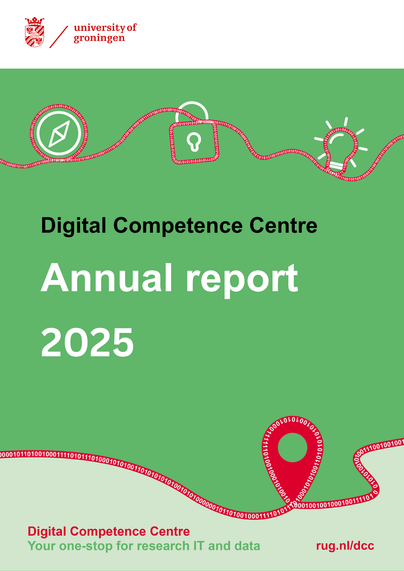
Our Annual Report 2025 is now available! 🎉

Discover how the UG Digital Competence Centre supported researchers in 2025 through research data and software management, FAIR and Open Science initiatives, training, infrastructure support, and national collaborations.

👉 Read the report: https://www.rug.nl/digital-competence-centre/contact/news/2026/ug-dcc-annual-report-2025.pdf

#OpenScience #ResearchData #ResearchSoftware #FAIRData #DataStewardship

What makes a workflow FAIR, and what makes FAIRification difficult in practice?

At the BioFAIR Showcase 2026, Galaxy BioFAIR Fellows Marisa Loach and Nicola Soranzo led an interactive workshop on workflow FAIRification, exploring why reusable and reproducible workflows matter, what barriers researchers face, and how Galaxy’s workflow “magic wand” can help make workflows FAIRer.

Read the recap: https://galaxyproject.org/news/2026-06-04-biofair-workflows-workshop/

#BioFAIR #FAIRData #OpenScience #Reproducibility #Workflows #GalaxyProject

Galaxy at the BioFAIR Showcase - Why Make Workflows FAIR?

Insights from a workshop on workflow FAIRification

Galaxy Project

🏛️📊 Die #Minimaldatensatz -Empfehlung für Museen und Sammlungen definiert die zentralen Datenfelder für eine strukturierte Online-Veröffentlichung. Wir sind ein Teil der AG Minimaldatensatz, die die Empfehlung gemeinsam mit Partner:innen entwickelt und weiterführt. 💡

🔗Zur Minimaldatensatz-Empfehlung: https://deutsche-digitale-bibliothek.atlassian.net/wiki/spaces/DFD/pages/48104499/Minimaldatensatz-Empfehlung+f+r+Museen+und+Sammlungen+MDS+v1.1

Aus der Praxis gibt es kurze Einblicke bei der Umsetzung der Empfehlungen 🌟

🔗 Zu den Success Storys: https://deutsche-digitale-bibliothek.atlassian.net/wiki/spaces/DFD/pages/389218305/Success+Storys

#Digitalisierung #FAIRdata #GLAM

🚀 #HAICON26 has begun!

This week (8–11 June), the Helmholtz AI Conference brings the #AIforScience community together. Several colleagues from #HMC are on site & looking forward to inspiring discussions on #metadata, #Interoperability, #FAIRdata & AI-enabled research.

📍 Visit the HMC booth to meet the team, learn more about our work & pick up some HMC goodies.

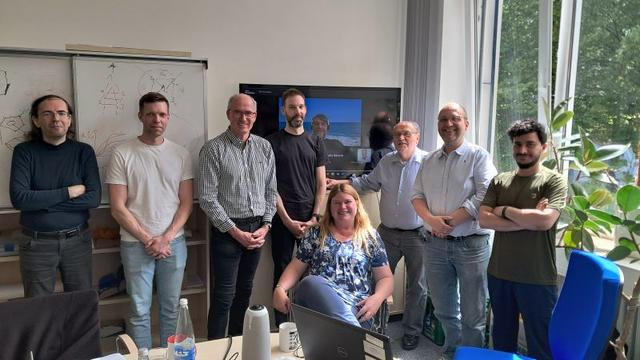
📸 Until we have fresh impressions from this year's conference, we're sharing a few moments captured by HMC colleagues at #HAICON25. 👇