Aktualności:
»250 lat polskiej fantastyki. Plebiscyt na najważniejsze polskie powieści science fiction – II etap«
Trwa plebiscyt na najważniejsze polskie powieści science fiction. Znamy utwory nominowane do drugiego etapu.
#Fahrenheit_zin #Eden #Trylogiaksiężycowa #MarcinPrzybyłek #AdamWiśniewskiSnerg #LagrangeListyzZiemi #RafałKosik #Robot #MikołajaDoświadczyńskiegoprzypadki #Solaris #Dziennikigwiazdowe #OtwarteKomiksy #NowaFantastyka #MarekBaraniecki #PiotrGociekZaprasza #StanisławLem #Kameleon #SięZobaczy #EdmundWnukLipiński #PolskaFundacjaFantastykiNaukowej #JanuszZajdel #IstvanVizvary #Niezwyciężony #Lód #CylindervanTroffa #OpowieściopilociePirxie #BajkiRobotów #Limesinferior #KongresFuturologiczny #Perfekcyjnaniedoskonałość #Paradyzja #Cyberiada #Powrótzgwiazd #JerzyŻuławski #GłosPana #Fiasko #JacekDukaj #Apostezjon #GolemXIV #Gamedec #Czarneoceany #GłowaKasandry #Katedra #KrakówMiastoLiteraturyUNESCO #KrakowskieBiuroFestiwalowe #PFFN
Hopping into the wayback machine for this next #KpopMonday #TakeMeHigher selection with bonus behind segment
EDEN - Stand Up (feat. Babylon) https://youtu.be/SN1GgPN-loI
cw: background flashing, camera motion
CC in 4 tracks, incl ENG
I should really give Eden more love... This is so much more hiphop than we'd usually get from him.

The Watchers
A watcher is a type of biblical angel. It shows up in both plural & singular forms in the Book of Daniel. This is where reference is made to the holiness of the beings. The Book of Enoch (2nd-1st century BC) refer to both good & bad Watchers, with a mani focus on the rebellious ones.
In Daniel 4:13, 17, & 23, there’s 3 references to the class of “watcher, holy ones.” The term was intro’ed by Nebuchaddnezzar who said he saw ” a watcher, a holy cone come down from Heaven.” He described how in his dream the watcher said that Nebuchdnezzzar will eat grass & be crazy. This punishment is “by the decree of the watchers, the demand by the word of the holy ones…” “that the living may know that the Most High rules in the kingdom of men.”
The 1st Book of Enoch devotes a lot of attention to the fall of the Watchers. The 2nd Book of Enoch addresses the Watchers who are in the 5th Heaven where the fall took place. The 3rd Book of Enoch gives attention to the unfallen watchers.
In the Book of Enoch, the Watchers are angels sent to Earth to watch over the humans. They soon begin to lust for/after human women, & at the prodding of their leader, Samyaza, defect to illicitly instruct mankind & have kids with them, arriving at Mount Hermon. The offspring of these unions are the Nephilim savage giants who pillage the earth & endanger humanity.
Samyaza & his associates further taught their human “charges” arts & tech such as weaponry, cosmetics, mirrors, sorcery, & other techniques that would otherwise be discovered gradually over time by humans, not foisted upon them all at once.
Eventually, God allows a Great Flood to rid the earth of the Nephilim. But 1st sends the archangel Uriel to warn Noah so as not to completely destroy the human race. The watchers are bound “in the valley of the Earth” until Judgment Day (Jude 1:6). This is where some theories pop up. Like they’re in the Marianus Trench or in the depths of the Grand Canyon or in a mountain base.
The Book of Enoch also lists the leaders of the 200 fallen angels who married & consummated unnatural unions with human women, & who taught forbidden knowledge. Some are listed in the Book of Raziel (Sefer Raziel Hamalakh), the Zohar, & Jubilees. Here’s a short list of them:
The Jewish pseudepigraphon 2nd Book of Enoch (Slavonic Enoch) referred to the Grigori. They’re the same as the Watchers in 1st Enoch. Chapter 18 presents the Grigori as countless soldiers with human appearance.
They’re located in the 5th Heaven. They’re identified as “the Grigori, who with their prince Satanail (Yes, you are reading that correctly) rejects the Lord of light.” One version of 2 Enoch adds that their number was/is 200 myriads (2 million).
Chapter 29, referring to the 2nd day of creation, before the creation of human beings, says that “One from out the order of angels” or “one of the ranks of the archangels” “conceived an impossible thought, to place his throne higher than the clouds above the earth, that he might become equal in rank to the Lord’s power. And the Lord threw him out from the height with his angels, & he was flying in the air continuously above the bottomless.”
The Mercer Dictionary of the Bible makes a distinction between the Grigori & the fallen angels by stating that in the 5th Heaven, Enoch sees “the giants whose brothers were the fallen angels.”
The longer recension of 2 Enoch 18:3 identifies the prisoners of the 2nd Heaven as the angels of Satanail.
First Corinthians 11:10, according to early Church Father Tertullian, refers to the Watchers. He taught that the lust of the Watchers was the reason for St. Paul’s directive to Christian women to wear a head covering. Tertullian referenced the case of a woman who was touched on the neck by an angel “who found her to be a temptation.”
According to Philo of Byblos, Sanchuniathon mentioned “some living beings who had no perception, out of whom intelligent beings came into existence, & they were called Zophasemin (In Hebrew: “Watchers of Heaven”). And they were formed like the shape of an egg.”
In the 1999 movie Dogma, the character Bartleby (played by Ben Affleck) is mentioned to have formerly been a Watcher. In the TV show Supernatural (season 10), the Grigori with 1 Tamiel (under the name “Peter Holloway”) appears as the main enemy of the episode. At 1 point, a picture is shown that is implied to be a painting of a Grigori. In the original Dragon’s Dogma, the dragon is called Grigori.
In the 1998 movie City of Angels (this is 1 of our founders’ favorite movies), Nicolas Cage plays a watcher angel who falls in love with a human woman (played by Meg Ryan).
Make a one-time donation
Your contribution is appreciated.
DonateMake a monthly donation
Your contribution is appreciated.
Donate monthlyMake a yearly donation
Your contribution is appreciated.
Donate yearly #1998 #1999 #1stCenturyBC #1stCorinthians1110 #2ndCenturyBC #5thHeaven #Angel #Araqiel #Armaros #Asbeel #Astrology #Azazel #Baraqel #BenAffleck #BookOfDaniel #BookOfEnoch #BookOfRaziel #Camouflage #Chazaqiel #ChurchFather #CityOfAngels #Cosmetics #Daniel17 #Daniel23 #Daniel413 #Dogma #DragonSDogma #Eden #FallenAngels #Gadreel #Geomancy #GrandCanyon #GreatFlood #Grigori #Heaven #Hebrew #Hell #Jeqon #JewishPseudepigraphon #Jubilees #Jude16 #JudgmentDay #Kasdaye #KingNebuchadnezzar #Kokabiel #MarianisTrench #MartialArts #MegRyan #MercerDictionaryOfTheBible #Metallurgy #Meteorology #MountHermon #Nephilim #NicolasCage #Noah #Penemue #PhiloOfByblos #Raziel #Samyaza #Sanchuniathon #Sariel #Satan #Satanail #SeferRazielHaMalakh #Shamsiel #SibyllineOracles #SlavonicEnoch #StPaul #Stars #Supernatural #Tertullian #theWatchers #Uriel #Watchers #Weaponry #Yeqon #Zohar #ZophaseminSTRANGE EDEN ころっと アクリルフィギュア/慈樹修一郎
https://www.movic.jp/shop/g/g05857-00350-00014/
#movic_shop #ムービック #movic #アニメ #グッズ #通販 #通信販売05857_00350_00014 #eden #EDEN_ころっと #STRANGE #アクリルフィギュア_慈樹修一郎 #キャラグッズ
Zwischen Erde und Eden – Blaue Blume
Wir vom RefLab pflanzen einen neuen, ersten, einzigartigen Garten: mit Blumen, Sträuchern, Heilkräutern und Bäumen aus der Heimat und aus unterschiedlichen Weltgegenden. Darunter auch mythische Grünpflanzen, fantastische Erdenthusiasten und bunt blühende Wundersträucher.
Wir nehmen euch mit in unseren paradiesischen Garten – zwischen Erde und Eden!
https://www.reflab.ch/wp-content/uploads/2026/05/Gartenillustration-Animation.mp4Die blaue Blume – wo ist sie?
Holunder und Christrosen lassen sich in unserem Garten bereits bestaunen. In dieser Folge kommt die mysteriöse blaue Blume hinzu. Wo findet man ihre Samen? Wo soll man sie suchen?
Die blaue Blume der Romantik – wo findet sie sich?So viel vorweg: Die blaue Blume lässt sich nicht pflanzen. Jedenfalls nicht im botanischen Sinn. Kein Saatgutkatalog führt sie, kein Gartenzentrum kennt ihre Ansprüche an Boden und Licht. Und doch wäre es voreilig, sie aus einem digitalen Garten auszuschliessen.
Vielleicht erscheint sie gerade dort, wo Planung endet. In einer Ecke, die man nicht bewusst bepflanzt hat: als Selbstwuchs des Unverfügbaren.
Oder sie zeigt sich, wenn man auf der Gartenbank einschläft, an einem heissen Sommernachmittag, halb in der Welt, halb im Traum.
So beginnt ihre Geschichte
Die «blaue Blume» tritt in die Literatur nicht als reale Pflanze ein, sondern als Vision. In Novalis’ unvollendetem Roman «Heinrich von Ofterdingen» (posthum 1802 erschienen) träumt der junge Heinrich von einer «lichtblauen Blume», die ihn mit eigentümlicher Intensität anzieht.
Die Blume im Traum hat breite, glänzende Blätter. Der Dichter betrachtet sie mit «unnennbarer Zärtlichkeit». Die Blume neigt sich ihm zu, und er glaubt, in ihr ein zartes Gesicht zu erkennen.
Ich habe das Romanfragment als Studentin gelesen – und befinde mich seither selbst auf der Suche nach der blauen Blume.
Die blaue Blume des jung verstorbenen Novalis wurde zum Signum der Romantik: nicht als Objekt des Besitzes, sondern Gegenstand der Sehnsucht.
Warum blau?
Auffällig ist schon ihre Farbe. Warum blau?
Wer in eine Landschaft blickt, kennt ein mögliches Sehnsuchtsblau: jenes der Ferne. Landschaftsmaler sprechen von Luft- oder Farbperspektive. Entferntes wird bläulicher, weniger greifbar. Blau markiert Distanz.
Die blaue Blume wäre dann kein Gewächs vor unseren Füssen, sondern eine Erscheinung des Fernen, die sich entzieht.
Das romantische Blau aber ist vermutlich noch tiefgründiger und dichter. Kein fernes Horizontblau und kein Himmelblau an Sonntagen, sondern leicht und schwer zugleich, wie von innen leuchtend und gleichzeitig dunkel.
Vielleicht das Blau eines seltenen Edelsteins tief im Gebirge? Novalis’ Beruf war Bergbauingenieur.
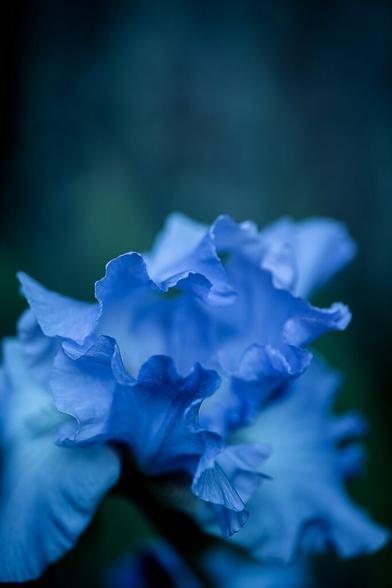
Foto von Sora Sagano auf UnsplashFarbe der Transzendenz
Wer die Kunstgeschichte betrachtet, stösst auf ein seltenes mineralisches Blau, das als überaus kostbar galt: Ultramarin, gewonnen aus Lapislazuli, importiert aus Afghanistan und reserviert für das Heilige. Dieses Blau stand in der religiösen Kunst für Transzendenz – das heisst für eine Wahrnehmung, die über das Gewöhnliche und Erfahrbare hinausgeht.
Blau ist im europäischen Bildgedächtnis eine Farbe des Entrückten, des Geistigen, des kostbaren Anderswo.
Vielleicht liegt hier die eigentümliche Spannung der blauen Blume: Sie ist sinnlich und geistig zugleich.
Philosophisch betrachtet bezeichnet die blaue Blume der Romantik kein Ziel, das sich sauber definieren liesse. Wer sagen könnte, was genau gesucht wird, hätte die Romantik bereits verlassen.
Der Philosoph Immanuel Kant hatte wenige Jahre davor das ästhetische Urteil als eine eigentümliche Form des Weltbezugs beschrieben: Schönheit lässt sich nicht in Begriffe auflösen wie eine mathematische Aufgabe. Das ästhetische Spiel der Erkenntniskräfte bleibt offen. Es erzeugt gerade deswegen eine schier endlose Bewegung.
Gerade die Nichterfüllung hält die Sehnsucht am Leben.
Die blaue Blume ist vielleicht die literarische Gestalt eben dieser Erfahrung.
Mystische Unterströmung
Die blaue Blume hält das Begehren in Bewegung, weil sie sich begrifflich nicht stillstellen lässt. Genau hierin wird eine tieferliegende Herkunft sichtbar:
Die mystische Tradition kennt ähnliche Strukturen.
In der Mystik ist Gott nicht primär Gegenstand eines Begriffs, sondern eines Begehrens, das durch Annäherung eher wächst als verschwindet. Negative Theologie lebt genau davon: Das Höchste entzieht sich jeder endgültigen Benennung. Man erkennt, indem man die Unzulänglichkeit des Erkennens erfährt.
Die ästhetische Erfahrung übernahm eine Bewegung, die religiös bereits eingeübt war. Die Romantik säkularisierte dieses Muster nicht einfach, sondern verschob den Ort hin zu Welt, Liebe, Natur und Kunst.
Aus der Gottessehnsucht wird Weltsehnsucht und Natursehnsucht.
Und genau davon lebt auch heute ein Gutteil dessen, was mit Ökospiritualität, Naturspiritualität, Tiefenökologie oder ähnlichen Begriffen bezeichnet wird. Hierin schreibt sich in unserer Gegenwart der Geist der Romantik fort, vielfach unbewusst.
Die blaue Blume heute
Übertragen auf unseren digitalen Garten lässt sich die blaue Blume vielleicht als dasjenige beschreiben, was sich effizienter Auffindbarkeit entzieht. Sie ist über keinen Link oder Shortcut aufrufbar. Sie lässt sich nicht als Content «einpflegen» und nicht algorithmisch steuern.
Im Digitalen stellt sie vielleicht eher eine Art Störung dar.
Durch digitale Räume intensiviert sich gleichzeitig die alte Sehnsucht sogar noch: nach tiefer Erfahrung, echter Liebe und Verbundensein.
Die blaue Blume unserer Zeit erscheint vielleicht dort, wo etwas in der digital vernetzten Gegenwart unauffindbar bleibt: in einer entlegenen Ecke – oder im Halbschlaf auf einer Gartenbank im Sommer.
Unser digitaler Garten ist übrigens vernetzt mit einem physischen Garten: dem Klostergärten in Kappel nahe Zürich. Neben Gemüse- und Obstgärten ist auch der traditionelle Heilkräutergarten einen Besuch wert. Im Klostergarten finden sich auch seltene Pflanzensorten (Näheres dazu unter dem Stichwort ProSpecieRara).
Foto: Erda Estremera auf Unsplash; Video: Illustriert von Isabelle Bühler, animiert von Pascal Tautschnig
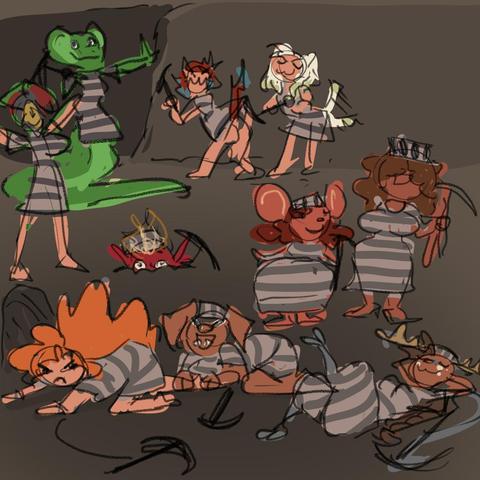
#Eden #Garten #Paradies #PflanzenI was asked to redo a bondage mitt drawing from a while back, but man i don't think i made it look any better this time around xDD Here's the group of DSO OCs all chain ganging it up having to crush rocks for their collective punishment!
https://pyperhaylie.carrd.co/
#bondage #bound #helpless #victim #damsel #damselindistress #did #chibi #doodle #sketch #dso #mining #chaingang #elana #mable #heidi #rosie #kyleigh #eden #ashe