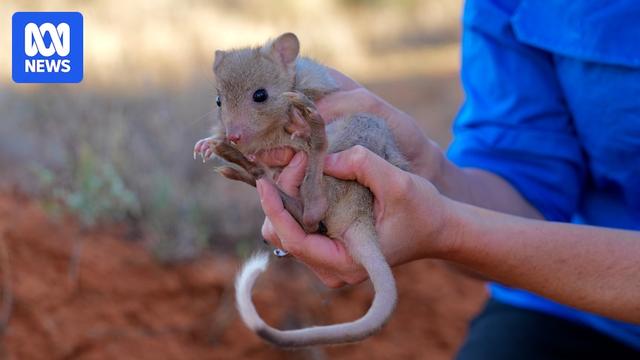
"A football-sized relative of kangaroos, the burrowing bettong once thrived across much of Australia's arid and semi-arid interior."

"Then, within a century of European settlement, the marsupials vanished from most of the mainland."

"Like many native animals, the population was decimated by feral cats and foxes."

"Feral cats kill more than 1.5 billion native animals every year in Australia..." >>
https://www.abc.net.au/news/2026-06-16/bettong-release-wild-deserts-sturt-national-park-after-extinct/106755452
#biodiversity #wildlife #pets #cats #EuropeanSettlement #extinction

'Ecosystem engineers' returned to desert decades after local extinction

Wiped off mainland Australia by the introduction of cats and foxes, burrowing bettongs are making a triumphant comeback in outback NSW.   

Lingering loopholes in the new national environment laws

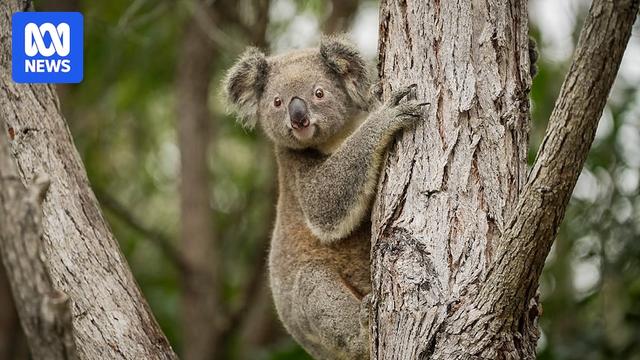
"The federal government says it fixed Australia's 'broken' environmental laws. Koala advocates disagree."

"Environmentalists believe the EPBC Act has (Australia's Environment Protection and Biodiversity Conservation) allowed habitat to be gradually lost, with multiple projects approved within the same area. Habitat loss on the Redlands coast has contributed to an 80 per cent drop in koala numbers over the last 25 years." >>
https://www.abc.net.au/news/2026-06-16/brisbane-koala-advocates-question-national-environment-laws/106748658
#EPBCAct #biodiversity #LandClearing #laws #regulation #sprawl #koalas #extinction

Are Australia's environment laws still 'broken'?

The clearing of koala habitat at a Brisbane school has enraged advocates and raised questions about the federal government's sweeping changes to national environment laws.  

How long before Earth erases all traces of Homo sapiens?

Finding the remains of other human species is reasonably rare and of other species that have come and gone. H. sapiens have scarred the planet far more deeply than others so it would presumably take a lot longer to bury all trace or most of the traces of our existence should we by dumb enough to aid ourselves in going extinct. If it happened tomorrow imagine intelligent aliens arriving one hundred years from now or a thousand, ten thousand or one hundred thousand. Would any of what we have done be left poking out of the surface? I took this photo in the overgrown cemetery at Brompton in London near the Chelsea football stadium. You can see how quickly the plants, then bushes and then trees take over the untended graves. The arch in the picture would take longer but eventually plant life would gain a hold in small crevices and eventually it would come tumbling down. We forget that we exist on a dynamic changing planet and we often ignore that we are here because of the way it works. Currently we are doing our best to break it and this may well indeed lead to our extinction if we are not too careful. We must therefore as a species learn to tread more carefully upon it.

Our links

Our Teemill shop site for our organic cotton clothes and bags, https://junagarh-media.teemill.com/.

My author page where you can discover more about my books, https://www.amazon.co.uk/-/e/B07D3ZTQ1L.

This is our website for all our photography and my books, https://www.junagarhmedia.co.uk/.

We are also on Flickr, https://www.flickr.com/photos/21104365@N06/.

Also on Instagram, https://www.instagram.com/junagarh_media/.

Our Etsy shop https://junagarhmedia.etsy.com.

On Pinterest, https://www.pinterest.co.uk/paulpaddington2017/

#Aliens #Cemetery #ClimateChange #Environment #Evolution #Extinction #HomoSapiens #Humans #London #Philosophy #Society

I wonder what happened to beige.party? It's still down.

I should learn more about Signal, I guess. You can make groups on it, but I don't know if that would allow me to post radical ideas without being censored. I found an anonymous social media site, but they enforce hate speech censorship there, too.

I don't agree with the concept of hate speech. It directly contradicts the basic principle of free speech. If authority can slap a "hate speech" label on ANY kind of speech, they •will• use that power to silence speech critical of themselves, their policies, or of the oligarchs that they serve.

As is happening now on a wide scale.

'If you want to know who rules over you, just look for who you are not allowed to criticize.'

It couldn't be more blatant. And they are literally killing us off. This is madness.

#Politics #oligarchs #oligarchy #extinction #censorship #FreeSpeech

From #meat 🥩☠️ to #palmoil 🌴☠️ – #agriculture is the world’s biggest driver of #deforestation and animal #extinction 🐆🦏🔥☠️ As these activities intensify, whole ecosystems could go #extinct. Fight back! #BoycottPalmOil and be #Vegan #Boycott4Wildlife
https://palmoildetectives.com/2021/02/14/how-our-food-choices-cut-into-forests-and-put-us-closer-to-viruses/?utm_source=mastodon&utm_medium=Palm+Oil+Detectives&utm_campaign=publer
How food choices slice into forests putting us close to diseases Palm Oil Detectives

As the global population has doubled to 7.8 billion in about 50 years, industrial agriculture has increased the output from fields and farms to feed humanity. One of the negative outcomes of this transformation has been the extreme simplification of ecological systems, with complex multi-functional landscapes converted to vast swaths of monocultures that lack the complexity of biodiversity found in tropical rainforests. Industrial agriculture is the biggest threat to rare wild animals and rare wild plants in the world. Fight back and resist extinction every time you shop - be #Vegan and #BoycottPalmOil #Boycott4Wildlife

Palm Oil Detectives

Try to talk about doing to the billionaires what they have been doing to the Earth and the rest of the human race, and you WILL be silenced.

#politics #censorship #authoritarianism #fascism #extinction

Genetic study reveals extinction risk for unique mangrove-adapted pampas cat

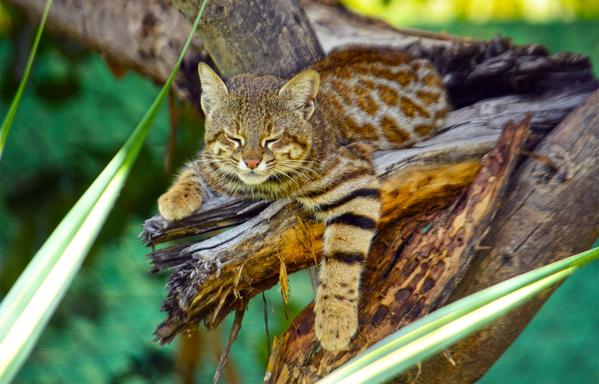
More than a decade ago, conservationists began working to preserve a unique population of desert pampas cats that has adapted to the mangroves of Peru’s northern coast. This small, isolated population roams the San Pedro de Vice dry mangroves, a Ramsar Site and South America’s southernmost mangrove ecosystem. “This is a very unique population, because […]

Conservation news

The Dandelions

If this entire post appears in the body of your email, click the title to read it in its natural blog setting.

During the grand opening ceremonies of a worldwide sporting event the other day, six military jets in tight formation roared over the stadium, low in the sky, trailing coloured vapour plumes to match the host country’s flag. Their presence lasted but an instant; they weren’t there, then they were, then they weren’t.

It occurred to me that, prior to their arrival, no one in the crowd was likely thinking about them. In the brief moment they were overhead, everyone was. But mere seconds after they were gone, most had likely forgotten all about them again, attention shifted to what was happening next.

I considered the scene analogous to the ever-shrinking attention span of our human species. We tend to focus on what is right in front of us, but only while it’s in front of us. Once it isn’t, we switch attention to whatever is next in front of us. Like scrolling.

Thinking, rather than being a critical, contemplative brain activity, is being reduced to bits and bites lasting only seconds. Reacting, in fact, not true thinking at all. Stimulus/response in place of thoughtful consideration and planning.

We would be doomed, I think, if we were required to focus our whole being on something for an extended period of time, as our distant ancestors had to while stalking game for food on distant savannahs. Had they allowed themselves to be distracted as easily as we do, they’d have starved to death, and none of us would be here today.

Life is much like the appearance of those jets in a way. As individuals, first we weren’t here, now we are, and eventually we won’t be. Collectively, going back perhaps 300,000 years, modern humans, homo sapiens, weren’t here; now we are; eventually, if the fate of other species is any indicator, we may not be.

Science tells us that more than ninety-nine percent of all species of life that have ever inhabited Earth are now extinct. When one considers the enormous number of life-forms still extant and sharing the planet with us today, the overall number of living creatures that once were here and now are not is staggering.

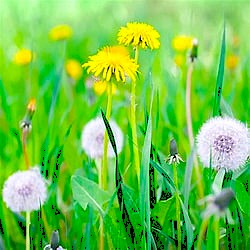
Individually, we are similar to dandelions, if you think of it. We might look out the window one day and spy a dandelion despoiling the pristine, green expanse of our lawn. If we leave it to its own devices, the dastardly weed will grow apace (doubtless in company with scores of comrades); then it will spread its seeds, miniature, white parachutists blown on the wind; and then finally, it will wither and die.

Or, we could choose to interrupt its life-cycle by stomping it under our heel, exposing it to toxic chemicals, uprooting it, or even turning it into wine. Either way—whether we leave it or interfere with it—it wasn’t there, then it was, then it wasn’t.

We are the same. Many of us live out our proverbial threescore-and-ten—some less, some more—spreading our seed as we go, and then die a natural death. Others of us, beaten down ‘neath the harsh heel of neglect and apathy, die prematurely. Still others, afflicted with a wasting disease, perhaps exposed to toxic chemicals intended to stem its progress, slowly wither and die. And still more are violently uprooted from their homes by violence or starvation or natural disaster, and are left to die alone.

Mortality is a subject I think about more often now than when I was younger. I contemplate my own, of course, though I do not fear it. Fearing death is like fearing the sunrise; it’s going to happen whether it’s feared or not, so why waste time dwelling on it? As I wrote in one of my poetic offerings—

I haven’t the time to dwell on life’s finish, ‘Though I know it lurks, that’s certain. When all has been said, I still look ahead To life’s next opening curtain.

I confess, however, that the demise of our human species is something I do think about. Not because it will affect me directly; I’ll be long-embarked on whatever journey is next for me by then.

But increasingly, it seems to me, humankind is separating itself into two broad factions: the many drones who think rarely for themselves and react self-servingly to whatever stimuli they encounter, content with the base pleasures they eke out; and the despoilers, fewer in number, who think deeply and conspire self-servingly to enrich themselves at the expense of the rest.

I’m pretty sure there is a third group, much smaller, who think first of others, not themselves, and who fight the good fight against the drones and despoilers. But alas, they are running out of time to win that fight. All harbingers are pointing to cataclysmic changes in the earth’s traditional, heretofore dependable cycles, patterns we have known and depended on for our entire lives.

But the effects of those changes aren’t here yet, not in sufficient abundance to alarm the majority of us. It seems that, as a species, we won’t admit they exist—just as that crowd in the stadium didn’t know about the jets in advance.

We’ll know when the effects begin to announce themselves fully, though—earthquakes, floods, wildfires, drought, increasing temperatures, rising sea-levels, climate-forced migration, and, of course, mass death. We’ll pay attention then.

My fear is that, unlike the other examples I’ve mentioned, where things aren’t here, then are, and then aren’t again, the massive changes rushing pell-mell at us will not disappear. They will linger to become the new normal for millennia to come.

And thus, it is we of whom some far-in-the-future, interstellar observer might say, “Human beings? Yeah, they weren’t there, then for hundreds of thousands of years they were, and then they weren’t.”

I console myself that perhaps the dandelions will survive.

#aging #attentionSpan #dandelions #death #disaster #Earth #extinction #jets #learning #mortality #seeds #thinking