 Stefan Prandl
Oh what, #Dragos is moving in across from us? I mean it’s a little small….
Tell you what if I see anyone here I’ll say hi, would be nice to have anyone that gets OT network monitoring to chat to over lunch.
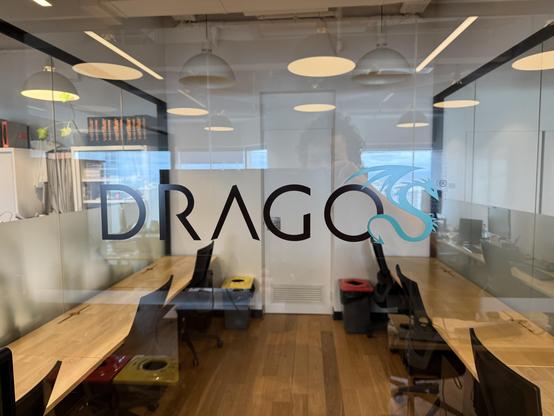
Oh what, #Dragos is moving in across from us? I mean it’s a little small….
Tell you what if I see anyone here I’ll say hi, would be nice to have anyone that gets OT network monitoring to chat to over lunch.
#dragos published an excellent report on the cyberattack on the Polish grid last December.
While the Spanish blackout is often cited as example in blog posts or articles, it is central to understand that both grids are completely different, in power generation sources and connectivity. As Dragos wrote:
"Grid vulnerability to disruptions depends heavily on the generation mix and system inertia. Poland generates over 50 percent of its energy from coal or lignite-fired power plants, providing significant inertia that helps stabilize grid frequency. Wind and solar make up approximately 25 percent of capacity. Grids with higher renewable penetration and less inertia, common in regions aggressively pursuing decarbonization, may be more susceptible to the cascading effects of
coordinated DER disruption."
"This attack was unlikely to cause a nationwide blackout in Poland under current conditions. Strong AC interconnection with neighboring countries and spinning thermal generation would have allowed the system to absorb the disruption, though localized outages could have
occurred."
"Treating remote access as an operational convenience rather than critical infrastructure is no longer viable for DER operators."
https://www.dragos.com/blog/poland-power-grid-attack-electrum-targets-distributed-energy-2025
Spain was reckless in how they managed their grid and they got burned.
Soon (February?) the final report on the Iberian blackout will be published.
#Dragos Toaca https://ift.tt/a8fN4Zw | posted by afasia | daily entries on contemporary art and architecture #afasiaarchzine #afasiaarq |
#architecture #arquitectura #design
Savasom Journal . EURO0C . St. Gallen Dragos Toaca . Savasom Journal Colle…
Think OT security isn’t relevant to your operations? Think again! @hacks4pancakes busts common myths and highlights the importance of OT systems in various environments on this episode of the Breaking Badness Cybersecurity Podcast.
🎧 Listen to the full episode wherever you get podcasts:
Spotify: https://open.spotify.com/episode/5S8UINAbTA1XC4TvMZBBqT
YouTube: https://www.youtube.com/watch?v=S2f4MSQL7gg&ab_channel=DomainTools
These last days i've been watching on youtube many videos of this comedian guy and he really is saving me from sinking and overthinking.
I also saw him without the ponytail and now i'm convinced he's the secret eastern european son of Fabio Lione XD

🌐Securing Critical Infrastructure 🌐
Dive into the world of industrial control systems with @hacks4pancakes from @dragosinc. In this episode of the Breaking Badness Cybersecurity Podcast, discover the unique challenges and essential practices for securing our critical infrastructure. 🚧🔒
#CyberSecurity #IndustrialControlSystems #OTSecurity #Dragos
Listen wherever you get podcasts
Spotify: https://open.spotify.com/episode/5S8UINAbTA1XC4TvMZBBqT
YouTube: https://www.youtube.com/watch?v=S2f4MSQL7gg&ab_channel=DomainTools

First takeaway. The #SANS Five ICS Cybersecurity Critical Controls
While I think I had come across them before it was helpful to get a quick overview.
Different many other approaches to #Cybersecurity, they don't start with a focus of prevention.
The 5 critical controls are
ICS-specific Incident Response Plan
Identify the scenarios which apply to you according to your industry, setting, etc. Start with 2-3 high consequence Simulate the scenarios and test your incident response plans, identify and prioritize gaps.
Defensible Architecture
to enable humans to successfully defend your system. Asset management, isolation, segmentation based on risks identified in the scenarios above and to enable
ICS Network Visibility and Monitoring
Without this a root cause analysis is hard. And without identifying "the" root cause it's impossible to corrects problems (added benefit of identifying misconfigurations)
Secure Remote Access
Remote access is a reality in most OT systems.
A lot of incidents start by unsecure remote access, including the 3rd parties like suppliers and service providers. So getting this secured including MFA, is crucial.
Risk-based Vulnerability
Management Program
Patch everything isn't general possible in an OT setting. Instead of trying and failing focus on the vulnerabilities which increase the risks identified before.
Find more information at
https://www.sans.org/white-papers/five-ics-cybersecurity-critical-controls/
or
https://www.dragos.com/blog/the-sans-ics-five-critical-controls-a-practical-framework-for-ot-cybersecurity/
(Little shoutout to @dragosinc, while there is a registration form when downloading stuff from #Dragos, there is generally also a "skip" button to download without providing information. I love it)
Last week i had the opportunity to participate in de #Dragos Industrial Security Conference in Munich (#DISC)
AS the name suggests in was about #ICS/#OT #Cybersecurity
In this thread I would like to share some takeaways
(Not sure if @dragosinc is their official account)
 Quick Quotes
 ~w00p~
 a f a s i a
 BreakingBadness
 Laura Lokkie
 Claudius Link
 Alternativa nerd