Messier 106
=========

That galaxy has four arms — but two of them aren't made of stars.

M106 in Canes Venatici is a Seyfert galaxy with an active nucleus powerful enough to drive jets of hot gas out of its own disk. The glowing blue structures flanking the spiral are shock-heated plasma, not star-forming regions. Also in the frame: the edge-on NGC 4217, the gravitationally entangled pair NGC 4231/4232, and a handful of fainter background galaxies.

Scope: Askar 103APO
Lens: Askar 1.0x Flattener
Camera: ZWO ASI 294MC Pro
Filter: Svbony UV/IR-Cut
Mount: SkyWatcher AZ-EQ5-GT
Guiding: SkyWatcher Evoguide 50ED with ZWO ASI 224MC
Controller: ZWO ASIAir Pro
Focusser: ZWO EAF

Integration time: 7hrs 25min

Full version and print available at:
https://adfr.io/astro/20260317_m106

#Astrophotography #M106 #NGC4258 #NGC4217 #DeepSky #DeepSkyObject #GalaxyPhotography #Galaxies #Astrophoto #ChasingPhotons #Nightsky #SpacePhotography
The Question Mark Nebula
====================

2,600 light-years away in Cepheus, a cosmic question mark is being written in gas and dust. Sharpless 171 (NGC 7822) is an active stellar nursery spanning over 100 light-years, powered by Berkeley 59 — a star cluster just two million years old. Its brightest member, BD+66 1673, burns at nearly 45,000 Kelvin, sculpting the surrounding cloud into the elephant trunks and dark pillars you see here. A two-million-year-old star carving a hundred-light-year nebula. The universe doesn't do things small.

The foreground scatter of stars in the upper part of the frame belongs to NGC 7762 — an unrelated open cluster that is 2.5 billion years old and just happens to share the same patch of sky. Ancient stars looking on as new ones are born.

Two-panel mosaic captured over two nights from Chemnitz, processed in Hubble Palette (HSO). 🔭

Scope: Askar 103APO
Lens: Askar 0.6x Reducer
Camera: ZWO ASI 294MC Pro
Filter: Antlia Tri-Band RGB Ultra
Mount: SkyWatcher AZ-EQ5-GT
Guiding: SkyWatcher Evoguide 50ED with ZWO ASI 224MC
Controller: ZWO ASIAir Pro
Focusser: ZWO EAF

Integration time: 16hrs 50min

Full version and print available at:
https://adfr.io/astro/20260310_sh2-171

#astrophotography #deepskyobject #narrowband #hubblepalette #emissionnebula #sh2171 #ngc7822 #questionmarknebula #cepheus #starforming #stellarnursery #berkeleycluster #hso #pixinsight #astronomyphotography #spacephotography #nightsky #cosmiclandscape #astrophoto #nebula #Sternenfotografie #Astrofotografie #deepsky #mosaic #longexposure #fromchemnitz
Cool Space Objects to See in February 2026: Galaxies, Nebulae, Star Clusters

Browse pictures of beautiful galaxies, colorful nebulae, and bright star clusters. Learn how to observe them yourself in February 2026.

Vito Technology, Inc.
The Monkey Head Nebula
======================

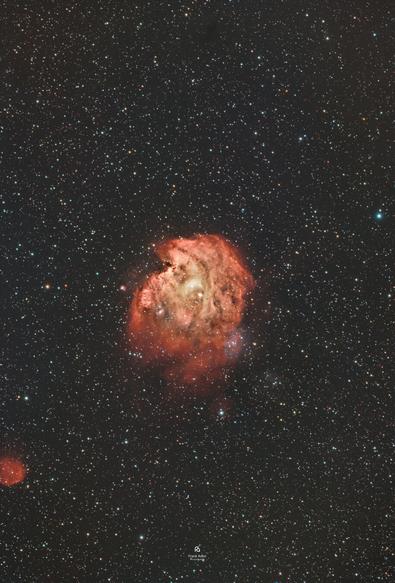
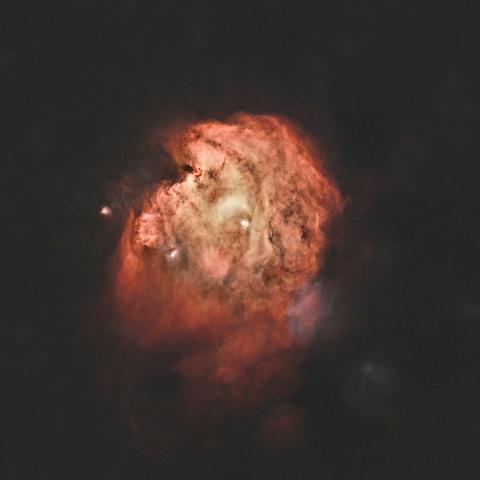
NGC 2175 is a glowing star-forming region in Orion, about 6.400 light-years away. It belongs to the wider Sh2-252 complex (often discussed alongside NGC 2174) and spans a surprisingly large patch of sky.

Powered by the hot O-type star HD 42088, ultraviolet light makes hydrogen shine while dark dust lanes carve the familiar “monkey” silhouette. A stellar nursery in motion, shaped by radiation and winds as new stars emerge.

Scope: Askar 103APO
Lens: Askar 0.6x Reducer
Camera: ZWO ASI 294MC Pro
Filter: Antlia Tri-Band RGB Ultra
Mount: SkyWatcher AZ-EQ5-GT
Guiding: SkyWatcher Evoguide 50ED with ZWO ASI 224MC
Controller: ZWO ASIAir Pro
Focusser: ZWO EAF

Integration time: 5hrs 35min

Full version and print available at:
https://adfr.io/astro/20260118_ngc2175

#astrophotography #astrophoto #astrophotographer #deepsky #deepskyphotography #deepskyobject #deepskyastrophotography #nebula #deepspace #space #nightsky #astronomy #cosmos #stargazing #spaceisart #Narrowband #SpacePhotography #BackyardAstronomy #AstronomyLovers #starchild #cosmicwonder #spaceart #universetoday #instaastro #NGC2175 #MonkeyHeadNebula #Sh2-252 #OrionConstellation #Halpha #OIII

#Followerpower
In 2024, Opher et al published a paper in which they describe how from a few million years ago, a cold hydrogen cloud started to traverse the solar system https://www.nature.com/articles/s41550-024-02279-8

Here's an app from the authors:
https://faun.rc.fas.harvard.edu/czucker/Paper_Figures/Interactive_LxCC.html
The cloud dented the #heliosphere and so, exposed Earth to more incoming cosmic rays. And its hydrogen probably did stuff to the ozone layer too, and maybe to the methane concentration.
Huge impacts on #climate.

My question is, can #astrophotography still capture this cloud? What would it look like, photos with more blue tint than photos taken away from the cloud?
I'd imagine, it would be visible only seasonally, given how its location is now "to the left" of the sun.

I would love to search on Astrobin if I only knew how to translate the cloud position today to #deepsky objects.

Can you help?
#Astronomy #Astronomie #telescope #deepskyobject

A possible direct exposure of the Earth to the cold dense interstellar medium 2–3 Myr ago - Nature Astronomy

Modelling suggests that the Solar System may have passed through a cold dense cloud 2–3 Myr ago, in agreement with geological evidence from 60Fe and 244Pu isotopes, putting Earth in direct contact with the dense interstellar medium with potentially substantial impacts on its climate.

Nature
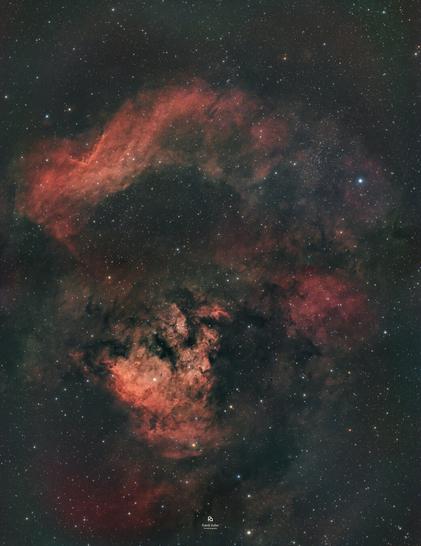
The California Nebula
================

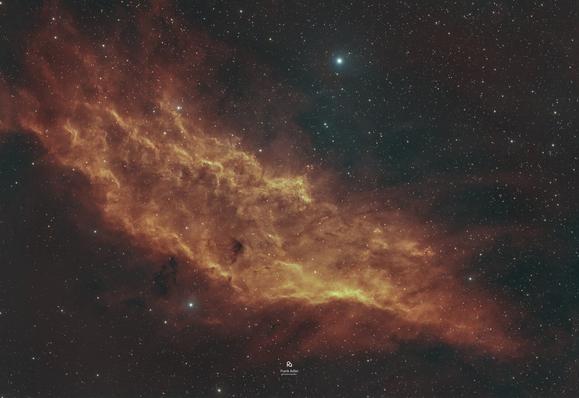
Stretching across nearly 100 light-years, this glowing river of hydrogen is known as the California Nebula. Located about 1,000–1,500 light-years away in the constellation Perseus, it’s far too faint to see with the naked eye — but long-exposure astrophotography reveals its true form.

The nebula shines almost entirely in H-alpha light, energized by intense radiation from the nearby hot star Xi Persei. What looks like a soft, golden cloud is actually a turbulent region of ionized gas, dust, and ongoing star formation.

Five times wider than the full Moon and yet nearly invisible visually, NGC 1499 is a perfect reminder of how much of the universe hides just beyond human perception.

Scope: Askar 103APO
Lens: Askar 0.6x Reducer
Camera: ZWO ASI 294MC Pro
Filter: Antlia Tri-Band RGB Ultra
Mount: SkyWatcher AZ-EQ5-GT
Guiding: SkyWatcher Evoguide 50ED with ZWO ASI 224MC
Controller: ZWO ASIAir Pro
Focusser: ZWO EAF

Integration time: 10hrs 25min

Full version and print available at:
https://adfr.io/astro/20251218_ngc1499/

#astrophotography #astrophoto #astrophotographer #deepsky #deepskyphotography #deepskyobject #deepskyastrophotography #nebula #deepspace #space #nightsky #astronomy #cosmos #stargazing #spaceisart #Narrowband #SpacePhotography #BackyardAstronomy #AstronomyLovers #starchild #cosmicwonder #spaceart #universetoday #instaastro #ngc1499 #californianebula
This isn’t a flower. 🌹

It’s the Rosette Nebula — a vast stellar nursery nearly 130 light-years wide, sculpted by intense radiation from young stars.

The deep reds come from glowing hydrogen gas, energized by ultraviolet light, while dark dust lanes trace regions where future stars may still form. The light captured here began its journey around 5,000 years ago, long before it reached this frame.

A moment of cosmic creation and erosion—where science, time, and art intersect.

Scope: Askar 103APO
Lens: Askar 0.6x Reducer
Camera: ZWO ASI 294MC Pro
Filter: Antlia Tri-Band RGB Ultra
Mount: SkyWatcher AZ-EQ5-GT
Guiding: SkyWatcher Evoguide 50ED with ZWO ASI 224MC
Controller: ZWO ASIAir Pro
Focusser: ZWO EAF

Integration time: 2hrs 25min

Full version and print available at:
https://adfr.io/astro/20251215_ngc2237/

#astrophotography #astrophoto #astrophotographer #deepsky #deepskyphotography #deepskyobject #deepskyastrophotography #nebula #deepspace #space #nightsky #astronomy #cosmos #stargazing #spaceisart #Narrowband #SpacePhotography #BackyardAstronomy #AstronomyLovers #starchild #cosmicwonder #spaceart #universetoday #instaastro #ngc2237 #rosettenebula

"An Oasis"

Properly known as vdB 48, I don't know if it has any pseudonyms but I loved the mixture of reflective, dust and Ha. vdB is one of my top-3 favourite catalogues.

Some day I'll try this again with a more intentional composition and maybe not forget to cover the light-leaks whilst shooting. Meanwhile, here goes something...

vdB48, Suzi 🔭 SW 8" Quattro, RisingCam, Neodymium filter, 83*180s = 4.15hr

#astrophotography #photography #astronomy #orion #nightsky #deepskyobject

The Pleiades
==========

A year after my first wide-field capture of the Pleiades, I revisited M45 with a tighter composition to reveal more of its hidden structure.

This close-up view brings out the delicate blue wisps of the reflection nebula—filaments, arcs, and soft dust clouds shaped by the hot young stars of the cluster.

With deeper integration and refined processing, this new image highlights just how intricate and dynamic the Pleiades truly are.

Scope: Askar 103APO
Lens: Askar 0.6x Reducer
Scope: Askar 103APO
Lens: Askar 0.6x Reducer
Camera: ZWO ASI 294MC Pro
Filter: Svbony UV/IR Cut
Mount: SkyWatcher AZ-EQ5-GT
Guiding: SkyWatcher Evoguide 50ED with ZWO ASI 224MC
Controller: ZWO ASIAir Pro
Focusser: ZWO EAF

Integration time: 6hrs 24min

Full version and print available at:
https://adfr.io/astro/20251122_m45/

#astrophotography #astrophoto #astrophotographer #deepsky #deepskyphotography #deepskyobject #deepskyastrophotography #nebula #deepspace #space #nightsky #astronomy #cosmos #stargazing #spaceisart #SpacePhotography #BackyardAstronomy #AstronomyLovers #starchild #cosmicwonder #spaceart #universetoday #instaastro #messier45 #m45 #pleiades #plejaden
The North America Nebula
====================

This is my latest image of the North America Nebula, a vast emission region in Cygnus, about 2,600 light-years away. The resemblance to the North American continent is striking — even in the raw data, the “Gulf of Mexico” region glows vividly in hydrogen light.

Captured and processed in the HOO palette (Hydrogen–Oxygen–Oxygen), the image combines warm hydrogen tones with cool oxygen blues. This mapping brings out the delicate structures and ionization fronts hidden in the nebula — the areas where newborn stars sculpt their surroundings with light and wind.

The dark band cutting across the nebula is a dense molecular cloud (L935), blocking the light behind it. Inside these dusty regions, new stars are still forming — invisible in visible light but revealed through narrowband imaging.

Every time I process this region, I’m reminded of how alive our galaxy is — constantly building, shaping, and recycling itself.

Scope: Askar 103APO
Lens: Askar 0.6x Reducer
Camera: ZWO ASI 294MC Pro
Filter: Antlia Tri-Band RGB Ultra
Mount: SkyWatcher AZ-EQ5-GT
Guiding: SkyWatcher Evoguide 50ED with ZWO ASI 224MC
Controller: ZWO ASIAir Pro
Focusser: ZWO EAF

Integration time: 3hrs 20min

Full version and print available at:
https://adfr.io/astro/20251105_ngc7000/

#astrophotography #astrophoto #astrophotographer #deepsky #deepskyphotography #deepskyobject #deepskyastrophotography #nebula #deepspace #space #nightsky #astronomy #cosmos #stargazing #spaceisart #Narrowband #SpacePhotography #BackyardAstronomy #AstronomyLovers #starchild #cosmicwonder #spaceart #universetoday #instaastro #NGC7000 #northamerica