 Miro Collas
I Tracked Down the Hidden Workers Secretly Powering ChatGPT - YouTube
https://www.youtube.com/watch?v=aooiDA-AsNo
#AI #GenAI #Tech #BigTech #Employment #GigEconomy #DataWork #Capitalism
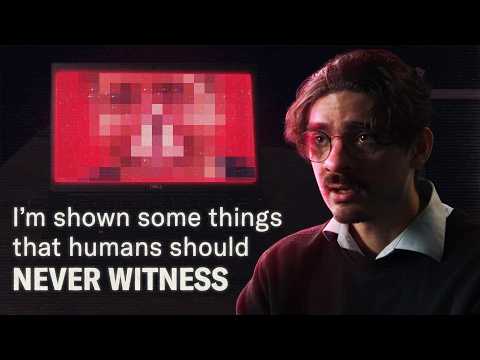
I Tracked Down the Hidden Workers Secretly Powering ChatGPT - YouTube
https://www.youtube.com/watch?v=aooiDA-AsNo
#AI #GenAI #Tech #BigTech #Employment #GigEconomy #DataWork #Capitalism
Data-Driven Hollywood: The New Data Professionals in the Age of Streaming
Violaine Roussel
(Princeton University Press)
"In Hollywood today, thousands of data specialists work for streaming video platforms, playing a role not just in distribution and marketing but also in decisions about content and production. In Data-Driven Hollywood, Violaine Roussel examines the emergence of this new category of professionals at the heart of the Hollywood dream factory. Roussel shows how the rise of data and algorithm specialists has transformed organizations and rearranged power relationships within them. Drawing on extensive interviews and in situ observations, she describes the ways that technical “data work” carried out by professionals at streaming platforms including Netflix, Amazon Prime Video, and Disney+ has had a significant effect on creative decisions.
Rather than fetishizing data and algorithmic models, Roussel explores the practices of the professionals who shape them, manipulate them, and give them power. She examines the relationships of these workers with traditional producers, describing legitimacy struggles and the eventual stabilization of new professional arrangements. Roussel’s account of the ways that data specialists deploy algorithmic models to reinvent their industry’s approach to content, artists, and the market—the first in-depth sociological study of the rise of this new profession—reveals the new forms of power and knowledge at play in today’s Hollywood."
https://www.google.pt/books/edition/Data_Driven_Hollywood/EkiUEQAAQBAJ
#Streaming #DataScience #Hollywood #Movies #DataWork #Algorithms
The rise of Hollywood’s data and algorithm specialists and their growing influence on creative decisionsIn Hollywood today, thousands of data specialists work for streaming video platforms, playing a role not just in distribution and marketing but also in decisions about content and production. In Data-Driven Hollywood, Violaine Roussel examines the emergence of this new category of professionals at the heart of the Hollywood dream factory. Roussel shows how the rise of data and algorithm specialists has transformed organizations and rearranged power relationships within them. Drawing on extensive interviews and in situ observations, she describes the ways that technical “data work” carried out by professionals at streaming platforms including Netflix, Amazon Prime Video, and Disney+ has had a significant effect on creative decisions.Rather than fetishizing data and algorithmic models, Roussel explores the practices of the professionals who shape them, manipulate them, and give them power. She examines the relationships of these workers with traditional producers, describing legitimacy struggles and the eventual stabilization of new professional arrangements. Roussel’s account of the ways that data specialists deploy algorithmic models to reinvent their industry’s approach to content, artists, and the market—the first in-depth sociological study of the rise of this new profession—reveals the new forms of power and knowledge at play in today’s Hollywood.
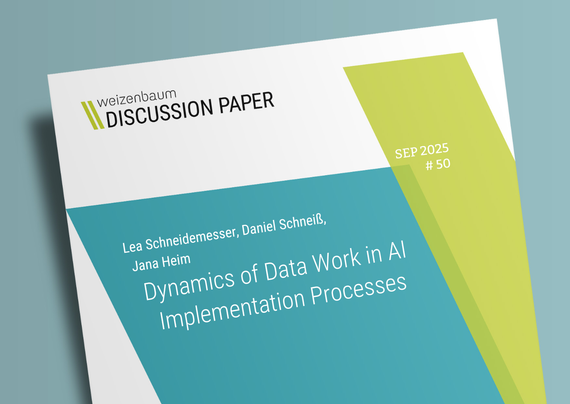
New Discussion Paper on "Dynamics of Data Work in AI Implementation Processes":
In their study, Lea Schneidemesser, Daniel Schneiß, and Jana Heim investigate the role of data work in the implementation of #AI systems in traditional industries, exploring the labor and power dynamics embedded in these processes.
More: 🔗 https://doi.org/10.34669/WI.DP/50
#socialscience #research #work #labor ##DataWork #TechAndSociety #FutureOfWork #openaccess #publication @WZB_Berlin @FOKUSpublic @tuberlin
🏅 Weizenbaum Researcher @milamiceli was included on TIME's list of Most Influential People in Artificial Intelligence of 2025. Congratulations on this distinction and your incredible work for and with data workers, Mila! 🎉 #TIME100AI #AI #DataWork
Find out more 👉 https://time.com/collections/time100-ai-2025/7305825/milagros-miceli/

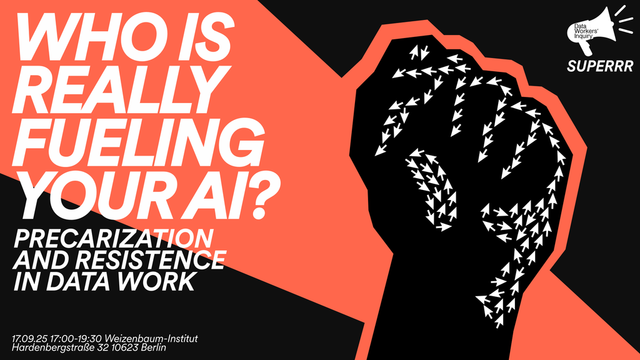
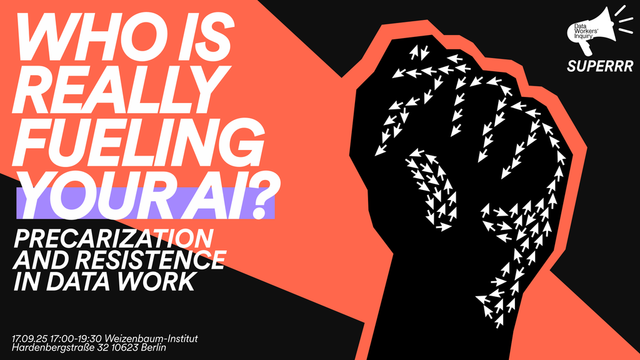
Who is really fueling your AI? 🤔 It's not just code & algorithms. Behind every large language model are millions of people, often in invisible roles. Join us and the Data Workers’ Inquiry for a talk and panel to hear directly from data workers! September 17th, with @milamiceli & @superrr
🔗 Register here: https://www.weizenbaum-institut.de/en/news/detail/who-is-really-fueling-your-ai/
 MindTGap
 Miguel Afonso Caetano
 Isto Huvila
 ACM CSCW
 Shana (OLD)
 Weizenbaum-Institut