The Windows wordmark font has changed many times. The original used Goudy. Windows 3 (1990) changed it to Times New Roman. NT 3.5 (1994) introduced Baskerville Old Face. Franklin Gothic was used from 95 (1995) to XP (2001). Since Vista (2006), variants of Segoe UI have been used. #DailyWindowsFact #Microsoft #Windows #Logo #Wordmark
Windows 8 (2012) shipped with 2 versions of Internet Explorer: the regular "desktop" variant, plus a new, touch-friendly, full screen "Metro" variant. In the latter, most of the window chrome is hidden & must be accessed using touch gestures (e.g. swiping ⬇️ to view/manage tabs). #DailyWindowsFact #Microsoft #Windows #Windows8 #Windows81 #InternetExplorer #Metro
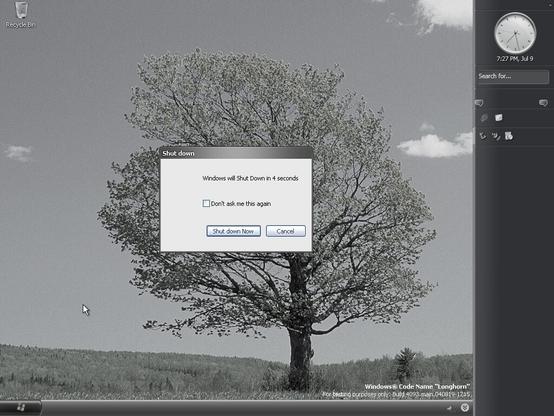
Windows Codename Longhorn build 4093, from August 2004, is the last available build of what would become Windows Vista (2006), before its infamous “development reset”. As such, it contains many prototype features that were either vastly reworked for Vista, or scrapped altogether. #DailyWindowsFact #Microsoft #Windows #WindowsVista #WindowsLonghorn #WindowsCodenameLonghorn
Windows Codename Longhorn build 3683, from September 2002, is the 1st known build of Windows Vista (2006). It had features that didn’t make the final release, such as a login screen clock & centred title bar text. Both would eventually arrive a decade later in Windows 8 (2012). 🤯 #DailyWindowsFact #Microsoft #Windows #WindowsVista #WindowsLonghorn #WindowsCodenameLonghorn #Windows8
Mars was a Windows component that powered the so-called Activity Centres - an experimental, task-centred UI tested in early builds of Windows ME (2000) & Codename Neptune (cancelled). Whilst the Activity Centres were scrapped, Mars lived on to power ME’s Help & Support app. ;-) #DailyWindowsFact #Microsoft #Windows #WindowsMillenniumEdition #WindowsME #WindowsCodenameNaptune #WindowsNeptune #ActivityCenters #ActivityCentres
MS-DOS ("MicroSoft Disk Operating System") was a command-line OS from Microsoft. The initial releases of Microsoft's newer, graphical OS - Windows - required MS-DOS to run. Windows Millennium Edition (Windows ME, pronounced "Me") (2000) was the last Windows version requiring DOS. #DailyWindowsFact #Microsoft #Windows #WindowsMillenniumEdition #WindowsME #MSDOS
The Start Page is a feature found in early development builds of Windows Codename Longhorn, which would eventually release as Windows Vista (2006). It appears to be a precursor to the Welcome Centre that debuted in Vista, and can be traced as far back as build 3683 in late 2002. #DailyWindowsFact #Microsoft #Windows #WindowsVista #WindowsLonghorn #WindowsCodenameLonghorn
Windows 7 (2009) debuted the “superbar”: a beefed up taskbar with larger app icons (& no text labels by default), the ability to “pin” frequent apps, app “jump lists” to quickly access recent files, a Show Desktop button - last tested in Windows 2000 build 1796.1 - & more!👌🤩 #DailyWindowsFact #Microsoft #Windows #Windows7
Following the release of Windows Millennium Edition (or Windows Me - pronounced “Me”) on 19th June 2000, Microsoft launched a promo campaign called the Meet Me Tour. People visiting malls across 25 US cities could test ME’s new video, photo, music & networking capabilities. #DailyWindowsFact #Microsoft #Windows #WindowsMillenniumEdition #WindowsMe
Live Tiles, introduced in Windows Phone 7 (2010), are UI elements acting both as app shortcuts & dynamic information feeds. Part of Microsoft’s Metro UI, they were later added to desktop Windows in Windows 8 (2012). Kept in Windows 10, they were deprecated in Windows 11 (2021). #DailyWindowsFact #Microsoft #Windows #WindowsPhone7 #Windows8 #Windows81 #Windows10 #Windows11 #LiveTiles #Metro