The Science of Dreams Reveals How Your Sleeping Brain Fuels Creative Thinking
Seriously, something changes the moment you close your eyes. Your conscious editor goes offline. The part of your brain that insists on logic, sequence, and sense steps aside. And what replaces it? A generative engine so strange, so prolific, and so underused by most creatives that neuroscientists are only beginning to map its true potential. The science of dreams is no longer fringe territory. It sits at the intersection of cognitive neuroscience, design psychology, and artistic practice — and it belongs in every serious creative’s toolkit.
You’ve almost certainly woken from a dream with something vivid in your head. A color combination that shouldn’t work but does. An image that makes no literal sense but carries enormous emotional weight. A spatial arrangement that defies architecture but feels completely right. Then you move on. You make coffee. You forget. This article argues that forgetting is one of the most expensive mistakes a creative can make.
Dreams and creative thinking are not just loosely connected. The connection is neurological, measurable, and directional. Understanding it changes how you work — and, more importantly, how you sleep.
What Actually Happens in the Brain When You Dream?
Dreams are not random noise. They are structured neurological events produced by the brain in a specific physiological state. To use them creatively, you first need to understand what your brain is actually doing during sleep.
Sleep moves through cycles lasting roughly 90 minutes. Each cycle contains both non-REM and REM (Rapid Eye Movement) stages. The most creatively relevant phase is REM sleep. During REM, your brain exhibits high-frequency electrical activity closely resembling the waking state. Your eyes move rapidly. Your body enters a state of voluntary muscle paralysis — a protective mechanism preventing you from physically acting out your dreams.
Inside the brain during REM, several key things happen simultaneously.
The Prefrontal Cortex Steps Down
The prefrontal cortex — your brain’s rational overseer — shows significantly reduced activity during REM sleep. This region governs logical sequencing, self-censorship, and critical evaluation. Its reduced involvement during dreaming explains why dream narratives feel internally coherent while being externally bizarre. Your dreaming brain cannot readily apply the filter that says, “This doesn’t make sense.” That constraint disappears. What remains is pure generative association.
For a designer, this is remarkable. The inner critic that kills ideas in the early stages of a creative process literally goes quiet during REM sleep. The science of dreams suggests your best uncensored thinking happens while you’re unconscious.
The Default Mode Network Goes Wide Open
During REM sleep, the default mode network (DMN) becomes highly active. The DMN is the same neural system that activates during daydreaming, mind-wandering, and imaginative thought. It links the medial prefrontal cortex, the posterior cingulate cortex, and the angular gyrus — regions associated with self-referential thinking, narrative construction, and the integration of memory with emotion.
When the DMN runs unchecked during REM sleep, it produces what researchers call associative thinking at scale. Your brain pulls from autobiographical memory, sensory experience, emotional history, and learned visual language simultaneously. Then it combines them in configurations your waking brain would typically suppress or never attempt.
Memory Consolidation and What I Call the Recombination Principle
Here’s a concept worth naming clearly — and I want to be upfront that this is an editorial framework, not an established scientific term. I call it the Recombination Principle. It describes something that neuroscience supports, but the label itself is original to this article. During REM sleep, the hippocampus — your brain’s primary memory indexing structure — replays and transfers information to the neocortex for long-term storage. But it doesn’t simply replay memories. It recombines them.
The hippocampus cross-references new experiences with older, emotionally resonant memories. The result is a kind of overnight remix — fragments of the day’s visual input overlaid onto stored imagery, linked by associative proximity rather than logical sequence. This process is the neurological basis for why dreams feel both familiar and alien at once. And it is precisely why dreams and creative thinking map onto each other so naturally.
The Nocturnal Ideation Cycle: An Editorial Framework for Creative Dreaming
I want to propose a working model here — one grounded in established sleep science but framed specifically for creative practice. I call it the Nocturnal Ideation Cycle (NIC). This is an original editorial framework, not a clinical term. It describes the full neurological loop that generates novel creative material during a single night of sleep, broken into three phases that map directly onto conscious creative practice: incubation, recombination, and retrieval.
During incubation — the early non-REM stages — your brain processes the day’s inputs and begins preliminary memory sorting. The creative implication: what you expose yourself to before sleep feeds directly into the dream content that follows. Designers who review reference images, sketch, or write before bed are loading the incubation phase with deliberate creative fuel.
During recombination — deep REM sleep — the hippocampus begins its associative cross-referencing. This is where the science of dreams gets genuinely interesting. Studies using fMRI imaging show that during REM, the brain activates weakly associated memory pairs more readily than it does during waking. In practical terms, your sleeping brain is better at connecting distant ideas than your waking brain. It finds relationships between concepts that your conscious mind would never link.
During retrieval — the hypnopompic state just before full waking — the dream content becomes accessible to conscious memory for a brief window of two to five minutes. This window is the most critical moment for any creative who wants to use the science of dreams productively. Miss it, and the content evaporates. Capture it, and you have raw creative material your waking mind could not have produced alone.
David Lynch and the Art of Dreaming While Awake
David Lynch rarely discussed dreams as a source in literal terms. Instead, he spoke about ideas arriving whole, fully formed images that he captured before his critical mind could evaluate them. His creative process has become one of the most widely studied examples of intuitive, non-linear ideation in contemporary art and cinema.
Lynch practiced Transcendental Meditation for over five decades. He described the meditative state as a direct access point to what he called “the unified field” — a layer of consciousness below ordinary thought. Neuroscientifically, this maps closely to the hypnagogic state: the boundary between wakefulness and sleep, where alpha brain waves (associated with relaxed alertness) transition toward theta waves (associated with drowsiness and early dreaming). The hypnagogic state is an established scientific concept.
For the purposes of this article, I refer to this zone as the Hypnagogic Creative Window — a framing of my own that emphasizes its specific value to creative practitioners. The hypnagogic threshold itself is well-documented in neuroscience. The name “Hypnagogic Creative Window” is an editorial label applied here to make that threshold more actionable in a creative context. During this window, the prefrontal cortex has partially disengaged, but enough conscious awareness remains to observe and record incoming imagery. Artists across disciplines have deliberately exploited this state for centuries.
Salvador Dalí is the most famous example. He would sit in a chair holding a metal key above a tin plate and allow himself to fall asleep. The moment he crossed into sleep, his hand would relax, the key would drop, the noise would wake him, and he would immediately sketch the imagery arriving in that hypnagogic threshold. He called it “slumber with a key.” Scientifically, he was repeatedly accessing the hypnagogic window and harvesting its associative imagery before full REM sleep could dissolve conscious recall.
Thomas Edison reportedly used a similar method with steel ball bearings. August Kekulé famously described arriving at the ring structure of benzene after a hypnagogic vision of a snake eating its own tail. The science of dreams here overlaps with the history of scientific discovery itself.
How Does the Dreaming Brain Differ From the Creative Brain When Awake?
This is where the neuroscience gets genuinely useful for practitioners. The waking creative brain and the dreaming brain share significant overlap, but they diverge in one critical way: inhibition.
When you brainstorm while awake, your prefrontal cortex remains active. It evaluates ideas as they form. It applies learned taste, cultural context, practical constraints, and self-consciousness simultaneously. This is useful in refinement stages. It is actively destructive in generative stages. The waking brain is a better editor than it is an inventor.
The dreaming brain inverts this. It generates without editing, follows associative chains without asking whether the destination is useful, and it produces combinations — visual, emotional, spatial, narrative — that no deliberate creative process would construct. Here I want to introduce another original editorial concept: the Associative Drift Index (ADI). This is not an established scientific measure — it’s a mental model I’m proposing to help creatives think about their dream content more strategically. Think of it as a measure of how far a dream image strays from its source memory before arriving at its final form. A high ADI value — a dream image radically unlike its origin — correlates with high creative novelty. Low ADI values produce dreams that feel mundane and literal.
Creatives who actively cultivate dream recall tend to notice higher ADI patterns over time. Their dreaming brains appear to become more skilled at associative recombination. This is consistent with broader research showing that creative skill is, in part, a trainable neurological capacity.
Personal Experience: How Dreams Interrupted My Design Process in the Best Way
I want to be direct here because personal experience is data too. I’ve kept a dream journal for years — not out of spiritual interest but out of sheer creative pragmatism. The results have been consistently strange and consistently useful.
One recurring pattern: color relationships arrive in dreams with a confidence I rarely achieve while awake. I’ve woken from dreams in which entire palettes existed that I’ve then pulled directly into visual work. Not approximate versions — exact relationships. A warm ochre pushed against a cold institutional green. A near-black blue anchoring a composition built from dusty pinks. These weren’t colors I would have consciously chosen. They worked in ways I couldn’t fully explain until I used them.
Another pattern: spatial logic. Dreams routinely produce architectural and compositional arrangements that ignore physical rules but obey emotional ones. A hallway that shrinks toward a light source. A room within a room that shouldn’t fit but creates perfect tension. These are compositional solutions. The dreaming brain solves spatial problems using emotional physics rather than literal ones. That’s an enormously useful input for any visual creative.
I’ve also noticed that the most productive design sessions I’ve had often follow nights when I’ve deliberately loaded the incubation phase. I review work-in-progress before sleep. I sit with an unresolved problem — not trying to solve it, just looking at it. The next morning, solutions arrive. Not always fully formed, but directionally right in ways that feel different from forced problem-solving. The science of dreams supports this completely.
Musicians, Writers, and the Dream-to-Draft Protocol
Paul McCartney woke one morning in 1965 with a complete melody in his head. He reached for the piano near his bed and played it immediately, worried he’d invented it unconsciously from something he’d heard. He hadn’t. The melody was “Yesterday” — one of the most recorded songs in music history. It arrived, fully formed, from sleep.
What McCartney did instinctively, I’d formalize as the Dream-to-Draft Protocol — another original editorial framework proposed here, not sourced from existing methodology literature. It describes the systematic creative practice of capturing and developing dream-sourced material across four steps: immediate capture, raw expansion, contextual filtering, and deliberate integration.
Immediate capture means recording dream content within two minutes of waking. Voice memos work better than writing for most people — the physical act of writing can allow the critical mind to engage too quickly, which suppresses recall. Speak the imagery, the feelings, the colors, the spatial arrangements. Get it out before evaluation begins.
Raw expansion means spending five minutes immediately after capture, adding associative detail. What did the space feel like? Furthermore, what was the light quality, and what emotional logic governed the sequence? This step deepens the material before waking logic starts compressing it.
Contextual filtering comes later — ideally hours later. Review the captured material with fresh eyes. Ask: What is this like? Not what it is literally, but what does it rhyme with in your active, creative work? What problem does it solve sideways? What visual language does it suggest?
Deliberate integration means introducing the dream material into active work without forcing a literal translation. A dream about flooding doesn’t become a literal flood illustration. It becomes a visual strategy about accumulation, pressure, and overflow — applied to whatever medium you work in.
Why REM Sleep Is the Most Underrated Creative Tool in Design
The design industry fetishizes waking processes. Mood boards. Sprints. Workshops. User research sessions. These are all valid. But almost no professional creative framework acknowledges the neurological reality that roughly 25% of each night’s sleep is spent in a state of heightened associative creativity that directly affects the next day’s cognitive performance.
REM sleep deprivation has measurable consequences for creative output. Research consistently shows that sleep-deprived subjects perform worse on tasks requiring flexible thinking, analogical reasoning, and the recognition of non-obvious relationships between concepts. These are not peripheral creative skills. They are the core of what design, art direction, writing, and visual communication demand.
Additionally, the timing of REM sleep matters. REM periods grow progressively longer through the night, with the longest and most vivid REM episodes occurring in the final two hours before natural waking. Cutting sleep short — a norm in most creative industries — means cutting the most generatively rich phase of the sleep cycle. This is worth stating plainly: staying up late to work costs you the most creatively valuable hours of your sleep.
Sleep Architecture and the Creative Professional
A complete night of sleep for an adult contains four to six full 90-minute cycles. The first two cycles are dominated by deep non-REM sleep — critical for physical restoration and declarative memory consolidation. Later cycles shift toward REM dominance. By cycles five and six, REM sleep can occupy 50 to 60 minutes of each 90-minute block.
This architecture has a direct practical implication. The creative value of sleep compounds across the night. The first four hours restore the body. The final two to three hours develop the mind’s associative capacity. Both matter. But for creative professionals specifically, consistently sleeping a full eight hours — and particularly protecting the final two — is not self-indulgence. It is a professional practice grounded in neuroscience.
How Artists and Designers Can Actively Work With Dreams
Passive dreaming is already productive. Active dreaming is transformative. Here’s a direct, practical approach for integrating the science of dreams into a working creative practice.
Build a Dream Journal That Actually Works
Keep a voice recorder or notebook within arm’s reach of your bed. Record immediately upon waking — before checking your phone, before conversation, before any external stimulus can overwrite fragile dream memory. Focus on sensory and emotional content first. Colors. Spatial relationships. Textures. Emotional register. Narrative logic can follow, but the sensory layer is where the creative material lives.
Review your dream journal weekly, not daily. Daily review keeps you too close to individual entries. Weekly review reveals patterns — recurring visual motifs, recurring emotional dynamics, recurring spatial configurations. These patterns are your personal visual language, produced by your dreaming brain without cultural mediation. They are uniquely yours.
Design Your Incubation Phase
What you put into your mind before sleep determines what the dreaming brain works with. This means the hour before sleep is a creative input channel, not dead time. Review unsolved problems. Study images that challenge or move you. Sketch loosely. Read something visually and conceptually stimulating.
Avoid passive screen consumption before sleep — not only because of blue light’s effect on melatonin production, but because passive consumption loads the incubation phase with algorithmically mediated content rather than self-selected creative fuel. Your dreaming brain will remix whatever you give it. Give it something worth remixing.
Use the Hypnagogic Window Deliberately
Try the Dalí method — deliberately and safely. Sit comfortably in a chair. Allow yourself to approach sleep without fully surrendering to it. Notice the imagery that begins to arise in the hypnagogic threshold: fragmented forms, color shifts, spatial distortions. Keep a sketchbook or voice recorder immediately available. Work in this state for ten to fifteen minutes. The imagery that arrives here is pre-verbal, pre-logical, and high-density in creative potential.
The Neuroscience Behind Dream Imagery and Visual Creativity
The visual cortex remains active during REM sleep despite the absence of external visual input. Specifically, the primary visual cortex (V1) shows moderate activation, while higher-order visual areas — including those processing motion, form, and color — show activity comparable to waking visual perception. Your dreaming brain sees.
More importantly, the dreaming brain generates imagery using a top-down process rather than the bottom-up process that governs waking vision. In waking life, visual perception begins with raw sensory data and builds upward toward interpretation. In dreams, interpretation and expectation generate the image directly. The brain constructs what it expects, fears, desires, or has recently been thinking about — without requiring external input.
This distinction matters enormously for visual creatives. Dream imagery is not a distorted recording of things seen. It is a generated construct — an original production by the visual imagination operating without external constraint. The colors in a dream are invented colors. The spaces in a dream are invented spaces. The science of dreams tells us these inventions follow emotional and associative logic rather than physical logic. For a designer or illustrator, this is not a limitation. It is a creative superpower.
Creatives Who Built Careers on Dream Logic
Beyond Lynch and Dalí, the intersection of dreams and creative thinking runs through the history of modern art and design with remarkable consistency.
Giorgio de Chirico built his entire visual language — the long shadows, the empty piazzas, the unsettling combination of familiarity and dread — from imagery he described as arriving in fever-dream states. His paintings operate on dream logic: architecturally precise, emotionally irrational, spatially impossible. They are among the most visually influential works of the twentieth century.
Yayoi Kusama has spoken extensively about using art-making as a way of externalizing the hallucinatory imagery that accompanies her psychological condition — a state that operates on similar neurological principles to dream production. Her infinite net paintings, polka-dot environments, and mirror rooms are literally the visual language of an unfiltered visual cortex made physical.
In graphic design, Neville Brody’s typographic experiments in the 1980s — particularly his work for The Face magazine — drew directly from his interest in surrealism, dream imagery, and automatic drawing. He described his best work as arriving before he’d consciously decided what he was doing. This is the hypnagogic threshold operating in real time — and precisely what the Hypnagogic Creative Window, as an editorial framing, is meant to describe.
What connects all of these practitioners is a deliberate willingness to work below the threshold of the critical mind. The science of dreams provides the neurological explanation for why that works. The prefrontal cortex is a great finisher. It is a terrible starter.
Dreams as Problem-Solving Engines
The most direct evidence for the practical utility of dreams in creative work comes from research on insight and incubation. A study by cognitive neuroscientist Ullrich Wagner and colleagues presented subjects with a mathematical puzzle that had a hidden shortcut. Subjects who slept between learning the puzzle and testing were nearly three times more likely to discover the shortcut than those who remained awake. The sleeping brain had restructured the problem representation during REM sleep, making the hidden solution visible.
This is not just a metaphor. The sleeping brain actively works on problems it has been exposed to. It restructures them, finds hidden relationships, and arrives at solutions through associative pathways that the waking, logically constrained brain would not explore. For a designer working on a difficult brief, for an art director stuck on a concept, for a writer stalled on structure — the most productive move may not be working harder. It may be sleeping smarter.
The Emotional Tagging Effect
Dreams also preferentially process emotionally tagged memories. The amygdala — your brain’s primary emotional processing center — remains significantly active during REM sleep. It essentially flags which memories and experiences get replayed and recombined during the night. Experiences associated with strong emotional responses, including aesthetic experiences, receive priority processing.
Practically: if you encounter work that genuinely moves you — a building, an image, a typeface, a piece of music — the emotional charge attached to that experience makes it more likely to resurface during dreaming and more likely to get recombined with other material. This gives a neurological basis for the advice that creatives should consume work that genuinely affects them, not just work that is strategically relevant.
The Future of Dream Research in Creative Practice
The science of dreams is accelerating. Targeted memory reactivation (TMR) — the technique of playing specific audio or olfactory cues during sleep to strengthen particular memories — is already used in experimental settings to direct dream content toward specific creative or problem-solving goals. In controlled studies, subjects exposed to TMR cues relating to a maze puzzle they’d been learning showed significantly improved maze performance after sleep compared to controls.
Consumer-grade neurofeedback tools capable of detecting REM sleep onset are entering the market. Within the next decade, creative professionals will likely have access to technology that can identify the hypnagogic window in real time and prompt immediate content capture. The Nocturnal Ideation Cycle — as an editorial framework describing this biological process — will become a designable workflow, not just a lucky byproduct of a good night’s sleep.
More speculatively but plausibly: AI tools trained on dream journals could begin identifying recurring associative patterns across large datasets, helping creatives map their personal visual language at scale. The intersection of dream science, neurotechnology, and creative practice is genuinely one of the most generative frontiers in applied cognitive research.
Why the Creative Industry Needs to Take Sleep Seriously
There is a cultural problem embedded in most creative industries: the celebration of sleeplessness as dedication. Late nights, early calls, the implicit prestige of exhaustion. This culture is neurologically counterproductive. It is also, frankly, bad for the work.
The science of dreams makes a clear argument that the brain’s creative capacity is not separate from its rest. It is dependent on it. Every hour of lost REM sleep is an hour of unrealized associative processing. Every truncated sleep cycle is a missed opportunity to let the dreaming brain do what the waking brain cannot. The brain cannot generate the creative material it would have generated had it been allowed to complete its biological process.
This is worth saying directly to art directors, creative directors, design educators, and anyone who structures the working conditions of creative professionals: the most effective creative tool in any studio is not a software subscription or a mood board methodology. It is a culture that takes sleep — and specifically REM sleep — seriously as a professional resource.
Dreams and creative thinking are not separate domains. They are the same cognitive system operating in two different modes. The waking mode refines. The dreaming mode invents. You need both.
Frequently Asked Questions
What is the connection between the science of dreams and creative thinking?
During REM sleep, the brain enters a state of heightened associative activity. The prefrontal cortex — responsible for critical evaluation and logical sequencing — reduces its activity significantly. Simultaneously, the default mode network and visual cortex remain highly active, generating novel combinations of memory, emotion, and visual imagery. This process produces creative material that the waking, inhibition-governed brain would typically suppress or never generate. The connection between dreams and creative thinking is therefore neurological and direct.
How did artists like David Lynch use dreams in their work?
David Lynch used Transcendental Meditation to deliberately access states of consciousness resembling the hypnagogic threshold — the transitional zone between wakefulness and sleep where associative imagery is generated with reduced critical filtering. He treated ideas as arriving whole, without analytical interference, and captured them immediately. Salvador Dalí used a more literal method: falling asleep holding an object and waking himself at the moment of sleep onset to capture hypnagogic imagery directly. Both approaches are grounded in the same neurological mechanism — deliberate access to a brain state with reduced prefrontal inhibition.
Can I train myself to remember dreams more clearly?
Yes. Dream recall is a trainable skill. The most effective method is immediate capture upon waking — within two minutes, before engaging with external stimuli. Voice memos are often more effective than writing because they require less motor effort and keep the critical mind more disengaged. Reviewing dream records weekly rather than daily helps identify recurring patterns. Consistently protecting the final two hours of sleep — when REM periods are longest and most vivid — significantly increases the volume and clarity of dream content available for recall.
What is the hypnagogic state, and why does it matter creatively?
The hypnagogic state is the established neurological term for the transition between wakefulness and sleep. During this window, alpha brain waves (associated with relaxed alertness) give way to theta waves (associated with early-stage sleep), and the prefrontal cortex partially disengages. The result is a brief period of conscious awareness during which associative, visually rich imagery arises without full dream-state disconnection from memory. This state is creatively significant because it offers access to generative dream-like imagery while retaining enough conscious awareness to observe and capture it. Artists from Dalí to Lynch have deliberately exploited this window.
Does REM sleep really affect creative output at a measurable level?
Yes. Cognitive research consistently shows that REM sleep specifically — not just total sleep duration — improves performance on tasks requiring flexible thinking, analogical reasoning, and the identification of hidden relationships between concepts. Subjects who complete full sleep cycles, including extended REM periods, demonstrate significantly higher creative problem-solving performance than those with interrupted or truncated sleep. Conversely, REM deprivation measurably impairs exactly the cognitive functions most central to creative work: associative thinking, emotional pattern recognition, and the synthesis of disparate information sources.
What is the Nocturnal Ideation Cycle?
The Nocturnal Ideation Cycle (NIC) is an original editorial framework proposed in this article — not a clinical term — that describes the full neurological loop generating novel creative material during sleep. It comprises three phases drawn from established sleep science: incubation (early non-REM sorting of daily inputs), recombination (REM-phase associative cross-referencing of memories), and retrieval (the hypnopompic window just before full waking, where dream content is briefly accessible to conscious memory). The underlying neuroscience is well-documented; the three-phase framing for creative practice is original to this article.
How can designers specifically incorporate dream content into their work?
The Dream-to-Draft Protocol — an original editorial framework proposed in this article — offers a practical four-step method: immediate capture of dream content upon waking (prioritizing sensory and emotional detail), raw expansion adding associative depth before full waking engagement, contextual filtering hours later to identify relevance to active creative problems, and deliberate integration of dream-sourced material into the working process without literal translation. The most productive applications tend to involve color relationships, spatial and compositional logic, and emotional register — areas where the dreaming brain’s top-down generative process produces combinations that deliberate waking-state design often doesn’t reach.
Is there scientific evidence that sleeping on a problem improves creative solutions?
Yes. Research in cognitive neuroscience has demonstrated that subjects who sleep between initial exposure to a problem and the solution phase are significantly more likely to discover non-obvious solutions than those who remain awake during the same interval. The mechanism appears to involve REM sleep’s role in restructuring problem representations — essentially reorganizing stored information in ways that make previously invisible relationships visible. This effect is most pronounced for problems that require insight or the recognition of hidden structure rather than rote application of learned procedures.
Not just dreams — our Art and Design categories are also an excellent source of inspiration, too.
#art #artists #creativity #design #designers #dream #dreaming #dreams Flipturns 🏊♀️ 📷 🦋
 WE AND THE COLOR
 WE AND THE COLOR
 Adina Geisler



 Apytele
 PLOS Biology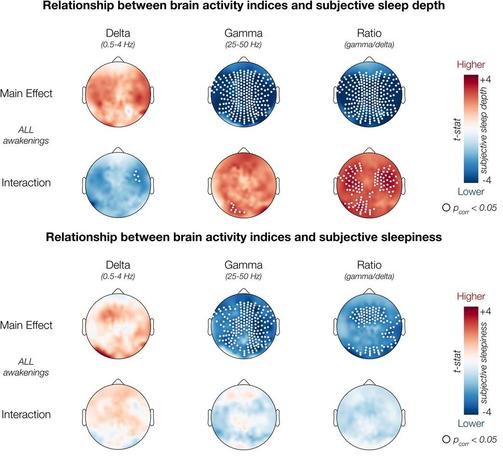
 Chris Koester
 Hiisikoloart
 Silvia Weber
 maiji
maiji