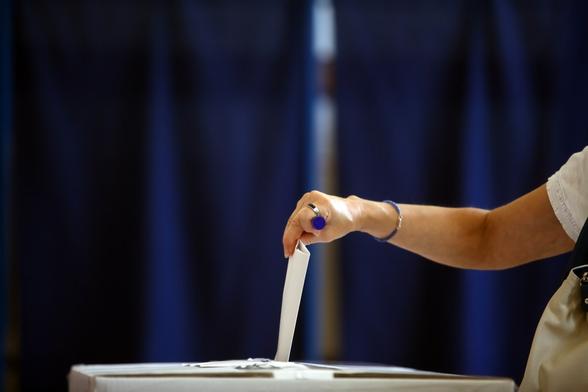
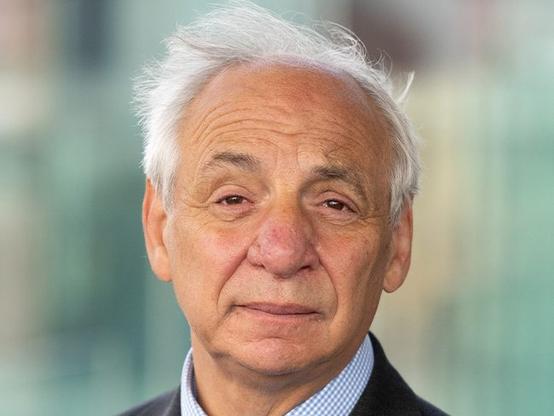
HOW WALES VOTES: Swansea MS Mike Hedges says new Senedd election system “does not work” — and “any system is better than the one we used”

Mike Hedges, the Labour MS for Gŵyr Abertawe — the constituency covering Swansea and Gower — has called for an open public discussion on the way Wales elects its Senedd Members, saying the new voting system “does not work.”

The May 2026 election was the first held under Wales’s reformed electoral system, which expanded the Senedd from 60 to 96 Members and introduced a fully proportional model based on 16 constituencies, each electing six Members from closed party lists.

Hedges, who was re-elected in Gŵyr Abertawe, says the system failed on its own terms.

“The new system does not work — it was meant to be proportional but it was not,” he said. “The electorate generally did not understand it.”

His central concern is tactical voting. Hedges argues the election effectively became a two-party contest between Plaid Cymru and Reform UK, and that this squeezed the vote going to everyone else.

“We did not have tactical voting — we had voters choosing between two parties, which depressed the votes of the other parties,” he said. “Those who thought they were voting tactically were actually not voting tactically. It did not work in five of the sixteen seats.”

He believes the effect was decisive in his own constituency, where he says fewer than 2,000 votes determined the final seat.

“Take 2,000 off one party and add it to another,” he said, expressing confidence in the figure. He argued that if Reform votes in the constituency had instead gone to the Conservatives, it would have produced a Conservative seat.

The criticism is notable coming from a Member elected under the very system he is attacking. Hedges took one of the six Gŵyr Abertawe seats, while Plaid Cymru took three and Reform UK two, as Labour‘s vote share across Wales fell to third behind both parties.

On the solution, Hedges is clear that change is needed — but stops short of backing the alternative favoured by the new Plaid Cymru government.

Asked whether he would support a move to the Single Transferable Vote — which Plaid committed in its 2026 manifesto to pursuing cross-party support for — he said he was open to reform but not to that particular model.

“We need an open discussion on the size of the Senedd and voting system,” he said. “I do not like STV, but any system is better than the one we used in the last election.”

It places him in unusual agreement with the Plaid government on the principle that the system should be reviewed, even as he rejects their preferred fix.

As a more immediate practical step, Hedges argues that better information would help voters navigate the system as it stands. “The most important thing next time is constituency polls,” he said — suggesting that seat-by-seat polling would give voters a clearer picture of the real contest in their area, rather than relying on national trends.

The new system was introduced through the Senedd Cymru (Members and Elections) Act 2024, passed by the previous Labour Welsh Government. Supporters argued the closed-list proportional model would produce a chamber that more accurately reflected how people voted, and that the larger Senedd would improve scrutiny of Welsh laws.

Critics — now apparently including some within Labour’s own ranks — have questioned the closed-list element, which means voters choose a party rather than ranking individual candidates, and whether the public was given enough information to understand how it worked.

Whether Hedges’s call for a review gains traction may rest with the Plaid Cymru government, which has its own manifesto commitment to explore electoral reform — albeit by a different route to the one the Swansea MS would choose.

Related stories from Swansea Bay News

Mike Hedges warns Wales could face another election as Labour counts the cost of historic defeat
The Swansea MS reflects on Labour’s worst-ever Senedd result in the immediate aftermath of the May election.

Plaid Cymru largest party, Reform UK historic breakthrough, Welsh Labour reduced to nine seats: the new political map of Wales
How the first election under the new voting system reshaped the Senedd.

Plaid Cymru top the poll in Gŵyr Abertawe as Reform UK and Labour also take seats
The full Gŵyr Abertawe result, where Mike Hedges held on for Welsh Labour.
#DHondtVotingSystem #electoralReform #MikeHedgesMS #PlaidCymru #ReformUK #SeneddElection2026 #SingleTransferableVote #WelshLabour

SENEDD ELECTION: Polls have closed — here’s what happens next, how the new D’Hondt voting system works, and when results will land

The polls have closed across Wales – and the most consequential Senedd election in Welsh history now moves into its final phase.

Voters across the country headed to polling stations between 7am and 10pm today to elect the 96 Members of the seventh Senedd, in what could prove to be a historic moment for Welsh politics.

But unlike a UK General Election, there is no exit poll for the Senedd vote. The first results will not be known until tomorrow.

Here’s what happens between now and then – and how the new voting system will decide who wins.

What happens overnight?

Ballot boxes from polling stations across each of the 16 new constituencies are being transported to count venues across Wales tonight.

Once they arrive, ballot papers are sorted and verified – but no counting takes place until the formal count begins on Friday morning.

When does counting start?

Counting will begin from 9am on Friday morning across all 16 constituencies.

When will we know the first results?

The first constituency declarations are expected from late morning on Friday. The full picture across all 16 constituencies should be clear by Friday afternoon or evening.

How does the new voting system work?

This is where things get interesting – because for the first time in Welsh history, all Senedd seats will be allocated using a fully proportional system.

There are now 96 Senedd Members instead of 60, elected from 16 enlarged constituencies that each return six MS.

Voters cast a single vote for a political party – or for an independent candidate – rather than for a named individual.

The seats are then allocated using something called the D’Hondt formula.

What is the D’Hondt formula?

The D’Hondt formula was devised in 1878 by Belgian mathematician Victor D’Hondt and is widely used in proportional voting systems across Europe.

It allocates seats in a way designed to closely reflect each party’s share of the vote.

Each party submits a list of up to eight candidates, ranked in order. The candidate at the top of the list is elected first if the party wins one seat. If they win two, the top two are elected, and so on.

Independent candidates stand alone – and are elected if they receive enough votes in their own right.

How are the seats actually allocated?

The six seats in each constituency are allocated one at a time, in rounds.

In the first round, the party with the highest total number of votes wins the first seat.

After that party has won a seat, its vote total is divided by two – and the calculation begins again. The party with the highest figure at that point wins the second seat.

If a party then wins a second seat, its original vote total is divided by three. And so on.

This continues until all six seats in each constituency are filled.

A worked example

To show how the D’Hondt system works in practice, here’s a fictional six-seat constituency where four parties and one independent candidate are competing for the votes.

The starting position – based on the votes cast – looks like this:

Party AParty BParty CParty DIndependentVotes3002101203010

Round 1: Party A has the most votes and wins the first seat. The first candidate on their list is elected.

Party A’s vote total is then divided by two (1 + 1 seat already won = 2). That gives them a new total of 150.

Round 2: Party B now has the highest figure (210) and wins a seat. The first candidate on their list is elected.

Party B’s votes are then divided by two – giving them 105.

Round 3: Party A now leads again (150) and wins a second seat. The second candidate on their list is elected.

Party A’s original 300 votes are now divided by three (1 + 2 seats already won) – giving them 100.

This process continues round by round. The full table looks like this:

Party AParty BParty CParty DIndependentVotes3002101203010Round 13002101203010Round 21502101203010Round 31501051203010Round 41001051203010Round 5100105603010Round 610070603010Seats won32100

So in this example, Party A wins three seats, Party B wins two, and Party C wins one.

In percentage terms, Party A took 45% of the vote and won 50% of the seats. Party B took 31% and won 33.3% of the seats. Party C took 18% and won 16.6% of the seats.

That’s how the new system makes sure the number of seats each party wins is much closer to their share of the vote – though as the example shows, smaller parties polling below around 12% are unlikely to win representation.

Will every party get a seat?

No – there is a practical threshold for winning representation under D’Hondt.

Although there is no formal vote threshold, in six-member constituencies a party will typically need around 12% to 13% of the vote to win a seat.

Smaller parties polling below that level are unlikely to gain representation, although strong local campaigns can change the picture.

Which seats matter most locally?

Across south-west Wales, six new constituencies are being closely watched:

  • Gŵyr Abertawe – covering Swansea and the surrounding area
  • Sir Gaerfyrddin – covering Carmarthenshire and parts of Llanelli
  • Brycheiniog Tawe Nedd – covering the upper Swansea Valley, Powys and Neath
  • Ceredigion Penfro – covering Pembrokeshire and Ceredigion
  • Pen-y-bont Bro Morgannwg – covering Bridgend
  • Afan Ogwr Rhondda – covering Port Talbot and the surrounding valleys

What’s at stake?

The election will determine who forms the next Welsh Government – with 49 seats needed for a majority in the new 96-seat Senedd.

Pre-election polling suggested it is unlikely any single party will reach that threshold, meaning coalition negotiations are likely to follow the count.

What about Welsh Labour?

Welsh Labour has been in power in Wales – either alone or in coalition – since the Senedd was first established in 1999.

Pre-election polling suggested Labour faces its toughest test yet, with the party predicted to drop significantly from the 30 seats it won in 2021.

When will the new Senedd meet?

The seventh Senedd is expected to meet for the first time in the weeks following the election, with the formal swearing-in of new Members and the election of a new Llywydd among the first orders of business.

Coalition negotiations – if needed – will determine when a new First Minister can be elected.

What time does Swansea Bay News begin its results coverage?

We’ll be reporting all the live updates and reaction from across south-west Wales as results come in throughout the day.

Stay tuned.

#DHondtVotingSystem #featured #Senedd #SeneddElection2026