https://101-things.readthedocs.io/en/latest/radio_receiver.html #crystalradio #RaspberryPiPico #digitalage #techinnovation #HackerNews #ngated
Pi Pico Rx β A crystal radio for the digital age?
https://101-things.readthedocs.io/en/latest/radio_receiver.html
#HackerNews #PiPicoRx #crystalRadio #digitalAge #technology #innovation
@bud_t @wb2ifs @thenrao @hamradiosci @arrl @goodgame_k5ata @ARDC The next phase for the project alumni is a #virtualclub we're building. We can using y'alls help. We need speakers and presentations on the following topics: #Amateurradio over the #Internet (ARoIP), #Morsecode (#cw) for fun
#Echolink.org deep dive,
What is #meshtastic and how do I get started?,
#WebSDR treasure egg hunt
#crystalradio #VirtualBuild
So Stay tuned...
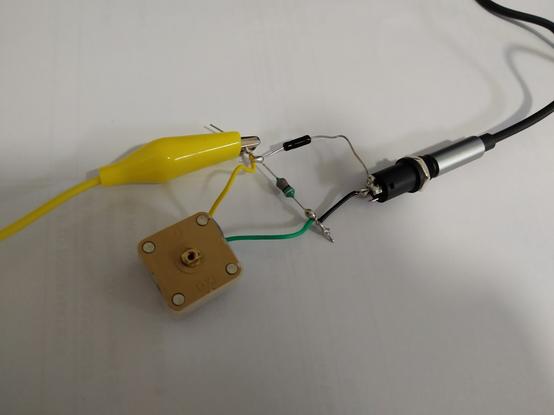
I got out the soldering iron and built a slightly tidier version of the #crystalradio circuit which works (despite being out of practice with soldering, and having to use the lead free stuff)
#RadioCaroline is now back on 4kW and broadcasting #RadioCarolineNorth from the #RossRevenge (they have an extra day of broadcasting due to the fundraiser) - the #crystalradio (now using a 220 uH inductor and 165 pF variable capacitor at around 78 pF for best tuning) receives the signal good and strong with quite decent volume to the PC line in (this video is taken using the mobile phone microphone, there is 0 amplification or soundprocessing)
"You NEED a Headset" β well, in 1925 you actually did if you wanted to listen to a radio, which weren't yet powerful enough to be heard via a speaker or horn.
#headphones #radio #SoundStudies #Brandes #CultureOfSound #CrystalRadio
Foxhole Radios date back to the 1890s but were most popular during WW2. Soldiers couldn't use vacuum tube radios bc their radio waves could be traced by the enemy, so soldiers built safe but crude crystal radios like this one at the Anzio beachhead in Italy in 1944, which used a blue steel razor blade with a pencil lead pressed against its surface by a safety pin as a detector.
Learn to make your own foxhole radio here:
The Simplest Way To Spot 2.4GHz RF
When the cool kids are showing off their SDRs it's easy to forget that a radio receiver can be very simple indeed. The crystal set is one of the earliest forms of radio receiver, a tuned circuit and a diode that would pick up those AM broadcast stations no problem. But lest you imagine that these receivers can only pick up those low frequencies, here's Hackaday alum [Ted Yapo] with a handy 2.4GHz receiver that picks up strong WiFi and microwave oven leakage.
It's about as simple as it gets, an LED with a UHF diode in reverse across it. The clever part lies in the wire leads, which are cut to resonate as a dipole at 2.4 GHz. The resulting RF voltage is rectified by the UHF diode, leaving enough DC for the LED to flash. If you are wondering why the LED alone couldn't do the job as a rectifier you would of course be on to something, however its much worse high frequency performance would make it not up to the job at this frequency.
The glory days of analogue broadcasting may now be in the past, but it's still possible to have fun with a more conventional crystal radio. If you are adventurous, you can even make one that works for the FM, band too.