 DoomsdaysCW
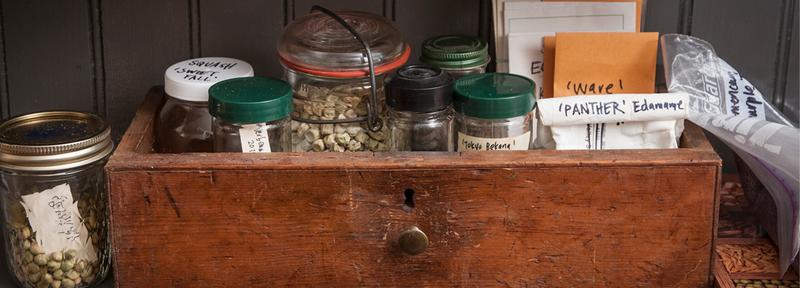
Excerpt from Seed Saving: Introduction by the #SeedSavingExchange
"Know Your Plants
Know whether your parent plant is a hybrid or open-pollinated variety.
Open-pollinated varieties are like dog breeds; they will retain their distinct characteristics as long as they are pollinated (or “mated”) with the same “breed”/variety.
Hybrids, which are created by crossing plants of two different varieties, generally do not produce offspring with the same traits as the parent plant. Seeds saved from open-pollinated varieties, on the other hand, will produce plants identical to the parent.
Seed Savers Exchange offers only open-pollinated varieties through its online and print catalog and on The Exchange, its gardener-to-gardener seed swap.
So what are #OpenPollinated varieties, and what is their lifespan? Open-pollinated varieties are like dog breeds; they will retain their distinct characteristics as long as they are pollinated (or “mated”) with the same “breed”/variety.
This means, with a little care and planning, the seeds you produce will be true-to-type, keeping their distinct traits generation after generation as long as they do not cross-pollinate with other varieties of the same species.
Know your plants’ lifespans.
Open-pollinated varieties can be annual, biennial, and perennial.
Plants that flower, set seed, and die in a single growing season—like lettuce, tomatoes, and peppers—are called annuals.
Biennials, such as carrots and onions, don’t flower until their second growing season after they have gone through a cold period called vernalization.
Some long-lived plants, like apple trees and asparagus, are perennial, surviving and flowering for many years.
Know your plants’ specific name (genus and species).
A long green vegetable with several slices
The ‘Armenian’ cucumber, commonly sold as a cucumber, is actually a melon.
In biology, a genus is a taxonomy rank that groups together closely related species. For example, tomatoes (Solanum lycopersicum) are closely related to eggplants (Solanum melongena). In this case, Solanum is the genus that both tomatoes and eggplants belong to.
A species is a group of individuals that are able to reproduce together. All tomatoes belong to the species lycopersicum and are able to cross-pollinate (or transfer pollen between plants) with each other.
In the garden, most crops are different species from one another, but not always. There are several species of squash and two distinct species of kale—meaning some varieties of these crops are not able to cross-pollinate with each other.
On the other hand, Cucumis melo, commonly categorized as a melon, also contains some varieties that are sold as cucumbers (like ‘Armenian’) because fruits of the variety are unsweet and sometimes pickled.
Planting just one variety in a species will help ensure you save pure seed. But if you want to save seeds from more than one variety, knowing your plants’ scientific name will help you determine which ones may cross-pollinate. To save pure seed, you want to prevent cross-pollination between two different varieties in the same species.
The squash commonly grown in the Seed Savers Exchange gardens at #HeritageFarm, for example, could fall into one of three species: Cucurbita maxima, C. moschata, and C. pepo. These species won’t typically cross-pollinate.
On the other hand, Brassica oleracea includes broccoli, Brussels sprouts, cabbage, cauliflower, collards, kale, and kohlrabi, all plants you might think wouldn’t cross-pollinate but actually do. Read up on the cross-pollination habits of the plants you are saving seeds from to ensure you won’t run into issues."
Learn more:
https://seedsavers.org/learn/seed-saving/#know-your-plants
#SolarPunkSunday #CrossPollination #Gardening #CommunityGardens #SeedSaving #KnowYourPlants
 Wendinlondon 🇺🇦
 James
James
 Gina
Gina
 Dustin Miller PolyInnovator
 Coach Sankhavaram ®
 Florence Lenaers
 Shane O'Mara
 European Research Council (ERC