Which ribosomal subunit does chloramphenicol target? πŸ§«πŸ’Š #ribosome #chloramphenicol #pharmacology ... Continue to: https://www.youtube.com/watch?v=-SBl-bOO92M
Which ribosomal subunit does chloramphenicol target?
A. 40S
B. 30S
C. 50S
D. 60S
#chloramphenicol #pharmacology #medications #ribosoms ... Continue to: https://www.facebook.com/1130092409221646/posts/1242372834660269
πŸ§¬πŸ’Š How Does Chloramphenicol Work? #antibiotics #chloramphenicol #pharmacology #antibacterial ... Continue to: https://www.youtube.com/watch?v=aMe1Zg6CHJE
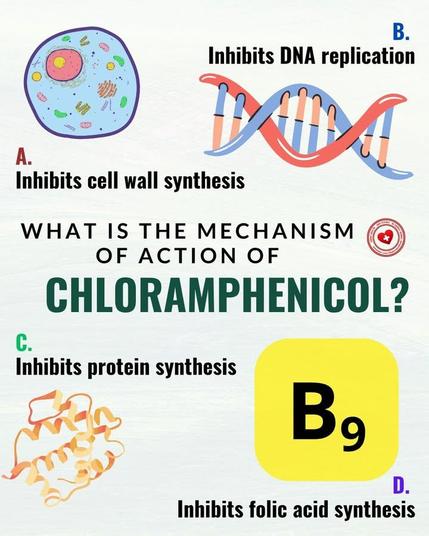
What is the mechanism of action of chloramphenicol?
A. Inhibits cell wall synthesis
B. Inhibits DNA replication
C. Inhibits protein synthesis
D. Inhibits folic acid synthesis
#chloramphenicol #synthes ... Continue to: https://www.facebook.com/1130092409221646/posts/1174181854812701
πŸ’Š Which of the following is a serious side effect of chloramphenicol? #chloramphenicol #pharmacology ... Continue to: https://www.youtube.com/watch?v=WT_UIdBIhlA
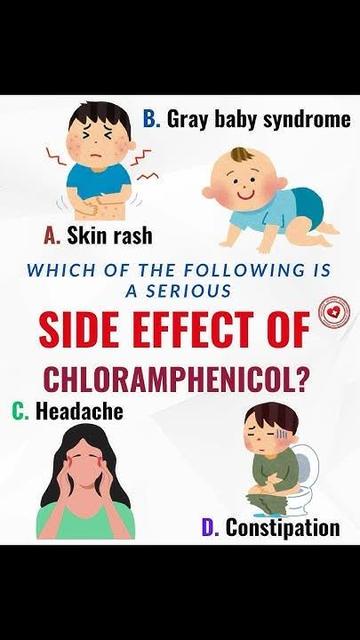
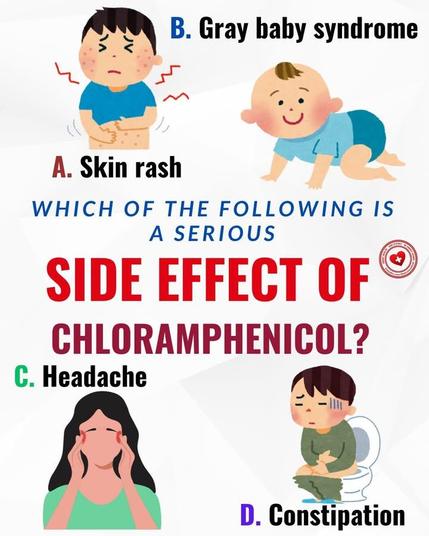
Which of the following is a serious side effect of chloramphenicol?
A. Skin rash
B. Gray baby syndrome
C. Headache
D. Constipation
#chloramphenicol #antibiotics #pharmacology #sideeffects ... Continue to: https://www.facebook.com/1130092409221646/posts/1132666122297608

Chloramphenicol-resistant microorganisms

This category includes such types of microorganisms: strains of Pseudomonas aeruginosa serrations, Mycobacterium tuberculosis and other acid-resistant bacteria, pathogens of gas gangrene and other clostridia, protozoa, fungi, viruses.

#chloramphenicol #antibiotic #microbiology #Bacteriaresistantchloramphenicol

Why should chloramphenicol be avoided?

When prescribing levomycetin, two circumstances must be taken into account: Firstly, this antibiotic sometimes causes very serious complications, in particular from the hematopoietic organs, often ending in death.

#chloramphenicol #antibioticresistance #complication #Chloramphenicolantibioticresistance

Physical and chemical properties of chloroamphenicol

This antibiotic is slightly soluble in water (1 part of chloramphenicol per 400 parts of water), but it is highly soluble in alcohol, pyridine, ethylene glycol and propylene glycol.
Solutions cannot be sterilized in a steam sterilizer (autoclave) due to the weakening of the antibacterial effect.

#chemistry #chloramphenicol #Chloramphenicolchemistry

Introduction of chloramphenicol in organism

The antibiotic is used orally through the mouth, less often rectally, and also topically in the form of ointments or aqueous solutions (for example, eye drops). For parenteral administration, chloramphenicol succinate soluble is used. Ingested chloramphenicol is quickly and completely absorbed, mainly in the small intestine.

#chloramphenicol #antibiotics #therapy